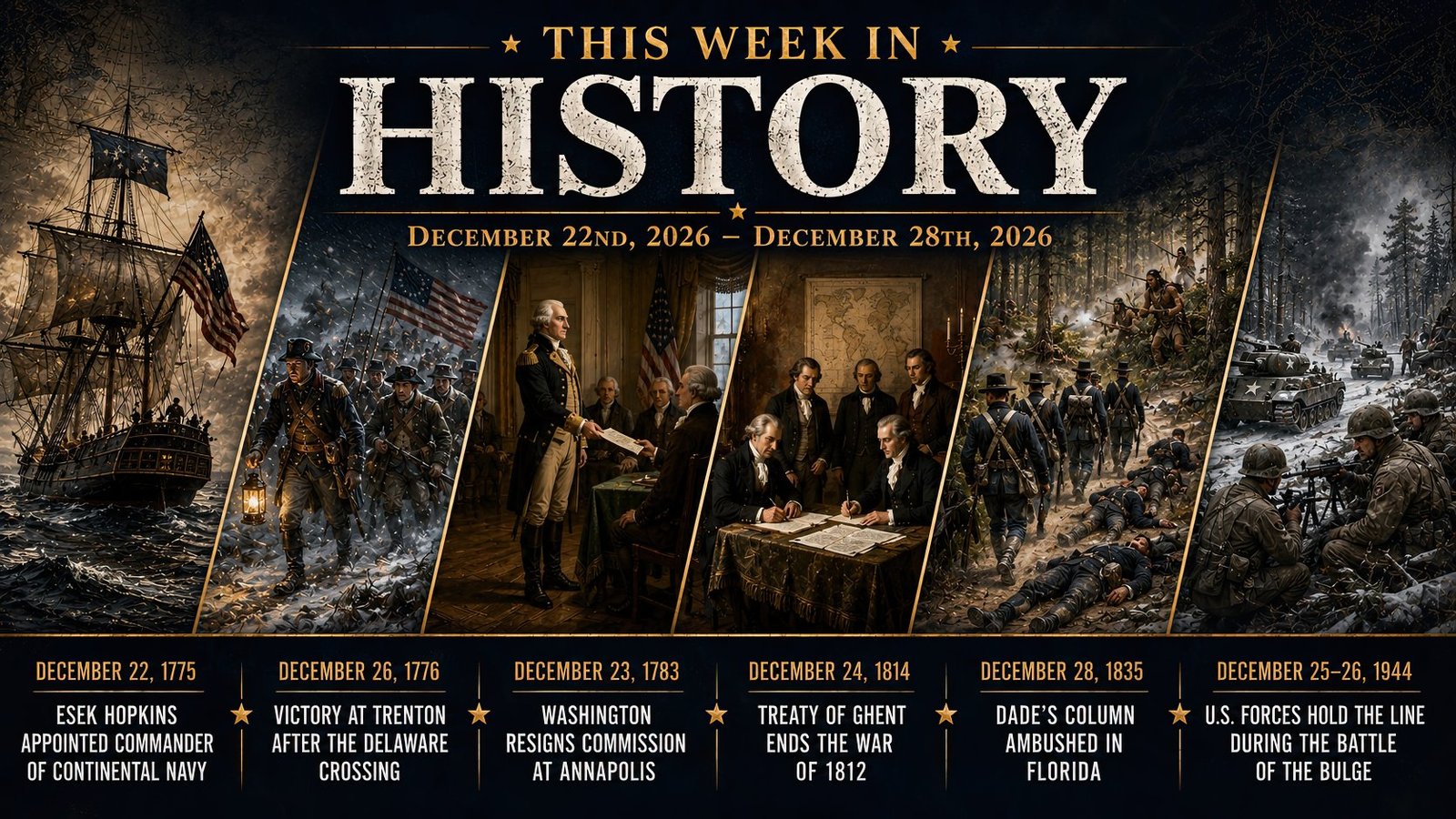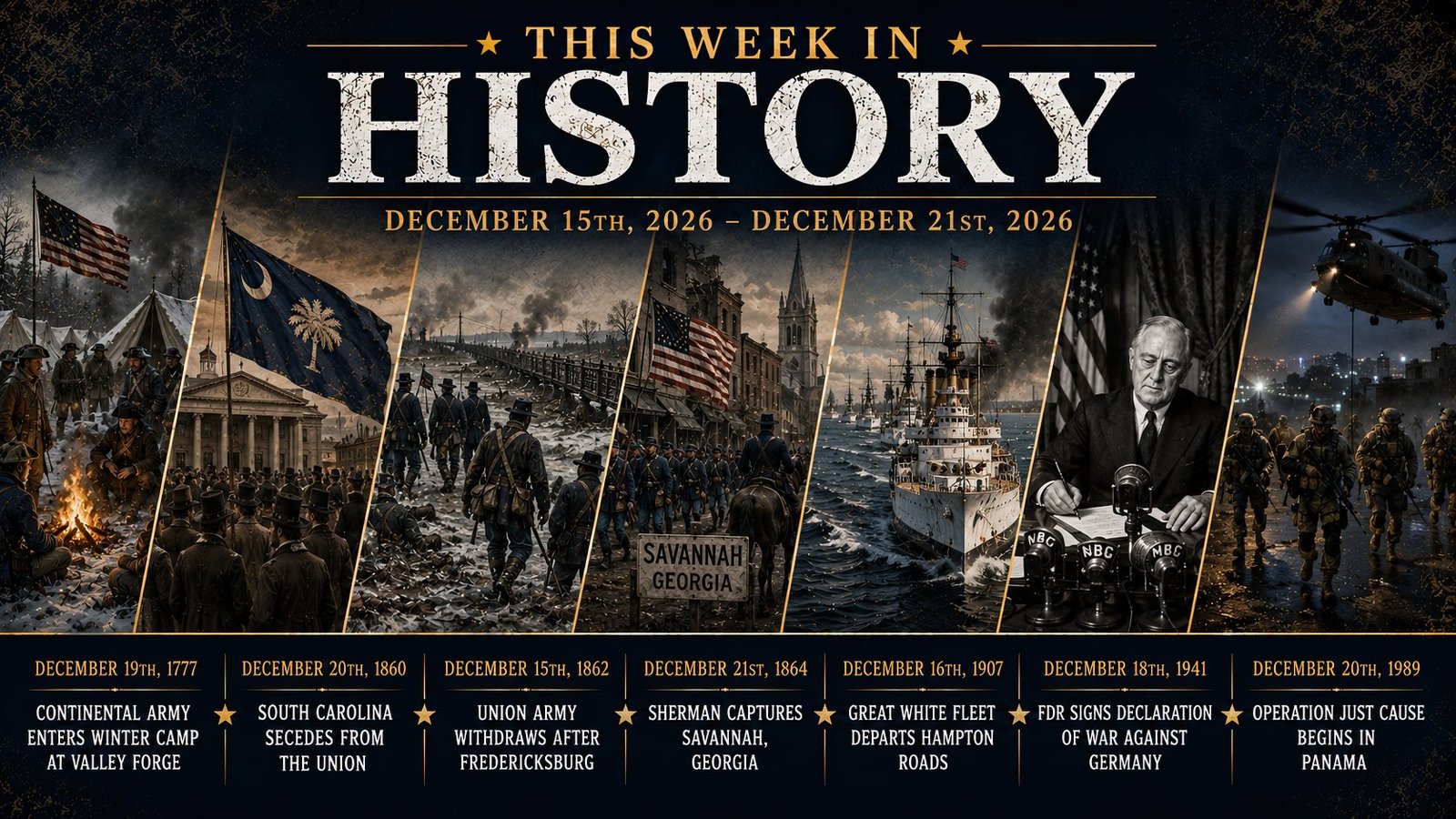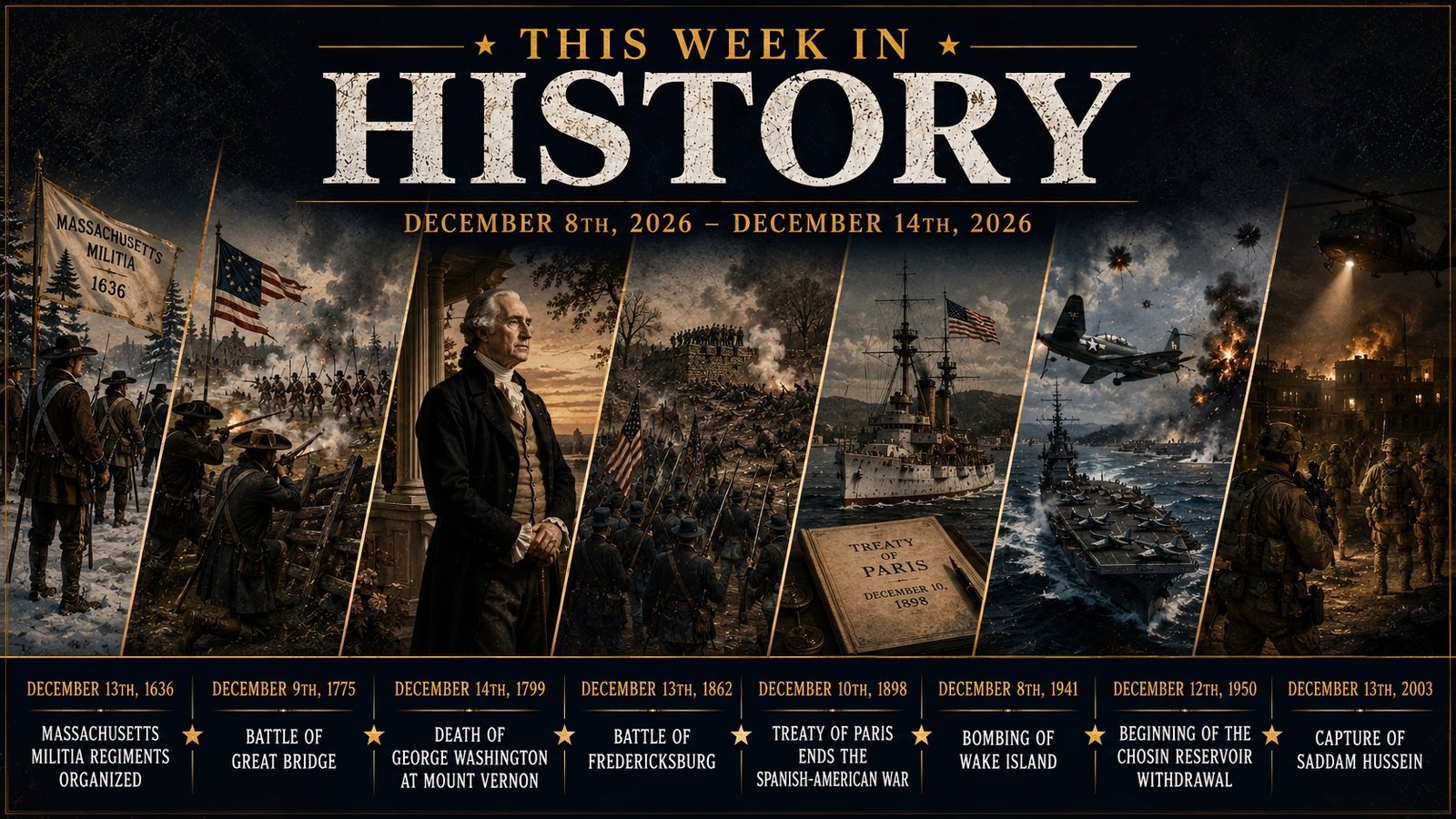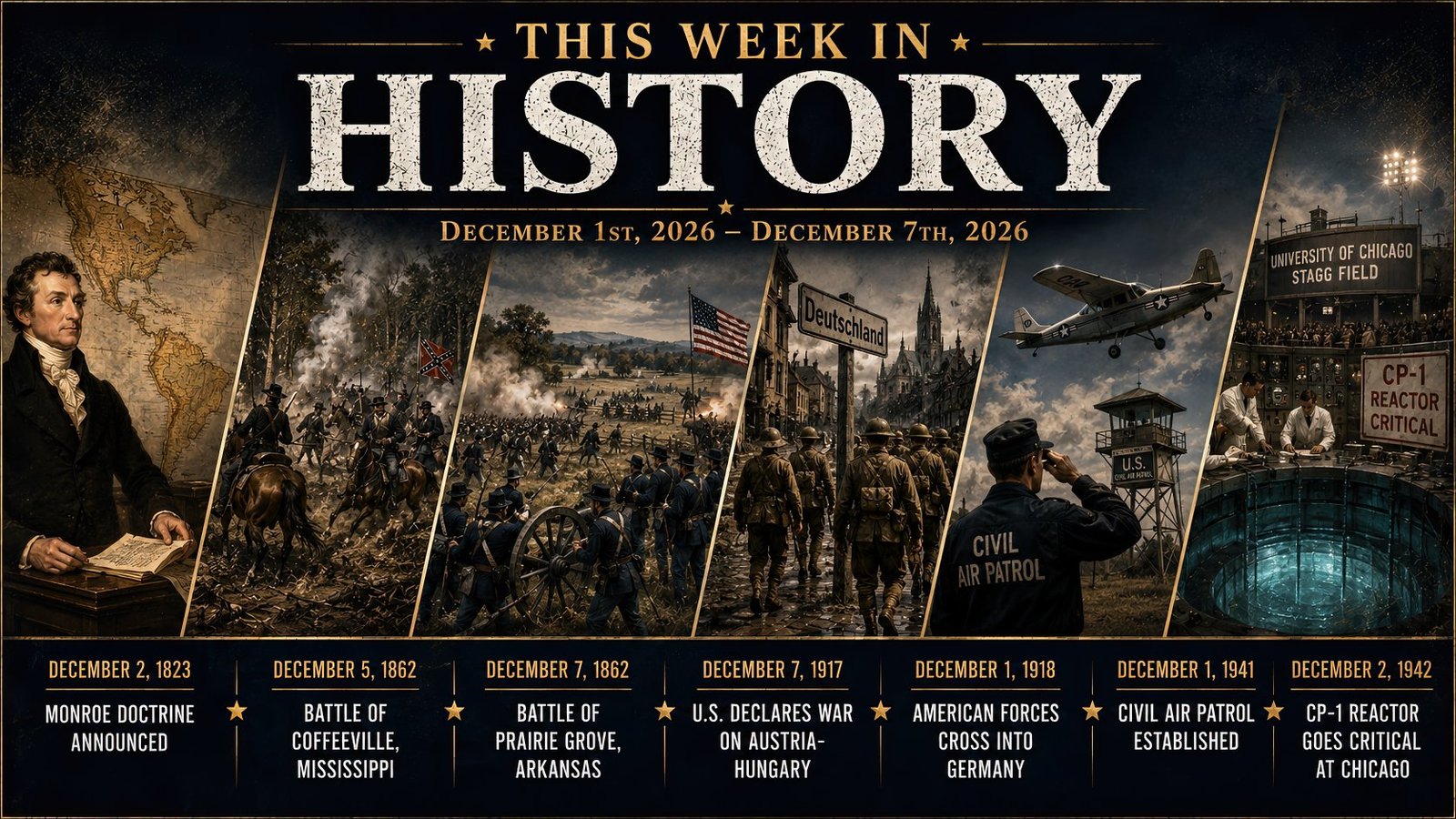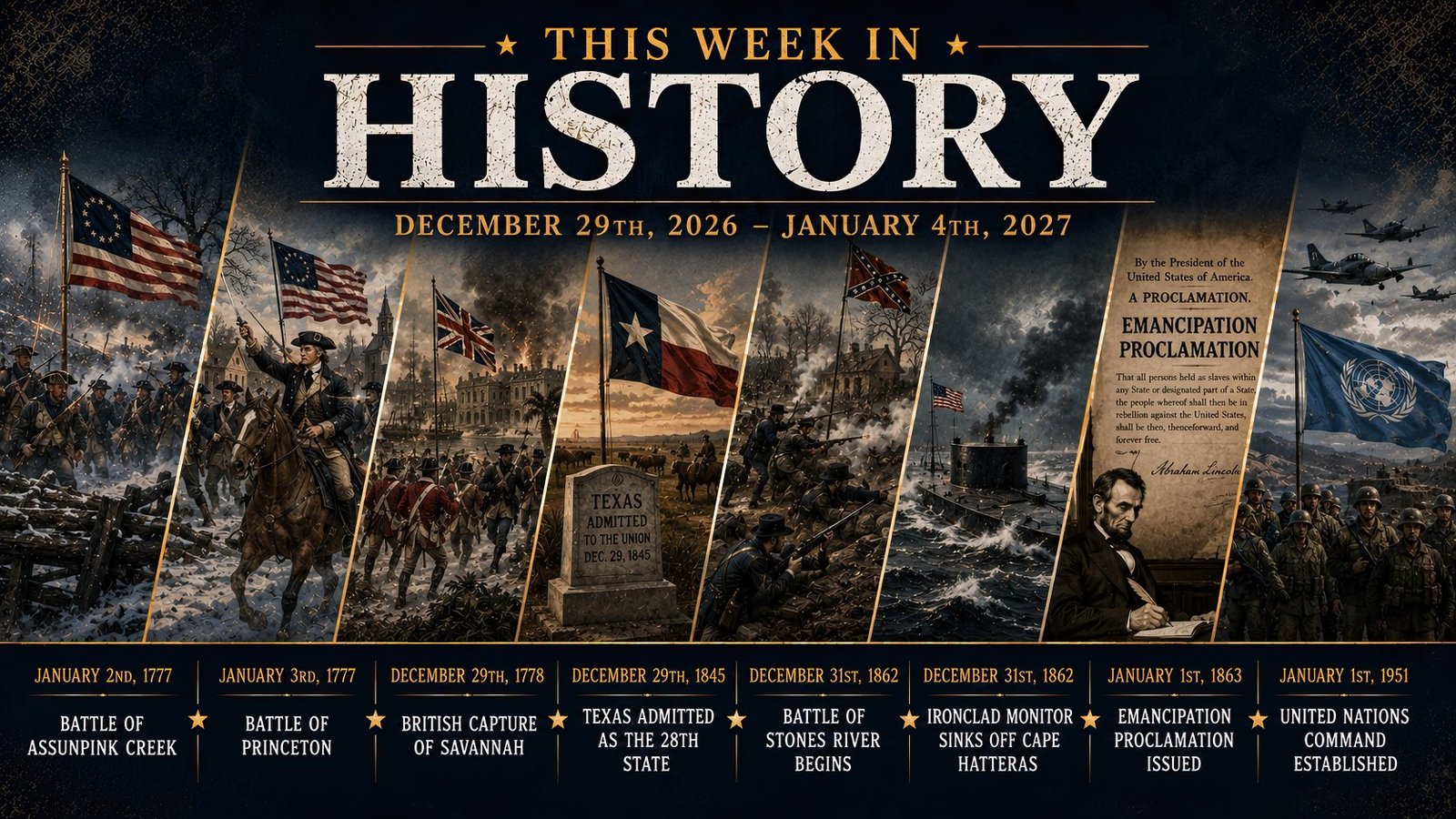
This Week in History · December 29, 2026
489 Populated Entries
Conflicts and historical periods that shaped military institutions and warfare.
Wars & Historical Eras
Every result opens a permanent subject record with its reference context and connected Dispatch coverage. Filter by record type, editorial collection, or a word in the entry.
489 entries found.
During the First Barbary War, the United States turned a small expedition into an enduring symbol of Marine Corps identity. An overland force of United States Marines and local allies, led by Marine Lieutenant Presley O’Bannon and naval agent William Eaton, marched across harsh desert terrain to attack the port city of Derna on the North African coast. On April 27th, 1805, they assaulted the defenses and captured the town, raising the American flag above the works.
A story of hard lessons, desert tank duels, and a young armor force learning fast enough to change a campaign.
Fast-forward to the summer of the Civil War, and the terrain shifts to the outskirts of Atlanta. Major General William Tecumseh Sherman had pushed his three Union armies close to the rail lines that kept the Confederate stronghold supplied. Newly appointed Confederate commander John Bell Hood tried to break that grip with a series of aggressive counterattacks. At Ezra Church, west of the city, Union troops under Oliver O.
Gettysburg brought the Army of Northern Virginia and the Army of the Potomac into a three-day battle shaped by terrain, reinforcement, and local decisions. This overview connects the opening encounter, both flanks, Cemetery Ridge, the cavalry actions, and the human aftermath.
Read Entry →Battle · 2026-06-30Battle of GlendaleAs the Peninsula Campaign turned sour for the Union in the summer of 1862, the Army of the Potomac tried to slip away toward the James River, its supply line and safety. On June 30th, 1862, near the crossroads at Glendale and the woods around Frayser’s Farm, Confederate forces under Robert E. Lee launched a complex attack meant to cut the retreating Union column in two.
A story of a grinding hill assault, exhausted rifle companies, and a single ridge that reshaped the war back home.
A story of street-to-street fighting, shattered assumptions, and how one city battle reshaped the Vietnam War.
A story of air cavalry, hidden armies, and a brutal valley fight that previewed the grinding war still to come.
A story of a risky harbor landing, brutal tides, and how it broke a grinding stalemate in Korea.
A story of a volcanic ridge, two flags in the wind, and a fight that reshaped the Pacific war’s final months.
A story of a painful first defeat and how it forced a new army to relearn leadership, tactics, and trust in combat.
On a summer evening near Niagara Falls, American and British forces collided in one of the War of 1812’s bloodiest battles. United States troops under Major General Jacob Brown and Brigadier General Winfield Scott assaulted a British-Canadian position anchored on a ridge lined with artillery. The fighting quickly turned into a close-range slugging match, with infantry charges going in against loaded guns and both sides trading control of the crest several times.
At the opening of the Spanish–American War, Commodore George Dewey led the United States Asiatic Squadron into Manila Bay to find and destroy Spain’s Pacific fleet. In the pre-dawn darkness his column of cruisers and gunboats slipped past coastal batteries and closed with the anchored Spanish ships. Once in position, Dewey gave his famous order to his flagship’s captain to open fire, unleashing a methodical bombardment that overwhelmed the outgunned enemy squadron.
A story of a risky carrier ambush, frantic searches, and a sudden shift in the Pacific war.
Early in the Civil War, control of Kentucky and the border states was still uncertain, and both sides understood how much those regions mattered. On January 19th, 1862, Union forces under Brigadier General George H. Thomas clashed with Confederate troops near Mill Springs, also known as Logan’s Cross Roads, in south–central Kentucky. Fighting in cold, muddy conditions, the Union line held against confused Confederate attacks that had begun before daylight.
Almost ninety years later, early June once again found American soldiers in desperate combat, this time along the Mississippi River during the Civil War. On June 7th, 1863, Confederate troops attacked Union positions at Milliken’s Bend, a key supply point supporting the siege of Vicksburg. Many of the defenders were newly raised African American regiments, still short on training and equipment but determined to prove their worth.
By August 5th, 1864, Union forces had spent years tightening the naval blockade that ringed the Confederacy, but the port of Mobile, Alabama, still offered the South a gateway to the Gulf. On that morning, Admiral David G. Farragut led a column of Union wooden warships and ironclads past the minefields—then known as “torpedoes”—and fortifications guarding the narrow channel into Mobile Bay.
A story of an urban raid that turned into a street-by-street survival fight and how it reshaped American intervention abroad.
A story of a lopsided clash where earthworks, frontier rifles, and bad timing shattered a veteran British army and reshaped a young republic’s confidence.
Okinawa was a connected land, sea, and air campaign rather than a single beach landing. This overview follows the April assault, northern and southern fighting, offshore defense, civilian experience, and the collapse of organized resistance in June 1945.
Read Entry →Battle · 2026-03-03Battle of Pea RidgeIn early March of 1862, attention in the Civil War was not only fixed on the great rivers but also on the rough Ozark terrain along the Missouri-Arkansas border. On March 7th, 1862, Union forces under General Samuel Curtis met a Confederate army led by Earl Van Dorn near Pea Ridge, in a battle that unfolded over two days in tangled woods and at crossroads such as Elkhorn Tavern.
As Union forces closed in on Atlanta during the summer of the Civil War, Confederate leadership underwent a dramatic change. General John Bell Hood replaced Joseph E. Johnston and immediately sought to seize the initiative with aggressive attacks. On July 20th, 1864, Hood hurled his troops against the Army of the Cumberland as it crossed Peachtree Creek north of the city, hoping to catch Union units strung out and vulnerable.
The September 1944 landing on Peleliu secured an airfield but opened a much longer struggle against a deeply fortified island. Marine and Army operations continued into November, making the battle more than the familiar story of its first beaches.
Read Entry →Battle Overview · 2026-09-06Battle of Sailor’s CreekOn April 6, 1865, Union infantry and cavalry struck separated portions of Lee’s retreating army. The fights at Hillsman Farm, Marshall’s Crossroads and Lockett Farm inflicted losses the Confederates could not readily replace and brought the campaign nearer its conclusion.
Read Entry →Related Dispatch
These current Dispatch articles connect directly to records in the Wars & Historical Eras directory.