Reference Entry
BATTLE OF THE PHILIPPINE SEA
An air-sea clash where radar, training, and discipline turned a desperate carrier defense into a one-sided hammer blow that reshaped the Pacific war.
Dated Historical Context
A RECORDED MOMENT IN HISTORY
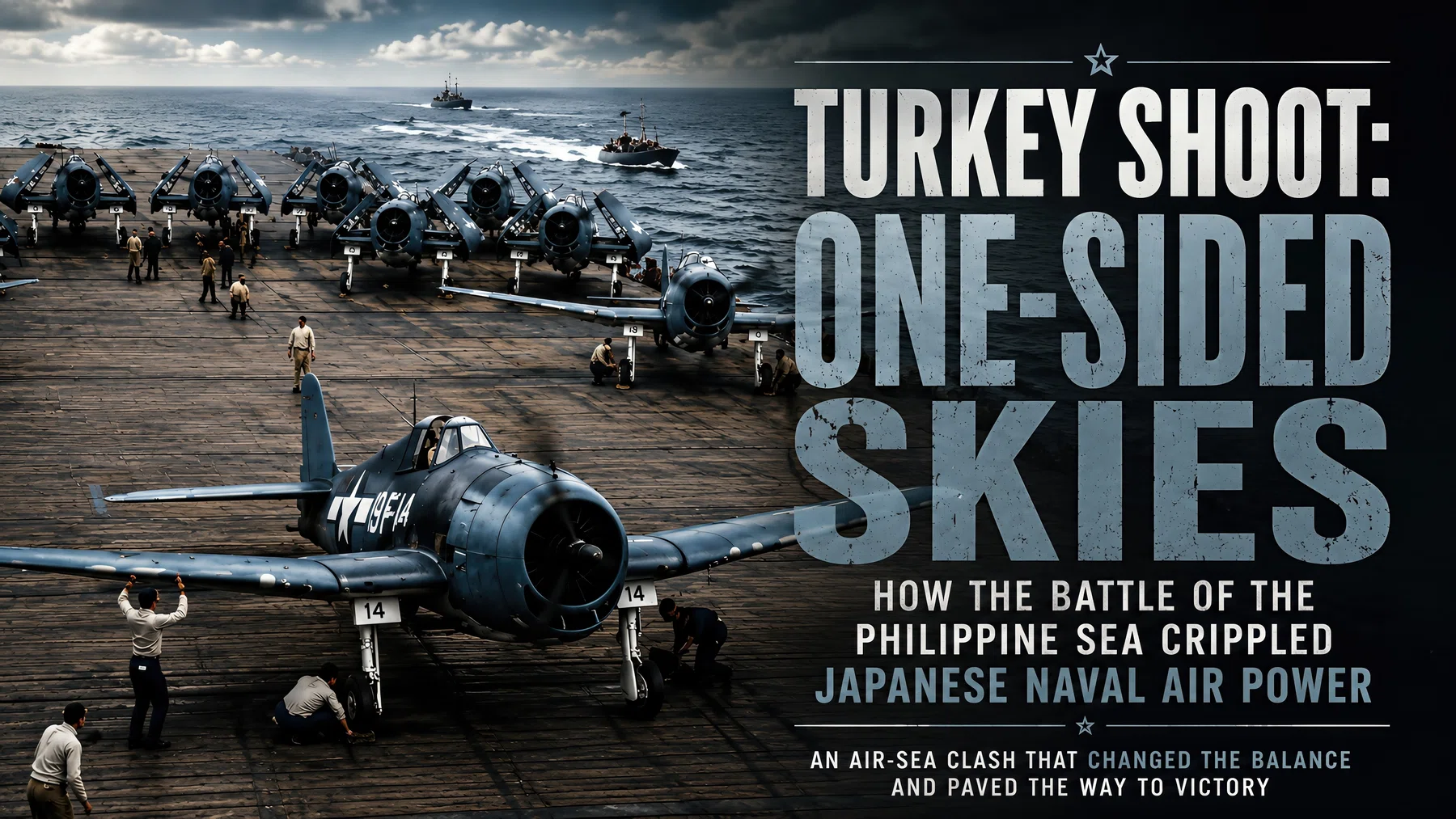
Battle of the Philippine Sea and the “Great Marianas Turkey Shoot”
In the central Pacific, American seaborne power reached a new height as carrier task forces covered the invasion of Saipan in the Mariana Islands. On June 19th, 1944, Japanese naval aviation mounted large waves of air attacks against the U.S. fleet in an attempt to blunt the landings and reclaim the initiative. Radar, fighter direction, and well-trained pilots flying modern carrier aircraft met those strikes far from the fleet, cutting down attacking formations in what American aviators later dubbed the “Great Marianas Turkey Shoot.” At the same time, American submarines and carrier aircraft struck at the Japanese fleet itself, sinking carriers and further eroding Japan’s ability to contest control of the ocean. By the end of the battle, Japan had lost a large share of its remaining carrier pilots, a loss that could not be made good quickly. The Philippine Sea fight ensured that American forces could press on toward the Philippines and ultimately Japan with overwhelming air superiority at sea.
Read the complete weekly DispatchTrackpads Source Register