Headline Features
Substantial Trackpads essays on battles, campaigns, operations, commanders, and military change.
33 direct episode linksExplore the Series →Trackpads Military History Wiki
Explore battles, campaigns, people, and military systems through reference histories, recipient citations, and connected Dispatch articles and audio.
The Trackpads Reference Collection
Courage beyond measure. Search the people, read the citations, and follow the battles, stories, and service behind America’s highest award for valor.
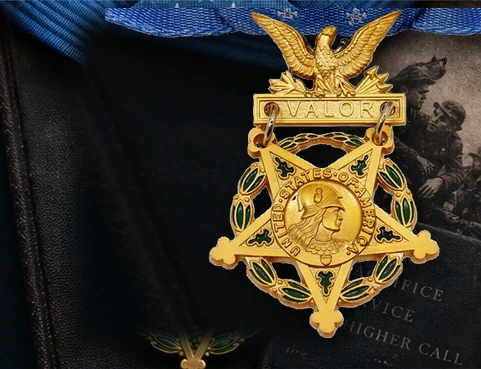 America’s highest award for valor
Battle, Campaign and Unit Histories
Read a complete overview, explore the more detailed histories, and follow reviewed connections to the Medal of Honor Archive.
Grant’s campaign brought a Union army across the Mississippi, isolated Vicksburg, and turned two failed assaults into a sustained siege. This overview connects the river operations, land battles, civilian experience, and recipient citations without treating every action as the same engagement.
Read the overview Battle OverviewBattle of GettysburgGettysburg brought the Army of Northern Virginia and the Army of the Potomac into a three-day battle shaped by terrain, reinforcement, and local decisions. This overview connects the opening encounter, both flanks, Cemetery Ridge, the cavalry actions, and the human aftermath.
Read the overview Campaign OverviewBattle of OkinawaOkinawa was a connected land, sea, and air campaign rather than a single beach landing. This overview follows the April assault, northern and southern fighting, offshore defense, civilian experience, and the collapse of organized resistance in June 1945.
Read the overview Battle OverviewSiege of PetersburgThe struggle for Petersburg combined failed assaults, trench warfare, railway interdiction, and repeated battles on an expanding front. This overview follows the campaign from June 1864 through the April 1865 evacuation, preserving the distinctions between individual award actions.
Read the overview Battle OverviewBattles of Fort FisherThe failed December 1864 expedition and successful January 1865 assault were separate attempts to close Wilmington’s protected sea approach. This overview distinguishes bombardment, amphibious landings, naval and army assaults, and the later advance on Wilmington.
Read the overview BattleBattle of Mobile BayBy August 5th, 1864, Union forces had spent years tightening the naval blockade that ringed the Confederacy, but the port of Mobile, Alabama, still offered the South a gateway to the Gulf. On that morning, Admiral David G. Farragut led a column of Union wooden warships and ironclads past the minefields—then known as “torpedoes”—and fortifications guarding the narrow channel into Mobile Bay.
Read the overview BattleBattle of ShilohAt Pittsburg Landing along the Tennessee River, Confederate forces struck the encamped Union Army of the Tennessee in a surprise attack that opened one of the Civil War’s first truly massive battles. General Ulysses S. Grant’s troops had been gathering for an advance deeper into the Confederate heartland when General Albert Sidney Johnston launched a dawn assault.
Read the overview Battle OverviewCienfuegos Cable-Cutting ActionOn May 11, 1898, crews from Marblehead and Nashville worked close to the Cuban shore under fire to cut submarine cables. The operation damaged communications but did not establish complete isolation of the port.
Read the overview EventLanding at Veracruz, MexicoIn the turbulence of the Mexican Revolution, the United States undertook a controversial intervention that highlighted both its naval reach and the risks of limited operations ashore. A diplomatic clash known as the Tampico Affair, combined with concerns over an incoming arms shipment to the regime of Victoriano Huerta, led Washington to order a seizure of the port of Veracruz.
Read the overview Battle OverviewBattle of PeleliuThe September 1944 landing on Peleliu secured an airfield but opened a much longer struggle against a deeply fortified island. Marine and Army operations continued into November, making the battle more than the familiar story of its first beaches.
Read the overview Battle OverviewBattle of SaipanThe June–July 1944 battle for Saipan joined Marine and Army divisions in a sustained advance across a populated island. Its outcome transformed American air operations while leaving a devastating military and civilian legacy.
Read the overview Battle OverviewBattle of ChancellorsvilleHooker’s spring offensive crossed the Rappahannock with an ambitious plan but ended in withdrawal. The main battle, Jackson’s flank march, and Sedgwick’s separate advance formed one campaign whose local actions cannot be reduced to a single surprise attack.
Read the overview Battle OverviewBattle of Spotsylvania Court HouseAfter the Wilderness, the armies fought for roads, salients and supply routes around Spotsylvania. The Bloody Angle was the most remembered episode, but the battle also included Laurel Hill, Heth’s Salient and later attempts to turn or break the defenses.
Read the overview Battle OverviewBattle of Sailor’s CreekOn April 6, 1865, Union infantry and cavalry struck separated portions of Lee’s retreating army. The fights at Hillsman Farm, Marshall’s Crossroads and Lockett Farm inflicted losses the Confederates could not readily replace and brought the campaign nearer its conclusion.
Read the overview Battle OverviewSiege of Port HudsonPort Hudson protected a difficult stretch of the Mississippi River. Farragut’s March passage preceded Banks’s land siege, whose costly assaults and prolonged investment ended with the Confederate surrender on July 9, 1863.
Read the overview Battle OverviewChapin’s Farm and New Market HeightsUnion attacks on September 29 broke parts of Richmond’s outer defenses and brought Black troops into a costly assault at New Market Heights. The capture of Fort Harrison survived Lee’s counterattack, but the advance did not take Richmond.
Read the overview Campaign OverviewUnited States Expedition to Korea, 1871An American mission seeking diplomatic contact became a punitive naval and amphibious operation. The capture of Korean forts in June demonstrated military power without securing the agreement the expedition sought.
Read the overview Campaign OverviewChina Relief Expedition, 1900The crisis in north China produced several connected operations: defense of the foreign legations, the unsuccessful Seymour expedition, fighting around Tientsin, and the August advance on Peking. Their recipients did not all fight at the same place or on the same day.
Read the overview Campaign OverviewLeyte CampaignThe October 1944 landings restored a major Allied foothold in the Philippines. Fleet battles protected that foothold, but Japanese reinforcement and the struggle for routes toward Ormoc made the ground campaign longer and more difficult than the beach assault alone suggests.
Read the overview Campaign OverviewLuzon Campaign, 1945The return to Luzon combined amphibious landings, the destruction and liberation of Manila, the recovery of the bay approaches and months of fighting in mountain defenses. Capturing the capital did not end the island campaign.
Read the overview Historical IncidentAttack on Pearl HarborThe same week on the calendar, but in a different year, brought one of the most searing dates in United States military history: December 7th, 1941.
Read the overview IncidentUSS Kearsarge sinks CSS AlabamaOff the French port of Cherbourg, two warships met in a duel that captured worldwide attention and helped decide a quieter but crucial front in the Civil War. The Confederate commerce raider CSS Alabama had spent years attacking Union merchant shipping across the globe, forcing the United States to divert warships to hunt her and driving up insurance rates.
Read the overview Naval IncidentUSS Bennington Boiler Explosion and RescuesA boiler explosion aboard the gunboat Bennington on July 21, 1905 turned routine naval service into a mass-casualty emergency. Rescue, medical care, investigation and public mourning followed.
Read the overview Battle OverviewBattle of Dak To, 1967The November 1967 fighting around Dak To involved several hills, formations and successive actions. Hill 875 became its best-known episode, but the wider battle also depended on reinforcement, medical evacuation and support from outside the immediate battlefield.
Read the overview Battle“Taffy 3” at the Battle off SamarThat massive naval struggle reached its most dramatic moment off Samar.
Read the overview Unit History1st Marine DivisionThe 1st Marine Division’s history connects Pacific amphibious campaigns, Korea, Vietnam and later expeditionary operations. Its recipient records include Marines and supporting Navy personnel whose documented unit relationships span different eras and task organizations.
Read the overview Unit History33rd Infantry Division in World War IIThe Illinois division’s wartime service led through Hawaii, New Guinea and Morotai to northern Luzon, where difficult terrain, combined operations and widely separated small-unit actions defined its contribution.
Read the overviewFeatured Wiki Entries
Begin with a battle, commander, operation, Medal of Honor recipient, or military system. Each card leads to an internal reference page and its connected Dispatch stories.
Before sunrise on November 20, 1917, the British attack began without the usual warning. There was no long preliminary bombardment to announce that an offensive was coming. No days of shellfire tearing the battlefield apart in advance. Instead, the opening movement at Cambrai depended on secrecy, timing, and the strange mechanical presence of hundreds of tanks moving toward the German line.
Read Entry BattleBattle of TarawaA story of a brutal island landing, a coral reef turned killing ground, and how one short battle rewrote amphibious warfare.
Read Entry BattleBattle of Chosin ReservoirA story of a frozen fighting withdrawal and how it reshaped the war in Korea.
Read Entry OperationDoolittle RaidA story of a long-shot bombing raid, a borrowed carrier deck, and how one gamble shifted the course of a global war.
Read Entry PersonCurtis F. ShoupThe snow was hard as concrete on the Belgian hillside, the January cold locking the ground into a sheet of ice. Staff Sergeant Curtis F. Shoup and the soldiers of his company lay sprawled on that frozen slope, their dark uniforms stark against the white as German machine guns raked the hillside. The attack had stalled almost as soon as it began. The enemy gun on the rising ground ahead had perfect fields of fire, sweeping every fold and hollow where the Americans tried to move.
Read Entry BattleBattle of New OrleansA story of a lopsided clash where earthworks, frontier rifles, and bad timing shattered a veteran British army and reshaped a young republic’s confidence.
Read EntryEditorial Collections
Complete Dispatch features supply narrative depth, weekly history entries add chronological breadth, Medal of Honor profiles connect people to action, and Arsenal articles extend weapons and systems coverage.
Substantial Trackpads essays on battles, campaigns, operations, commanders, and military change.
33 direct episode linksExplore the Series →Recipient-centered histories that place an act of valor inside its battle, unit, terrain, and consequences.
31 direct episode linksExplore the Series →Concise reference entries connecting dates on the calendar to battles, decisions, people, ships, operations, and institutions.
Explore the Series →Direct-linked audio guides to weapons, vehicles, aircraft, ships, technology, logistics, and battlefield employment.
52 direct episode linksOpen the Arsenal →Browse by Subject
Topic counts refer to permanent reference records. Because one event can connect to several subjects, a record may appear in more than one directory.
Conflicts and historical periods that shaped military institutions and warfare.
Engagements and campaigns examined through objectives, terrain, forces, outcomes, and consequences.
Named operations, planning, execution, command, and operational results.
Weapons, munitions, integrated systems, design, production, and operational use.
Military platforms across land, air, sea, and supporting domains.
Organizations, structures, lineages, roles, and operational histories.
Leaders, service members, historians, and figures connected to the military record.
Acts of courage, official awards, citations, recipients, and battlefield context.
How forces prepare, organize, fight, adapt, and learn.
Production, transport, sustainment, communications, and technological change.
The terrain, installations, cities, seas, and landscapes where military history occurred.
Service life, institutions, memory, preservation, museums, and public history.
Current Dispatch Connections
The reference collection includes the complete 2026 publication plan, with every imported article available to read now, regardless of its editorial issue date.
A story of a lopsided clash where earthworks, frontier rifles, and bad timing shattered a veteran British army and reshaped a young republic’s confidence.
Person · 2026-08-17Leonard C. BrostromMedal of Honor, U.S. Army, World War II
Battle · 2026-08-12Defense of Little Round TopA story of a desperate hilltop stand, a fixed bayonet charge, and how it helped turn a Civil War invasion back.
Person · 2026-08-10Richard Eller CowanA 22-year-old heavy machine gunner who held back a German attack in the Battle of the Bulge
Battle · 2026-08-05Battle of AntietamA story of a blood-soaked cornfield, a shallow creek, and a battle that reshaped the Union’s war.
Person · 2026-08-03William H. ThomasHow a 22-year-old automatic rifleman kept firing after losing both legs, and saved his platoon in the Philippine mountains of 1945.
Battle · 2026-07-29Battle of the BulgeA story of a winter surprise offensive and exhausted American units holding the line under crushing odds.
Person · 2026-07-27Owen Francis Patrick HammerbergBy February 1945, much of Pearl Harbor had returned to the business of war. Battleships and carriers came and went; convoys formed up and headed west toward Iwo Jima and Okinawa. But in a side channel called West Loch, the harbor still hid a graveyard. Months earlier, a chain of explosions had torn through a cluster of tank landing ships loading ammunition for the Pacific campaign.