Reference Entry
ATTACK ON PEARL HARBOR
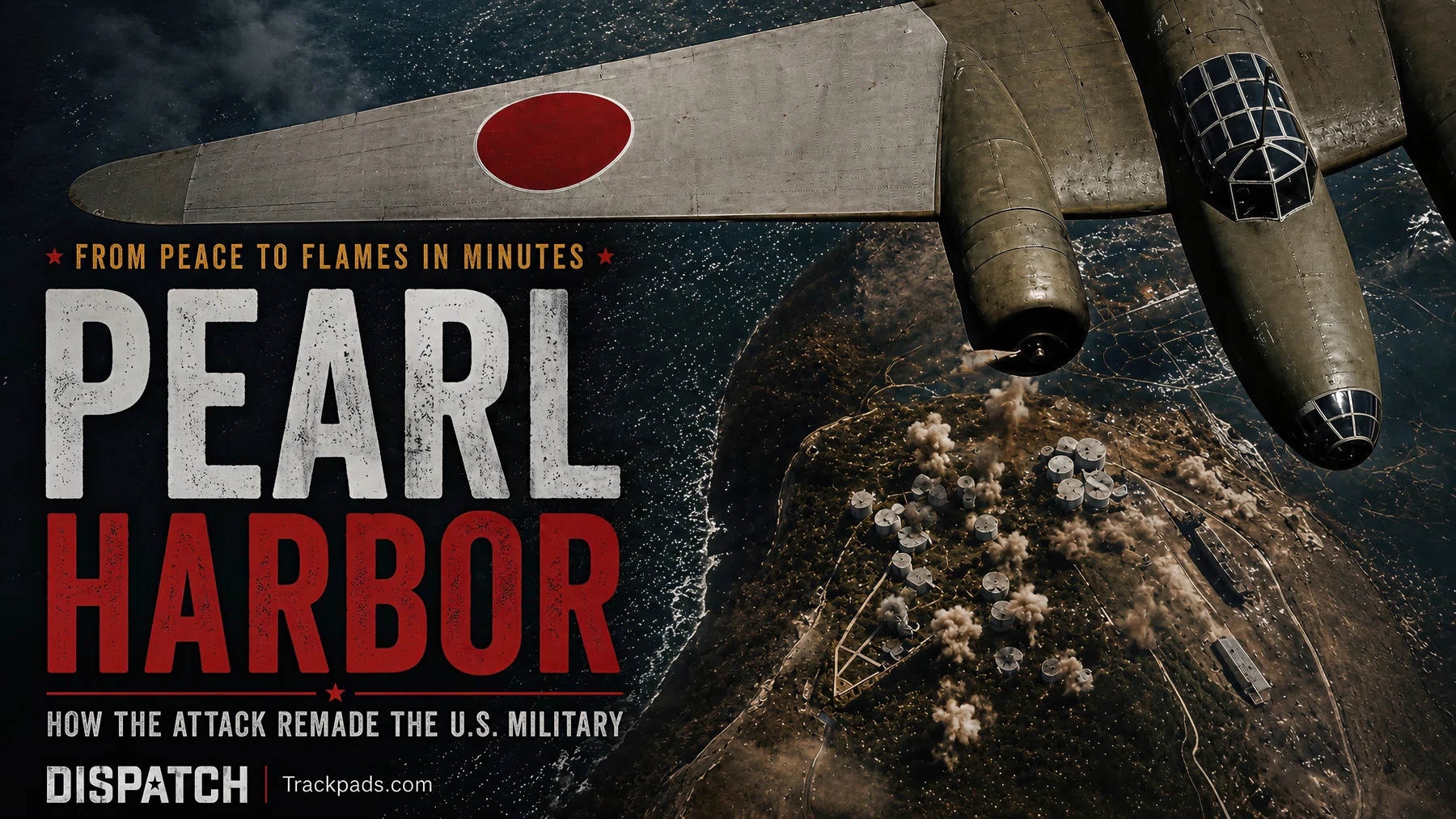
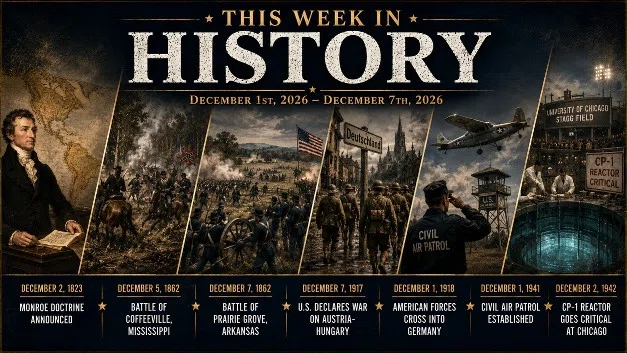
The same week on the calendar, but in a different year, brought one of the most searing dates in United States military history: December 7th, 1941.
Scope of this history
The Pearl Harbor attack with explicitly identified wider-Oahu context. Kaneohe Bay is not treated as a location inside Pearl Harbor.
More than Battleship Row
Japanese carrier aircraft attacked Pearl Harbor shortly before eight on the morning of December 7. The operation also struck military installations across Oahu. Ford Island, Hickam, Wheeler, Ewa, Kaneohe and other fields belonged to a connected assault intended to suppress aircraft as well as damage ships. The familiar view of burning battleships therefore represents only part of the battlefield. [1]
The attackers came from six aircraft carriers in two waves. Crews aboard damaged American ships continued fighting fires and manning weapons while further aircraft approached. Tennessee’s experience illustrates the persistence of that work: bomb damage and burning oil threatened the ship, but its crew’s efforts helped preserve it for repair and further service. Individual survival and the recovery of fighting power depended on actions taken during the attack, not only on later shipyard work. [2]
Airfields and exposed gun positions
At Hickam, attacks hit aircraft, hangars and barracks. Incoming B-17s added another dimension to the confusion because they were arriving from a long flight rather than taking off for a planned defense. The airfield history makes clear that facilities ashore were direct targets, not merely collateral damage from a harbor attack. Different bases faced different immediate conditions within the same morning’s assault. [3]
John W. Finn manned an exposed machine gun at Kaneohe Bay despite repeated wounds and returned after first aid to help rearm aircraft. His citation gives a definite place outside Pearl Harbor. The connection to this history is therefore wider-Oahu context, not a claim that he fought aboard a battleship or from Ford Island. Keeping that geography visible makes the overall account more accurate without diminishing the relationship. [4]
Keeping the ships alive and the guns working
Donald K. Ross worked in Nevada’s dynamo rooms despite heat, smoke and repeated loss of consciousness. Edwin J. Hill helped free the ship’s mooring lines and later died while working forward. Their citations describe different requirements for moving a damaged vessel: machinery had to function and the ship had to be released from its berth. The achievement was collective even when individual responsibilities were sharply separated. [5] [6]
On California, Jackson C. Pharris organized ammunition supply and rescue while dealing with flooding and fumes. Herbert C. Jones and Thomas J. Reeves helped keep ammunition moving after mechanical systems failed. Robert R. Scott remained at his air-compressor station as its compartment flooded. These records show how antiaircraft fire depended on men working out of sight below decks and carrying ammunition through dangerous spaces, not only on the gunners at their mounts. [7] [8] [9] [10]
Command and escape as ships were lost
Mervyn S. Bennion continued directing West Virginia after being mortally wounded. Franklin Van Valkenburgh and Isaac C. Kidd died aboard Arizona while carrying out their command responsibilities. Samuel G. Fuqua’s citation describes directing firefighting and rescue there, then supervising abandonment when the ship could no longer be saved. The duties changed as damage progressed: preserving a ship and saving its people could eventually demand different decisions. [11] [12] [13] [14]
Francis C. Flaherty and James R. Ward remained in Oklahoma’s turrets with lights so others could escape as the ship capsized. Peter Tomich stayed in Utah’s engineering spaces to secure boilers and ensure that personnel left their stations. These acts concerned the survival of other people when normal movement and power had failed. Their citations describe deliberate service at posts from which escape was becoming increasingly unlikely. [15] [16] [17]
Damage, recovery and ships that did not return
The surviving repair facilities, fuel stocks and carriers absent from the harbor mattered to the American recovery. The National Museum of the Pacific War’s salvage interpretation follows the work of divers and rescue crews after the air attack. Immediate devastation did not mean that every damaged ship was beyond repair or that all capacity for further operations had vanished. Salvage became a sustained engineering effort, not a quick reversal of the losses. [18]
Oklahoma demonstrates why raising a wreck should not be equated with restoring it to combat service. The ship was recovered but did not return to the fighting fleet. Arizona remained a wreck and a place of remembrance for the 1,177 sailors and Marines killed aboard it. The later return of other ships cannot cancel those permanent losses, and the different outcomes should not be compressed into a claim that the fleet was simply rebuilt unchanged. [19] [20]
December 8 and the meaning of the attack
Franklin Roosevelt addressed Congress on December 8 and requested a declaration of war against Japan. Congress approved it that day. His speech placed Hawaii within a series of attacks across the Pacific, making clear that the crisis extended beyond one naval base. The surviving speech is a record of political decision and public mobilization, distinct from the operational records describing how individual ships and stations experienced December 7. [21]
The attack connected a local military disaster to a global war, but the scale of its consequences should not erase the scale of the immediate human experience. The shipboard citations describe ammunition handling, engineering, command and rescue. The wider-Oahu history adds exposed airfields and shore personnel. Read together, these accounts explain both the breadth of the attack and the specific acts through which individuals tried to limit its destruction. [1]
Source notes
Sources and further reading
Institutional histories establish the battle, incident, or unit context. Linked Trackpads recipient records preserve the award citations used for individual actions. The connections below are a reviewed selection, not a complete historical roll of awards.
- Battlefield Oahu ↗
- USS Tennessee crew saves ship at Pearl Harbor ↗
- Hickam Field ↗
- John William Finn — preserved award citation
- Donald Kirby Ross — preserved award citation
- Edwin Joseph Hill — preserved award citation
- Jackson Charles Pharris — preserved award citation
- Herbert Charpoit Jones — preserved award citation
- Thomas James Reeves — preserved award citation
- Robert Raymond Scott — preserved award citation
- Mervyn Sharp Bennion — preserved award citation
- Franklin van Valkenburgh — preserved award citation
- Isaac Campbell Kidd — preserved award citation
- Samuel Glenn Fuqua — preserved award citation
- Francis Charles Flaherty — preserved award citation
- James Richard Ward — preserved award citation
- Peter Tomich — preserved award citation
- The Salvage — USS Arizona Hatch ↗
- USS Oklahoma Memorial ↗
- USS Arizona Memorial ↗
- Joint Address to Congress Leading to a Declaration of War Against Japan ↗
Dated Historical Context
A RECORDED MOMENT IN HISTORY
Attack on Pearl Harbor
The same week on the calendar, but in a different year, brought one of the most searing dates in United States military history: December 7th, 1941. That morning, Japanese carrier-based aircraft struck the Pacific Fleet at Pearl Harbor and airfields across Oahu, seeking to cripple American sea power in a single coordinated blow. Battleships were sunk or battered at their moorings, aircraft burned on the ground, and thousands of sailors, soldiers, and civilians were killed or wounded in a matter of hours. The shock of the attack ended any remaining debate about American involvement in the global war. Within days, the United States was formally at war with Japan, Germany, and Italy, and the armed forces began a rapid expansion that would carry soldiers, sailors, airmen, and Marines to every major theater. December 7th, 1941, remains a touchstone for discussions of readiness, surprise, and national resolve.
Read the complete weekly DispatchTrackpads Source Register