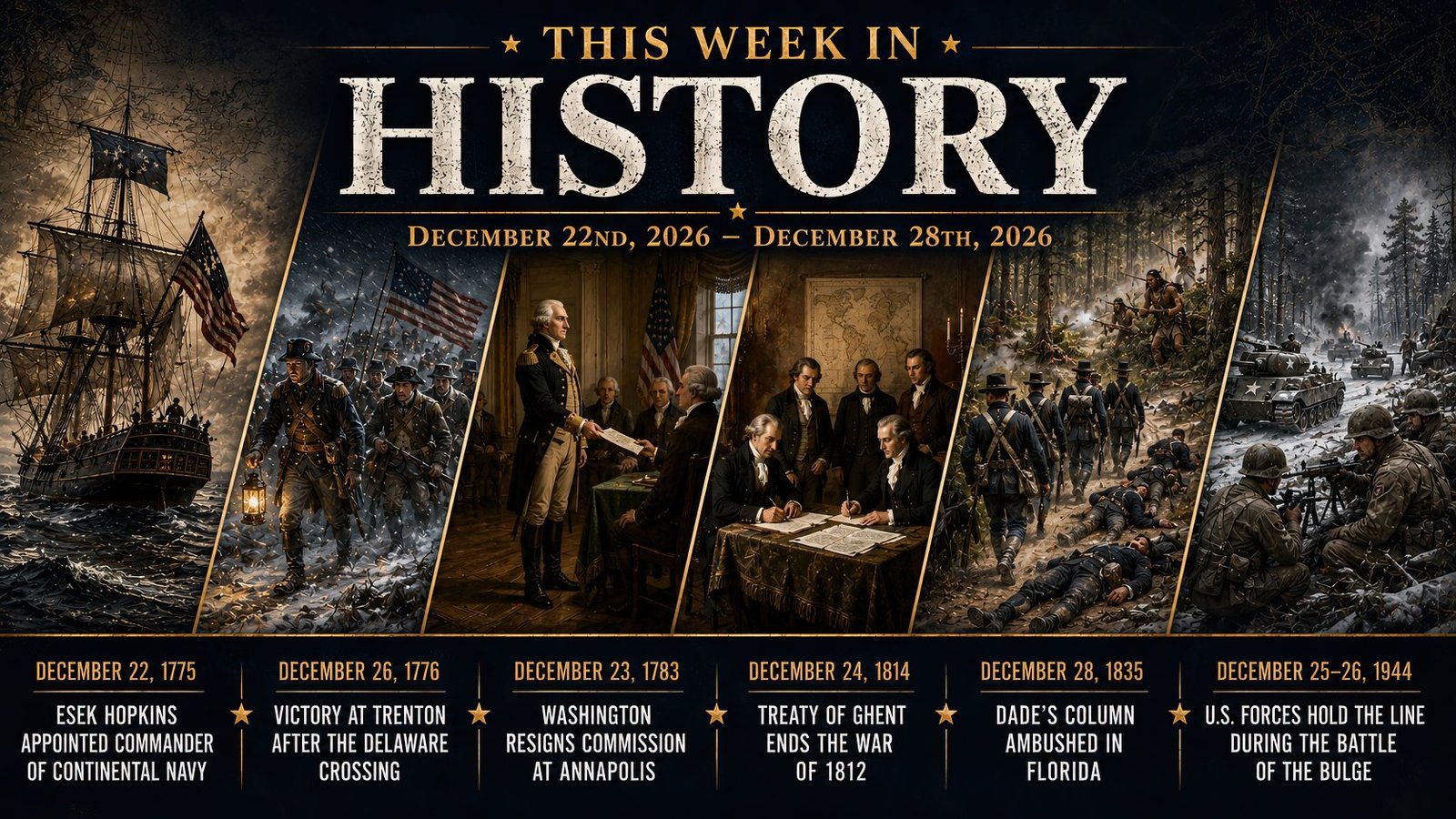
This Week in History · December 22, 2026
68 Populated Entries
Named operations, planning, execution, command, and operational results.
Military Operations
Every result opens a permanent subject record with its reference context and connected Dispatch coverage. Filter by record type, editorial collection, or a word in the entry.
68 entries found.
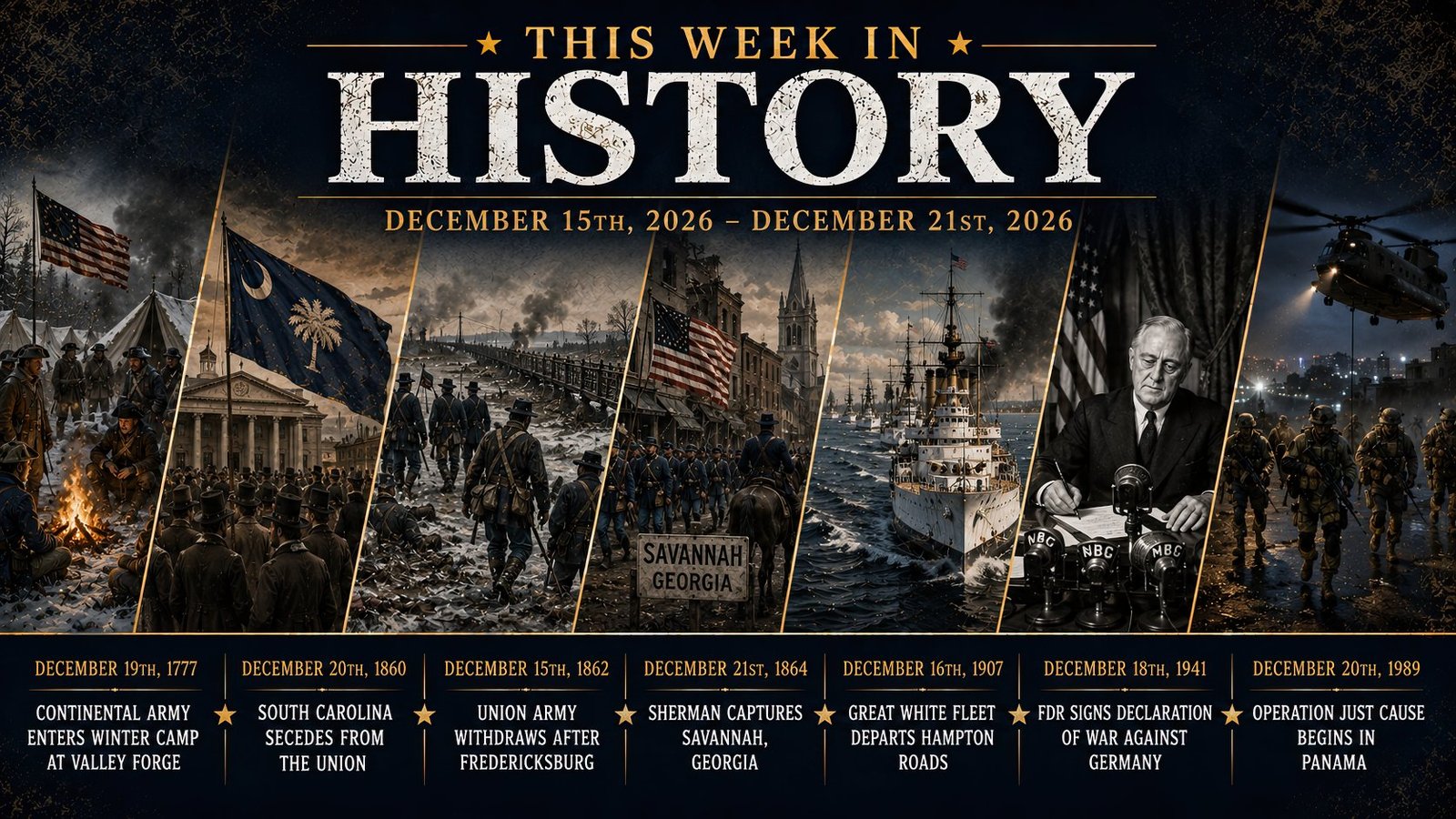
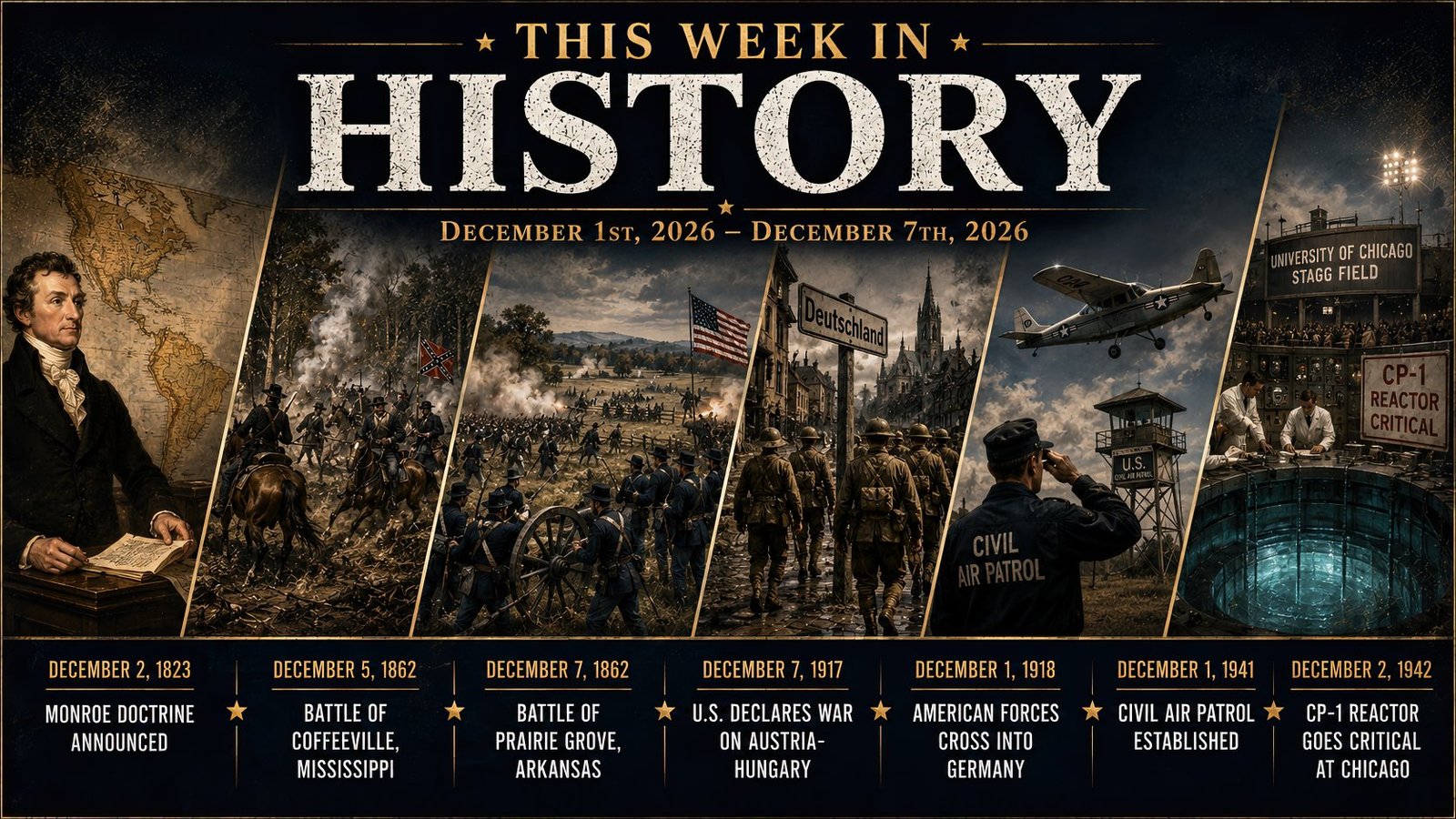
Less than a year later on the calendar, December 1st, 1918, American troops of the newly designated occupation forces began crossing into Germany itself.
A story of high-tech American armor meeting Soviet-designed tanks in the desert and how it reshaped modern ground warfare.
A story of a frozen fighting withdrawal and how it reshaped the war in Korea.
An unfolding story of carrier decks, radio reports, and long-range strikes that reshaped the Pacific war before the fleets ever met face to face.
An air-sea clash where radar, training, and discipline turned a desperate carrier defense into a one-sided hammer blow that reshaped the Pacific war.
Two decades later, American troops faced a different kind of threat while on peacekeeping duty in Lebanon.
In the early Cold War, the contest for Berlin became a test of whether the Western Allies could sustain a free city deep inside the Soviet occupation zone without surrendering to pressure.
On November 10th, 1775, the Continental Congress authorized the raising of two battalions of Marines to serve as soldiers at sea.
A story of a shattered defensive line, a race against explosives, and the one intact bridge that cracked open the last barrier into Germany.
A story of a shattered defensive line, a race against explosives, and the one intact bridge that cracked open the last barrier into Germany.
In October 1962, reconnaissance photographs revealed Soviet ballistic missiles being installed in Cuba, within range of American cities and bases.
On this date, the President was briefed on photographs taken two days earlier by a high-altitude reconnaissance flight, revealing that the Soviet Union was secretly installing medium-range nuclear missiles in Cuba.
A story of a tense naval cordon, nuclear brinkmanship, and how one week at sea pushed the Cold War to the edge and back again.
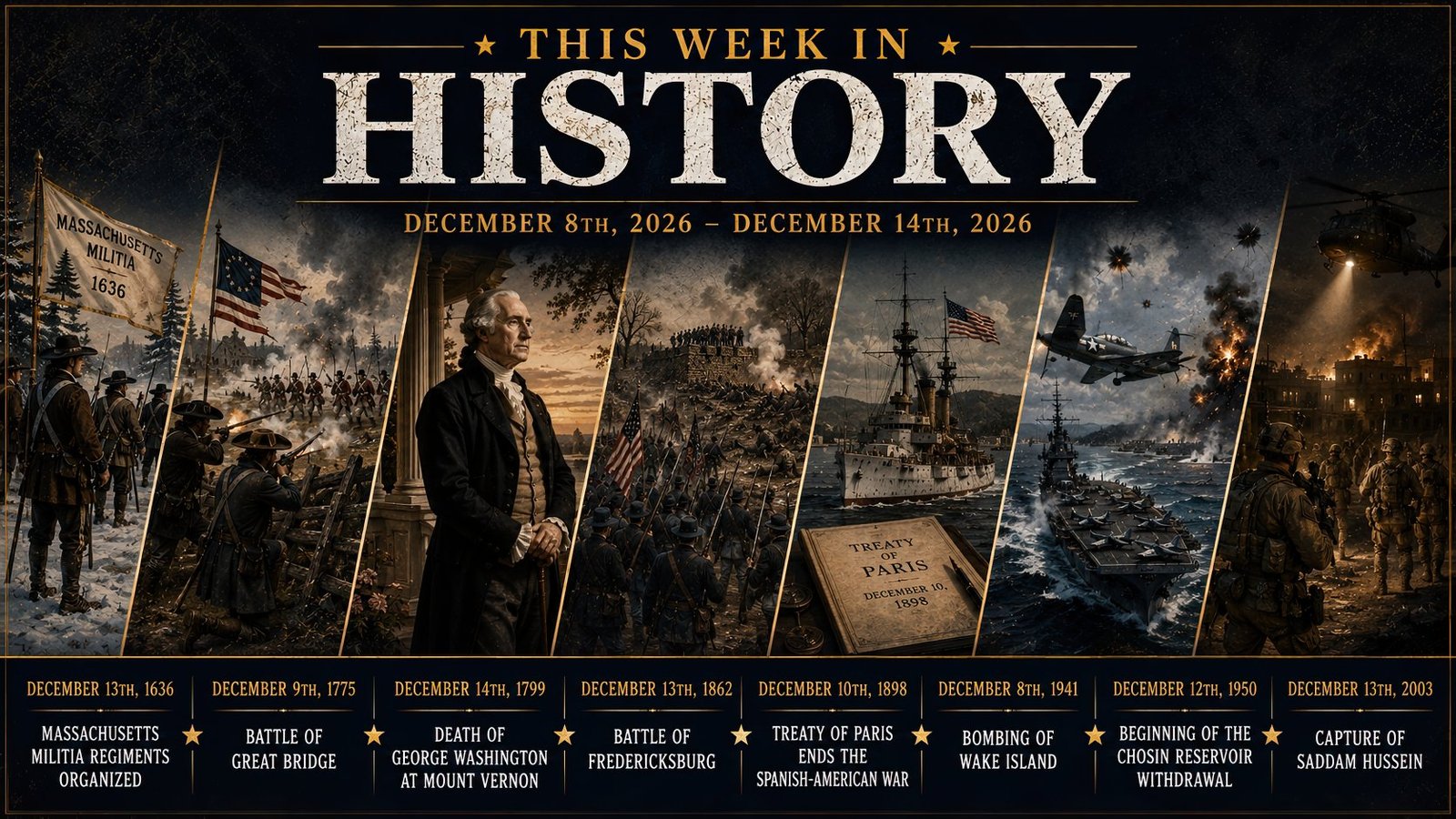
On December 14th, 1799, George Washington died at his home at Mount Vernon, closing the life of the commander who had led the Continental Army and then served as the first president.
A story of a long-shot bombing raid, a borrowed carrier deck, and how one gamble shifted the course of a global war.
Barely four months after the attack on Pearl Harbor, the United States planned a strike to carry the war to the Japanese home islands. On April 18th, 1942, sixteen B-25 medium bombers led by Lieutenant Colonel James Doolittle took off from the carrier USS Hornet in the Pacific, a feat never attempted before with aircraft of that size. Spotted early by enemy patrol vessels, the task force launched the bombers farther from Japan than planned, forcing the crews to stretch their fuel to the limit.
On this date in the Revolutionary War, a young Continental Army officer named Nathan Hale was hanged by the British in New York after being captured while gathering intelligence behind enemy lines.
A year after Tehran, another kind of reach took shape when Boeing B-29 bombers lifted off from freshly built airfields in the Mariana Islands for the first raid on Tokyo from that direction.
The final events in this week’s window unfolded in the shifting landscape of the post–Cold War world. In the early hours of August 2nd, 1990, Iraqi armored and mechanized units crossed the border into Kuwait, quickly overwhelming the small country’s defenses and seizing its capital. The invasion stunned the region and set off a wave of diplomatic and military responses.
On February 19th, 1945, the beaches of Iwo Jima filled with landing craft as Marines of the 4th and 5th Marine Divisions came ashore under fire. The island was small but strategically important, lying between the Marianas and the Japanese home islands and hosting airfields that could threaten American bombers.
Just two weeks after the attack on Pearl Harbor, Japanese forces struck another major blow by landing large invasion forces along the shores of Lingayen Gulf in northern Luzon on December 22nd, 1941.
The B-24 shook as it skimmed over the Romanian countryside, treetops flashing beneath the wings and church steeples knifing up toward the formation. Ahead, the sky over Ploesti was already boiling with black bursts of antiaircraft fire and thick columns of oily smoke. Colonel John Riley Kane, commanding the third element of heavy bombers in a massive low-level strike, peered through the haze and realized something was wrong. The main force that should have been ahead of him was gone.
In the shadow of the Cuban Missile Crisis, another October date marked a different kind of strategic turning point.
On January 9th, 1945, American forces surged ashore along the beaches of Lingayen Gulf on the island of Luzon in the Philippines. Supported by a powerful naval and air armada, soldiers of the United States Sixth Army waded through surf under the threat of mines, artillery, and kamikaze attacks that had already cost the fleet dearly during the approach.
Related Dispatch
These current Dispatch articles connect directly to records in the Military Operations directory.