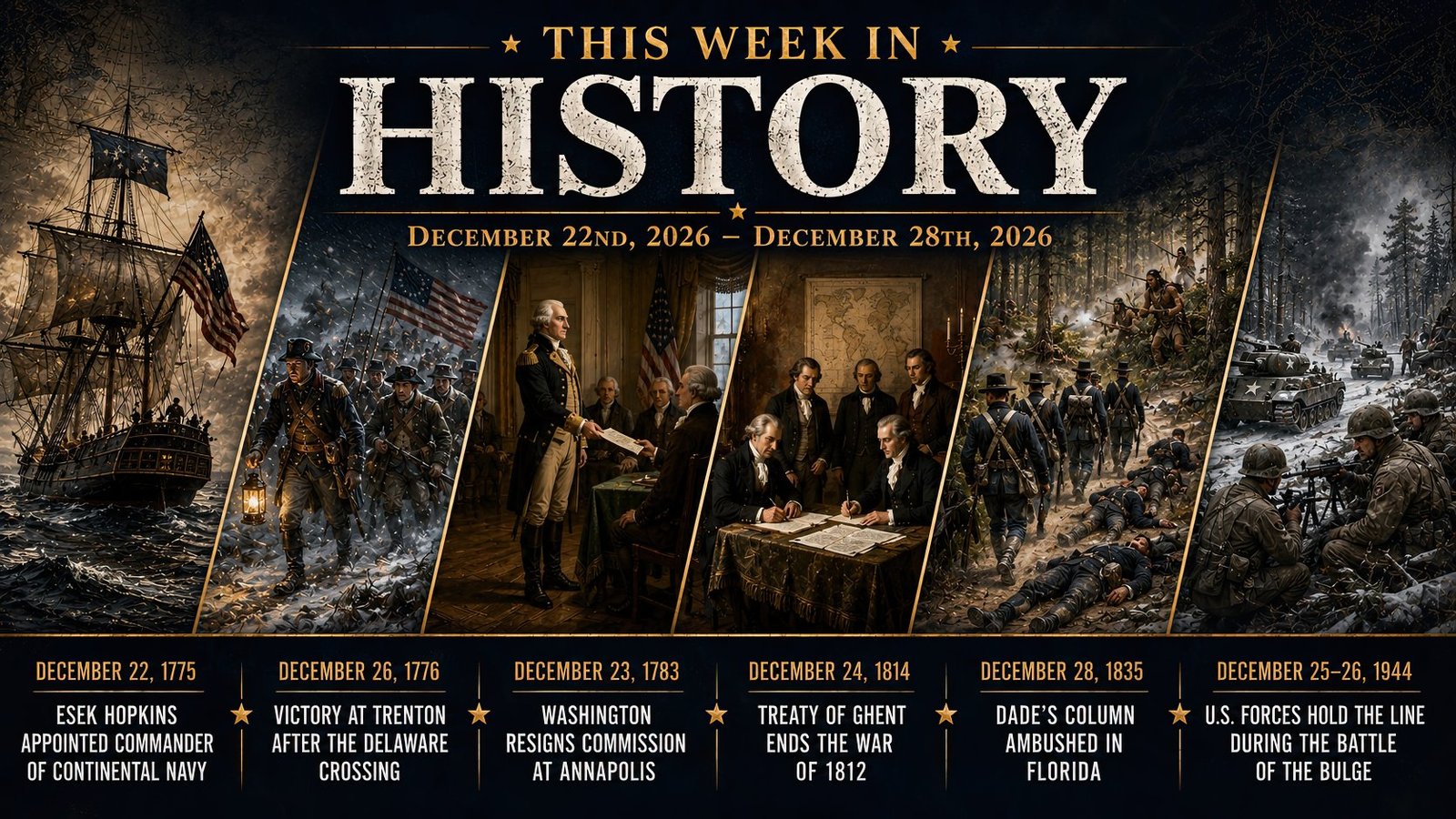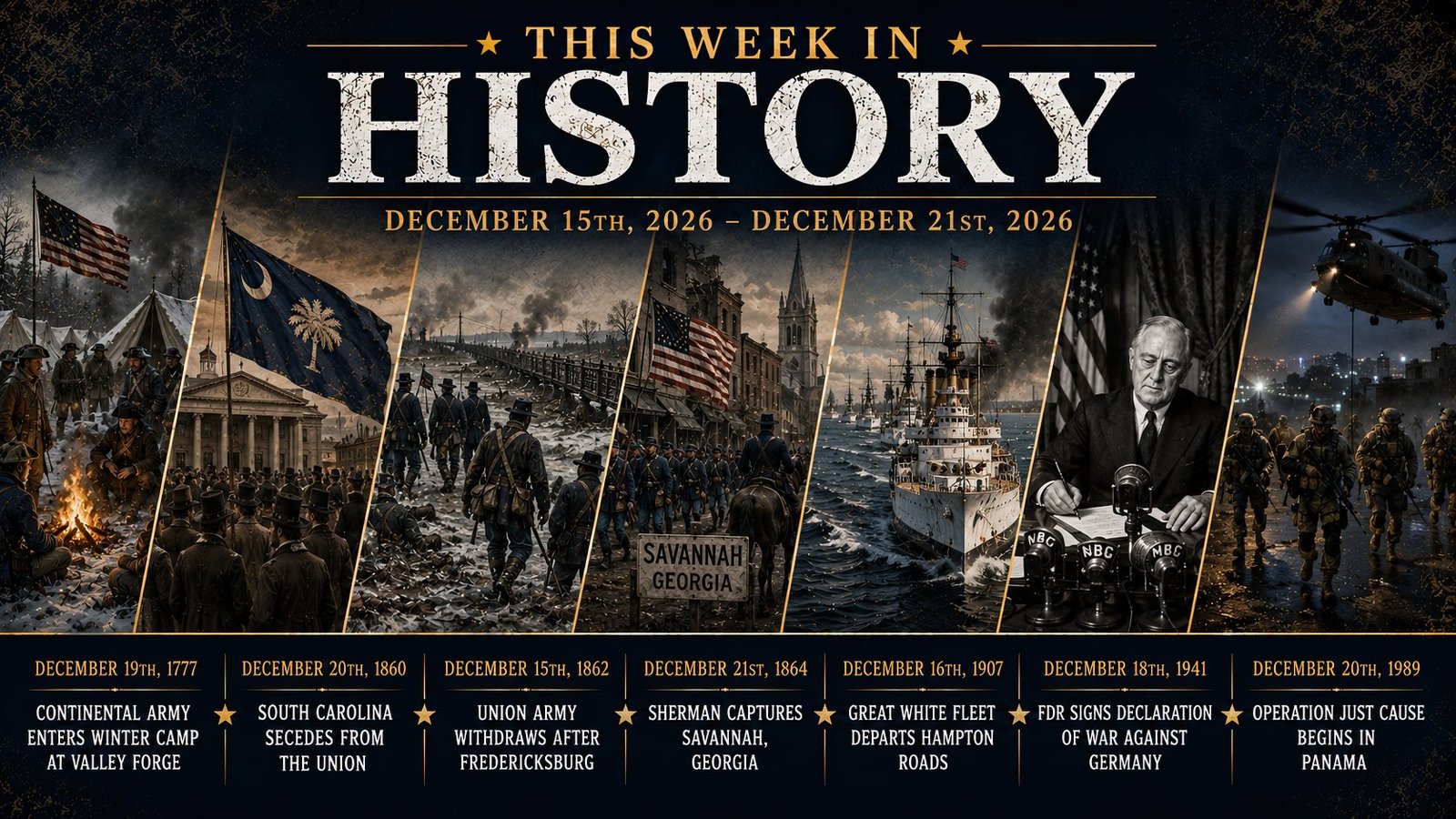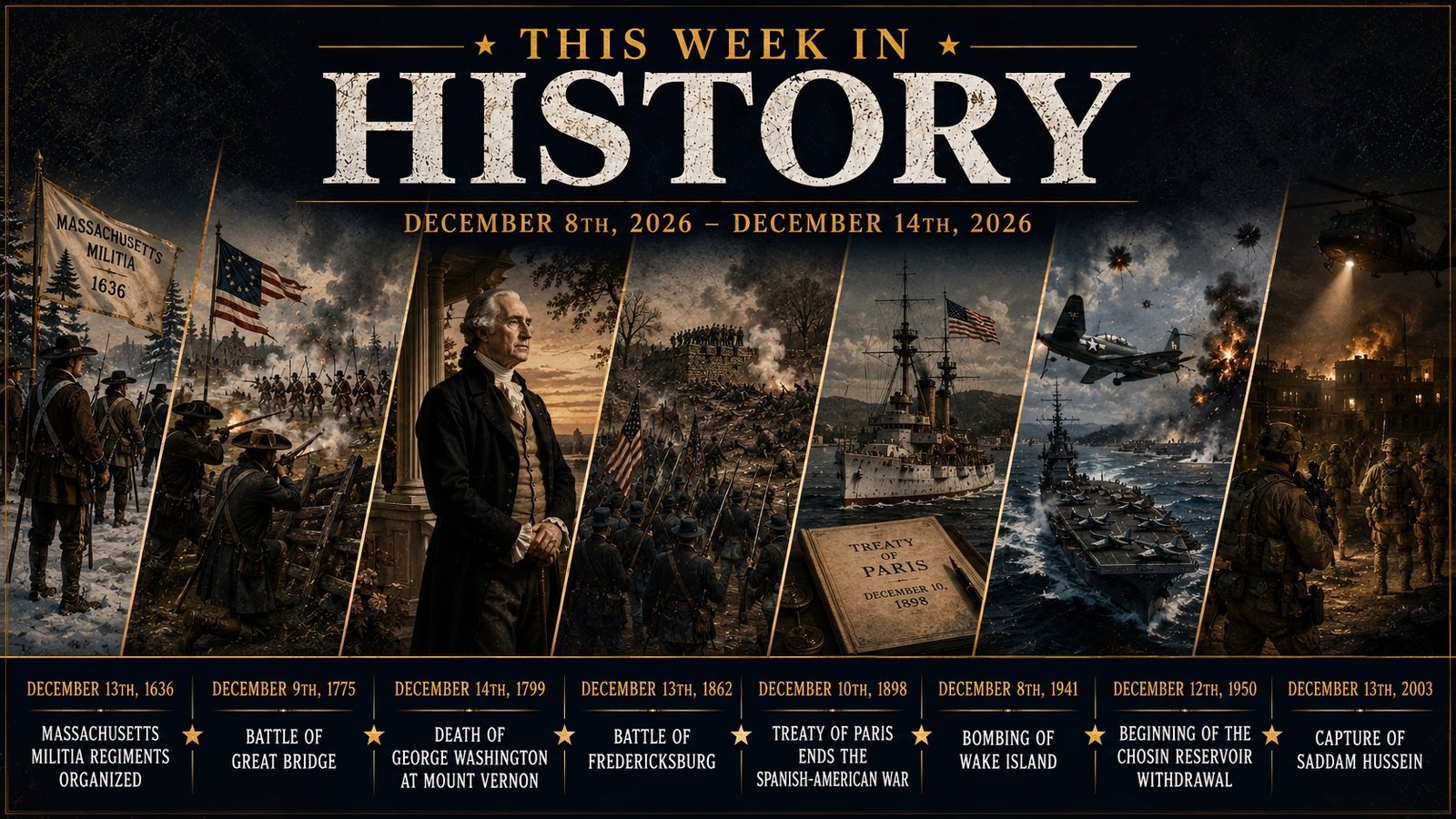
This Week in History · December 29, 2026
489 Populated Entries
Conflicts and historical periods that shaped military institutions and warfare.
Wars & Historical Eras
Every result opens a permanent subject record with its reference context and connected Dispatch coverage. Filter by record type, editorial collection, or a word in the entry.
489 entries found.
More than a century after the Civil War, United States troops were again fighting over steep slopes, this time in the A Shau Valley of Vietnam. From May 10th through May 20th, 1969, airborne infantry and supporting units battled to seize Hill 937, a thickly forested height that soldiers nicknamed “Hamburger Hill” because of the grinding nature of the combat.
While Dutch Harbor burned, the decisive blows of that wider Japanese plan were being struck far to the south. On June 4th, 1942, United States Navy carriers Enterprise, Yorktown, and Hornet launched waves of torpedo planes and dive bombers against a powerful Japanese carrier force near Midway Atoll. Early attacks by torpedo squadrons suffered terrible losses, but they drew enemy fighters and disrupted Japanese flight decks.
Even as Corregidor fell, the fortunes of the Pacific war were beginning to shift at sea. In early May 1942, American and Japanese carrier groups maneuvered through the Coral Sea, each searching for the other’s position with aircraft rather than surface scouts. On May 8th, following the sinking of the light carrier Shoho the day before, the main carrier duel unfolded.
On November 11th, 1943, carrier task forces of the United States Navy launched bold air strikes against the heavily defended Japanese naval base at Rabaul on New Britain.
As the Second World War entered its middle years, senior Allied leaders needed to decide where to strike next and how to balance competing priorities. On January 14th, 1943, President Franklin D. Roosevelt and Prime Minister Winston Churchill began meeting in Casablanca, Morocco, accompanied by senior American and British military planners.
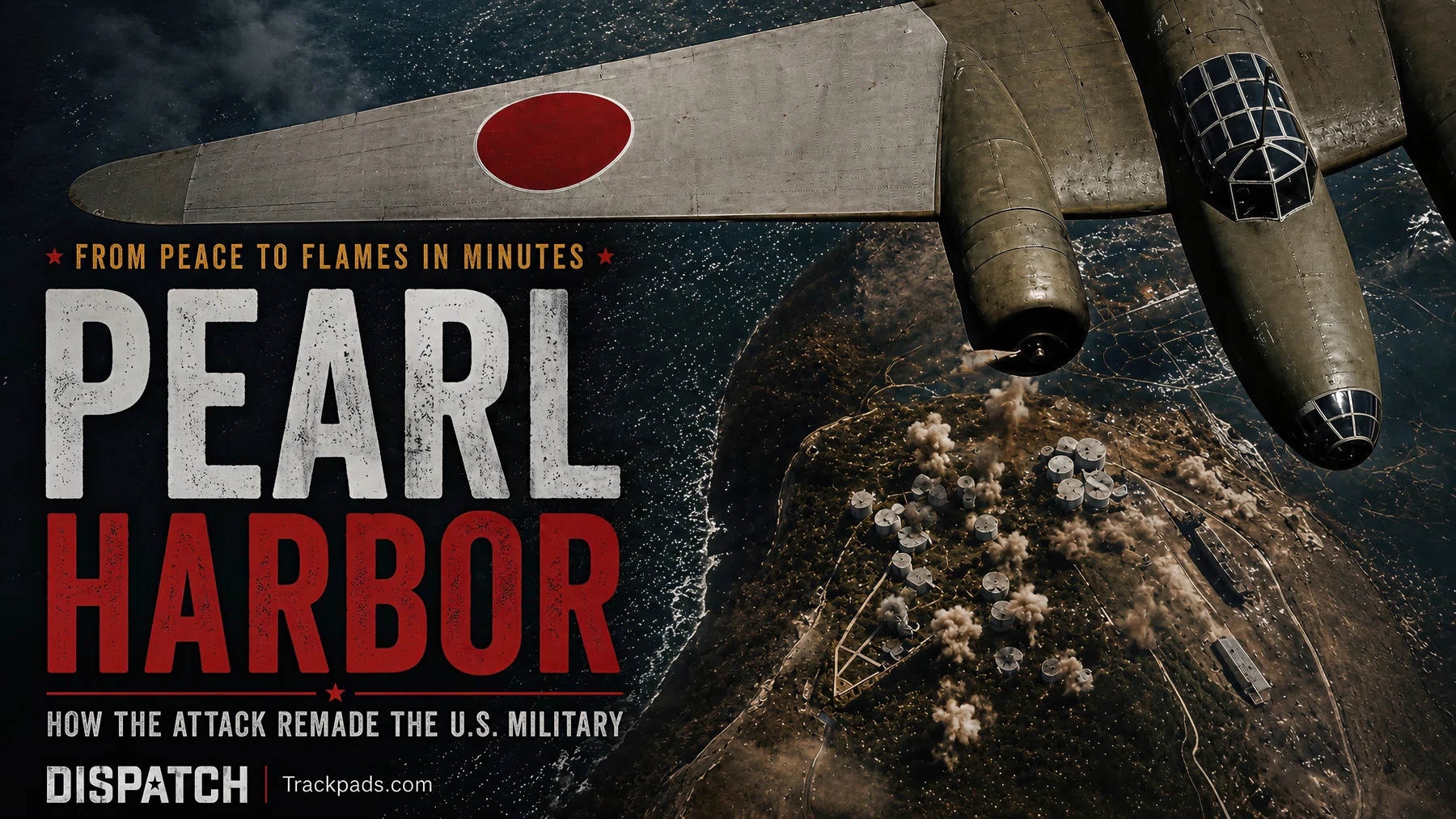
The first explosions rolled across Pearl Harbor like distant thunder, then slammed into the harbor with terrifying clarity. On the repair ship USS Vestal, moored outboard of the battleship USS Arizona, Commander Cassin Young felt his ship shudder as bombs found their mark up and down the fleet. Men sprinted for their battle stations, the air already thick with smoke, the rising whine of diving aircraft cutting through shouted orders and alarm bells.
In the early Cold War, the United States sought more powerful nuclear weapons to stay ahead in the arms race. On March 1st, 1954, at Bikini Atoll in the Pacific, the United States conducted the Castle Bravo test, the first dry-fuel thermonuclear device in its series. The blast was far more powerful than designers anticipated, yielding many megatons of explosive force and producing a massive fireball and mushroom cloud.
Union attacks on September 29 broke parts of Richmond’s outer defenses and brought Black troops into a costly assault at New Market Heights. The capture of Fort Harrison survived Lee’s counterattack, but the advance did not take Richmond.
Read Entry →Person · 2026-07-06Charles E. MowerThe jungle ravine near Capoocan, on the island of Leyte, funneled sound like a drum. Machine guns hammered from the slopes, echoing off the trees. A thin stream cut the bottom of the gulch, its surface slapped into white splashes as bullets stitched across the water. Sergeant Charles E. Mower, just nineteen years old, stood in that stream with his squad of Company A, 34th Infantry Regiment, advancing into the teeth of a Japanese defense on a November day in 1944.
The crisis in north China produced several connected operations: defense of the foreign legations, the unsuccessful Seymour expedition, fighting around Tientsin, and the August advance on Peking. Their recipients did not all fight at the same place or on the same day.
Read Entry →Historical Event · 2026-12-08Chosin Reservoir survivors reach HungnamIn the winter of 1950, United Nations forces in northeast Korea found themselves enveloped by massive Chinese attacks around the Chosin Reservoir.
On May 11, 1898, crews from Marblehead and Nashville worked close to the Cuban shore under fire to cut submarine cables. The operation damaged communications but did not establish complete isolation of the port.
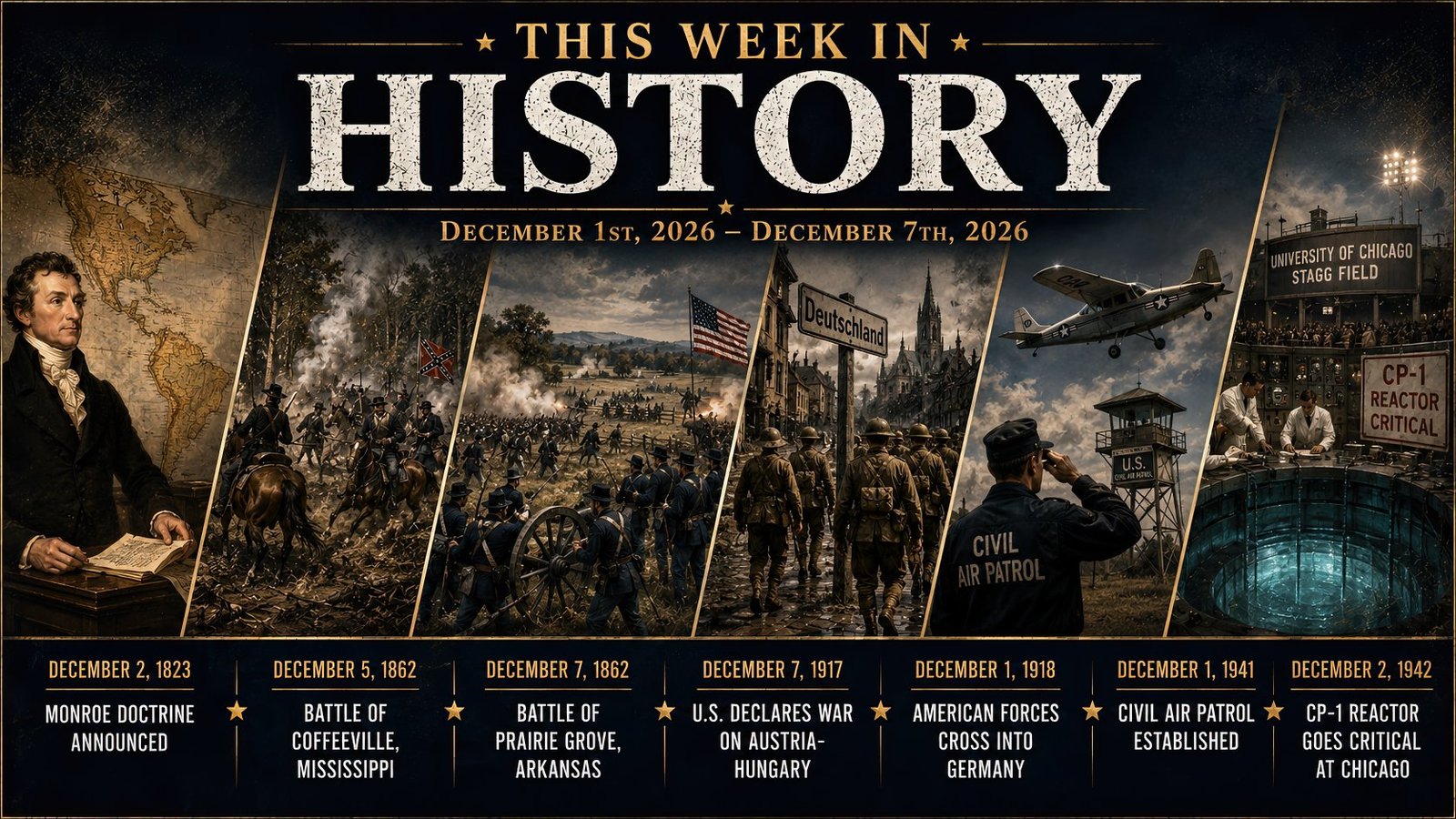
Read Entry →Historical Incident · 2026-12-01Civil Air Patrol establishedOn December 1st, 1941, just days before the attack on Pearl Harbor, the United States government formally created the Civil Air Patrol as a nationwide volunteer aviation organization.
At Groton, Connecticut, the United States Navy stepped into a new era when USS Nautilus, the world’s first nuclear-powered submarine, was commissioned on September 30th, 1954.
By the late nineteenth century, the United States stood on the edge of a new role beyond its continental borders. After the explosion of the battleship Maine in Havana harbor and rising tensions over Cuba’s rebellion against Spanish rule, American public opinion and political pressure built toward intervention. Naval forces were already moving, and a blockade of Cuba had begun on April 21st.
As the deadline for Iraqi forces to leave Kuwait approached in the winter of 1991, the United States confronted a crucial decision. On January 12th, 1991, after intense debate, Congress passed a resolution authorizing the use of military force to uphold United Nations demands and drive Iraqi troops out of Kuwait. The vote affirmed the president’s ability to lead a coalition into combat but also underscored the constitutional role of the legislature in questions of war and peace.
Finally, on August 13th, 1961, residents of West Berlin awoke to find barbed wire barriers and armed guards cutting across streets and neighborhoods as East German authorities began constructing what would become the Berlin Wall. For the American garrison and its British and French partners, the sudden division of the city turned familiar patrol routes and crossing points into potential flashpoints.
On this day the Continental Army trudged into winter quarters at Valley Forge, west of Philadelphia, after a bruising campaign season.
Early in the Revolutionary War, the Continental Congress desperately needed gunpowder, cannon, and naval stores to keep its rebellion alive. On March 3rd, 1776, a small American squadron under Esek Hopkins appeared off New Providence in the Bahamas, then a British-held island rich in military supplies. Continental Marines and sailors went ashore, captured the local forts, and hauled away barrels of powder and ordnance that would feed the young war effort.
Four years later to the week, another British army marched out to surrender, this time at Yorktown, Virginia.
In South Vietnam, the war that involved American advisers and support was as political as it was military.
In the late summer of the Revolutionary War, General George Washington issued a general order at his headquarters in Newburgh, New York, establishing a new distinction for enlisted soldiers and noncommissioned officers. The Badge of Military Merit took the form of a heart made of purple cloth, to be worn over the left breast by those who had performed “any singularly meritorious action” in the service of the Continental Army.
On this date, the Second Continental Congress voted to adopt the New England militia forces already besieging British-held Boston and to form them into a Continental Army. Before this decision, the men surrounding Boston answered primarily to their individual colonies, making coordination and supply uneven and uncertain.
When the Continental Congress resolved on this date to outfit a small fleet to intercept British supply ships, it took a cautious but decisive step toward creating a national sea service.
Related Dispatch
These current Dispatch articles connect directly to records in the Wars & Historical Eras directory.