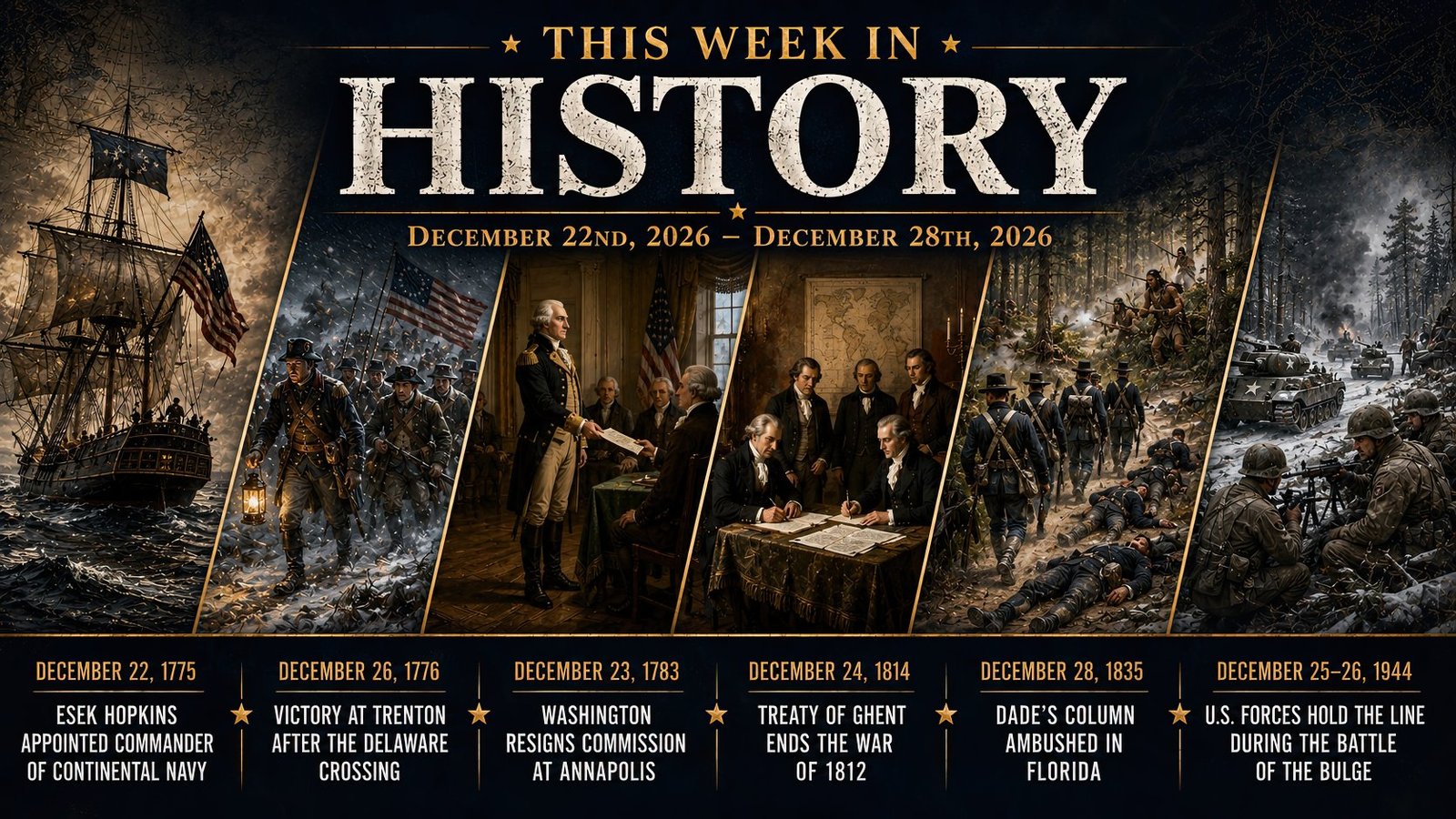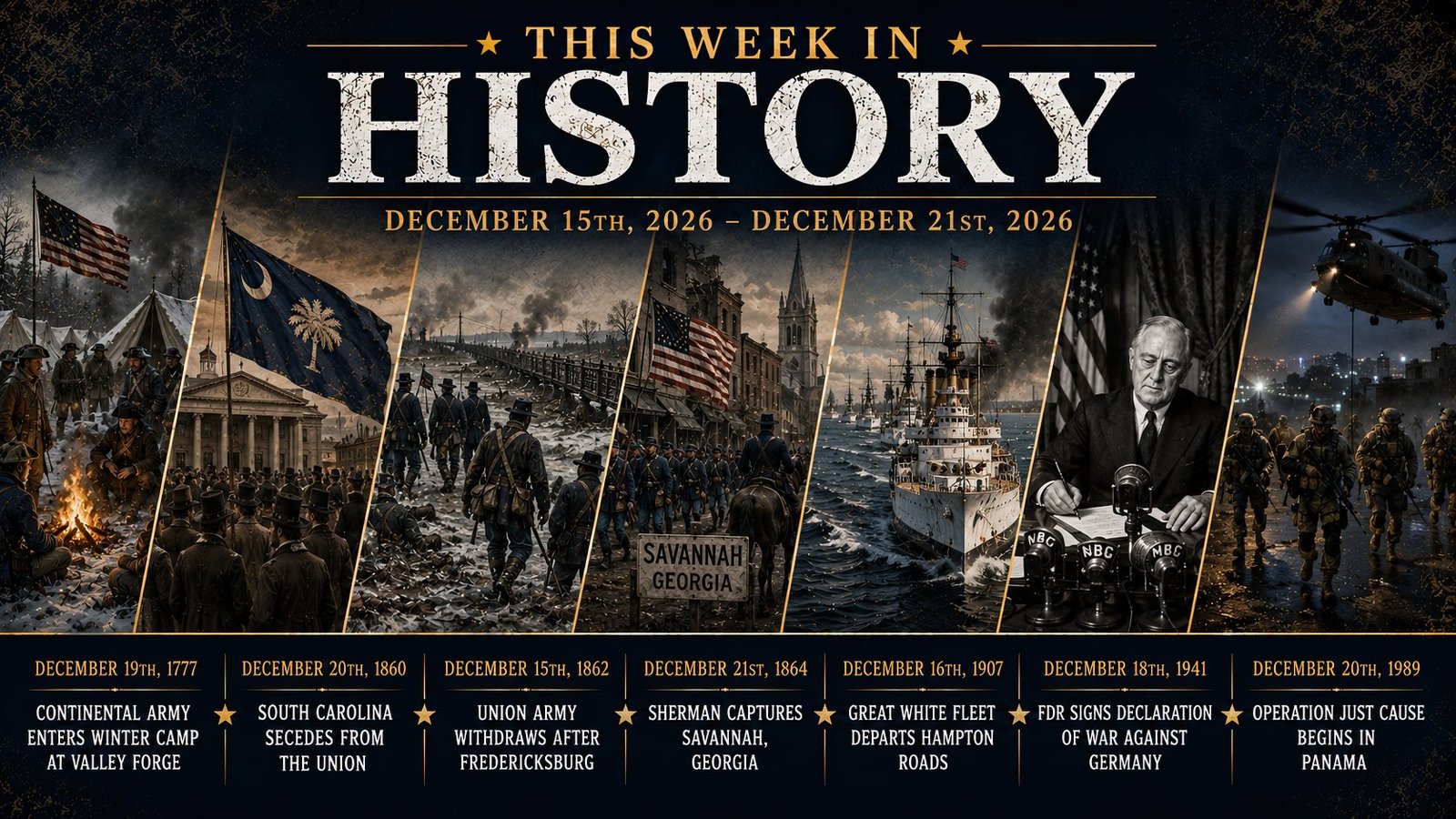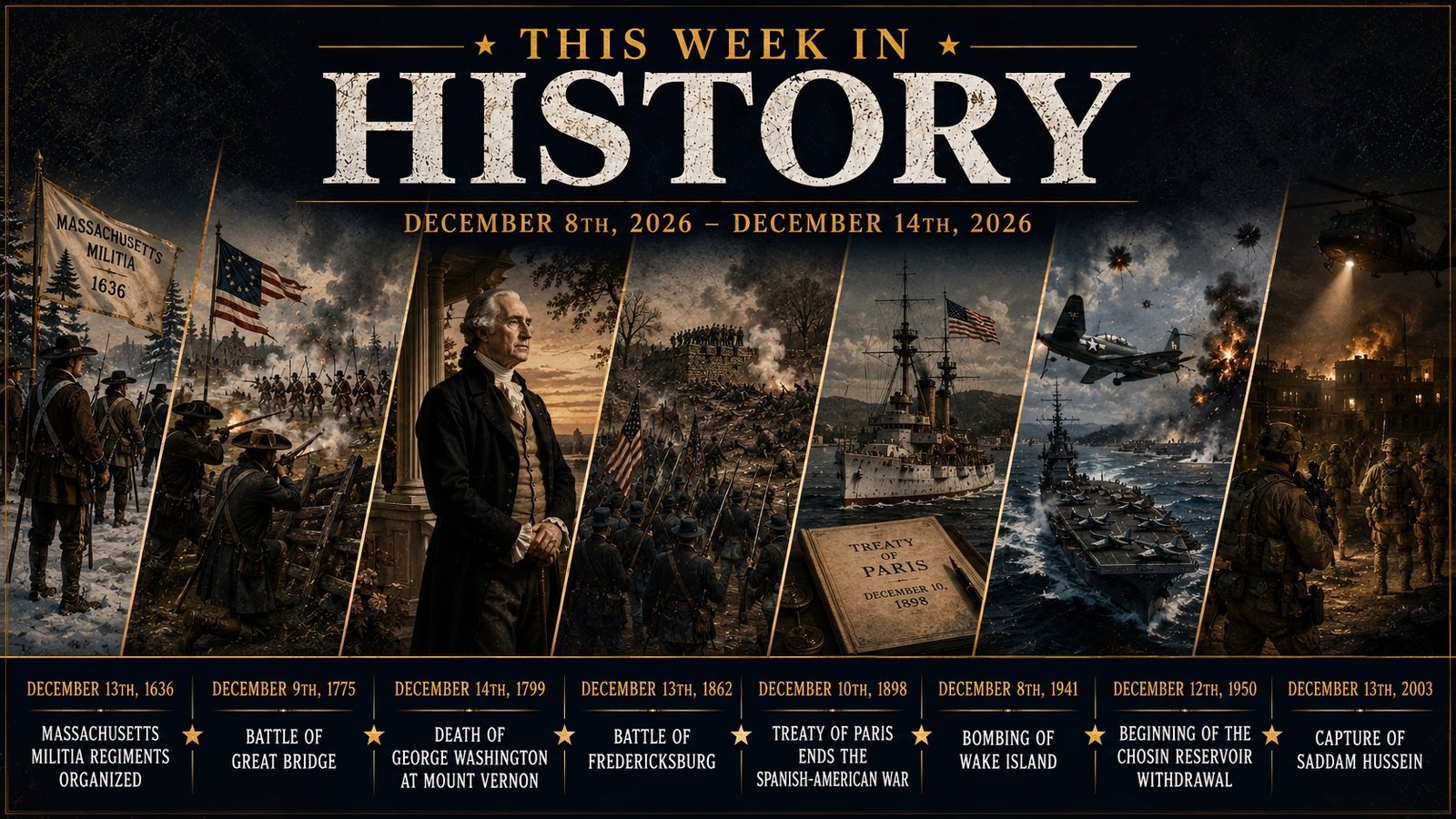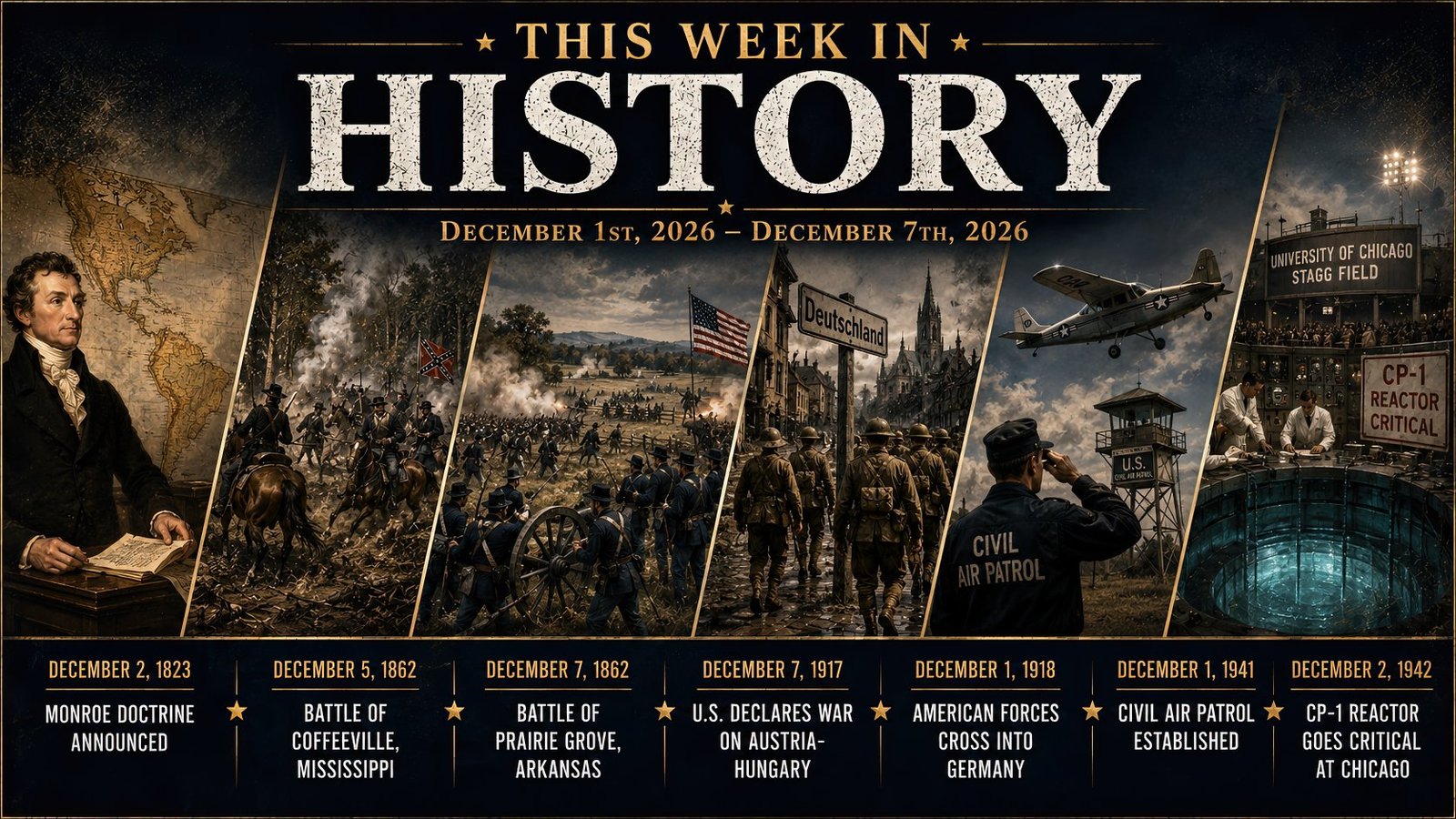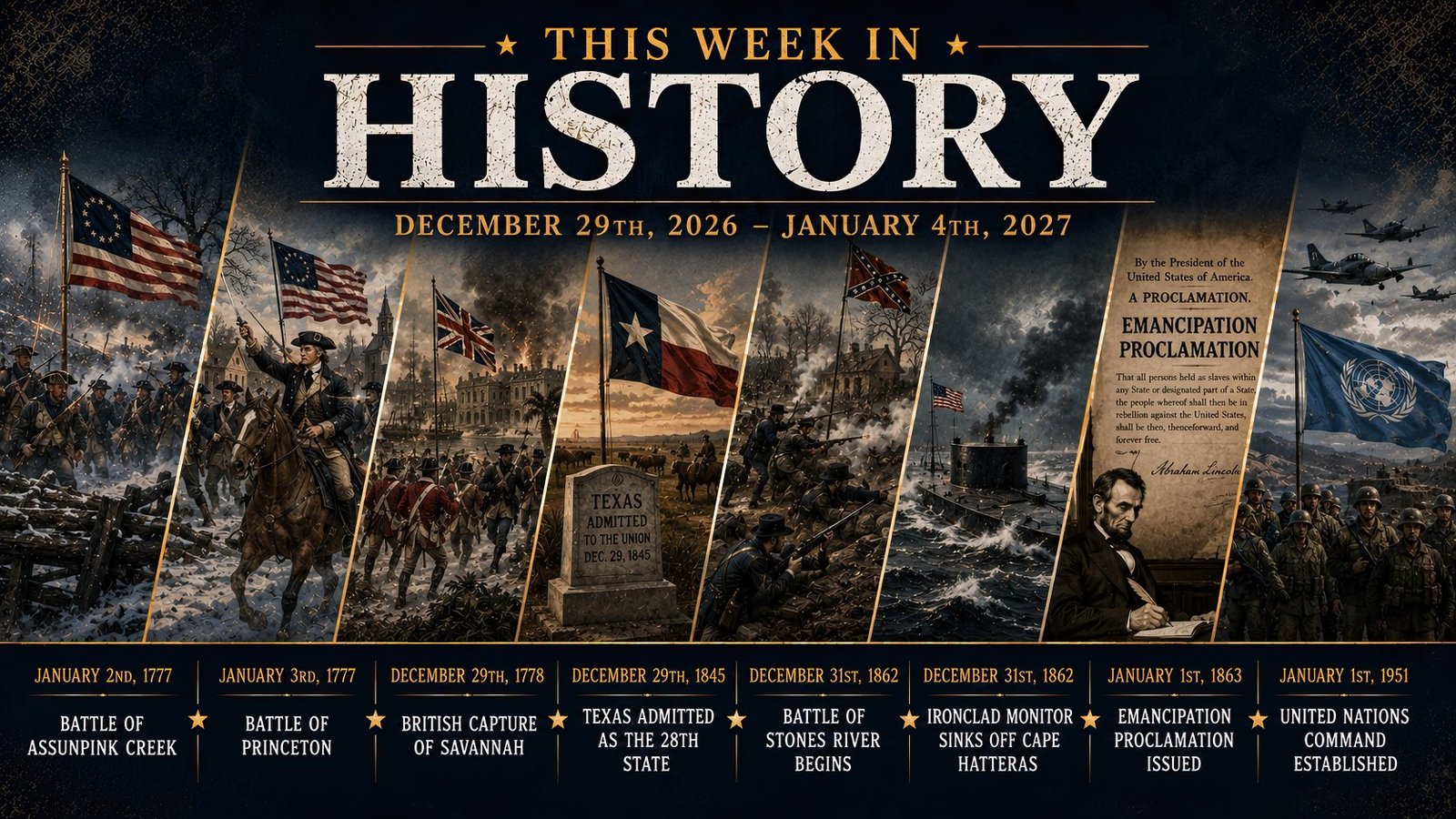
This Week in History · December 29, 2026
489 Populated Entries
Conflicts and historical periods that shaped military institutions and warfare.
Wars & Historical Eras
Every result opens a permanent subject record with its reference context and connected Dispatch coverage. Filter by record type, editorial collection, or a word in the entry.
489 entries found.
Two days after the blockade began, American and British planners put into motion a response that few had imagined on such a scale: they would feed and fuel an entire city by air. On June 26th, 1948, transport aircraft began flying regular supply missions into Berlin, using narrow air corridors agreed upon at the end of World War II.
Three years after the end of World War II in Europe, the uneasy coalition that had defeated Nazi Germany fractured sharply over the future of occupied territories. On June 24th, 1948, Soviet authorities cut road, rail, and canal traffic into the Western sectors of Berlin, effectively trying to starve out the American, British, and French presence deep inside their occupation zone.
In the early hours of May 12th, 1949, Soviet authorities lift the land and water blockade that has cut West Berlin off from surrounding territory for nearly a year. Since the previous summer, American and British aircrews have flown round-the-clock missions to deliver food, coal, and other essentials to the isolated city. The airlift becomes a massive logistical effort, with aircraft landing and taking off every few minutes in carefully timed sequences.
On February 12th, 1809, Abraham Lincoln was born in a Kentucky log cabin, long before he would become the wartime president who guided the Union through the Civil War. For military history, Lincoln’s significance lies in the way he grew into the role of commander in chief of an enormous citizen army. During four years of brutal fighting, he wrestled with strategy, replaced generals, and learned to balance political pressures with the realities of the battlefield.
In the gray dawn of May 12th, 1864, Union soldiers surge through fog and rain toward a bulging section of Confederate works near Spotsylvania Court House known as the Mule Shoe. What follows is one of the most brutal episodes of the Civil War, later remembered as the Bloody Angle. For nearly twenty hours, men on both sides fire from opposite sides of the same log parapets, stab with bayonets, and club with musket stocks as trees are splintered by constant musketry and artillery.
In the early morning hours, Confederate batteries around Charleston harbor opened fire on Fort Sumter, a brick fortification held by a small United States Army garrison. The standoff over supplies and sovereignty that had simmered through the winter suddenly turned into open combat. For more than a day, shells and heated shot crashed into the fort’s walls and buildings, setting fires and forcing the defenders to husband their ammunition carefully.
As the Vietnam War dragged on, the sustained air campaign against North Vietnam weighed heavily on pilots, ground crews, and the civilians beneath the bombs.
That same date, three years and an ocean away from Hampton Roads and decades after Veracruz, marked one of the most destructive air raids in history. On the night of March 9th, 1945, United States Army Air Forces B-29 bombers carried out a low-level incendiary attack against Tokyo, dropping a mix of bombs designed to ignite the city’s tightly packed, largely wooden neighborhoods.
At the dawn of a new century, American forces operating far from home faced a different kind of threat.
In the depths of the Great Depression, military service and economic hardship collided on the streets of the nation’s capital. World War I veterans had marched on Washington to demand early payment of bonuses promised for their wartime service, setting up sprawling camps along the Anacostia River and near the Capitol. As the standoff dragged on and tensions rose, the government ordered the camps cleared.
On December 1st, 1950, in the mountains of North Korea near the Chosin Reservoir, United States Marines and attached soldiers were fighting a different kind of battle for survival.
On this late autumn day, the last British troops finally departed New York City, ending seven years of occupation of the largest port in North America.
On a gray September morning, British warships and transports massed off the east side of Manhattan and began pounding the American positions at Kip's Bay.
Two years later, during the same war, British forces marched on Washington after defeating American troops at the Battle of Bladensburg. Poorly coordinated regulars and militia units could not stop the advance, and the road to the capital lay open. British troops entered the city and set fire to key government buildings, including the Capitol and the President’s Mansion, while many civilians fled or watched helplessly.
During the opening weeks of the Iraq War, United States Army armored units pushed toward Baghdad in a series of rapid thrusts designed to shock and disorganize Iraqi defenses. One of the most important objectives was Baghdad International Airport, whose capture would provide a major logistical hub and symbolic foothold on the edge of the capital.
In the wake of the D-Day landings, Allied planners understood that securing a major port was essential if the Normandy foothold were to become a sustained campaign across France. That task fell largely to the United States VII Corps, which fought its way up the Cotentin Peninsula against German units determined to hold Cherbourg’s fortifications and coastal guns as long as possible.
Off the North Carolina coast, the earthworks of Fort Fisher guarded the entrance to the Cape Fear River and the vital port of Wilmington, the last major Confederate gateway on the Atlantic. After an earlier Union attempt failed, a massive second expedition began on January 13th, 1865, with warships pounding the defenses while soldiers under Major General Alfred Terry prepared to storm the works.
During the War of 1812, the Niagara frontier became a key line where American and British forces tested each other’s strength. On May 27th, 1813, United States troops supported by naval gunfire came ashore near Fort George in Upper Canada and pushed inland under heavy resistance. The combined land and naval operation forced the British garrison to abandon the fort, giving American forces control of an important position opposite Fort Niagara.
In the dead of winter during the Revolutionary War, Virginia officer George Rogers Clark led a small force of frontiersmen and French militia through flooded Illinois country to strike the British post at Vincennes, in what is now Indiana. After a grueling march through icy water and mud, his men surrounded Fort Sackville and convinced the British commander, Lieutenant Governor Henry Hamilton, that he faced a much larger American force.
In the early weeks of the Revolutionary War, a small American force moved quietly across Lake Champlain toward the poorly defended British post at Fort Ticonderoga. Led by Ethan Allen and Benedict Arnold, the raiders surprised the garrison at dawn and demanded its surrender, capturing the fort and its store of artillery with barely a shot fired. Those heavy guns did not simply sit in the stone walls they had just taken.
Just one day after the armistice protocol, on August 13th, 1898, American forces executed a planned assault that led to the capture of Manila in the Philippines. Communications delays meant that officers on the spot did not treat the earlier agreement as the end of hostilities, and the operation proceeded under prearranged signals with Spanish commanders in the city.
On May 18th, 1944, Allied troops finally occupy the shattered ruins of the monastery and town of Cassino in Italy, ending a months-long struggle along the Gustav Line. Earlier attacks in winter and early spring had seen United States and other Allied units bleed heavily against well-prepared German defenses in rough terrain. The controversial bombing of the historic abbey and repeated assaults through mud, rivers, and rubble turned Monte Cassino into a symbol of the grinding Italian campaign.
In Normandy, weeks after the D-Day landings, American forces found themselves locked in a grinding struggle through hedgerow country that favored the German defenders. The town of Saint-Lô, a key road junction, became a vital objective for United States units trying to break out of the constricted beachhead. After days of intense fighting, artillery barrages, and house-to-house clearing, American troops finally secured the shattered town on July 18th, 1944.
A story of a shattered defensive line, a race against explosives, and the one intact bridge that cracked open the last barrier into Germany.
Related Dispatch
These current Dispatch articles connect directly to records in the Wars & Historical Eras directory.