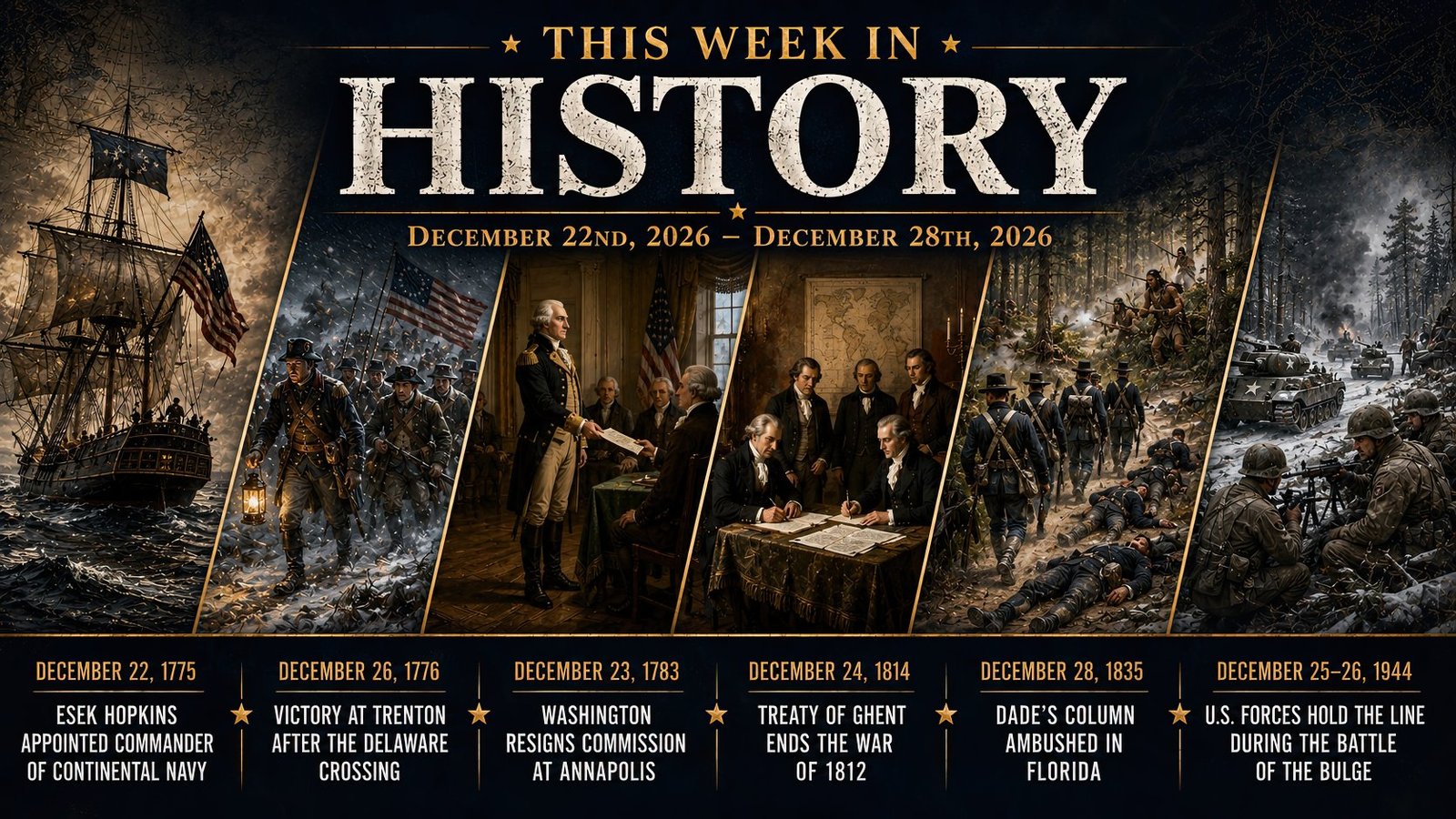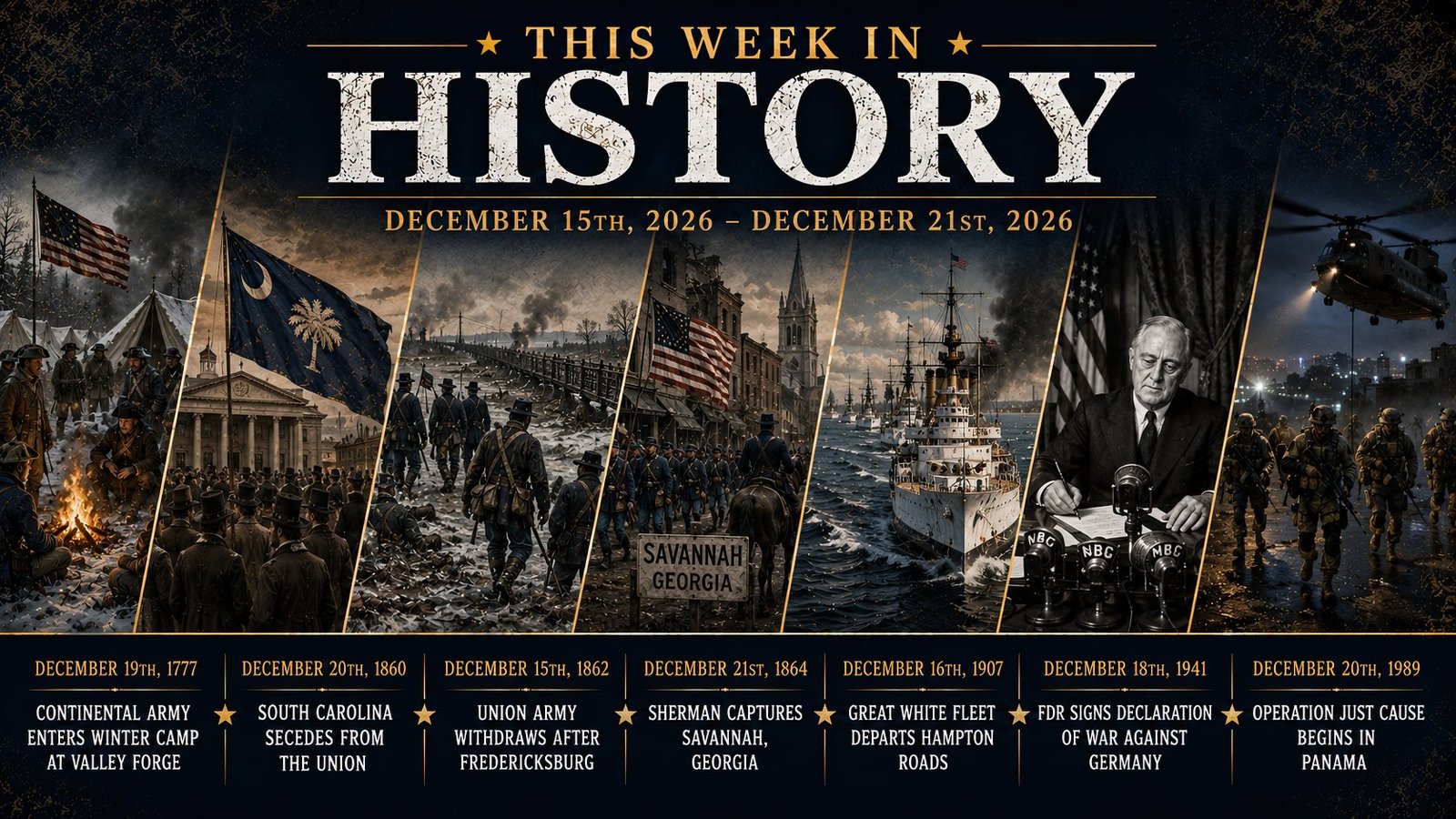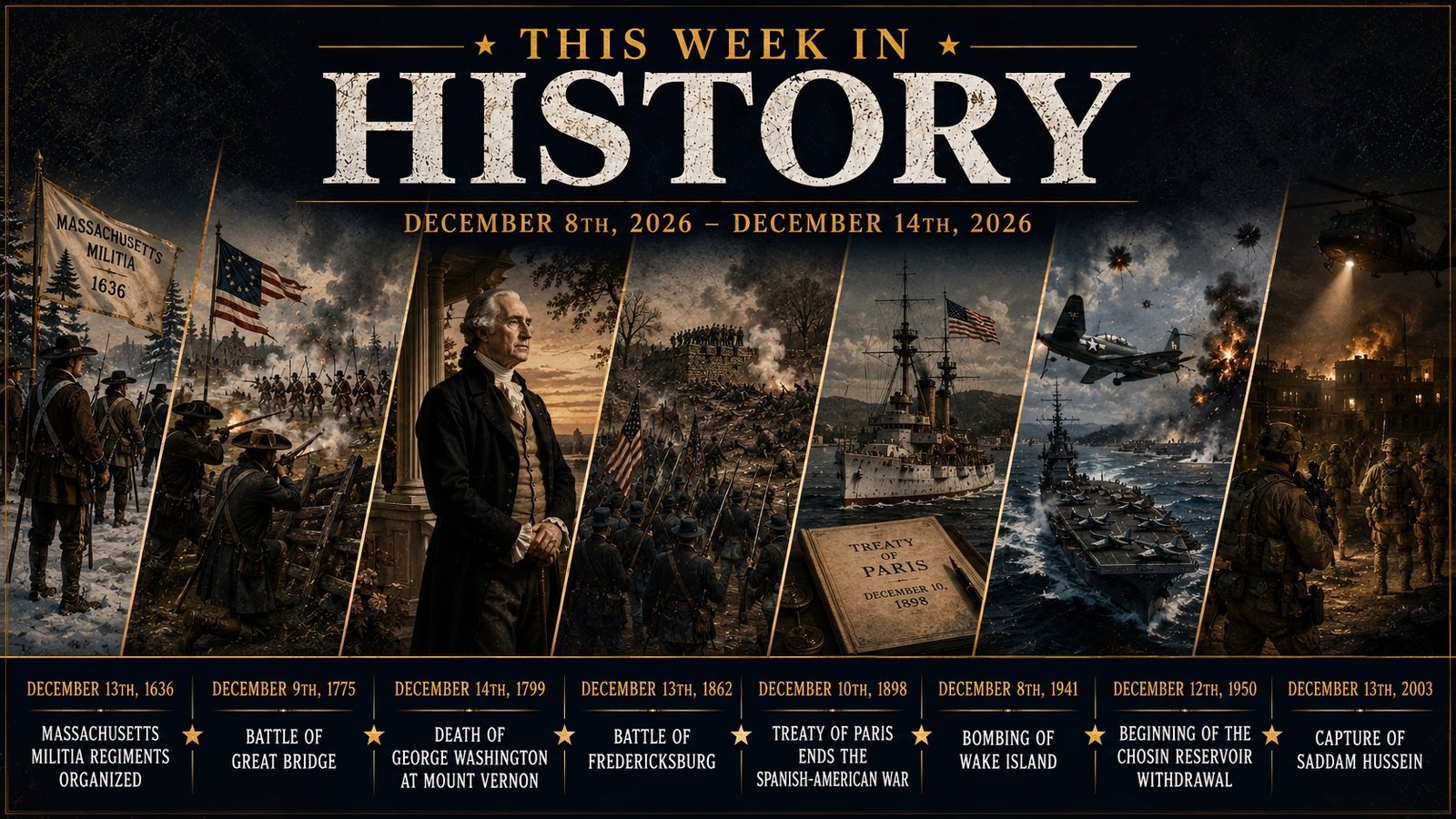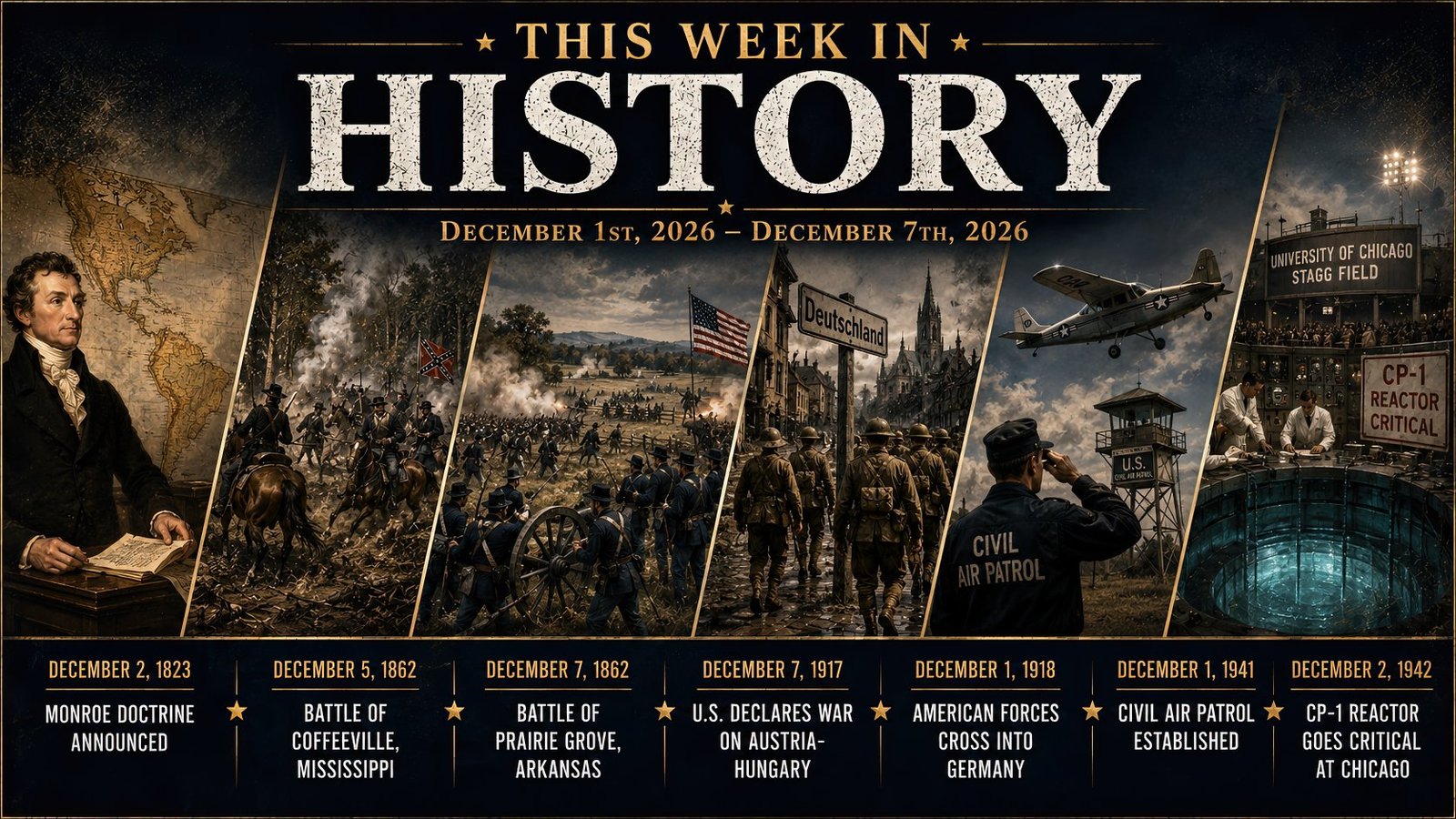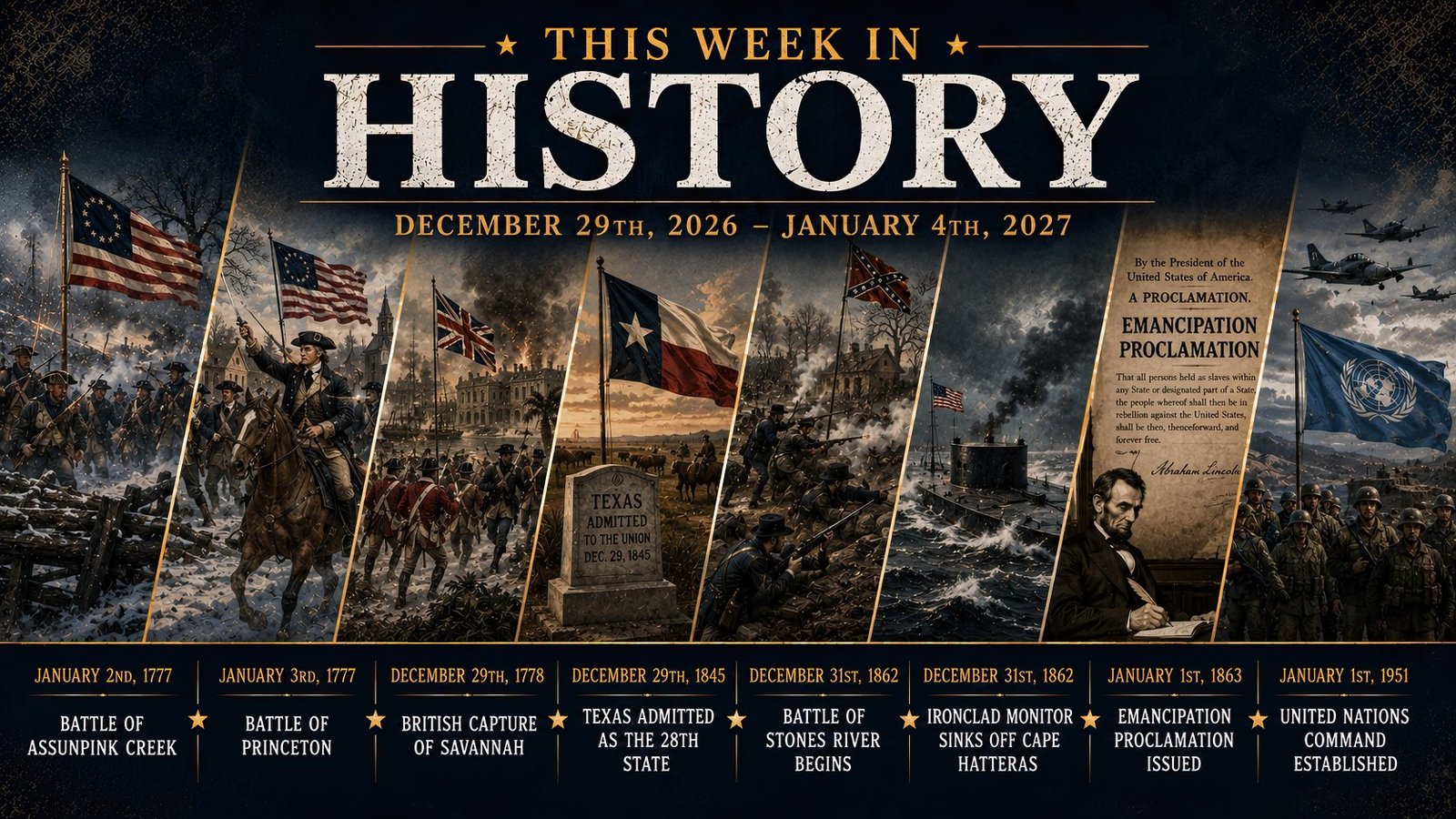
This Week in History · December 29, 2026
489 Populated Entries
Conflicts and historical periods that shaped military institutions and warfare.
Wars & Historical Eras
Every result opens a permanent subject record with its reference context and connected Dispatch coverage. Filter by record type, editorial collection, or a word in the entry.
489 entries found.
In the turbulence of the Mexican Revolution, the United States undertook a controversial intervention that highlighted both its naval reach and the risks of limited operations ashore. A diplomatic clash known as the Tampico Affair, combined with concerns over an incoming arms shipment to the regime of Victoriano Huerta, led Washington to order a seizure of the port of Veracruz.
On August 7th, 1942, United States forces launched their first major offensive of the Pacific War with amphibious landings in the Solomon Islands. Elements of the First Marine Division came ashore on Guadalcanal, Tulagi, and nearby islets to seize an airfield that Japanese engineers were building, one that threatened the sea lanes linking the United States and Australia.
Three weeks after seizing Saipan, American forces returned to Guam, reclaiming a prewar United States possession that had been lost in the dark days of 1941. Marines and soldiers from the Third Marine Division, the First Provisional Marine Brigade, and the Seventy-Seventh Infantry Division went ashore under heavy fire, forced to slog through surf, coral, and fortified jungle slopes.
On January 31st, 1944, United States forces stormed ashore on the islands of Kwajalein Atoll in the Marshall Islands during Operation Flintlock. Amphibious training in earlier campaigns had taught hard lessons, and planners now applied them against one of Japan’s most important central Pacific strongholds.
As World War II in the Pacific neared its climax, United States forces launched the amphibious assault on Okinawa, a large island only a few hundred miles from the Japanese home islands. The Tenth Army, composed of United States Army and Marine Corps units, went ashore on beaches that were eerily lightly defended, a stark contrast to the bloody assaults at places like Tarawa and Iwo Jima.
Two months after the signing of the Paris Peace Accords, a long chapter of American warfare drew to a close. On March 29th, 1973, the last United States Army combat units departed South Vietnam, leaving behind a small presence associated with the embassy and defense attaché functions. Many American prisoners of war had already been released and flown home in the preceding weeks, their arrivals watched closely by families and a war-weary public.
At the shipyards in Groton, Connecticut, the United States Navy launched a vessel that would fundamentally change undersea warfare. On January 21st, 1954, USS Nautilus slid into the water as the world’s first operational nuclear-powered submarine. Unlike conventionally powered boats that had to surface or snorkel regularly for air and fuel, Nautilus could remain submerged for long periods, travel at higher sustained speeds, and operate far from bases.
Night still clung to the sea when the submarine slid in among the enemy ships. On the open bridge, spray cold against his face, Commander Lawson “Red” Ramage watched the black shapes of freighters and tankers loom out of the darkness. Their wakes glowed faintly, white scars across a heaving Pacific, while bursts of star shell and tracer fire clawed at the sky. Somewhere off Taiwan, a Japanese convoy was trying to slip through before dawn. Ramage intended to stop it.
In the summer of 1776, the Continental Army was already fighting the British Empire around Boston, New York, and in scattered frontier campaigns. On June 7th, 1776, Virginia delegate Richard Henry Lee put into words what that fighting increasingly implied, offering a resolution that the united colonies “are, and of right ought to be, free and independent states.” Debate over his proposal forced Congress to confront the true scale of the conflict and led to the appointment of a committee tasked…
Medal of Honor, U.S. Army, World War II
On May 14th, 1804, a small flotilla of boats pulls away from Camp Dubois, near Saint Louis, and starts upriver into largely unmapped country. The party, known as the Corps of Discovery, is built around soldiers and noncommissioned officers of the United States Army under Captain Meriwether Lewis and Lieutenant William Clark. Their mission is to explore the recent Louisiana Purchase, seek a practical route toward the Pacific, and make contact with Native nations along the way.
The October 1944 landings restored a major Allied foothold in the Philippines. Fleet battles protected that foothold, but Japanese reinforcement and the struggle for routes toward Ormoc made the ground campaign longer and more difficult than the beach assault alone suggests.
Read Entry →Event · 2026-04-28Liberation of Dachau concentration campOn this date, elements of the United States Seventh Army reached the gates of Dachau, one of Nazi Germany’s earliest and most notorious concentration camps. Soldiers from the 42nd and 45th Infantry Divisions walked into scenes of devastation and horror: emaciated prisoners, mass graves, and railcars filled with bodies from death marches.
On August 25th, 1944, the long-occupied French capital erupted in celebration as Free French armored columns and American infantry rolled into Paris.
Two days after the United States garrison at Fort Sumter surrendered, President Abraham Lincoln issued a proclamation calling for seventy-five thousand state militia volunteers to put down the rebellion. The call, issued on April 15th, 1861, transformed a constitutional crisis into a full-scale civil war by forcing citizens, states, and officers to choose sides.
Four years after the war’s outbreak, the nation seemed on the brink of healing when a final shock struck. On the evening of April 14th, 1865, President Lincoln attended a play at Ford’s Theatre in Washington City, only days after Confederate forces in Virginia had surrendered a major army. An assassin slipped into the presidential box and fired a pistol shot at close range, mortally wounding the commander in chief.
Just days after Monocacy, on July 12th, 1864, Confederate forces under Jubal Early probed the northern defenses of Washington near Fort Stevens. As skirmishers traded fire and Union troops manned the earthworks, President Abraham Lincoln came to the front lines to see the situation for himself, standing on the parapet within range of enemy rifles.
On December 29th, 1972, the United States halted the intense B-52 and tactical bomber campaign known as Linebacker II against targets around Hanoi and Haiphong in North Vietnam.
On January 9th, 1945, American forces surged ashore along the beaches of Lingayen Gulf on the island of Luzon in the Philippines. Supported by a powerful naval and air armada, soldiers of the United States Sixth Army waded through surf under the threat of mines, artillery, and kamikaze attacks that had already cost the fleet dearly during the approach.
Off the New England coast, the nuclear-powered submarine USS Thresher was conducting deep-diving tests when something went catastrophically wrong. Communications suggested trouble with systems and attempts to surface as the boat descended beyond its safe limits. Moments later, contact was lost, and later analysis pointed to flooding and a reactor shutdown that left the submarine unable to recover.
On this date American negotiators in Paris agreed to purchase the vast Louisiana territory from France, a deal that nearly doubled the size of the young republic. For the United States Army, the treaty opened an enormous new frontier to explore, survey, and secure, from the Mississippi River out toward the Rocky Mountains. Army officers and enlisted soldiers would lead reconnaissance missions, escort surveyors, and eventually garrison remote posts that anchored American claims on the plains.
The return to Luzon combined amphibious landings, the destruction and liberation of Manila, the recovery of the bay approaches and months of fighting in mountain defenses. Capturing the capital did not end the island campaign.
Read Entry →Historical Event · 2026-08-25MacArthur arrives in JapanOn August 30th, 1945, General Douglas MacArthur stepped off an aircraft at Atsugi Airfield near Tokyo as the designated Supreme Commander for the Allied occupation of Japan.
When war came to the Pacific, American and Filipino troops on Bataan and Corregidor fought a desperate delaying action against advancing Japanese forces. By March 1942, the situation had grown dire, and the president ordered General Douglas MacArthur to leave the islands and avoid capture. On the night of March 11th, MacArthur and his party boarded small patrol torpedo boats for a dangerous run through hostile waters to Mindanao, later continuing by aircraft to Australia.
Related Dispatch
These current Dispatch articles connect directly to records in the Wars & Historical Eras directory.