Reference Entry
LANDINGS ON GUADALCANAL AND TULAGI
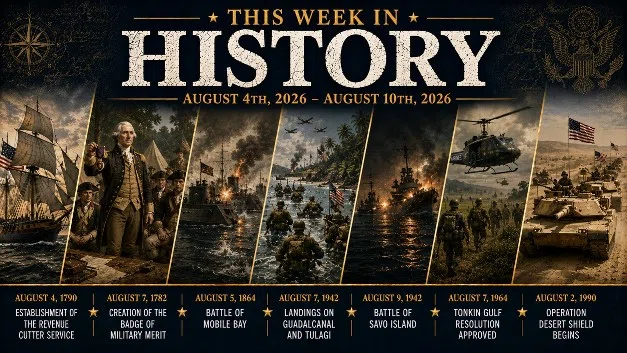
On August 7th, 1942, United States forces launched their first major offensive of the Pacific War with amphibious landings in the Solomon Islands. Elements of the First Marine Division came ashore on Guadalcanal, Tulagi, and nearby islets to seize an airfield that Japanese engineers were building, one that threatened the sea lanes linking the United States and Australia.
Dated Historical Context
A RECORDED MOMENT IN HISTORY
Landings on Guadalcanal and Tulagi
On August 7th, 1942, United States forces launched their first major offensive of the Pacific War with amphibious landings in the Solomon Islands. Elements of the First Marine Division came ashore on Guadalcanal, Tulagi, and nearby islets to seize an airfield that Japanese engineers were building, one that threatened the sea lanes linking the United States and Australia. The landings surprised the defenders, allowing the Marines to take the unfinished airstrip, soon renamed Henderson Field, and establish a tenuous beachhead. Behind the immediate clash lay a broader strategic shift: until this point, the United States had largely been reacting to Japanese advances across the Pacific, but now it was seizing the initiative. Logistics were fragile, naval cover uncertain, and Japanese counterattacks would be fierce in the months that followed. Yet August 7th marked the opening move in a grueling campaign that would grind down Japanese forces and demonstrate that American amphibious operations could project power into contested waters. The anniversary underscores how a single decision to land on a remote island can reshape the trajectory of an entire theater.
Read the complete weekly DispatchTrackpads Source Register