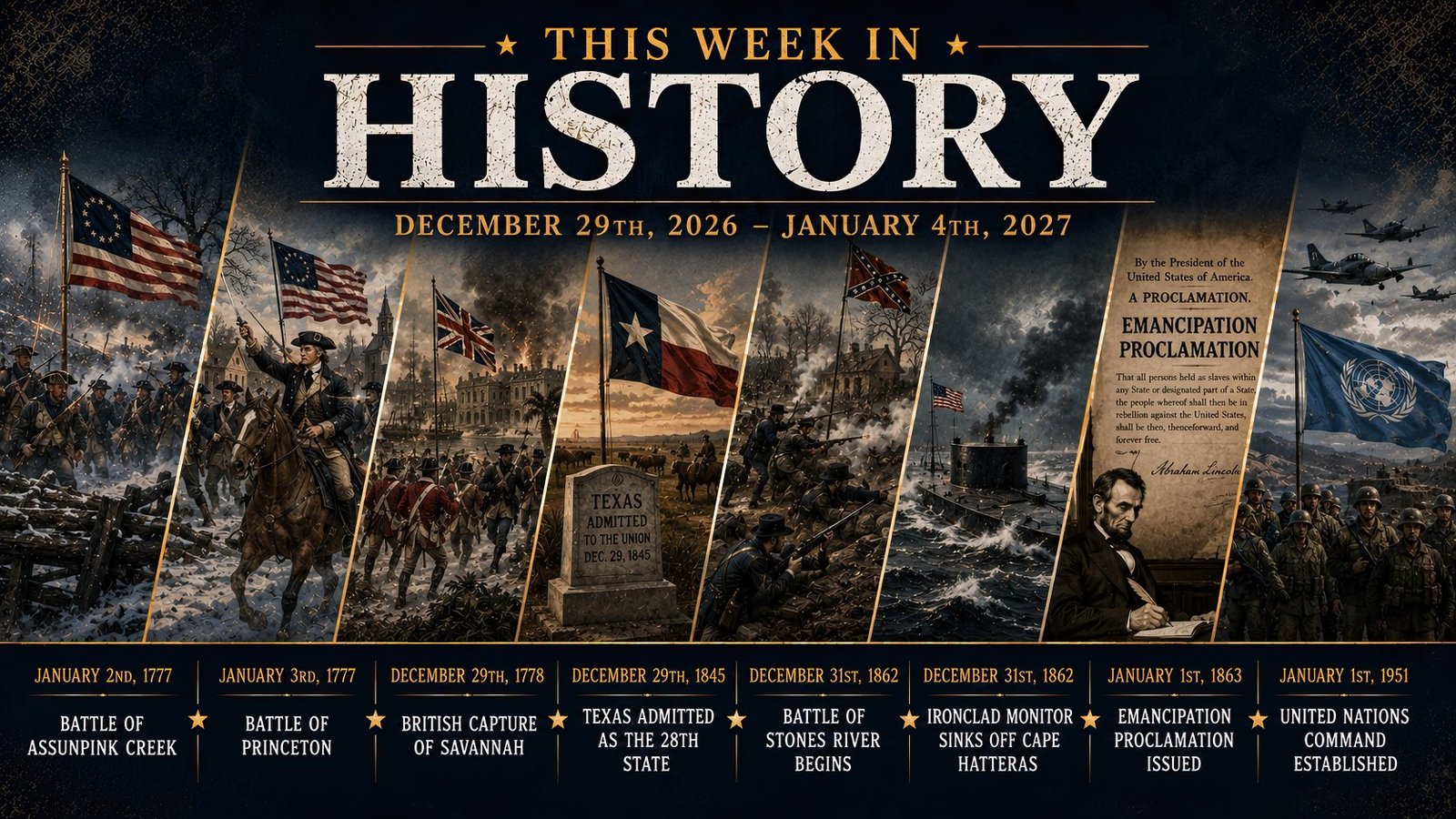
This Week in History · December 29, 2026
233 Populated Entries
Military platforms across land, air, sea, and supporting domains.
Trackpads Air Archive
Use the dedicated Air Archive for structured aircraft-family profiles, variants, representative specifications, imagery, sources, and design lineage.
Vehicles, Aircraft & Ships
Every result opens a permanent subject record with its reference context and connected Dispatch coverage. Filter by record type, editorial collection, or a word in the entry.
233 entries found.
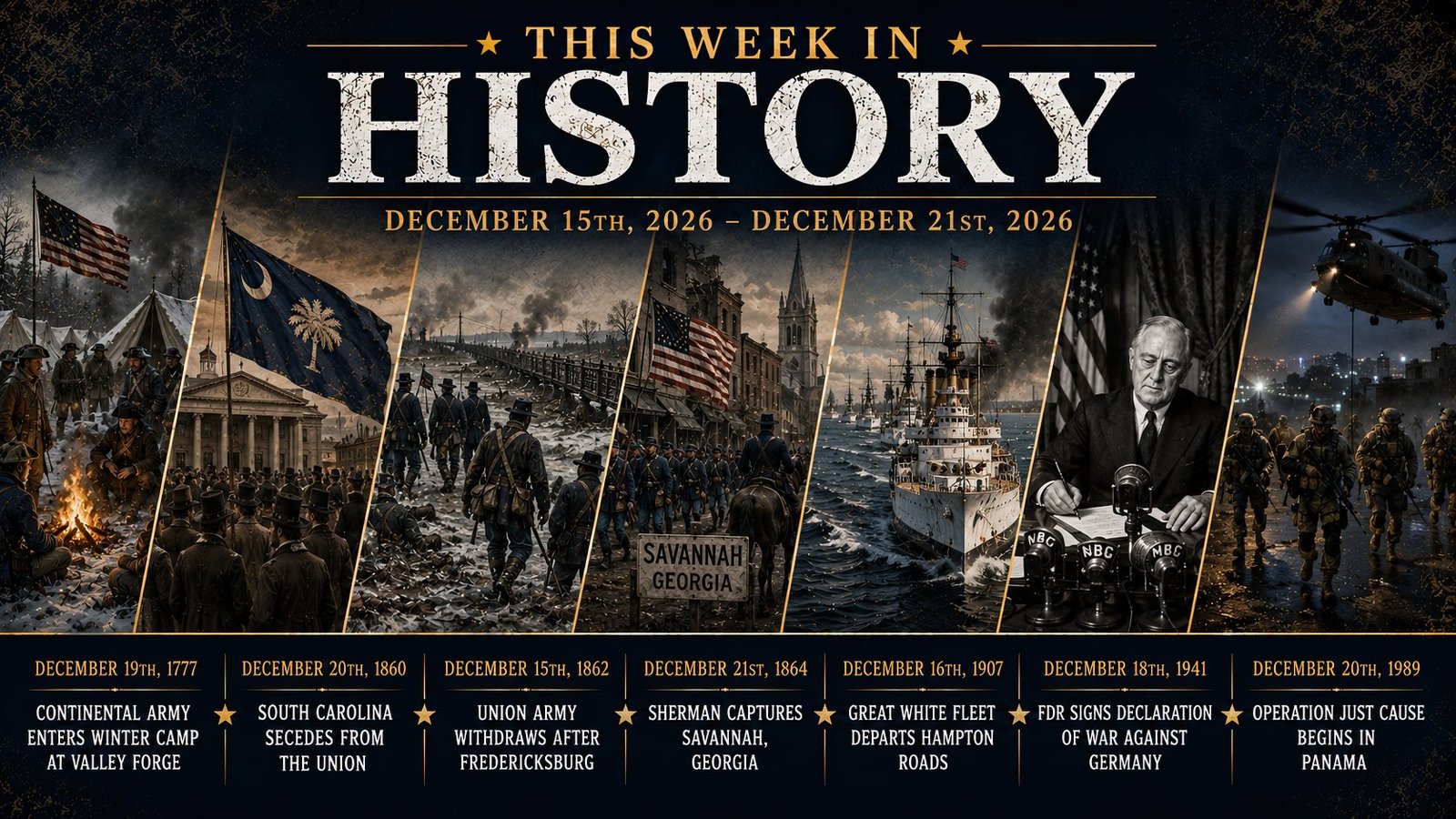
Less than two weeks after the attack on Pearl Harbor, on December 18th, 1941, the First War Powers Act dramatically expanded the president’s authority to direct the national war effort.
Two days after Plattsburgh, another critical gateway came under fire when British warships bombarded Fort McHenry, guardian of Baltimore’s inner harbor.
A story of reach, adaptability, and hard fighting told through the destroyer crews who carried the war across the Pacific.
The Second World War was over by December 5th, 1945, but military aviation remained a dangerous profession even in training.
In the autumn of the Revolutionary War, George Washington’s army reeled from defeat around New York City.
High over Europe on Christmas Eve 1944, the sky is crowded with contrails. Hundreds upon hundreds of heavy bombers push east toward German airfields, the engines’ steady thunder mixing with clipped radio calls. At their head is a single Flying Fortress, the air commander’s ship, where Brigadier General Frederick Walker Castle studies the instruments and the grey cloud deck below.
A story of reach, endurance, and silent pressure told through the boats, their crews, and the tonnage war beneath the Pacific.
Just three days after Pearl Harbor, Adolf Hitler and Benito Mussolini chose to broaden the conflict by declaring war on the United States on December 11th, 1941.
When German forces crossed into Poland on this date, they triggered a European war that would ultimately reshape American security policy.
In the early years of the Cold War’s nuclear standoff, Strategic Air Command kept bombers airborne or on quick alert around the clock. On January 24th, 1961, a B-52 carrying two powerful thermonuclear bombs broke apart in the skies near Goldsboro, North Carolina, after suffering structural failure. The weapons fell to earth, and one descended with its parachute deploying, while the other plunged into soft ground.
On December 16th, 1907, a column of gleaming white-painted American battleships steamed out of Hampton Roads to begin a world cruise that would last more than a year.
The fuel gauges in Harold Bauer’s Wildcat fighter were already edging toward empty when the coastline of Guadalcanal slid beneath his wings. He had just finished leading a long, tense, overwater flight of Marine fighters up from Espiritu Santo, six hundred miles of nothing but ocean and cloud. Henderson Field, the hard-bitten airstrip the Marines called home, lay ahead as a thin strip of coral and mud, promising rest, repairs, and—most of all—gasoline.
At the turn of the twentieth century, American leaders viewed an isthmian canal as essential to both commerce and naval strategy.
A story of reach, survivability, and stubborn determination told through the aircrews and ground teams who trusted this helicopter to bring them home alive.
A story of long-range precision firepower told through the crews who drive a wheeled launcher into harm’s way and the targets that suddenly find nowhere to hide.
HMS Warrior was the Royal Navy first iron-hulled armoured warship. Her long life moved from Channel Fleet showpiece to reserve and support duties, then from oil jetty to major museum restoration.
Read Entry →Incident · 2026-02-17Hunley sinks USS HousatonicOn the night of February 17th, 1864, off Charleston, South Carolina, the Confederate submarine H. L. Hunley moved slowly toward the Union sloop of war USS Housatonic. The Hunley was a dangerous experiment: a hand-cranked, cigar-shaped boat with a spar torpedo mounted on its bow. Its crew had already died in earlier test accidents, but on this sortie the submarine reached its target, detonated its explosive charge, and sent Housatonic to the bottom in minutes.
The final U.S. battleship class, designed for high-speed fleet operations and adapted across five decades of service.
Read Entry →Event · 2026-06-30Iran Air Flight 655 shot downOn July 3rd, 1988, during tense operations in the Persian Gulf, the guided-missile cruiser USS Vincennes mistook a civilian Iran Air Airbus ascending along a commercial route for a hostile military aircraft. Believing the plane to be an attacking fighter and amid conflicting reports about altitude and identification, the ship fired surface-to-air missiles that destroyed the airliner, killing all passengers and crew.
On November 4th, 1979, the line between diplomatic tension and outright crisis was crossed at the United States embassy in Tehran.
While soldiers bled at Stones River, sailors on the pioneering ironclad Monitor fought the sea itself.
On this day representatives of Imperial Japan signed an instrument of surrender on the deck of the battleship Missouri, anchored in Tokyo Bay and surrounded by Allied warships.
Just two weeks after the attack on Pearl Harbor, Japanese forces struck another major blow by landing large invasion forces along the shores of Lingayen Gulf in northern Luzon on December 22nd, 1941.
Three years later, on the same date of the calendar, an American naval squadron under Captain John Paul Jones fought one of the most celebrated sea battles of the war off the English coast near Flamborough Head.
Related Dispatch
These current Dispatch articles connect directly to records in the Vehicles, Aircraft & Ships directory.
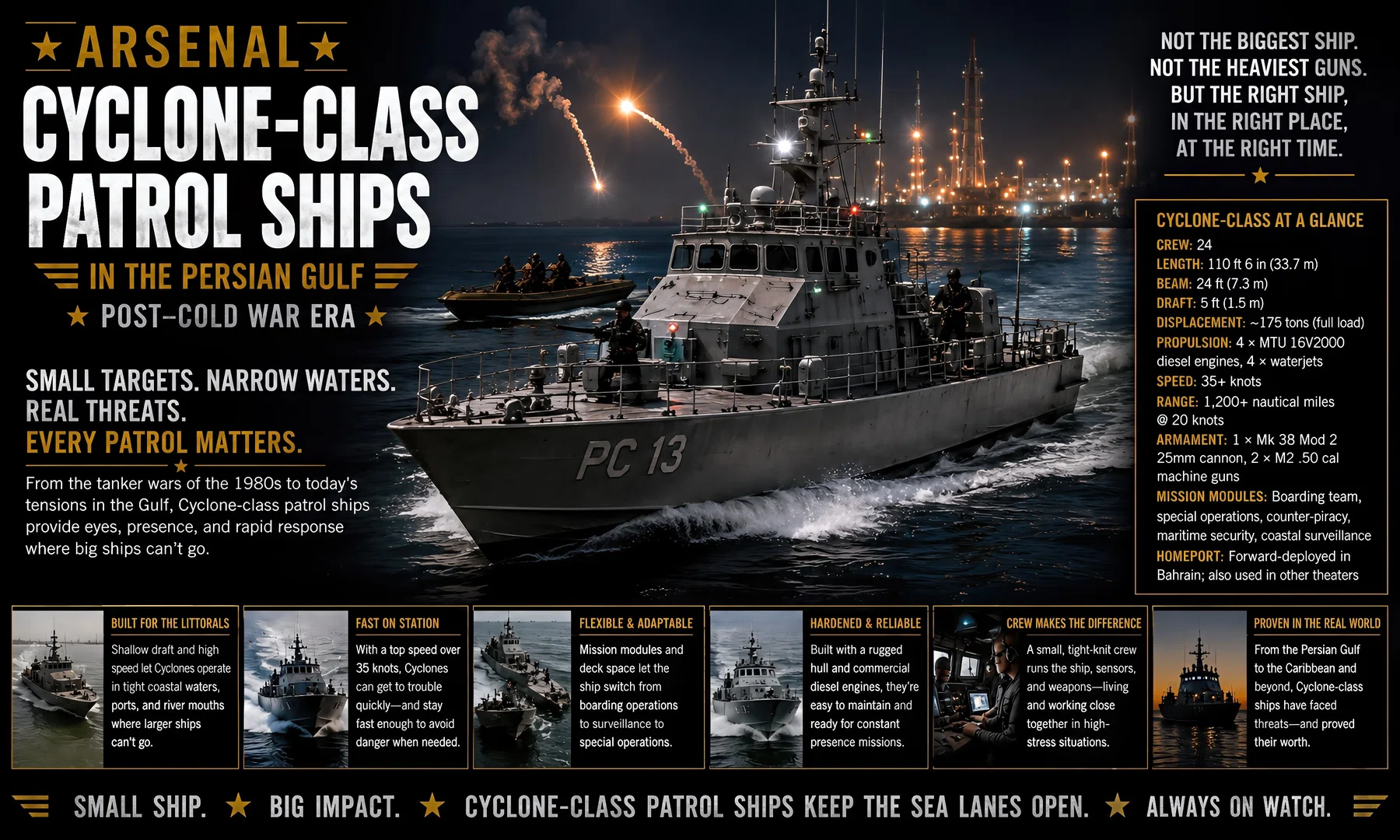
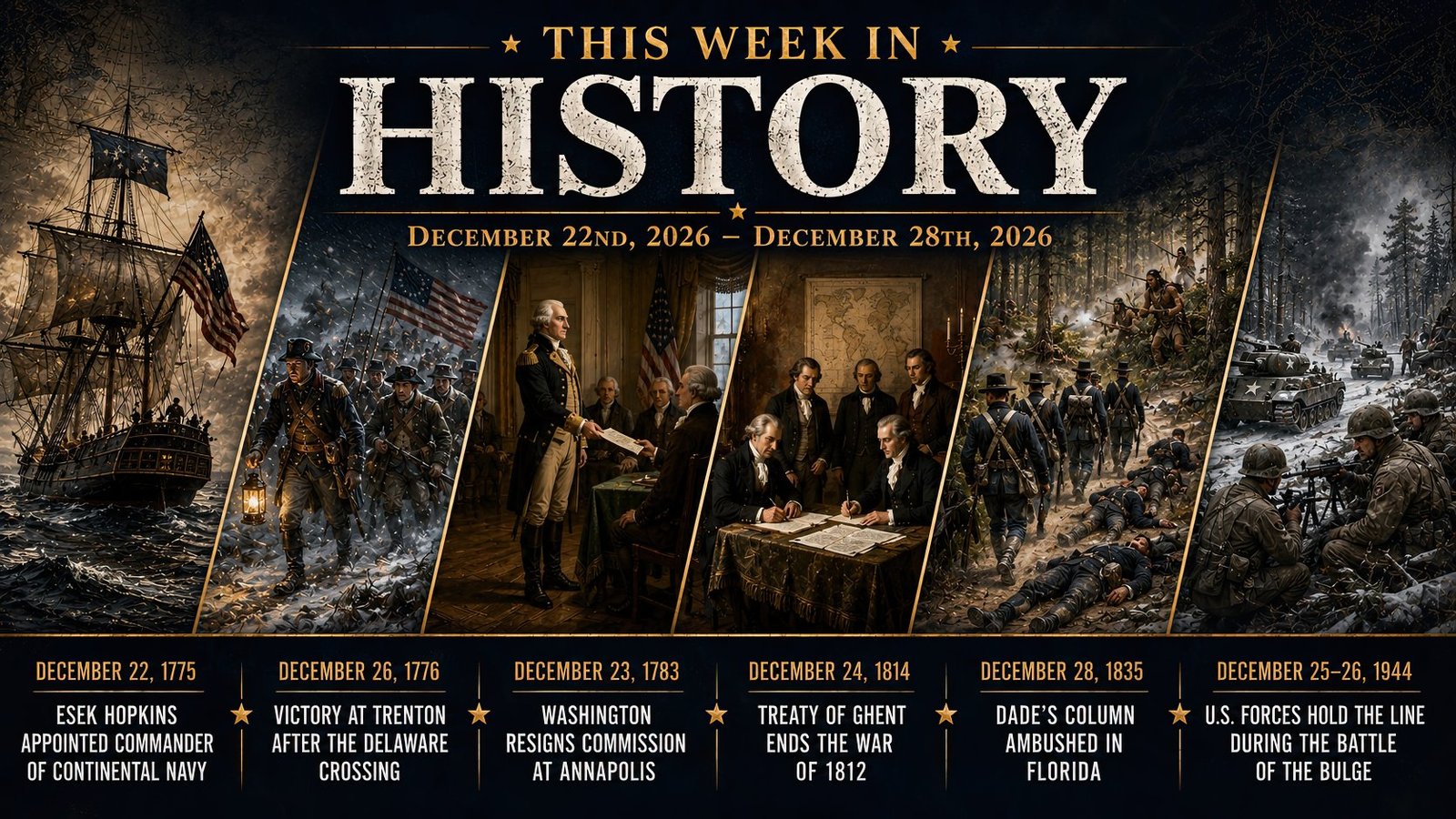
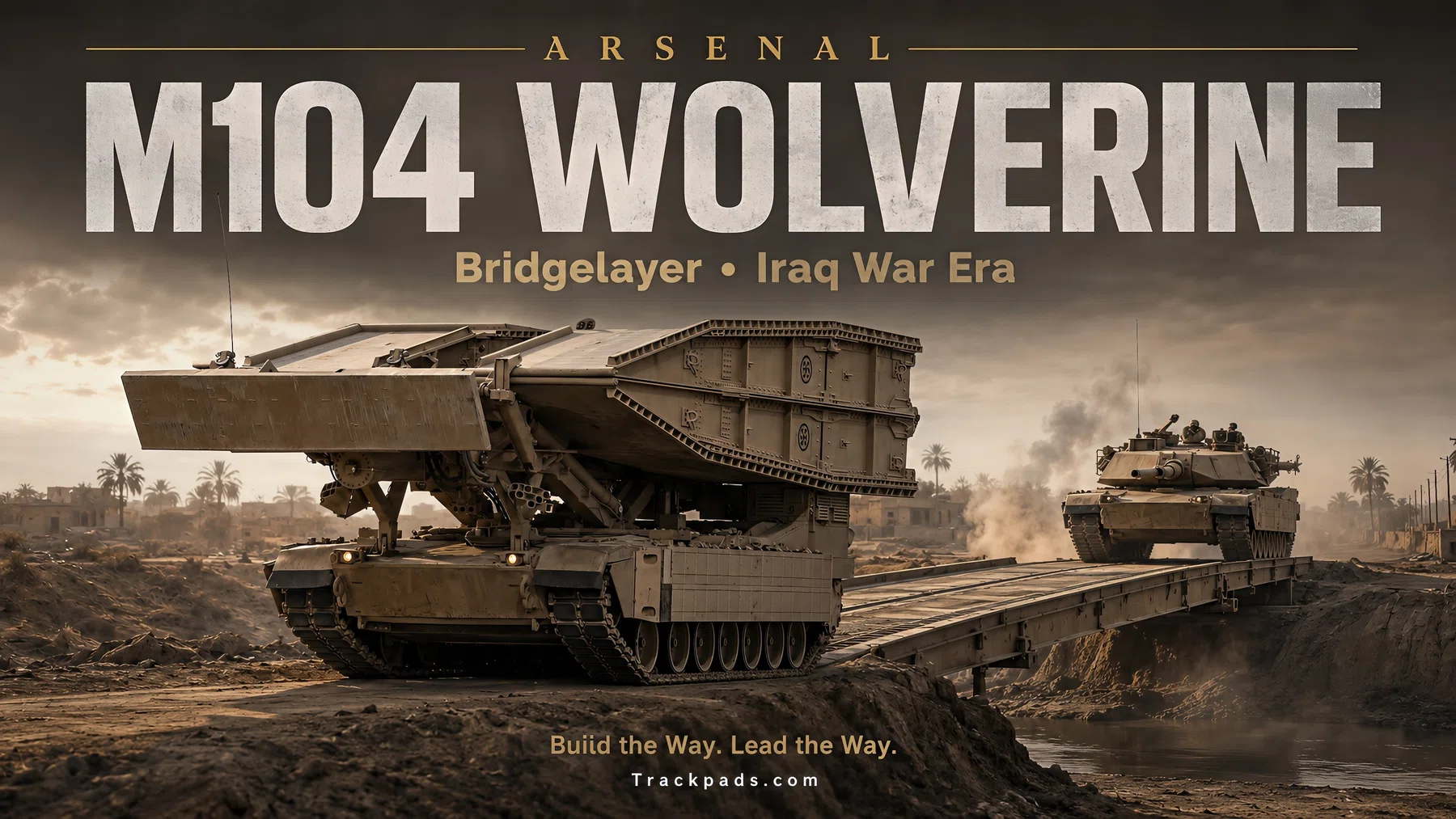
Related Arsenal Guides
These established direct episode links supplement the Wiki directory rather than replace it.