Beyond the Call · December 28, 2026
206 Populated Entries
Leaders, service members, historians, and figures connected to the military record.
People & Commanders
Every result opens a permanent subject record with its reference context and connected Dispatch coverage. Filter by record type, editorial collection, or a word in the entry.
206 entries found.
By February 1945, much of Pearl Harbor had returned to the business of war. Battleships and carriers came and went; convoys formed up and headed west toward Iwo Jima and Okinawa. But in a side channel called West Loch, the harbor still hid a graveyard. Months earlier, a chain of explosions had torn through a cluster of tank landing ships loading ammunition for the Pacific campaign.
Shortly before the United States entered the First World War, the Army found itself responding to a different kind of threat much closer to home. In the early hours of March 9th, 1916, fighters loyal to Mexican revolutionary leader Francisco “Pancho” Villa crossed the border and attacked the town of Columbus, New Mexico, as well as a nearby Army camp. The raid killed soldiers and civilians, burned buildings, and shocked a country that had long assumed the borderlands were secure.
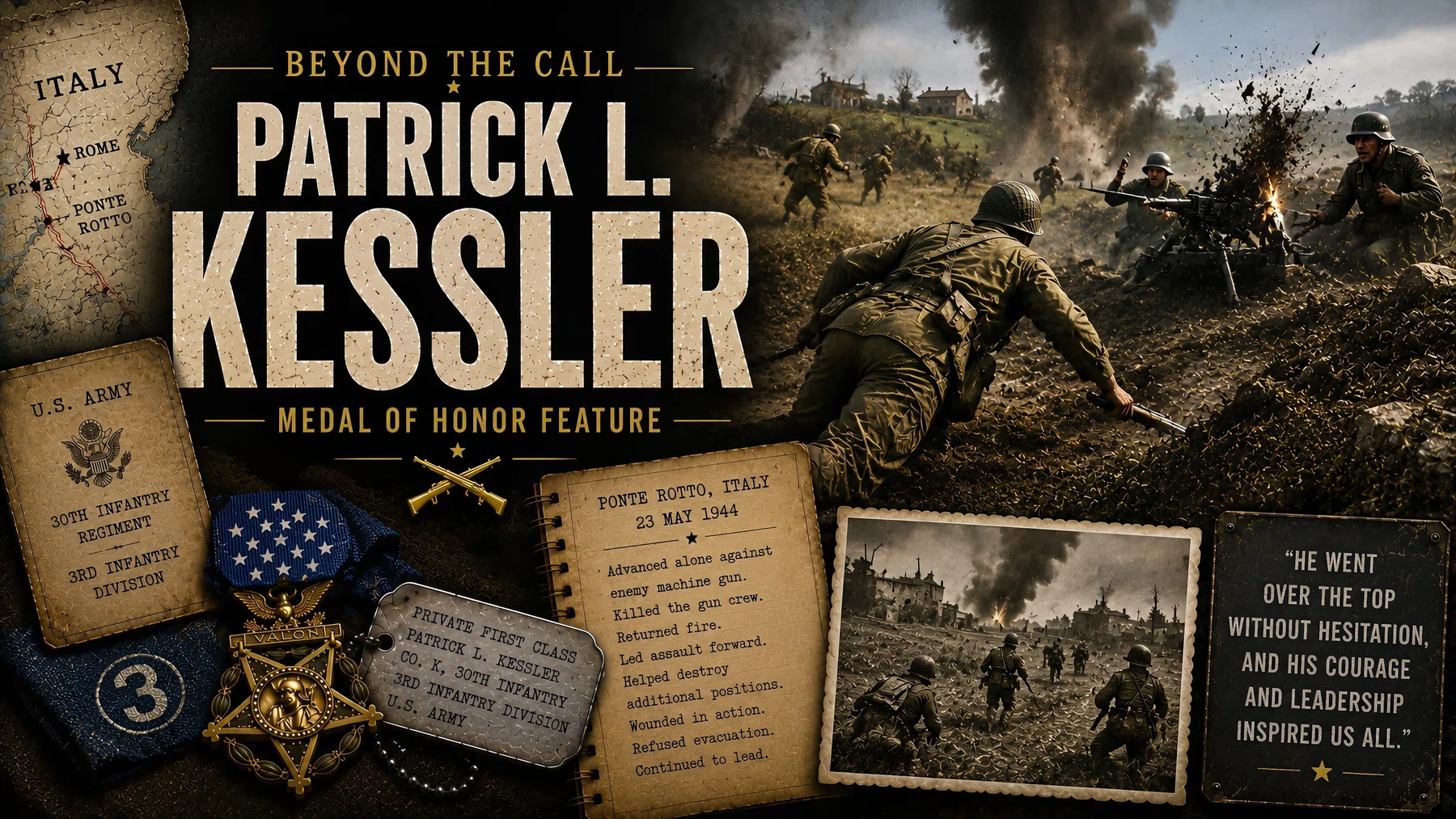
A Medal of Honor story of relentless courage under fire in the Italian campaign of World War II.
In early 1916, a cross-border raid on Columbus, New Mexico by forces loyal to Mexican revolutionary Pancho Villa shocked the United States and demanded a response. On March 15th, the Army launched a punitive expedition under John J. Pershing, sending columns of cavalry, infantry, trucks, and even a small aviation detachment across the desert into northern Mexico. The mission aimed to capture Villa and deter further incursions while avoiding a full-scale war with Mexico’s government.
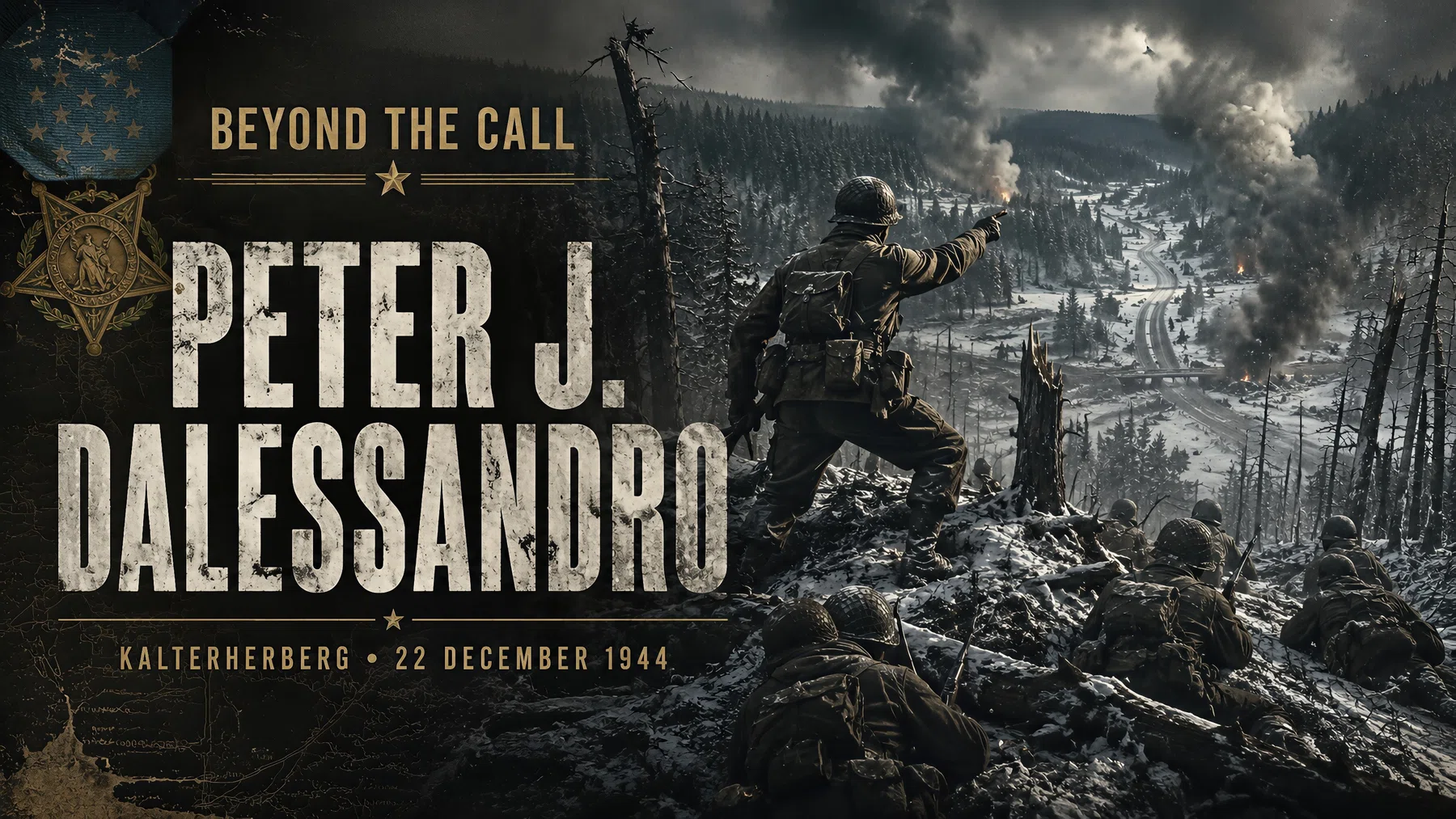
A Medal of Honor story of courage under fire in the Battle of the Bulge.
As a former five–star general and Supreme Allied Commander, President Dwight D. Eisenhower brought a unique perspective to his final speech from the Oval Office. On January 17th, 1961, just days before leaving office, he used his farewell address to reflect on the burdens of Cold War leadership. He praised the dedication of armed forces and defense workers, but also warned of the risks that could come from a permanent arms industry intertwined with government.
Decades later, the United States stood on the edge of another conflict as patrols clashed along the disputed border with Mexico. On May 11th, 1846, President James K. Polk addressed Congress and described these incidents as Mexican forces invading American soil and spilling American blood. His message framed the fighting not as a limited frontier skirmish but as a clear act of aggression, urging Congress to recognize that a state of war already existed.
That same summer, halfway around the world, a small wooden patrol boat was cutting through the darkness of the Solomon Islands. PT-109, commanded by Lieutenant John F. Kennedy, was part of a group of motor torpedo boats tasked with intercepting Japanese shipping. In the early hours of August 2nd, a Japanese destroyer loomed out of the night and sliced through the slower patrol boat, killing two crewmen and flinging the survivors into burning fuel and debris.
The night action around the Solomons a year later produced a very different kind of story when Patrol Torpedo boat PT-109, commanded by Lieutenant John F. Kennedy, was rammed and cut in two by a Japanese destroyer in the early hours of August 2nd, 1943. Kennedy and most of his crew survived the collision but found themselves in the water amid wreckage, miles from friendly lines.
A 22-year-old heavy machine gunner who held back a German attack in the Battle of the Bulge
A 22-year-old heavy machine gunner who held back a German attack in the Battle of the Bulge
Just days after the call for volunteers, a respected career officer faced his own decision. On April 20th, 1861, Colonel Robert E. Lee resigned his commission in the United States Army rather than take command against his native Virginia. Lee had served for decades in the regular army, distinguishing himself as an engineer and commander during the war with Mexico. In the tense weeks after Fort Sumter, senior leaders in Washington considered him for high command in the Union field army.
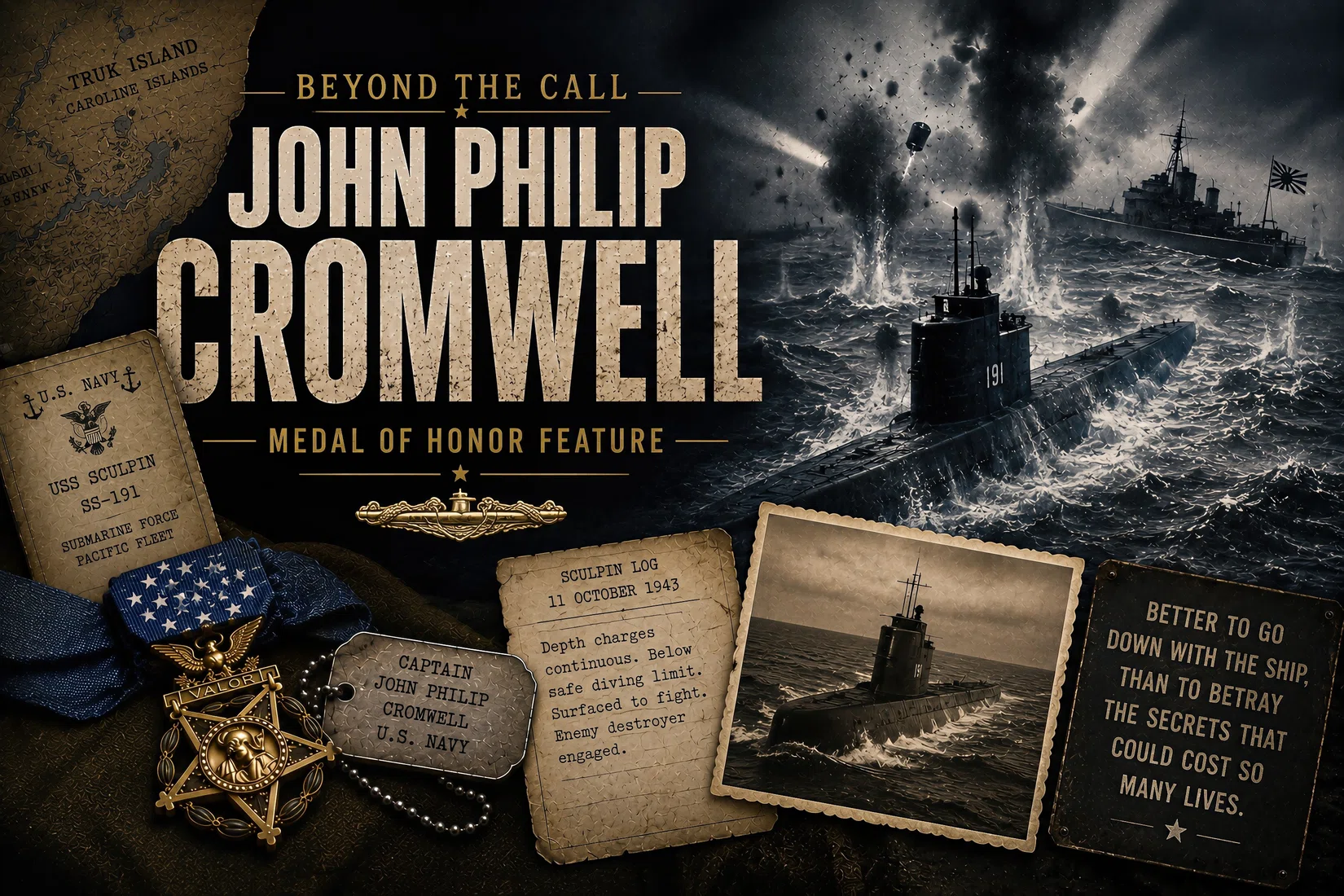
A Medal of Honor story of sacrifice and courage in World War II’s Pacific campaign.
On May 18th, 1917, President Woodrow Wilson signs the Selective Service Act, creating a national mechanism to draft men into military service. The law requires eligible males to register for possible induction, and it lays out how local boards will classify and call individuals. For the United States, whose small prewar Army cannot sustain large operations in Europe, the act is essential to raising a mass citizen force.
Even as battles raged in Normandy and the Pacific, policymakers were looking ahead to the millions of service members who would one day come home. On June 22nd, 1944, President Franklin D. Roosevelt signed the Servicemen’s Readjustment Act, soon known simply as the GI Bill. The law offered a package of benefits including education assistance, home loan guarantees, and support for finding work, all intended to ease the transition from military to civilian life.
In the middle of the Sicily campaign of the Second World War, Lieutenant General George S. Patton’s Seventh United States Army drove into Palermo and seized one of the island’s most important ports. The advance came after a rapid push along Sicily’s northern coast, with American armored and infantry columns racing over mountain roads and through towns battered by previous fighting.
The hill had a simple name on the map—Zebra Hill—but nothing about it was simple up close. Ahead of the assault troops the ground rose in a broken, rocky slope, pocked with shell holes and scraps of shattered brush. Hidden in that terrain were Japanese pillboxes and trenches positioned to command every approach. As the American infantrymen pushed forward, the hillside erupted with machine-gun bursts and grenades, turning the advance into a crawl and then into a standstill.
On February 17th, 1865, Union forces under Major General William Tecumseh Sherman entered Columbia, the capital of South Carolina, as part of the Carolinas campaign that followed the March to the Sea. Confederate defenses had crumbled, and the city’s fall carried heavy symbolic weight because South Carolina had led secession. That night, fires swept across large sections of Columbia.
In late May of 1754, a young Virginia officer named George Washington led colonial troops and Native allies through the forests of the Ohio Country. Near a small encampment of French soldiers at a place later called Jumonville Glen, his party launched a surprise attack that killed or captured most of the detachment, including its commander.
In the tense weeks after South Carolina seceded, a small Union relief ship named Star of the West steamed toward Charleston Harbor. Its mission was to bring supplies and reinforcements to Major Robert Anderson’s garrison at Fort Sumter. On January 9th, 1861, as the ship approached the harbor’s defenses, shore batteries manned in part by South Carolina forces and cadets from the state’s military academy opened fire.
In a small Virginia village, General Robert E. Lee met General Ulysses S. Grant to discuss terms, bringing the main Confederate field army in Virginia to surrender. Lee’s forces had been worn down by siege, shortages, and constant pressure, and the attempt to slip westward had been cut off by Union pursuit.
As the Civil War drew to a close, one of the largest remaining Confederate armies faced hard realities in the Carolinas. Near a small farm called Bennett Place, outside Durham Station in North Carolina, General Joseph E. Johnston met repeatedly with Union General William Tecumseh Sherman. After the shock of President Abraham Lincoln’s assassination complicated negotiations, the two commanders eventually agreed on new terms.
On February 16th, 1862, Confederate forces at Fort Donelson on the Cumberland River surrendered to Union troops under Brigadier General Ulysses S. Grant, marking one of the first major Union victories in the Western Theater of the Civil War. The campaign had begun with the capture of nearby Fort Henry earlier that month, opening the Tennessee River and rattling Confederate defenses in the region.
After a long siege, one of the young republic’s worst defeats unfolds as Major General Benjamin Lincoln surrenders Charleston, South Carolina, to British forces under Sir Henry Clinton. Thousands of Continental soldiers and militia lay down their arms, along with warships and supplies inside the vital port. With Charleston in hand, British leaders hope to rally Loyalists, crush resistance in the South, and then roll the rebellion up toward the north.
Related Dispatch
These current Dispatch articles connect directly to records in the People & Commanders directory.