Reference Entry
OPERATION ANACONDA
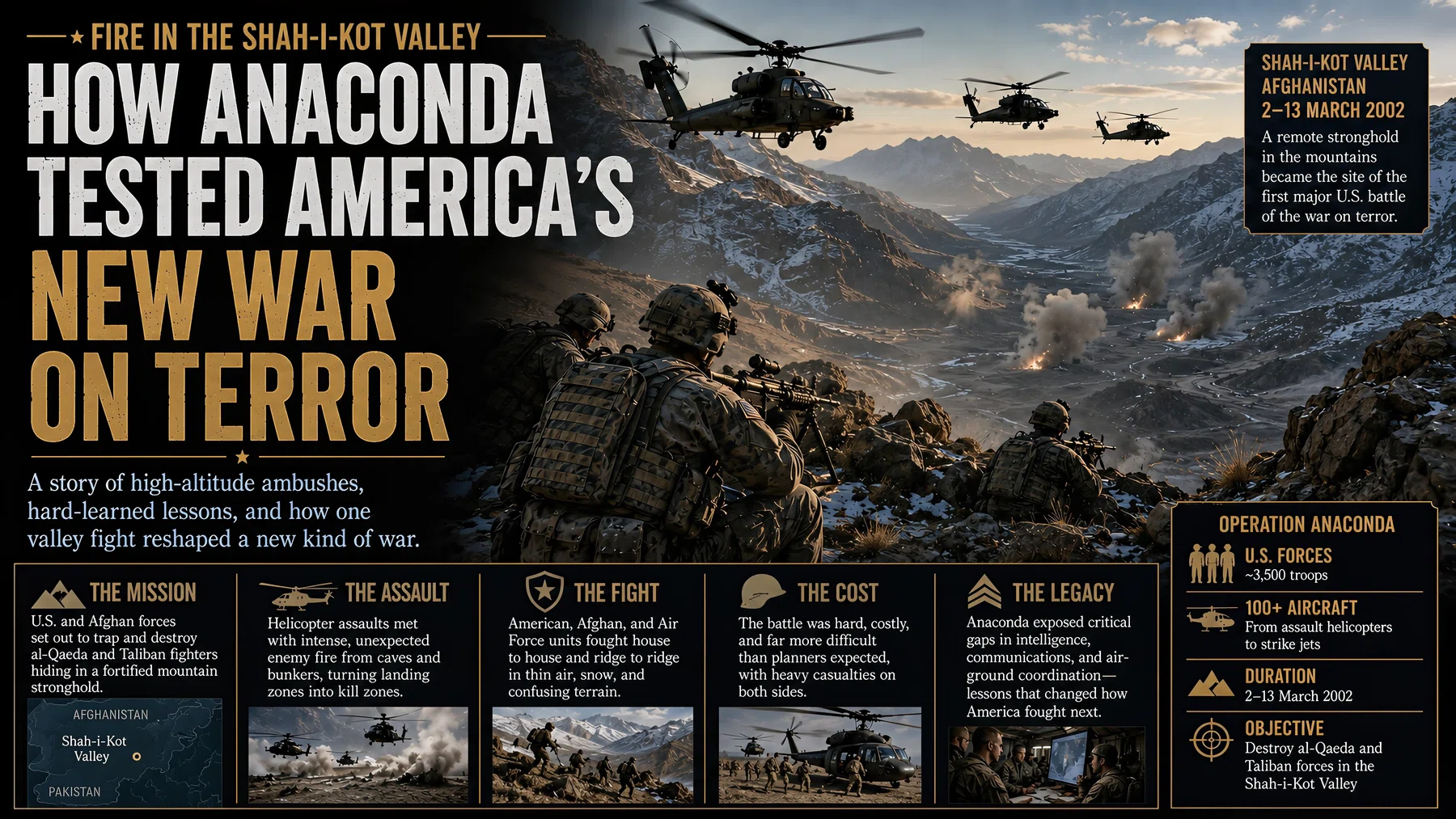
Just over a decade after Desert Storm, United States forces found themselves fighting a very different kind of war in Afghanistan. On March 2nd, 2002, Operation Anaconda began in the Shah-i-Kot Valley and surrounding high ground, as United States and allied troops attempted to encircle and destroy concentrations of al-Qaeda and Taliban fighters. The plan called for Afghan and coalition units to block escape routes while airlifted infantry swept through rugged terrain at high altitude.
Dated Historical Context
A RECORDED MOMENT IN HISTORY
Operation Anaconda begins in Afghanistan
Just over a decade after Desert Storm, United States forces found themselves fighting a very different kind of war in Afghanistan. On March 2nd, 2002, Operation Anaconda began in the Shah-i-Kot Valley and surrounding high ground, as United States and allied troops attempted to encircle and destroy concentrations of al-Qaeda and Taliban fighters. The plan called for Afghan and coalition units to block escape routes while airlifted infantry swept through rugged terrain at high altitude. In practice, resistance was stronger than expected, communications were sometimes strained, and several units found themselves in intense close combat and reliant on rapid air support, including dramatic rescues and firefights on snow-covered ridgelines. Though the operation ultimately disrupted enemy networks and killed or captured many fighters, it also exposed shortcomings in coordination, intelligence, and preparation for high-altitude warfare. For the United States military, Anaconda became an early case study in the challenges of joint operations, special operations, and conventional forces working together in complex, unforgiving terrain against a determined irregular foe.
Read the complete weekly DispatchTrackpads Source Register