Reference Entry
OPERATION TIDAL WAVE
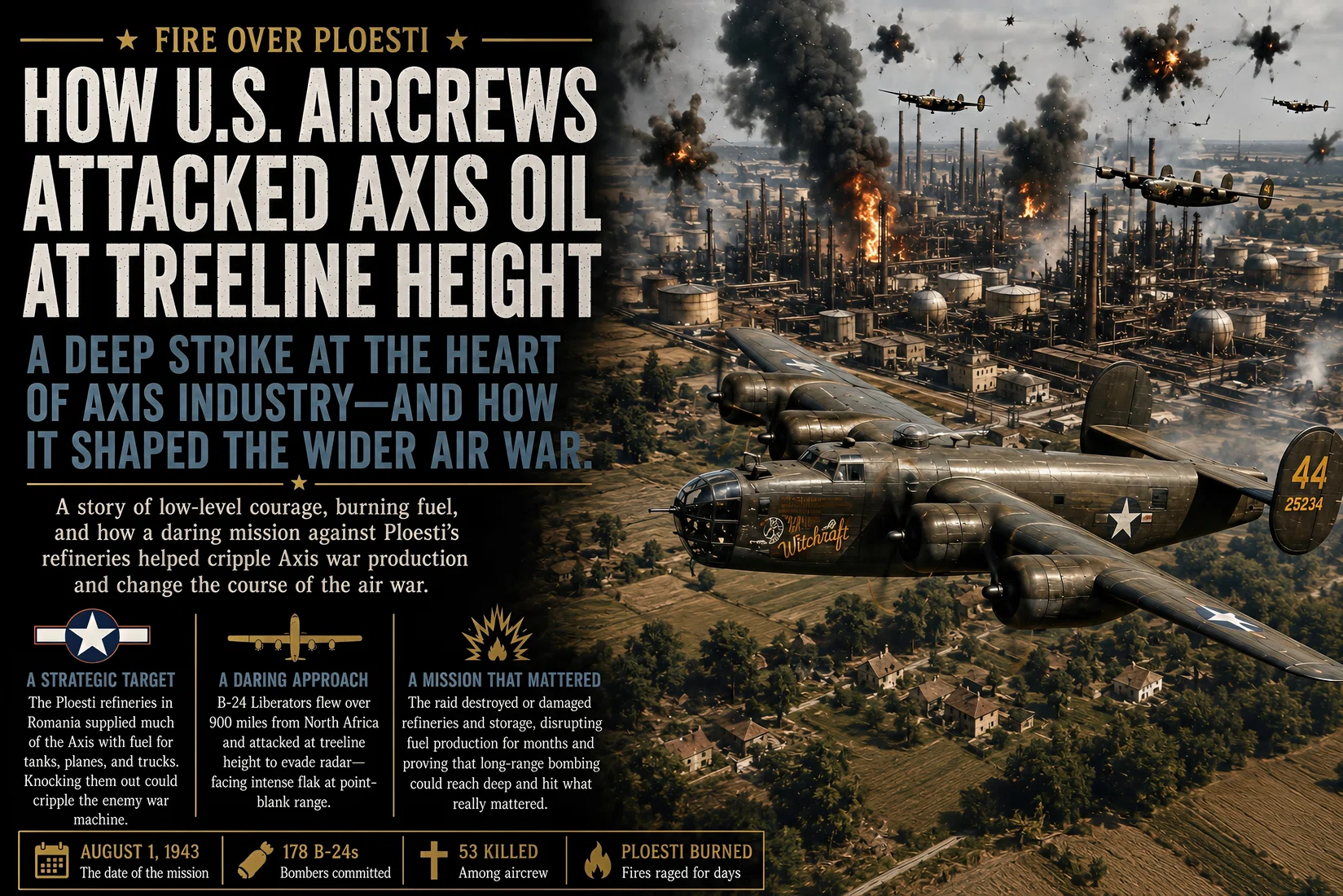
The summer of 1943 found the United States Army Air Forces looking for ways to hit the Axis where it hurt most: oil. From airfields in North Africa, more than one hundred heavy bombers took off for a long-range, low-level mission against refineries around Ploesti, Romania, a key supplier of fuel to Germany. Flying at treetop height to evade radar and fighters, the crews encountered dense flak, smoke, and confusion around the target.
Dated Historical Context
A RECORDED MOMENT IN HISTORY
Operation Tidal Wave strikes Ploesti
The summer of 1943 found the United States Army Air Forces looking for ways to hit the Axis where it hurt most: oil. From airfields in North Africa, more than one hundred heavy bombers took off for a long-range, low-level mission against refineries around Ploesti, Romania, a key supplier of fuel to Germany. Flying at treetop height to evade radar and fighters, the crews encountered dense flak, smoke, and confusion around the target. Some formations became separated or misdirected, yet pressed their attacks through walls of fire and explosions. The raid inflicted serious damage and produced acts of extraordinary courage that would be recognized with the Medal of Honor. At the same time, losses were staggering and Romanian and German workers got many facilities back into operation sooner than hoped. Operation Tidal Wave highlighted both the promise and the limits of strategic bombing, and it spurred refinements in planning, navigation, and target analysis for later campaigns.
Read the complete weekly DispatchTrackpads Source Register