Reference Entry
ASSAULT AT COLD HARBOR
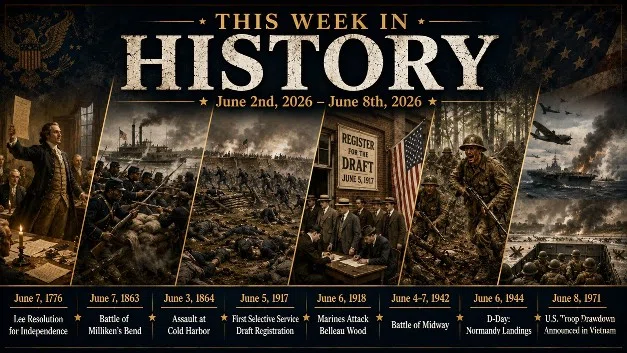
Just a year later in war-time June, Union and Confederate armies were locked in the Overland Campaign, a grinding series of battles as Ulysses S. Grant tried to force Robert E. Lee’s Army of Northern Virginia back toward Richmond. On June 3rd, 1864, Grant launched a massive frontal assault at Cold Harbor, where entrenched Confederate troops held strong positions behind earthworks and rifle pits.
Dated Historical Context
A RECORDED MOMENT IN HISTORY
Assault at Cold Harbor
Just a year later in war-time June, Union and Confederate armies were locked in the Overland Campaign, a grinding series of battles as Ulysses S. Grant tried to force Robert E. Lee’s Army of Northern Virginia back toward Richmond. On June 3rd, 1864, Grant launched a massive frontal assault at Cold Harbor, where entrenched Confederate troops held strong positions behind earthworks and rifle pits. In minutes, waves of attacking Union soldiers were cut down by small-arms and artillery fire, and repeated attempts to resume the attack only added to the toll. Veterans later remembered Cold Harbor as one of the most futile and bloody charges they had ever seen, and Grant himself came to regret ordering it. The battle underscored how field fortifications, rapid-fire weapons, and disciplined defenders could dominate open ground, offering a grim preview of industrial-age warfare and the kind of trench stalemates that would reappear on European battlefields half a century later.
Read the complete weekly DispatchTrackpads Source Register