Reference Entry
OPERATION EAGLE CLAW
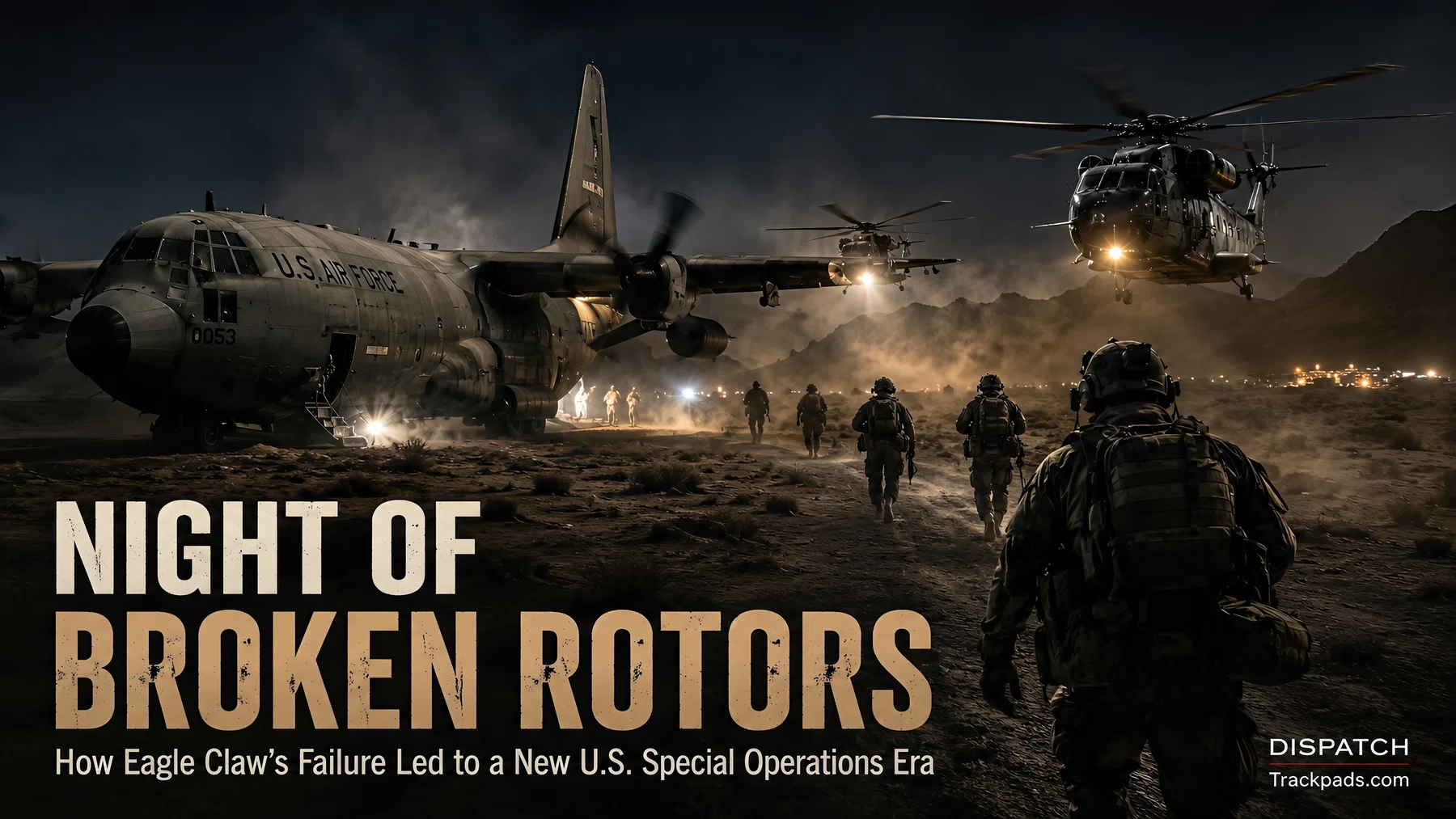
During the Iran hostage crisis, the United States attempted a daring special operations mission to rescue embassy personnel held in Tehran. Code-named Operation Eagle Claw, the plan called for long-range transport aircraft and helicopters to rendezvous at a remote desert staging site, then move on toward the capital under cover of darkness. On April 24th, 1980, mechanical problems, dust, and the challenges of coordinating complex movements over great distances began to undermine the mission.
Dated Historical Context
A RECORDED MOMENT IN HISTORY
Operation Eagle Claw
During the Iran hostage crisis, the United States attempted a daring special operations mission to rescue embassy personnel held in Tehran. Code-named Operation Eagle Claw, the plan called for long-range transport aircraft and helicopters to rendezvous at a remote desert staging site, then move on toward the capital under cover of darkness. On April 24th, 1980, mechanical problems, dust, and the challenges of coordinating complex movements over great distances began to undermine the mission. At the staging area, as aircraft maneuvered in tight quarters, a helicopter collided with a transport plane, causing a catastrophic fire that killed eight American servicemembers. The operation was canceled on the spot, and the surviving forces withdrew, leaving wreckage and deep national disappointment behind. Out of that painful failure came a hard review of joint training, equipment, and command arrangements, changes that would help shape the modern structure of American special operations forces.
Read the complete weekly DispatchTrackpads Source Register