Reference Entry
ESTABLISHMENT OF THE REVENUE CUTTER SERVICE
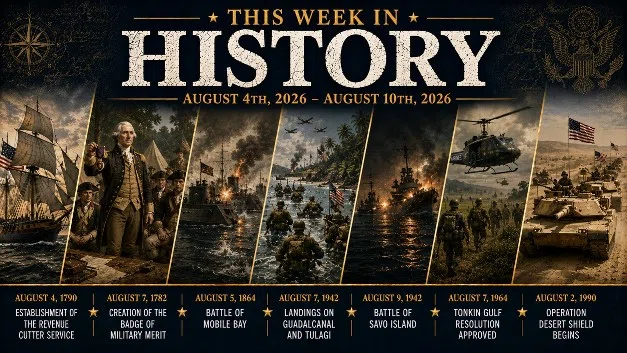
On August 4th, 1790, the young federal government took a practical step to secure both its finances and its coasts. Responding to proposals from Secretary of the Treasury Alexander Hamilton, Congress authorized the construction of a small fleet of revenue cutters to enforce customs laws and combat smuggling. These fast sailing vessels and their crews patrolled harbors and coastal routes, boarding ships, checking cargoes, and ensuring that customs duties reached the federal treasury.
Dated Historical Context
A RECORDED MOMENT IN HISTORY
Establishment of the Revenue Cutter Service
On August 4th, 1790, the young federal government took a practical step to secure both its finances and its coasts. Responding to proposals from Secretary of the Treasury Alexander Hamilton, Congress authorized the construction of a small fleet of revenue cutters to enforce customs laws and combat smuggling. These fast sailing vessels and their crews patrolled harbors and coastal routes, boarding ships, checking cargoes, and ensuring that customs duties reached the federal treasury. In an era before a standing navy had taken shape, the Revenue Cutter Service often represented the only federal armed presence along vast stretches of shoreline. Over time, the cutters took on additional missions, including search and rescue and support to naval operations in war. When the service later merged with the Life-Saving Service to form the United States Coast Guard, it brought with it this founding date and tradition. The August 4th anniversary therefore stands as the Coast Guard’s birthday and a reminder of the longstanding link between maritime law enforcement and national defense.
Read the complete weekly DispatchTrackpads Source Register