Reference Entry
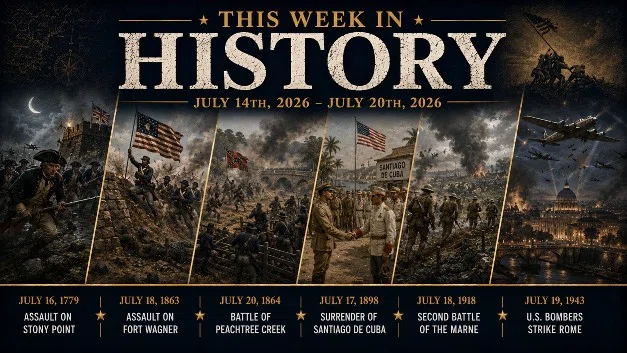
SURRENDER OF SANTIAGO DE CUBA
During the Spanish–American War, the Cuban city of Santiago became the focal point of United States operations on land and sea. After the destruction of the Spanish fleet outside the harbor and hard fighting on heights like San Juan and Kettle Hill, Spanish forces inside Santiago found themselves isolated and outgunned. On July 17th, 1898, they formally surrendered the city to United States forces, ending organized resistance in that sector of the campaign.
Dated Historical Context
A RECORDED MOMENT IN HISTORY
Surrender of Santiago de Cuba
During the Spanish–American War, the Cuban city of Santiago became the focal point of United States operations on land and sea. After the destruction of the Spanish fleet outside the harbor and hard fighting on heights like San Juan and Kettle Hill, Spanish forces inside Santiago found themselves isolated and outgunned. On July 17th, 1898, they formally surrendered the city to United States forces, ending organized resistance in that sector of the campaign. The fall of Santiago effectively broke Spanish military power in Cuba and accelerated negotiations that would end the war. Beyond the immediate battlefield, the surrender signaled the arrival of the United States as a significant overseas power, with new responsibilities and debates over empire, occupation, and the future of territories such as Cuba, Puerto Rico, and the Philippines.
Read the complete weekly DispatchTrackpads Source Register