Reference Entry
GULF OF TONKIN RESOLUTION
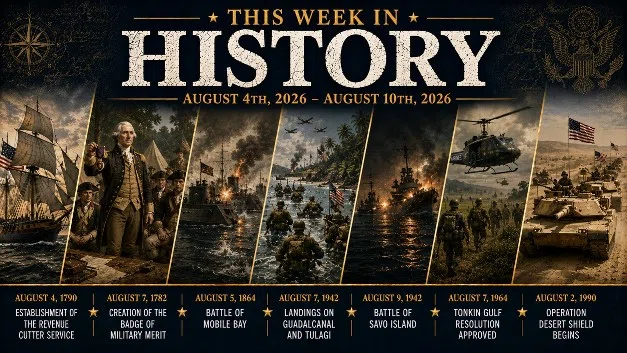
On August 7th, 1964, the United States Congress passed what became known as the Gulf of Tonkin Resolution, a short but far-reaching measure tied to contested events earlier that week. American destroyers operating off the coast of North Vietnam had reported an attack on August 2nd and a second, disputed encounter on August 4th, prompting the Johnson administration to order retaliatory air strikes, known as Operation Pierce Arrow, on August 5th.
Dated Historical Context
A RECORDED MOMENT IN HISTORY
Gulf of Tonkin Resolution
On August 7th, 1964, the United States Congress passed what became known as the Gulf of Tonkin Resolution, a short but far-reaching measure tied to contested events earlier that week. American destroyers operating off the coast of North Vietnam had reported an attack on August 2nd and a second, disputed encounter on August 4th, prompting the Johnson administration to order retaliatory air strikes, known as Operation Pierce Arrow, on August 5th. Seeking a show of unity and authority, the administration then asked Congress for a resolution affirming that the president could take all necessary measures to repel attacks and prevent further aggression in Southeast Asia. The House and Senate approved it by overwhelming margins, with little dissent and limited debate. In the years that followed, the resolution served as the primary legal framework cited for major expansions of United States ground and air operations in Vietnam, even as investigations raised serious questions about what had actually happened in the gulf. The August 7th anniversary therefore marks a political and military hinge point, when a short document opened the door to a long and costly war.
Read the complete weekly DispatchTrackpads Source Register