When Nuclear Power Went to Sea
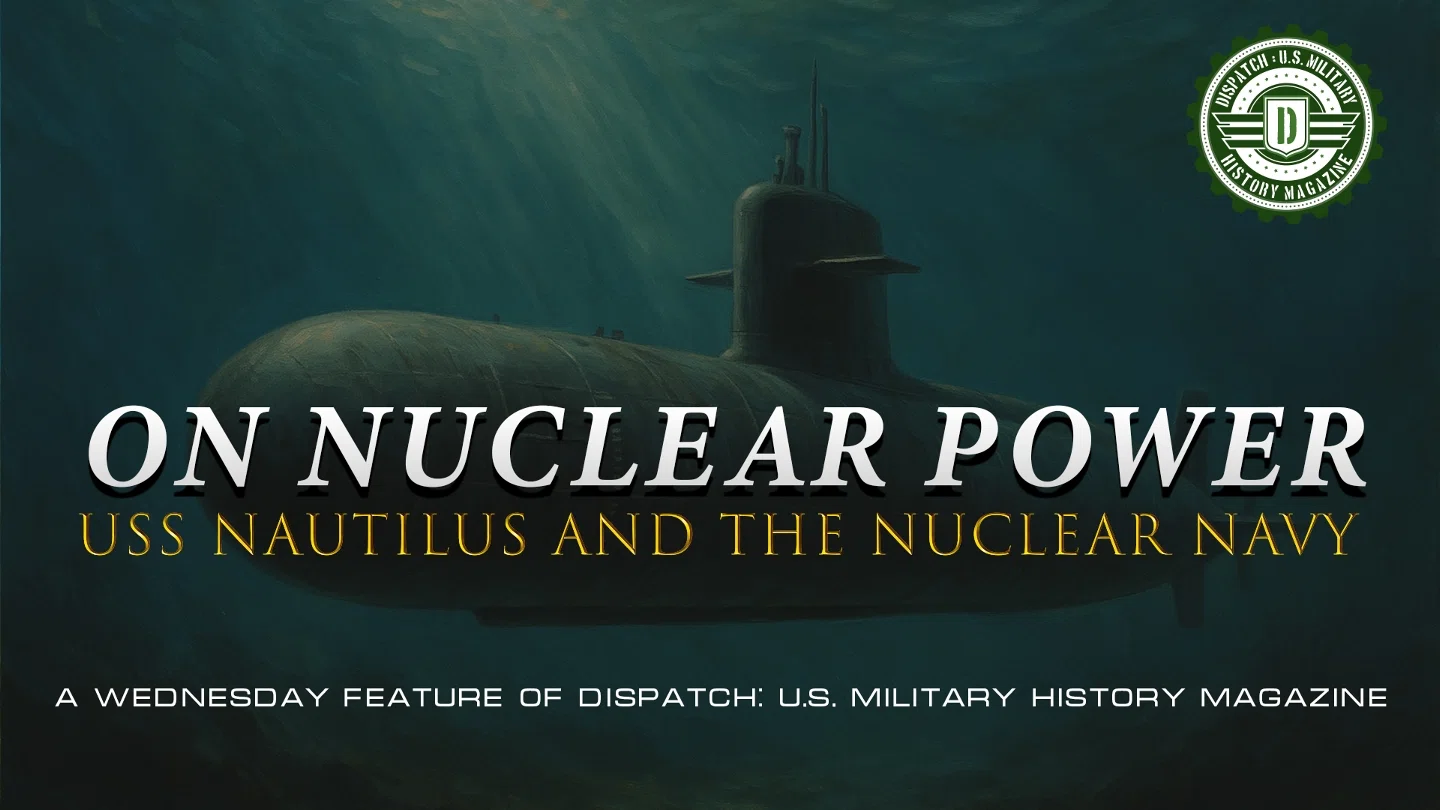
On a cold January day in 1955, a long, shark-like hull eased away from the pier at Groton, Connecticut. The submarine was gray like countless others before it, but deep inside its pressure hull something entirely new was waking up. Instead of banks of diesel engines and rows of batteries, a compact nuclear reactor was driving spinning turbines, feeding power straight to the shafts. Down in the control room, sailors watched needles, gauges, and dials, waiting to see if theory would hold up when steel met seawater.
The boat was USS Nautilus, SSN-571, the world’s first operational nuclear-powered submarine. Her captain, Eugene Wilkinson, carried a short, historic phrase ready to send once he was sure everything was working as designed. The crew felt the subtle change as the ship picked up speed without the usual vibration and noise of diesels. There was no need to snorkel, no need to surface for air, no moment when the machinery had to pause so batteries could be coaxed back to life. Nautilus simply gathered way and kept going.
When Wilkinson was satisfied, he sent a message that would ring around the naval world: “UNDERWAY ON NUCLEAR POWER.” The words were spare, almost routine, but everyone who read them understood that a line had been crossed. This was not another incremental improvement in hull shape or sonar range. It was a break with the entire way submarines had operated since the days of hand-cranked boats and early diesels.
For the sailors aboard, the moment blended the familiar and the unknown. They still stood watch, turned valves, and logged readings, but they were also living inside a proof of concept that carried both promise and risk. If the reactor plant worked as advertised, Nautilus could stay submerged for weeks, even months, limited mainly by food and human endurance. If it failed, the result would not just be a lost ship, but a major blow to the Navy’s confidence in nuclear power at sea.
As the submarine slipped beneath the surface and settled into its first nuclear-powered run, no shots were fired and no enemy was in sight. Yet the quiet wake folding shut over Nautilus marked the start of a new era. In that seemingly routine evolution from pier to open water lay the seed of a revolution that would change how fleets maneuvered, how oceans were patrolled, and how future wars at sea might be fought.
Rewriting the Rules Beneath the Waves
To understand what was at stake when Nautilus went to sea, it helps to remember how submarines had fought up to that point. In both world wars, diesel-electric boats had been powerful but constrained weapons. They could strike hard, but they had to surface or snorkel regularly to run their engines, recharge batteries, and refresh the air. Their time truly submerged was measured in hours, not days, and every trip to the surface risked detection by aircraft, radar, and patrolling escorts. Submarines were hunters, but they were also vulnerable whenever they came up to breathe.
The Cold War sharpened those limits into a strategic problem. The United States and its allies needed a way to protect long transatlantic shipping lanes, shadow Soviet fleets, and, increasingly, prepare for the possibility of nuclear-armed submarines prowling the deep. Diesel boats remained useful, but they could not hide long enough or move fast enough underwater to dominate vast ocean spaces. At the same time, advances in sonar, radar, and anti-submarine tactics were making traditional submarines easier to track and trap.
Nautilus offered a different path. With a nuclear reactor on board, a submarine no longer depended on the surface world for air or frequent refueling. She could sprint submerged for extended periods, change depth and course without worrying about battery charge, and simply refuse to appear on the surface where aircraft and radar waited. That endurance translated into new roles: high-speed scouting ahead of carrier groups, long patrols in the Arctic, and eventually the ability to carry ballistic missiles on boats that might never be seen until they chose to be.
Beyond tactics, the program carried immense political and institutional weight. The Navy was betting not just on a new class of ship, but on a new way of thinking about power at sea, with Admiral Hyman Rickover driving standards that were unforgiving and costly. If Nautilus succeeded, it would justify an entire nuclear fleet and lock in a technological edge over the Soviet Union. If she failed, critics of nuclear power and skeptics of expensive new programs would have powerful ammunition.
That is why a single message sent from a submarine’s radio shack mattered far beyond the Thames River. It signaled that the United States Navy had found a way to uncouple submarines from the surface in a way no rival could yet match. From that point forward, every admiral and planner thinking about undersea warfare had to reckon with a boat that could vanish beneath the waves and stay there for as long as its crew and supplies would allow. The birth of the nuclear navy was not just a technical milestone; it was a shift in how nations thought about control of the seas in a nuclear-armed world.
Rickover’s Vision and a Bold Bet
The path to Nautilus began years before her hull touched the water, in conference rooms, laboratories, and test sites where nuclear power was still an unproven possibility for ships. In the years after the Second World War, atomic energy was mostly associated with weapons and experimental power plants on land. Turning that same energy into a reliable, compact propulsion system that could fit inside a submarine hull demanded a combination of engineering ambition and institutional stubbornness. One of the key figures pushing the idea forward was Admiral Hyman Rickover, who insisted on rigorous standards, obsessive training, and a culture that treated safety and reliability as non-negotiable.
Rickover’s team, working with industry partners and naval designers, had to solve problems that had never been faced at sea. The reactor had to be small enough to fit inside a pressure hull yet powerful enough to drive a full-sized combat submarine at sustained high speeds underwater. It had to be shielded so that crew members could serve safely for years, and it had to respond predictably to the constant changes in speed and depth that defined submarine operations. Every valve, pump, and control rod had to work not in the calm of a shore-based plant, but in a steel tube rolling and pitching beneath the waves.
Inside the Navy, the program was not without critics. Some leaders worried about cost, complexity, and the political fallout of putting reactors into the fleet. Others questioned whether the promised gains in endurance and speed would justify the risk of such a radical change. Diesel-electric submarines had earned their reputation in wartime patrols; they were understood, relatively cheap, and backed by a large cadre of experienced crews and engineers. Moving to nuclear power meant rewriting training pipelines, maintenance practices, and operational doctrine.
Yet the strategic environment was changing quickly. The emerging Cold War with the Soviet Union pushed the United States to look for ways to project power and gather intelligence in oceans that might soon be crowded with new threats. Long-range bombers and carriers could be seen and tracked; submarines that did not need to surface promised a different kind of presence. By the early 1950s, the decision was essentially made: the Navy would build a true nuclear-powered submarine, and Nautilus would be the first test of whether this bold bet on technology could deliver a real advantage at sea.
Proving a New Kind of Submarine at Sea
Once Nautilus was commissioned and her crew trained on the unfamiliar systems of a nuclear plant, the real test moved from drawings and test stands to open water. Early cruises focused on shaking down the new submarine, building confidence in how the reactor responded to rapid speed changes, emergency drills, and the constant demands of patrol life. Sailors learned how the boat felt when it accelerated underwater without the old rumble of diesel engines or the drain of battery run-downs. Officers tested how quickly Nautilus could reposition, change depth, and hold high speeds for hours on end.
These trials soon turned into demonstrations designed to show what nuclear power could do for operations. Nautilus conducted long submerged runs that would have been impossible for a diesel-electric boat, staying underwater for days and weeks while maintaining substantial speed. She surged across the Atlantic, reducing passage times and proving that a submarine could serve as a fast scout, not just an ambush platform. In fleet exercises, Nautilus practiced slipping through anti-submarine screens, using her sustained underwater speed to approach, attack, and then disappear before surface ships could react.
As the Cold War hardened, Nautilus moved from demonstrations to missions that carried strategic meaning. One of the most dramatic came when she headed north into Arctic waters, pushing under ice where earlier submarines could not safely operate for long. There, nuclear propulsion showed its full value. The ability to stay submerged, maneuver at will, and avoid the need to surface in ice-choked seas opened a new route for undersea operations. When Nautilus crossed under the polar ice and reached the vicinity of the geographic North Pole, it sent a clear signal that the United States could move submarines through waters once thought inaccessible.
For the sailors on board, each of these cruises was both a test of endurance and a lesson in how different their world had become. They had to master new watch routines centered on reactor control, maintain strict engineering discipline, and adapt tactics to a boat that could outrun many surface ships while still submerged. Commanders learned to think of time and distance in new ways, planning patrols that used continuous high speed rather than short bursts between snorkel periods. Opposing navies were also watching, taking notes and accelerating their own nuclear programs.
By the end of Nautilus’s early years at sea, the “fight” had not been a single battle but a series of proving grounds: shakedown cruises, high-speed transits, Arctic missions, and fleet exercises that together rewrote the expectations for undersea warfare. The submarine had demonstrated that nuclear power was not just a laboratory concept but a working, repeatable advantage. The stage was set for the next wave of designs and missions, where the lessons learned aboard Nautilus would shape everything from attack submarines to missile boats in oceans around the world.
A Reactor, a Culture, and a Fleet
What ultimately turned Nautilus from a daring prototype into the foundation of an entire nuclear navy was not a single cruise or one headline-grabbing accomplishment. It was the consistent proof that the reactor plant, the crew, and the operational concept worked together under real-world stress. Each successful deployment, each long submerged run, and each exercise where Nautilus outpaced expectations chipped away at doubt inside the Navy and in Washington. The boat did more than meet its design goals; it showed that nuclear power could be operated safely and predictably by disciplined sailors, not just by scientists in lab coats. That reliability, more than any single speed or range figure, convinced leaders that they could plan strategy around this new capability.
Rickover’s demanding culture turned out to be as important as the hardware. Officers and enlisted personnel who served aboard Nautilus and in her support structure absorbed a mindset that treated procedure, training, and accountability as life-or-death matters. Reactor drills, engineering inspections, and performance standards were unforgiving by design. This approach produced crews who could be trusted with complex systems far from help, in waters where mistakes had no easy remedy. Over time, that culture spread through the growing nuclear community, becoming a quiet but critical part of why the technology scaled beyond a one-off experiment.
Nautilus’s ability to execute missions like the under-ice transit toward the North Pole had a powerful effect on strategic thinking. It proved that nuclear-powered submarines could go where older boats could not, and stay there, creating new avenues for intelligence collection, deterrent patrols, and fleet support. The boat’s performance gave weight to arguments for building follow-on classes that would be faster, quieter, and better armed. Once planners saw how a nuclear sub could reshuffle the map, the question shifted from “Should we do this?” to “How quickly can we build more, and how will the other side respond?”
By the time Nautilus had completed her early years of service, the turning point was clear. The Navy no longer saw nuclear propulsion as an experiment on the margins. It had become the standard for front-line submarines and, soon, for key surface combatants and carriers. The die was cast: the undersea balance of power in the Cold War would hinge on fleets built in the image of what Nautilus had proven possible.
From First-of-Its-Kind to Enduring Legacy
In the years that followed, Nautilus shifted from being the newest thing in the fleet to a working member of a rapidly expanding nuclear force. New attack submarines drew on her lessons but improved hull design, quieting, and weapons. Ballistic missile submarines adapted the same propulsion concept to carry nuclear-armed missiles on long, hidden patrols. Together, these boats formed a crucial leg of the nation’s strategic deterrent, promising that any adversary contemplating a first strike would have to account for submarines that could retaliate from unknown positions in the world’s oceans. The basic idea that Nautilus had demonstrated—continuous underwater endurance coupled with sustained speed—became a pillar of Cold War stability.
For the crews who served aboard Nautilus throughout her career, the boat was at once a workplace, a home, and a piece of history. They lived with the daily realities of cramped bunks, watch bills, and maintenance on complex machinery, but they also understood that they were part of something new. Many went on to serve in or command later nuclear submarines, carrying forward the habits and stories forged in those early years. Their experience helped refine training programs, reactor school curricula, and operational doctrine that would shape the nuclear navy for decades.
When Nautilus was eventually retired and preserved as a museum ship, she became a physical reminder of how quickly technology and strategy can pivot. Visitors walking her decks can see the mix of familiar submarine fittings and the specialized spaces devoted to the reactor plant, control systems, and engineering spaces that made her unique. For students of military history, she offers a case study in how innovation demands not just hardware, but institutional change, leadership, and a willingness to accept risk in pursuit of long-term advantage.
Today, every modern nuclear-powered submarine, whether slipping quietly through the deep on patrol or participating in joint exercises, carries a thread of Nautilus’s legacy. The ideas proved by that first nuclear patrol still shape how navies think about sea control, deterrence, and the strategic value of the undersea domain. The story of USS Nautilus is more than a chapter in the history of one ship. It is a reminder that a single vessel, built at the right moment with the right vision behind it, can alter the trajectory of naval warfare for generations.