Low-Level in the Dark Over North Vietnam
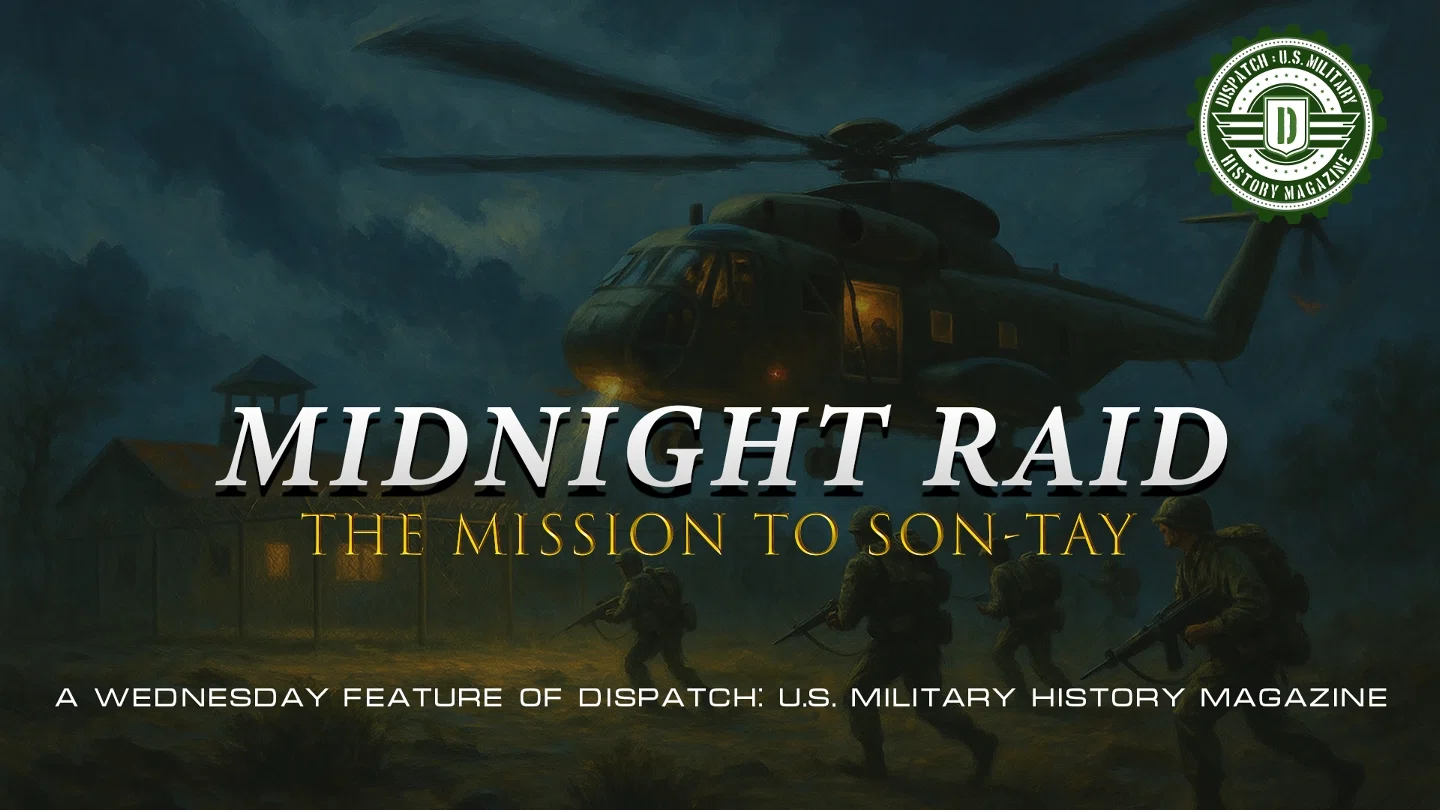
The night sky over North Vietnam was blacked out when the formation crossed the border, a tight knot of transports, helicopters, and escorts knifing in at treetop height. In the lead, specially modified C-130 transports hugged the terrain as their crews watched the glowing radar scopes and dim red cockpit lights, guiding a mixed force of Air Force helicopters and attack aircraft toward a single mark on the map: a prisoner of war camp near the village of Son Tay, just west of Hanoi. Behind those cockpit windows rode the months of planning that had turned a desperate idea into a real mission. On board the helicopters, Army Special Forces raiders sat crowded on the floors, faces striped with camouflage, hands closing and reopening around their weapons as the minute-by-minute schedule ticked in their heads.
The target was close to the heart of North Vietnam’s air defenses, inside the ring that guarded Hanoi and its nearby military sites. The plan called for one helicopter to slam down inside the compound itself, delivering a small assault force straight into the guard towers and cellblocks, while other aircraft landed nearby with support teams and held the perimeter. Above and around them, fighters and attack planes were ready to suppress anti-aircraft guns and keep any response away from the camp for the precious few minutes the raiders needed on the ground. Everything depended on timing and surprise. If the approach was detected early, the raid would turn into a running fight inside the most heavily defended airspace of the war.
As the formation broke into its final attack runs in the early hours of November 21, 1970, floodlights and flares turned the dark camp into a harsh white stage. One helicopter dropped too close to a tree line and crash-landed inside the walls, just as intended, hurling the assault team into the courtyard. Fire tore through guard posts and buildings as the raiders moved fast, clearing each corner and calling out to the Americans they believed were locked inside. What they found instead was empty cells, abandoned bunks, and personal traces of men who were no longer there. In the middle of enemy territory, the Son Tay raiders realized that the camp they had trained for had no prisoners left to save.
Why One Night at an Empty Camp Mattered So Much
From a distance, it is easy to see only the image of American special operators standing in empty barracks and to read the raid as a simple failure. At the time, the stakes looked very different to the people who approved it, planned it, and volunteered to ride into the heart of North Vietnam. By late 1970, the war in Southeast Asia had dragged on for years. Hundreds of American airmen were missing or confirmed captured, many of them held in and around Hanoi. Reports from returned prisoners and intelligence analysts pointed to harsh conditions, poor medical care, and the grinding psychological pressure of captivity. Families at home were organizing, writing, and demanding that their government do more than trade lists of names and quiet diplomatic notes.
Politically, the United States was trying to wind down its ground presence in Vietnam while still applying pressure through air power. The leadership in Washington faced a brutal tension. They wanted to reduce casualties and bring ground troops home, but they also needed to show that American lives already in enemy hands still mattered. The proposed raid on Son Tay promised several things at once. If it succeeded, dozens of captured airmen might be brought out alive, their stories nudging public opinion and perhaps reshaping negotiations. Even if the rescue failed, the very act of striking so close to Hanoi would signal to North Vietnam that prison camps were not safe havens.
For the military services involved, the stakes went beyond one camp. The mission pulled together Joint Special Forces, Air Force transport crews, helicopter pilots, fighter and attack squadrons, and an intricate command structure linking them across the Pacific. It was a test of whether a joint force could move from concept to detailed plan, rehearse in secrecy, and execute a pinpoint operation deep in defended territory. If the United States could put raiders on the ground within sight of Hanoi’s lights and bring them back out again, it would not only answer families’ pleas but also demonstrate to allies and adversaries that American reach and coordination were still formidable. That is why, even knowing that some intelligence was uncertain, senior leaders accepted the risk of sending real men into the dark toward a camp that might already have changed.
From Sketchy Photos to a Joint Plan
The road to Son Tay began not with a dramatic speech but with grainy aerial photographs and troubling reports about American prisoners. Intelligence specialists in Washington and at Pacific headquarters sifted through images of compounds near Hanoi, looking for signs of American captives: men exercising in formation, laundry strung in regular lines, small details that suggested Western habits inside North Vietnamese walls. One site near the village of Son Tay drew particular attention. Analysts believed several dozen American prisoners were being held there, close enough to Hanoi to be well guarded but far enough out to be physically reachable by a carefully planned air assault. Out of that assessment came a question that sounded reckless at first hearing: could a joint force fight its way in and bring those men out?
Once the idea was put on the table, a small circle of planners began to work through the problem in detail. They had to find a route that would move transports, helicopters, and escorts through layers of radar and anti-aircraft guns. They had to pick pilots and Special Forces soldiers who could be trusted with a mission that might never be acknowledged if it failed. A secluded training area in the United States became a stand-in for North Vietnam. Engineers laid out a replica of the Son Tay compound on the ground, using the best available imagery, so that raiders could rehearse every step of the fight in darkness. Crews practiced low-level night flying, timing their turns and altitude changes against a schedule that had to match almost to the second.
At the same time, senior leaders weighed the political and strategic risks. A botched raid could hand North Vietnam propaganda material for years. A successful operation might rescue prisoners but also provoke calls for more daring strikes deeper into the country. The chain of command eventually approved the mission, with strict secrecy. Volunteers from Army Special Forces were told only that they would be attempting a long-range rescue of American prisoners, and that the probability of heavy resistance was high. They accepted anyway, knowing that the men at Son Tay had endured years in captivity. By the time the task force moved forward to its launch point in Southeast Asia, the operation had a code name, a refined script, and a tight clock. All that remained was to test it against the reality of North Vietnamese defenses and the unpredictable chaos of combat.
A Precision Raid in the Wrong Place
When the task force launched in the early hours before dawn, months of rehearsal turned into real movement across black water and darker land. The transports led the way, their crews using radar and carefully plotted waypoints to guide the helicopters along river valleys and low ground that would mask them from radar. Fighter and attack aircraft climbed and descended along their own routes, poised to smash any radars that lit up and to hammer anti-aircraft batteries that came alive. In the helicopter cabins, Special Forces teams checked weapons one last time and ran through the sequence in their heads. One group would crash-land a stripped-down helicopter directly into the compound courtyard, while two other elements would secure the nearby landing zones, cut off any response, and be ready to help load prisoners for extraction.
The approach did not go perfectly. Navigation in the dark, at low altitude, with aircraft spread across miles of sky, left little margin for error. One group of helicopters, meant to land at a separate location, was thrown off by unexpected lights and terrain features and put down near a different compound, which turned out to be a school. There, North Vietnamese troops and civilians were startled awake by the roar of rotors and the crack of gunfire as the raiders fought a brief and confusing firefight before realizing they were not at the prison camp. That misdrop added noise, tracers, and confusion to an operation whose success depended on a few minutes of controlled violence at a single target.
At the actual Son Tay compound, the plan unfolded much closer to the rehearsed script. The helicopter tasked to put raiders inside the camp clipped a tree and slammed into the courtyard, just as trained, its airframe sacrificed to put the assault element precisely where it needed to be. Soldiers spilled out into the open, cleared guard towers, swept through cellblocks, and called out in English for prisoners to come forward. Outside the walls, other teams secured road junctions and river lines, digging in against any quick reaction force that might rush toward the camp from nearby barracks or garrisons. Above, attack aircraft orbited, ready to strike any concentration of enemy forces that formed, while other fighters patrolled to discourage North Vietnamese interceptors.
The tempo on the ground was measured in heartbeats and shouted reports. Within minutes, it became clear that something was wrong. Rooms that should have held dozens of men were empty. The small signs of American presence were old: worn clothing, personal items, and traces of earlier occupation. The raiders confirmed again and again that there were no prisoners to move. That realization hit in the middle of a live raid, under the glow of flares and the growing awareness that the surrounding countryside was fully awake. The force commander on the ground now had to pivot from a rescue to a fighting withdrawal, with empty helicopters waiting and enemy units beginning to probe in toward the noise and fire around Son Tay.
Flawless Execution, Missing Target
The turning point at Son Tay was not a single explosion or last-minute charge. It came in the quiet moments when Special Forces teams swept their last cellblocks and realized there were no Americans to move. On the ground, the force commander had to make a rapid shift from rescue to survival. Years of training pushed aside the shock. The men blew key structures, destroyed equipment, and gathered at the pickup points, determined not to leave anyone from their own ranks behind in the place where they had hoped to find prisoners. That decision, made under pressure, kept the raid from turning into a prolonged firefight under the full weight of North Vietnamese reinforcements.
In the air and at higher headquarters, the mission pivot had its own logic. Escorts and attack aircraft increased their suppressive fire along likely approach routes, discouraging organized counterattacks as the helicopters lifted out. The low-level routes, carefully chosen to avoid radar, now served as escape corridors. The aircrews’ discipline under fire and the rehearsed timing of each phase meant that damaged aircraft could still limp home under the protective umbrella of others. By dawn, the joint task force had done something many had considered impossible: it had put American ground forces on the edge of Hanoi and then brought them back, with no raiders killed in action.
What truly “turned” Son Tay, though, had happened months earlier. North Vietnam had quietly moved the prisoners out, likely in response to flooding threats, changing security priorities, or a mix of both. Gaps in American intelligence meant that shift was not fully recognized in time. The raiders broke into an empty cage because their information was slightly out of date, not because their plan or execution had failed. On a tactical level, the mission was a near textbook success in joint planning, low-level night penetration, and rapid exfiltration from a heavily defended area. On a strategic and human level, its strange combination of flawless execution and absent prisoners would define how the raid was remembered, and how its lessons were carried forward.
An Empty Camp’s Long Shadow
In the immediate aftermath, the Son Tay raid forced both sides to reconsider how prisoners of war were treated and protected. North Vietnam reacted by consolidating many American captives into central facilities in Hanoi, including the already notorious main prison. For the men in those cells, the news that a rescue attempt had been launched was a powerful shock. They learned, often in fragments and rumors, that a force had flown through the heart of the defenses to try to bring them home. That knowledge lifted morale and, over time, contributed to somewhat improved living conditions as guards adjusted to the fear that more raids might follow. The empty camp outside Son Tay still changed life inside other walls.
For families and the American public, the raid became a complex symbol. On one hand, no prisoners walked down the helicopter ramps, and critics pointed to that reality as evidence of a failed gamble. On the other, the operation showed that the government was willing to risk lives and aircraft to keep faith with captured airmen. The image of Special Forces soldiers fighting their way through a camp near Hanoi, even for nothing more than vacant bunks, became part of the larger story of how the war’s human costs were carried on the home front. It also shaped later debates over how far the United States should go to recover its people from hostile territory.
Inside the military, Son Tay had an even longer legacy. The raid’s planning and execution fed directly into the growth of modern joint special operations, where precise intelligence, rehearsed ground forces, and tailored air support come together for high-risk missions. The lessons learned about low-level night flying, detailed rehearsal, and cross-service coordination informed training and doctrine long after the last helicopters from Son Tay had returned to base. Today, when planners discuss hostage rescues, strikes against high-value targets, or deep raids into defended airspace, echoes of that night in 1970 are never far away. An empty camp on the edge of Hanoi still casts its shadow across how the United States thinks about rescuing its own, balancing risk and obligation, and sending small teams into the dark in the name of those left behind.