In Action
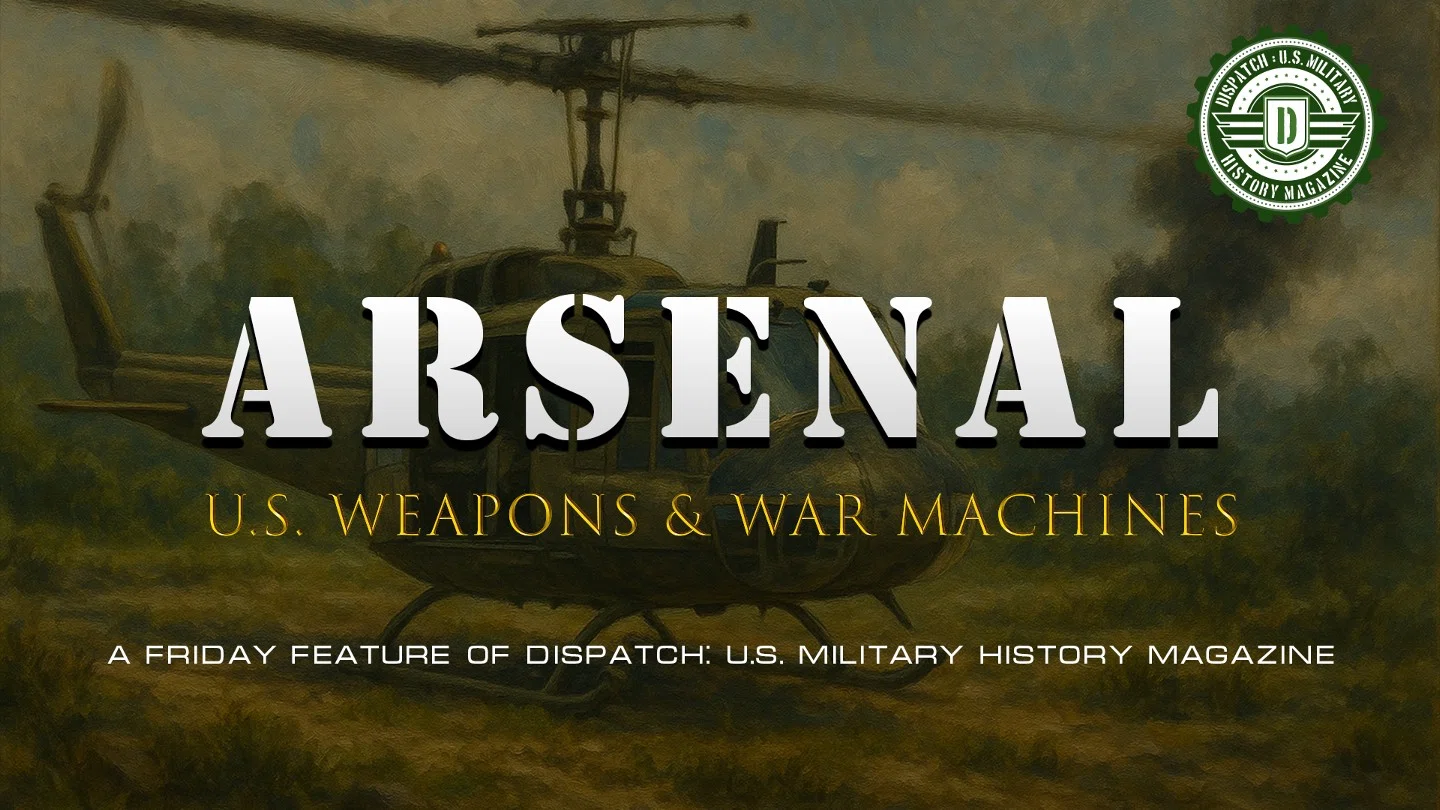
The jungle is burning and the air tastes like fuel and red dust. Below, a tree line in the Central Highlands of Vietnam flashes with muzzle blasts, thin streaks of tracers reaching up toward the formation of olive-drab helicopters. Inside one of them, a UH-1 “Huey,” the cabin vibrates so hard the paratroopers’ boots buzz against the deck. The door gunner leans into his mounted machine gun, firing short, controlled bursts down the right side of the approach lane, trying to spot the muzzle flashes before they spot him.
The pilot is flying a shallow descent, keeping just enough speed to make a hard break if enemy fire chews in from the front. His copilot calls airspeed and altitude over the intercom, voice steady out of habit more than calm. In the back, the crew chief watches the rotor clearance as trees whip past frighteningly close, one hand on the intercom box and the other resting on the frame, feeling the machine’s shudder through his fingertips.
Ahead, colored smoke marks the landing zone. The ground unit has thrown it to signal wind direction and location, but the hue of the smoke also tells the pilots what they are flying into: hot, contested, and under direct fire. The Huey flares, hovering just long enough for the infantry to spill out and fan toward the scrub. The pilots count the seconds, because every extra heartbeat in the zone is another chance for a lucky shot to find the engine, transmission, or tail boom.
In a few moments the helicopter is climbing away, lighter by the weight of its squad and heavier by the knowledge that it will be back, again and again, to the same patch of contested ground. This is what the Huey was built for: turning terrain that stopped armies into terrain that slowed them, and giving commanders a new way to think about the battlefield.
The Problem It Was Built To Solve
In the years after the Second World War and the Korean War, the United States Army knew that the old way of moving infantry and supplies was running out of road. Trucks, trains, and even armored columns were chained to valleys, road nets, and chokepoints that smart opponents could mine, ambush, or simply bypass. Jet aircraft brought immense firepower, but they needed runways and could not hover over a clearing or touch down on a ridgeline. Light liaison aircraft and early helicopters had proven their worth in evacuation and observation, yet they lacked the power, capacity, and reliability to lift whole units into battle at will.
Strategists were wrestling with two different futures at once. One imagined mechanized forces scattered across an atomic battlefield, needing rapid evacuation and resupply under the threat of nuclear weapons. The other imagined limited wars in rough terrain, where small units might need to deploy quickly into jungles, mountains, and rice paddies far from good roads. In both visions, the same question kept coming up: how do you give ground forces something like the freedom of movement that air forces already enjoyed?
Existing rotary-wing aircraft could not solve it. Piston-engine helicopters struggled in hot, high conditions and carried too few troops. Their maintenance demands were high, and performance left little margin for error when fully loaded or under fire. The Army wanted a turbine-powered utility helicopter that could lift a useful load of troops or supplies, evacuate wounded quickly, and support emerging airmobile tactics without collapsing under the workload of daily combat operations.
Out of that demand came a new family of designs, one of which would become the HU-1, later redesignated the UH-1 Iroquois, and almost immediately nicknamed the Huey. It was meant to be a flying truck, ambulance, and gun platform in one adaptable airframe. As doctrine shifted toward air assault and “vertical envelopment,” in which infantry would arrive from above rather than along a road, the Huey and its growing family of variants became central to how the Army planned to fight and survive in places like Vietnam.
From Design Board To Production
The Huey’s journey started long before it was dropping infantry into hot landing zones. In the early 1950s, as the United States Army explored the idea of air mobility, it needed a practical turbine powered helicopter that could serve as a general purpose workhorse rather than a fragile experimental machine. Bell Helicopter won a competition with a clean, relatively simple design built around a single turboshaft engine above the cabin, a two bladed main rotor, and a slender tail boom. Early prototypes, sometimes designated XH-40, proved that a light helicopter with a turbine engine could lift more, respond faster, and survive better than the piston powered aircraft then in service.
Testing quickly highlighted tradeoffs that would shape the final machine. Engineers pushed for more power and lift, which meant a stronger transmission and rotor system, while the Army wanted a cabin that could carry a useful squad plus their gear. Every kilogram devoted to armor or electronics had to be justified against fuel load and troop weight. Designers refined the fuselage for better visibility and airflow, accepting a somewhat boxy profile in exchange for a large side door opening that would make loading casualties and troops far easier in the field. Reliability and ease of maintenance received just as much attention, because the helicopter would only matter if it could fly multiple sorties a day from rough forward bases.
At a glance, the UH-1 series was a light utility helicopter built by Bell for the United States Army and other services. It entered service in the late 1950s and came of age during the Vietnam War. A typical Huey troop carrier variant carried a crew of pilot, copilot, crew chief, and often a door gunner, plus roughly a squad of infantry in the cabin. Primary armament in the transport role consisted of door mounted machine guns, while dedicated gunship versions carried fixed forward firing guns, rockets, and sometimes grenade launchers. In level flight it could move at well over one hundred miles per hour and had the range to carry troops from distant bases into remote landing zones without refueling.
As confidence grew, production orders expanded and multiple variants spun off the same basic airframe. Early medevac versions evacuated wounded from the field, while training models helped build the pool of pilots needed for large scale air assault operations. By the time American involvement in Vietnam deepened, the Huey was no longer an experiment. It was a mature, mass produced utility helicopter that could be assembled, shipped, and operated in large numbers, ready to anchor the new airmobile doctrine.
Inside The Weapon
To understand why the Huey left such a mark on its crews, it helps to walk through the aircraft from nose to tail. Up front, the cockpit places the pilot and copilot side by side beneath a wide greenhouse of glass panels. Visibility is excellent by design, with large forward and side windows giving a clear view of terrain, treetops, and other aircraft in the formation. The instrument panel is simple by modern standards, with essential flight gauges, engine instruments, and radios laid out so that either pilot can monitor the health of the helicopter while the other concentrates on flying. Between and above them, overhead controls and switches connect directly to the engine and rotor systems, a constant reminder that this is a machine that rewards careful hands and punishments rough ones.
Behind the cockpit bulkhead lies the main cabin, the heart of the Huey’s utility. Metal bench seats line the sides, and in a pure troop carrier configuration they can be folded up or removed to make room for stretchers, cargo, or additional ammunition. Wide sliding doors on both sides can be left open in flight, turning the cabin into a breezy, deafening space where door gunners crouch behind their weapons and infantrymen look straight down at the jungle passing beneath them. The floor is reinforced to tolerate hard usage, boots, mud, and fuel spills, because this aircraft is expected to operate from crude landing strips and cleared paddies, not pristine airfields.
Above the cabin roof sits the turboshaft engine, cowled but very much present in the vibration and noise that permeate the airframe. Its power flows through a transmission and into the two bladed main rotor, whose great disc defines the aircraft’s working envelope. The tail boom carries the drive shaft out to the tail rotor, which counters the torque of the main blades and responds to the pilot’s pedal inputs to yaw the helicopter. Mechanically, it is a straightforward layout, but every component is a compromise between weight, strength, and the ability to survive combat damage and hard landings.
The crew that lives inside this framework develops its own rhythm. The aircraft commander, usually in the right seat, makes the final calls on approach direction, landing decisions, and emergency procedures. The copilot manages radios, navigation, and scanning for threats or obstacles when the workload spikes. In the back, the crew chief treats the Huey as his or her charge, handling daily inspections, minor repairs, and the constant cleaning and adjusting that keep the helicopter flying. The door gunner, sometimes the same person in smaller crews, focuses on providing suppressive fire, calling out incoming threats, and helping troops get on and off the aircraft under pressure.
Subsystems support this teamwork in ways that are easy to overlook. Intercom headsets knit the crew into a single nervous system, allowing quiet corrections and quick warnings to pass between cockpit and cabin despite the rotor noise. Radios tie the helicopter into higher headquarters, ground units, and other aircraft, making it a node in a wider network rather than an isolated airframe. Fuel tanks, often placed under or beside the cabin floor, give the Huey its range but also create vulnerabilities that crews learn to respect when planning their approaches and holds.
For the soldiers riding in back, the Huey is both a cramped metal box and a lifeline. The smell of fuel, hydraulic fluid, and sweat, the slap of rotor wash, and the shouted last minute instructions before landing become part of the memory of combat itself. In training, instructors talk about center of gravity, rotor disc loading, and approach profiles. In the field, troops learn in a very direct way what those words mean when a heavily loaded helicopter claws for altitude over a hot landing zone or drops sharply into a tight clearing. The machine may be a product of engineering choices, but for the people inside it, those choices are experienced as noise, vibration, trust, and fear.
Baptism Of Fire
When the Huey truly entered the public consciousness, it did so against the backdrop of red earth, elephant grass, and distant tree lines in Vietnam. In the mid 1960s, as American ground forces increased, air cavalry and airmobile units began using the helicopter not simply as a taxi but as the central tool of their fighting style. Operations in the Central Highlands and valleys like Ia Drang showed what this meant in practice. Companies of infantry no longer marched for hours to reach a fight. Instead, they lifted off in serials of helicopters, staggered in altitude and spacing, then descended toward landing zones that were sometimes nothing more than small clearings cut out of dense jungle.
In one well known pattern, gunship variants of the Huey or heavier attack helicopters would orbit and rake suspected enemy positions with rockets and machine gun fire as the troop carriers approached. The transport Hueys then darted in, flared, and hovered just long enough for their passengers to jump from the skids into tall grass or dust. Moments later the aircraft climbed away to bring in another wave or to evacuate the first wounded. Days of marching and staging collapsed into minutes of controlled chaos on a landing zone that could be as deadly as any trench line or beachhead.
These early battles were a brutal test of the theory of air assault. Commanders discovered that the same helicopter that could deliver troops rapidly could also be pinned down or destroyed if enemy forces were close enough and disciplined enough to hold their fire until the landing. At Ia Drang, for example, landing zones such as X Ray and Albany showed both the power and the vulnerability of airmobile tactics. When properly supported, Hueys could reinforce isolated companies, shift forces quickly along a fluid front, and pull casualties out of terrain that would otherwise have condemned them. When taken by surprise or pressed too close to overwhelming enemy forces, those same aircraft became thin skinned targets in a narrow corridor of approach and departure.
Over time, units refined their tactics. They adjusted approach directions to exploit terrain masking, coordinated more tightly with artillery and fixed wing aircraft, and experimented with suppressive fire techniques from the door guns. Pilots learned to read wind, smoke, and enemy fire patterns in an instant, choosing whether to wave off or commit. Infantry learned how to move off the landing zone quickly, secure perimeters, and mark fresh clearings for follow on lifts. Through success and bitter loss, the Huey proved that air assault could work, but only when commanders respected its limits and planned carefully for the moment when the aircraft and the troops were most exposed.
Strengths And Weaknesses
From the perspective of its crews and passengers, the Huey’s greatest strength was its versatility. It could deliver infantry, evacuate the wounded, haul ammunition and supplies, and provide direct fire support, often with the same airframe reconfigured between missions. Pilots praised its responsive controls and the way its turboshaft engine gave them a margin of power, especially compared to earlier piston powered helicopters. The large side doors and open cabin made loading and unloading fast, which mattered immensely when every second on a hot landing zone could mean the difference between life and death. Ground commanders valued the way Hueys turned ridgelines, rivers, and jungle into challenges rather than absolute barriers, giving them options to outflank or reinforce in hours instead of days.
Those same qualities came with serious weaknesses. The Huey was not heavily armored. While some critical areas and crew positions received protection, the aircraft remained vulnerable to concentrated small arms and heavy machine gun fire. Fuel tanks, control linkages, and rotor blades could all be damaged by hits that a tank or armored personnel carrier would shrug off. In hot, high conditions or when heavily loaded, performance margins tightened, forcing pilots to nurse their power and accept that a fully burdened helicopter might struggle to clear trees or climb rapidly away from a landing zone. Maintenance demands were also relentless. Dust, heat, and the strain of repeated hard landings punished engines, transmissions, and rotor systems, keeping mechanics and crew chiefs busy around the clock.
Enemies learned to exploit the helicopter’s vulnerabilities. They studied approach patterns, timed their fire to moments when aircraft were slow and fully committed, and used terrain to mask their positions until the last possible second. At the same time, those on the receiving end of Huey borne assaults came to fear how quickly a quiet valley or ridgeline could fill with enemy troops delivered from the sky. For crews, the balance of strengths and weaknesses was personal. They knew that the aircraft gave them reach and flexibility no earlier generation had enjoyed, but they also lived with the knowledge that a single burst of fire in the wrong place could bring the machine down in seconds.
Variants And Evolution
As the basic UH-1 airframe proved itself, it became a family of related machines tailored to different roles. Early medevac variants were configured to carry litters and medical attendants, turning the helicopter into a flying ambulance that could pull wounded soldiers out of contact and deliver them to surgical facilities far faster than ground transport ever could. Troop carrier versions emphasized seating and door gun mounts, while dedicated gunships traded cabin space for fixed forward firing guns, rocket pods, and sometimes grenade launchers. The combination of troop ships and gunships in a single mission gave commanders a flexible toolset, pairing delivery and protection in one mixed formation.
Over time, more powerful engines and refined rotor systems appeared, giving later Huey variants better performance in demanding conditions. Improved avionics and communications suites increased their ability to coordinate with ground units and other aircraft, especially in poor weather or at night. Some versions were adapted for command and control, with extra radios and mapping equipment that allowed leaders to oversee operations from an airborne vantage point. Others served as training platforms, helping to build the large cadre of pilots and crews needed to sustain high sortie rates.
The Huey’s basic design also inspired or fed into later utility helicopters as technology advanced and requirements shifted. Experience in Vietnam and other theaters demonstrated the limits of a single engine machine under heavy fire or in extreme conditions, influencing the development of twin engine successors with greater lift, redundancy, and protection. Yet for many air forces and armies around the world, variants of the Huey and license built relatives continued to serve for decades, often upgraded with modern avionics and weapons while retaining the same familiar silhouette and core layout.
Legacy And Where To See It Today
Long after the last major American combat units left Vietnam, the sound of Huey rotors remained one of the most recognizable signatures of that war. Its influence on doctrine and design went far beyond a single conflict. The idea of air assault, of inserting and sustaining infantry by helicopter at scale, became a core part of how many armies thought about mobility and surprise. Later utility helicopters inherited not only mechanical lessons about engines, rotors, and transmissions, but also human lessons about crew coordination, landing zone tactics, and the psychological effect of helicopters on both friend and foe. Training programs, manuals, and simulations all carried forward scenarios built around the kinds of missions the Huey had flown thousands of times.
Today, surviving Hueys can be found in museums, on memorial fields, and sometimes still in active service with smaller forces or civilian operators. Visitors to aviation museums in the United States and abroad can walk up to a retired UH-1, peer into the cockpit, and see the bench seats and door frames where crews once rode into combat. Some are preserved in markings that recall specific units and campaigns, while others serve as static displays at veterans’ memorials or outside armories, their rotor blades fixed in place above lawns and parking lots. On rare occasions, flight worthy examples still appear at airshows, lifting off with veterans and new generations aboard, the familiar rotor beat carrying echoes of past missions.
For those who cannot reach a museum, photographic and video collections offer close views of the aircraft in action and at rest, including interior tours and cockpit walkthroughs. Features under the Dispatch banner and other Trackpads related content help tie those images to the stories of the soldiers and aircrews who depended on the Huey. It is a reminder that this helicopter’s legacy is not only about changing doctrine or inspiring later designs. It is also about the countless individual journeys it made, carrying the wounded to safety, the weary back to base, and the determined into battle. You can also hear narrated versions of Arsenal features as part of the Trackpads podcast feeds and Dispatch audio editions.