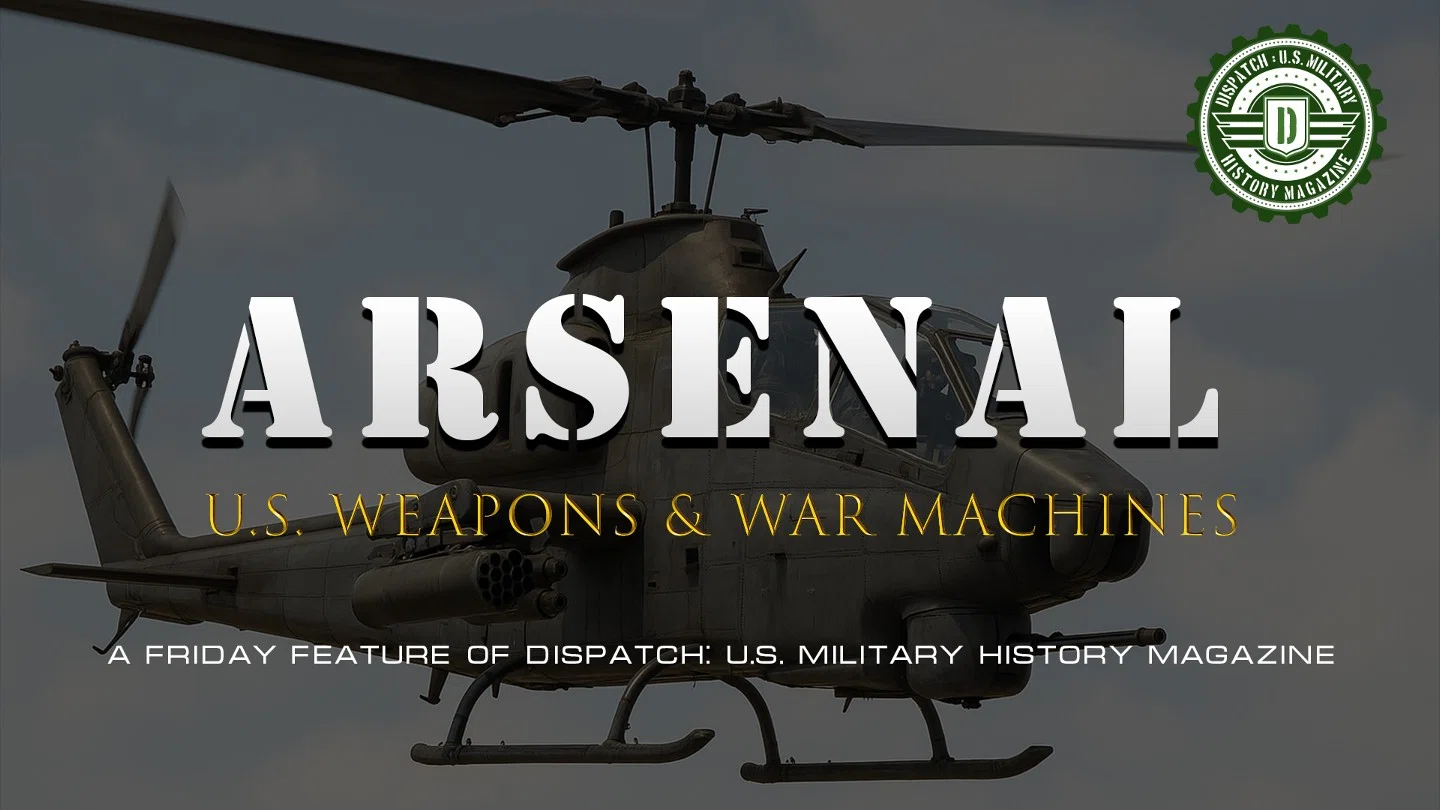
In Action
The jungle ridge line looks quiet from a distance, a dark green wall under the haze of a late–afternoon Vietnam sky. Down in the valley, it is anything but quiet. A column of United States Army helicopters threads low along the treetops, rotors biting hot, humid air. The troop-carrying Hueys are heavy and vulnerable, loaded with infantry destined for a landing zone that has not yet proved itself friendly. Out ahead and on the flanks, two AH-1 Cobras slide into position, thin as spearpoints, stub wings loaded with rockets and gun pods.
In the front cockpit, the pilot nudges the cyclic, keeping the nose just above the canopy line. The Cobra feels sharper than the Hueys he used to fly, more like a fighter than a bus. His gunner in the rear scans the ridge through his sight, hands resting on the controls for the chin turret that houses a rapid-firing cannon and machine guns. Radio chatter builds in his headset as the formation nears the approach to the landing zone. The infantry commander wants the birds in fast, one pass if possible, no circling.
The first enemy tracers rise almost lazily from the tree line, then in a sudden swarm. Heavy machine guns and automatic rifles hammer at the sky, reaching for the troop ships. The Cobras roll into their attack runs like diving hawks. Rockets flare from the pods in ripples, walking explosions along the ridge as the gunners stitch the firing points with cannon bursts. The Hueys dart through the gap their escorts are tearing open, dust and debris whipping around the landing zone as skids touch down.
For the soldiers sprinting off the ramps, the shriek of the Cobra’s engine and the dull thump of its ordnance are more than noise. They are the difference between an ambush and a fighting chance. For the pilots and gunners, this kind of mission is exactly why their machine exists: to fly where troop carriers cannot, to take the brunt of the fire, and to turn chaotic ambushes into controlled, if dangerous, assaults. The Cobra’s presence in that valley is the visible end of a longer story about frustration, doctrine, and the search for a helicopter that was built from the start to kill.
The Problem It Was Built To Solve
When the United States committed large ground forces to Vietnam, the Army’s air arm was in the middle of a revolution. Air assault doctrine promised to put infantry almost anywhere on the battlefield within minutes, riding into combat on UH-1 Hueys that could land in clearings too small for fixed-wing transports. On paper, it was a flexible answer to a war of ambushes and elusive enemies. In practice, it exposed a brutal vulnerability: troop-laden helicopters creeping into hot landing zones under the guns of prepared defenders.
At first, the answer was improvisation. Standard utility helicopters were turned into makeshift gunships with side-mounted machine guns, grenade launchers, and rocket pods fixed to hardpoints that had never been designed for that role. These armed Hueys, flown by aggressive crews, gave the assault forces some badly needed immediate fire support. They could rake tree lines, pop smoke, and blast suspected ambush positions just before the troop carriers touched down. But the gun-Hueys were still big, relatively slow targets with wide frontal areas and limited armor. As enemy forces brought more heavy machine guns and automatic weapons into the fight, the losses mounted and the limits of improvisation became painfully clear.
There was a second, longer-term problem on the horizon. Even while fighting in Vietnam, planners were looking ahead to the possibility of facing massed enemy armor in Europe or elsewhere. The Army had field artillery and tactical jets, but needed a way to put accurate, flexible anti-armor firepower anywhere along a front at short notice, over rough terrain and in bad weather. A dedicated attack helicopter promised a solution that could escort troop carriers in the jungle one year and hunt tanks across open fields the next.
In both environments, the existing aircraft were caught in a bind. They were either too specialized for transport and not survivable enough as gunships, or too fast and high-flying to provide the kind of close, on-call fire support that infantry units in Vietnam required. The result was a push for something new: a helicopter purpose-built around weapons, visibility, and survivability, not adapted after the fact. Out of that mix of battlefield necessity and strategic anxiety came the decision to back a slim, tandem-seat gunship that borrowed proven engines and rotor systems but wrapped them in a narrow, armored fuselage built to attack. That machine would become the AH-1 Cobra, the first dedicated United States attack helicopter.
From Design Board To Production
By the mid nineteen sixties, Bell Helicopter already had thousands of Huey hours to look at, and the weaknesses of improvised gunships were obvious. Engineers and test pilots had spent years sketching and flying experimental gunship concepts that never quite satisfied the Army, either because they were underpowered or too complex to field in numbers. Out of that experience came the Model 209, a clean sheet attack helicopter that quietly borrowed the Huey’s proven engine, transmission, and rotor system, then wrapped them in a narrow, tandem cockpit fuselage with stub wings for weapons and a chin turret. The prototype flew in September nineteen sixty five and moved from demonstration to production with unusual speed, driven by the urgency of Vietnam and the Army’s need for an “interim” gunship that could be built on an existing production base.
On paper, the Cobra was a two seat, single engine attack helicopter built in the United States by Bell for the Army, entering service in nineteen sixty seven as the AH-1G. It drew heavily on Huey parts to simplify logistics but cut a much slimmer profile, with a tandem crew, a chin turret that could mount a minigun, a grenade launcher, or both, and stub wings that carried pods of folding fin aerial rockets. Typical crews were a pilot in the rear and a front seat gunner who also had flight controls. In service the helicopter could reach speeds in the neighborhood of one hundred fifty to one hundred seventy knots, with a combat radius that let it escort troop carriers deep into contested terrain and loiter long enough to cover extractions or repeated attack runs.
Once the Army saw how quickly Bell could turn prototype into production, orders came fast. The first contract called for just over one hundred helicopters, then wartime demand pushed that total into the hundreds and finally into the low thousands as Cobras proved their worth over Vietnam. Production lines worked to blend combat driven tweaks into later batches, from changes to the canopy and skids to refinements in the rotor system and tail rotor layout. Over time, the basic airframe also became a test bed for improved sights, night fighting gear, and eventually dedicated anti tank missile fits that hinted at the next generation of attack helicopters. Yet the heart of the story in those early years remained simple: take what already worked in the Huey, sharpen it into a purpose built gunship, and get it into the hands of crews who had been making do with improvised machines.
Inside The Weapon
Seen up close on a revetment line, the AH-1 Cobra looks more like a flying spear than a traditional helicopter. The fuselage is narrow and tall, with the canopy stepping up from the front cockpit to the rear so that both crew members can see forward over the nose. The pilot usually sits in the rear seat, higher up with a broad view of the horizon and instruments, while the gunner occupies the front, closer to the chin turret and the targeting sights that control it. Armor plate and armored seat inserts surround vital areas, particularly around the cockpit and key parts of the transmission, giving crews a measure of protection against small arms and fragments without trying to make the whole airframe shell proof.
Walking around a Vietnam era Cobra, the first things that draw the eye are the stub wings and the chin turret. Each wing typically carries pods of two point seven five inch rockets, sometimes mixed with gun pods or smoke launchers depending on the mission. Under the nose, the turret often houses a seven point sixty two millimeter minigun, a forty millimeter grenade launcher, or a combination, all slaved to the gunner’s sight and controls. In practice that means the front seater can swing the turret quickly from one tree line to another, hosing down firing points or dropping grenades into gullies while the pilot keeps the helicopter in a shallow bank or a dive. The main rotor above them is the familiar two blade Huey system, tuned for the Cobra’s slimmer body, with a tail boom and tail rotor that will feel instantly recognizable to any maintenance crew raised on the UH-1 family.
Inside, the crew stations are tight but purpose built. The front cockpit is dominated by the sighting system, weapon controls, and essential flight instruments, with good downward and side visibility to help the gunner pick out targets in the clutter of jungle, paddies, or urban edges. The rear cockpit carries the full suite of flight controls and more of the navigation and engine gauges, along with weapon selectors that allow the pilot to back up the gunner if needed. Communication between the two is constant over intercom, with short, clipped exchanges that keep the helicopter coordinated during aggressive maneuvering and quick switches between rockets, cannon, or grenades. Both positions have flight controls so that in an emergency either crew member can fly the machine, an important safety margin when battle damage or disorientation could hit without warning.
Life in a Cobra is defined by the way all these systems mesh under stress. On the training range, crews practice smooth, planned attack runs and weapons employment, learning the helicopter’s sighting quirks, recoil effects, and the way rotor wash and dust can obscure the target just when they need it most. In combat, those same systems are pushed harder, with pilots using the Cobra’s relatively high speed and small frontal area to “pop up” from behind terrain, fire, then drop back into cover before enemy gunners can walk rounds onto them. Reports from Vietnam describe Cobras taking hits, losing noncritical systems, and still getting home thanks to the robustness of the Huey based drivetrain and the protection around the cockpit. That combination of familiar mechanics and purpose built firepower is what made the AH-1 feel like a weapon system in its own right rather than just another helicopter pressed into a gunship role.
Baptism Of Fire
The AH-1 Cobra’s combat debut came quickly after its introduction, because the war in Vietnam gave the Army no time for a leisurely learning curve. Early production AH-1G Cobras reached units in theater in late nineteen sixty seven and were almost immediately folded into air cavalry and assault helicopter formations that had been relying on gun-modified Hueys. Crews were already familiar with the jungle environment, the patterns of ambush along rivers and roads, and the vulnerability of troop carriers on final approach. What changed was the way they could shape a fight. A pair of Cobras could race ahead of a lift, orbiting at higher speed and tighter turns than the old gunships, then drop into attack runs with a smaller target profile and a more flexible mix of rockets and turret fire. Over time, units developed tactics that used Cobra teams to probe suspected hot landing zones, drawing fire and then smashing gun positions before the troop ships committed.
In the highlands and along the Laotian border, the helicopter’s baptism of fire often meant repeated missions into the same contested valleys. Pilots and gunners learned which ridges hid heavy machine guns, which stream beds were likely infiltration routes, and how quickly weather could shut down fixed-wing support and leave rotary-wing gunships as the only immediate firepower over the grunts. Cobras escorted convoys, guarded firebases during night attacks, and flew “hunter-killer” patterns with observation helicopters, the little scout calling out targets for its armed partner. They took hits that would have brought down lighter machines, sometimes limping home on damaged rotors or with hydraulics leaking, proving both the toughness of the Huey-derived drivetrain and the value of cockpit armor. The Cobra’s first years in combat cemented its reputation as a weapon that could bridge the gap between artillery and fast jets, staying close enough to see the fight while hitting hard enough to matter.
Strengths And Weaknesses
Crews who flew the AH-1 in Vietnam and in later Cold War exercises tended to praise the same core strengths. The Cobra was fast for a helicopter of its time, giving pilots more options for choosing their ingress routes, minimizing exposure over open terrain, and reacting quickly when ground units called for help. Its narrow fuselage presented a smaller target coming head-on, and the tandem cockpit combined with good canopy design gave both pilot and gunner useful forward visibility. The concentration of weapons on stub wings and a chin turret meant that all of the helicopter’s offensive punch could be brought to bear quickly, without the limitations of door-mounted guns tied to the cabin. Perhaps most importantly, its heavy use of proven Huey components made it relatively familiar to maintainers and helped keep availability high under tough conditions.
Those strengths came with tradeoffs, and crews were frank about the weaknesses. Early Cobras were single-engine machines; a hit or failure in the wrong place could leave the crew with few options beyond a forced landing or autorotation. The cockpit and vital systems were protected against small arms and fragments, but concentrated fire from heavy machine guns or larger weapons could still penetrate, particularly from the sides or below. The tight cockpit layout and tandem seating also demanded excellent crew coordination, because neither pilot nor gunner had the broad “bus driver” view of a Huey cabin, and losing sight of friendly positions in complex terrain could be dangerous. Enemy forces learned to time their fire to catch Cobras during pop-up maneuvers or turns, and to disperse quickly after opening up on a formation before the gunships could roll in. Compared with later purpose-built tank hunters, early models also lacked the sophisticated sensors that would eventually define the attack helicopter role.
Variants And Evolution
The AH-1 family did not stand still after its Vietnam service. Once the basic airframe proved itself, both the United States Army and Marine Corps pursued upgrades that responded to new threats and missions. For the Army, the key change in the nineteen seventies and nineteen eighties was a shift toward dedicated anti-armor capability to counter Warsaw Pact tank formations in Europe. This drove a series of improved variants, often grouped under the “S” and later designations, that incorporated more powerful engines, enhanced rotor systems, improved fire control, and crucially the ability to carry wire-guided anti-tank missiles such as TOW. These developments turned the Cobra from a primarily gun and rocket platform into a true tank hunter, able to engage armored columns from standoff distances while using terrain for cover.
The United States Marine Corps, operating primarily from amphibious ships and with a strong focus on close air support for Marines ashore, followed a slightly different path. Marine Cobras evolved into twin-engine SeaCobra and SuperCobra variants, using navalized components better suited to over-water operations and shipboard basing. They carried updated weapons suites that included missiles for both anti-armor and anti-ship roles, alongside improved night-fighting gear and navigation systems tailored to expeditionary operations. Export versions and license-built derivatives spread the design to allied nations, each bringing local preferences and modifications, from different sighting systems to alternative weapon fits. Over time, the family tree culminated in modernized versions like the AH-1Z, which carries advanced sensors, glass cockpits, and more powerful engines while still showing the unmistakable lineage of the original slim-fuselage Cobra. Across all these changes, the core idea remained constant: a narrow, agile helicopter built around weapons, tailored and retuned for each new generation of threats.
Legacy And Where To See It Today
The AH-1 Cobra’s legacy lives on in both hardware and doctrine. As the first dedicated United States attack helicopter, it proved that rotary-wing gunships could be more than improvisations on transport airframes. It demonstrated how a machine built from the outset for fire support could integrate with air assault tactics, armored defense plans, and expeditionary operations at sea. Many of the ideas that later shaped more advanced attack helicopters, such as tandem cockpit layouts, concentrated forward-firing weapons, and close integration with scouts and ground controllers, were tested and refined in Cobra units. Even as newer helicopters took over front-line roles, the Cobra’s service in Vietnam and along Cold War frontiers left a clear imprint on training, manuals, and expectations for what attack aviation could deliver.
Physically, Cobras survive in significant numbers. Retired airframes stand on pedestals outside National Guard armories, veterans’ halls, and bases across the United States, often painted in Vietnam or desert camouflage schemes that reflect their service eras. Museums with aviation and military collections display Cobras in indoor galleries or outdoor air parks, sometimes alongside the Hueys they escorted, giving visitors a sense of how the family of airframes worked together. Some examples remain in limited service or as flying heritage aircraft, their rotor beats and distinctive profiles drawing attention at airshows and commemorative events. For readers and listeners who follow Dispatch and Trackpads, Cobras appear in photo sets, video clips, and interviews with pilots, gunners, and ground troops who depended on them. The enduring appeal of the AH-1 lies in that combination of sharp, purposeful design and the human stories wrapped around it, from the valleys of Vietnam to training ranges and museums where its silhouette still signals an era when the attack helicopter first came into its own. You can also hear narrated versions of Arsenal features as part of the Trackpads podcast feeds and Dispatch audio editions.