In Action
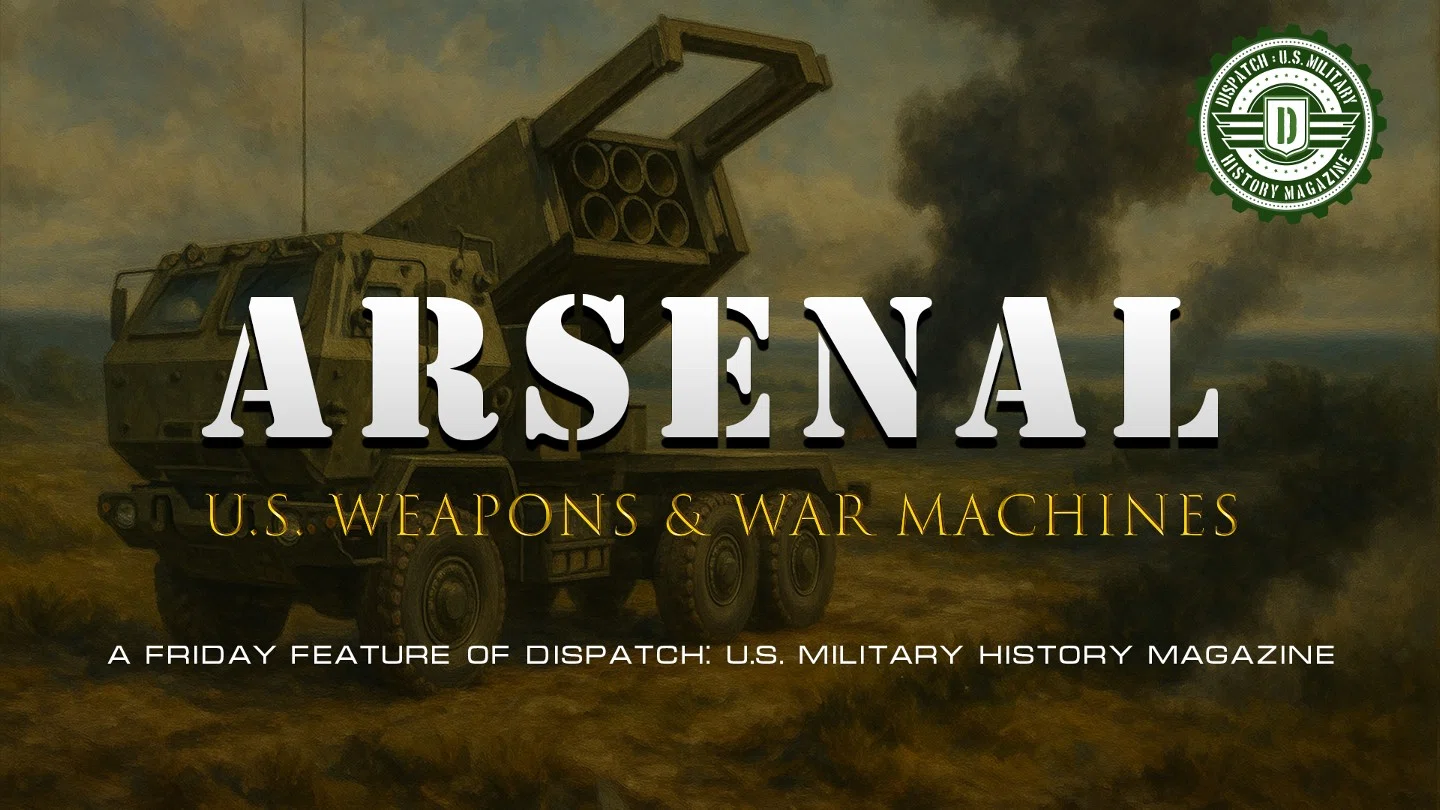
It is past midnight in eastern Ukraine, and the sky is clear enough to navigate by the stars. A single six-wheeled truck rolls with its lights blacked out along a farm track that did not exist on any map six months ago. In the cab, three soldiers ride in silence, the driver watching a dim red dashboard glow while the crew commander studies a tablet full of satellite imagery and coordinates. In the back, the boxy launcher of HIMARS, the High Mobility Artillery Rocket System, rides low and quiet, outwardly just another cargo truck until it lifts and opens.
They stop in a tree line on a slight rise. The target is a Russian ammunition dump and command node more than 60 kilometers away, comfortably beyond the reach of most tube artillery. For years, that distance meant safety. Tonight, it does not. The launcher elevates and slews with a soft hydraulic whine. Inside the cab, the gunner confirms the grid, checks the fire mission data one more time, and arms a pod of GPS-guided rockets designed to land within meters of their aimpoint.
The rockets leave in a rapid ripple, each one disappearing into the darkness with a blinding flash and a rolling roar that rattles the windows. Before the last shockwave has finished echoing across the fields, the driver is already throwing the truck into gear. Within minutes, HIMARS is gone, racing toward a new hide position while the first explosions blossom over the horizon. Somewhere out there, fuel tanks erupt, ammunition cooks off, and a headquarters goes off the air. For the crew, this is just one mission in a long campaign that began decades earlier, when armies realized their existing rocket artillery was too heavy, too slow to deploy, and not nearly precise enough for the wars they were actually fighting.
The Problem It Was Built To Solve
The roots of HIMARS lie in a simple but stubborn problem: how to deliver the punch of a rocket artillery battery with the agility of a light truck. During the late Cold War, the United States Army embraced heavy tracked launchers like the M270 Multiple Launch Rocket System to saturate large areas with unguided rockets. Those vehicles were powerful but cumbersome. They demanded heavy transport, soaked up logistics, and were difficult to move quickly by air to a crisis half a world away. When conflicts after the Cold War shifted toward rapid deployments and dispersed threats, those drawbacks became glaring.
Commanders wanted something different. They needed a launcher that could roll off a cargo aircraft like the C-130, drive under its own power on ordinary roads, and still fire the same family of rockets and tactical missiles as its heavier cousin. They wanted deep-strike range without bringing an armored brigade’s worth of support. At the same time, advances in navigation and guidance meant that rockets no longer had to be area weapons. With GPS-aided guidance and improved inertial systems, a single rocket could be steered onto a specific building, a bridge span, or an air defense radar instead of blanketing an entire grid square.
The result was a design question that blended tactics and engineering. Could a medium tactical truck carry a single pod of rockets, protect a three-person crew, and shoot, then move again before enemy counter-battery fire arrived? Could it do so in deserts, mountains, and cities, in support of airborne brigades and marine units that prided themselves on moving fast and light? HIMARS emerged as the answer to that question: a wheeled precision rocket artillery system meant to put long-range, high-precision firepower into the hands of units that would never have been able to drag a tracked launcher into the fight. The decision to build it would reshape how the United States and its partners thought about long-range fires, and eventually it would transform battlefields from Iraq and Afghanistan to Ukraine.
From Design Board To Production
HIMARS began life as an answer to a mobility problem, and its design story reflects that narrow focus. Engineers and artillery officers wanted the reach and punch of the tracked Multiple Launch Rocket System in a package that could ride in a C-130 and keep up with wheeled brigades. That meant starting not with a tank chassis, but with a medium tactical truck already proven in service. The concept was simple in outline: bolt a single rocket pod and launcher mechanism to the back of a six by six truck, integrate the fire control electronics into the cab, and accept that sacrificing some armor and off-road performance would buy speed and deployability.
Moving from concept to prototype meant tackling tradeoffs line by line. A wheeled chassis offered lower weight, cheaper operating costs, and easier road marches, but it limited how much recoil and launcher mass the frame could handle. Carrying only one rocket pod instead of the twin packs on the heavier launcher reduced immediate volume of fire, yet it kept the system within the weight limits for tactical airlift. Designers worked to ensure that the new truck could still fire the full family of rockets and missiles, from area-effect rockets to precision guided rounds, without redesigning the munitions themselves. That compatibility eased logistics and made HIMARS attractive to commanders who already knew the older system.
At a glance, HIMARS is a high mobility artillery rocket system built for the United States, primarily for the Army and Marine forces that rely on rapid deployment. It belongs to the late Cold War and post-Cold War era, with design work maturing in the 1990s and operational fielding in the early years of the twenty first century. A typical crew consists of three soldiers in the cab, responsible for driving, operating the fire control, and commanding the launcher. The primary armament is a single pod that can hold either six guided rockets for precision strikes at tens of kilometers or one larger tactical missile for deep targets at far greater ranges. In service, production ramped up as conflicts in Iraq and Afghanistan underscored the value of long-range, precise fires from a system that could self-deploy on ordinary roads.
Inside The Weapon
Seen from the outside, HIMARS looks like a slightly oversized tactical truck with a rectangular box on the back. The truck chassis provides six large wheels, high ground clearance, and enough suspension strength to carry the launcher and its ammunition pod across rough roads and dirt tracks. The cab seats three in close quarters, with blast protection and armor kits on later models to improve survivability against shrapnel and small arms. From this small space, the crew can drive, aim, and fire without stepping outside once the vehicle is in position, which matters when counter-battery radar and drones can spot a stationary launcher in minutes.
Inside the cab, the driver sits to one side behind a conventional truck-style control layout, focused on keeping the vehicle on the move and getting it in and out of firing positions quickly. Next to the driver, the gunner manages the fire control system, entering target coordinates, selecting ammunition types, and confirming safety checks on a computer display. Behind or beside them sits the launcher chief, the crew member responsible for overall mission control, communications with higher headquarters, and the final decision to fire. Intercom headsets and radios keep the crew talking quietly even when the engine is roaring and the launcher is moving.
Behind the cab, the heart of the system is the launcher module and ammunition pod. The pod itself is a sealed box loaded at the factory or depot with rockets or a missile, designed so that crews in the field never handle individual rounds. A resupply vehicle brings fresh pods and uses a crane to swap out empty ones, reducing the time the launcher must sit exposed and cutting down on dangerous manual loading. When the crew receives a fire mission, hydraulic systems elevate and rotate the launcher, and the fire control software calculates the exact angles and timing needed for the rockets to follow their programmed paths.
Underneath all of this, the truck carries a diesel engine, transmission, and fuel tanks sized for long road marches between firing zones. The wheeled layout means HIMARS can use the same road network as other tactical vehicles, blending into convoys or dispersing alone into small farm lanes and desert tracks. It trades the heavy armor of tracked launchers for speed and range, trusting in camouflage, shoot and scoot tactics, and modern warning systems rather than thick steel. For the crew, living with the weapon means long hours cramped in the cab, constant attention to navigation and communications gear, and the knowledge that a short burst of rocket fire can bring distant enemy guns or aircraft hunting in their direction within minutes.
Baptism Of Fire
HIMARS first drew blood in the conflicts that followed the attacks of September 11, when United States forces needed to support dispersed troops in Iraq and Afghanistan with long-range firepower. Early combat missions saw launchers rolling out to dusty forward operating bases, where crews fired precision rockets against insurgent training camps, ammunition stockpiles, and command compounds that lay beyond the reach of conventional howitzers. Those strikes demonstrated that a single truck, guided by accurate intelligence and satellite navigation, could collapse a targeted complex with minimal collateral damage. Over time, HIMARS became a familiar presence in joint operations, working alongside aircraft, drones, and special operations teams to hit fleeting targets on tight timelines.
The system’s reputation, however, leapt to global attention with its role in Ukraine from 2022 onward. Ukrainian crews, trained to operate HIMARS launchers supplied by the United States and partners, used them to attack ammunition depots, headquarters, and key bridges deep behind Russian lines. Night after night, rockets arced out from unassuming truck positions, landing dozens of kilometers away on logistics hubs that had previously been safe. Railway sidings erupted, command posts went dark, and long, vulnerable supply lines suddenly faced constant disruption. In several offensives, observers traced the gradual thinning of enemy artillery fire and fuel supplies to sustained HIMARS campaigns that made it dangerous for ammunition and fuel to accumulate anywhere within range.
On the ground, the sequence of a typical engagement followed a pattern that crews drilled again and again. A launcher would move under cover, sometimes along back roads or narrow farm tracks, to a preselected firing point chosen for concealment and a clear line of fire. Target data flowed from higher headquarters, often built from a mix of satellite imagery, intercepted communications, and reports from scouts or drones. The crew verified coordinates, selected the appropriate rockets, and fired a short, brutal salvo. Within moments, the launcher was already leaving, racing toward a new position while the rockets covered the distance in less time than it took enemy radars to process and respond. The results, whether in Iraq’s deserts or Ukraine’s fields, showed up as burning depots, severed bridges, and enemy units forced to move and resupply under constant threat.
Strengths And Weaknesses
Crews and commanders talk about HIMARS first in terms of mobility and precision. They value a system that can drive long distances on its own wheels, roll onto standard cargo aircraft, and fit into the same road network as other tactical vehicles. For units that pride themselves on moving fast, the launcher’s truck chassis means it can accompany light infantry, airborne brigades, or marines without special transport. Its guided rockets and missiles give those units the ability to hit targets far beyond the front line, often with a single pod’s worth of fire, and then displace before enemy counter-fire arrives. That combination of reach and agility has made HIMARS a favored tool whenever commanders need to hold an enemy’s rear area at risk without committing aircraft to every strike.
At the same time, soldiers are quick to point out the system’s limitations. Carrying only one ammunition pod means a HIMARS launcher cannot sustain the same volume of fire as a heavier tracked launcher without frequent resupply. In intense fights, that places a premium on well-organized logistics and protected resupply vehicles to keep pods flowing forward. The wheeled chassis, while excellent on roads and firm ground, can struggle in extreme mud or soft terrain where tracked vehicles excel. The launcher’s armor and protection are modest compared to heavy self-propelled guns, leaving it reliant on concealment, distance, and movement for survival. When enemies adapt with better counter-battery radars, drones, and electronic warfare, the risk of lingering too long in one place goes up sharply.
Opponents, for their part, fear HIMARS for its reach and accuracy but also study its patterns. They learn to disperse ammunition, harden command posts, and move high-value assets frequently to avoid creating lucrative targets. They push air defenses and counter-battery systems further forward, try to jam navigation signals, and use decoys to soak up precious rockets. Comparisons with older rocket artillery highlight the tradeoffs: HIMARS cannot saturate a broad front with unguided barrages the way older systems could, but it does not need to. Its strength lies in making specific enemy nodes—bridges, depots, headquarters—fragile, forcing an adversary to spend effort and resources simply to keep their rear area functioning under constant, precise threat.
Variants And Evolution
Over its life, HIMARS has seen its capabilities grow less through visible changes to the launcher and more through the munitions and electronics it can employ. Early launchers focused on firing both unguided rockets and emerging guided rounds from the same family used by the heavier tracked system. As precision guidance matured, the emphasis shifted toward GPS-aided rockets capable of landing within a small radius of a chosen aimpoint, transforming the launcher from an area-suppression tool into a precision-strike asset. Software and fire control updates allowed crews to plan more complex missions, integrate with digital command networks, and handle different rocket and missile types without changing the basic hardware.
Export interest and allied adoption brought their own tweaks. Partner nations sought interoperability with their existing command and control systems, local communications gear, and logistical chains. That meant integrating national radios, encryption, and sometimes different vehicle support fleets while keeping the core launcher and pod architecture intact. Some users focused on the system’s ability to fire tactical missiles for deep-strike missions against high-value targets, while others emphasized guided rockets for shaping the immediate battle area. In each case, wartime experience fed back into training, tactics, and small refinements rather than wholesale redesigns.
Discussions about the future of HIMARS often revolve around new munitions rather than new trucks. Longer-range rockets, improved seekers that can home on moving targets, and warheads tailored to specific missions all promise to extend what a single launcher can do. As adversaries improve their air defenses and counter-battery capabilities, the need for launchers that can fire from even greater distances while staying hidden grows more pressing. The basic idea—a wheeled, rapidly deployable launcher that can fire a family of modular rockets and missiles—remains sound, and evolution has focused on stretching its reach, sharpening its accuracy, and strengthening its connection to a broader web of sensors and planners.
Legacy And Where To See It Today
Even while HIMARS remains a frontline system, its influence on doctrine and design is already clear. Armies around the world now study how to integrate highly mobile, precision rocket launchers into their force structures, often pairing them with drones and satellites in a combined targeting network. The system has helped cement the idea that long-range fires are not only the domain of aircraft or heavy artillery divisions but can belong to nimble brigades that operate far from large supply bases. Exercises and real operations alike show commanders designing campaigns around the knowledge that key enemy nodes can be struck quickly and accurately from well behind the frontline, reshaping how they think about logistics, air defense, and command post placement.
For students of military history, HIMARS offers a living case study in how technology and doctrine evolve together. Unlike many Arsenal subjects that rest behind museum ropes, this one can often be seen in current training footage and public demonstrations. Launchers appear in live-fire exercises, joint drills with allies, and official displays that highlight their shoot-and-move profile. Over time, retired examples will find their way into museums and collections, where visitors will be able to walk around the trucks, peer into the cabs, and see the launcher pods up close. When they do, those displays will sit alongside earlier rocket artillery systems, letting visitors trace the path from massed unguided salvos to pinpoint strikes from a single wheeled vehicle.
In the broader ecosystem of Dispatch features, HIMARS connects naturally to stories about the units and campaigns it has shaped. Beyond the Call profiles may feature soldiers who worked under the cover of its rockets or depended on its strikes to break enemy resistance. Living History interviews with artillery officers, logisticians, and allied partners can give voice to those who planned and executed the missions that made headlines. Other Arsenal pieces on traditional tube artillery, air-delivered precision munitions, and earlier multiple-rocket systems form a backdrop for understanding where HIMARS fits. Above all, its story reminds readers that every button press in a fire control system sends destructive force toward real people on the other end, and that the ultimate measure of a weapon lies in how it changes the lives of the crews who operate it and the opponents who face it.