High Above a Closed Empire
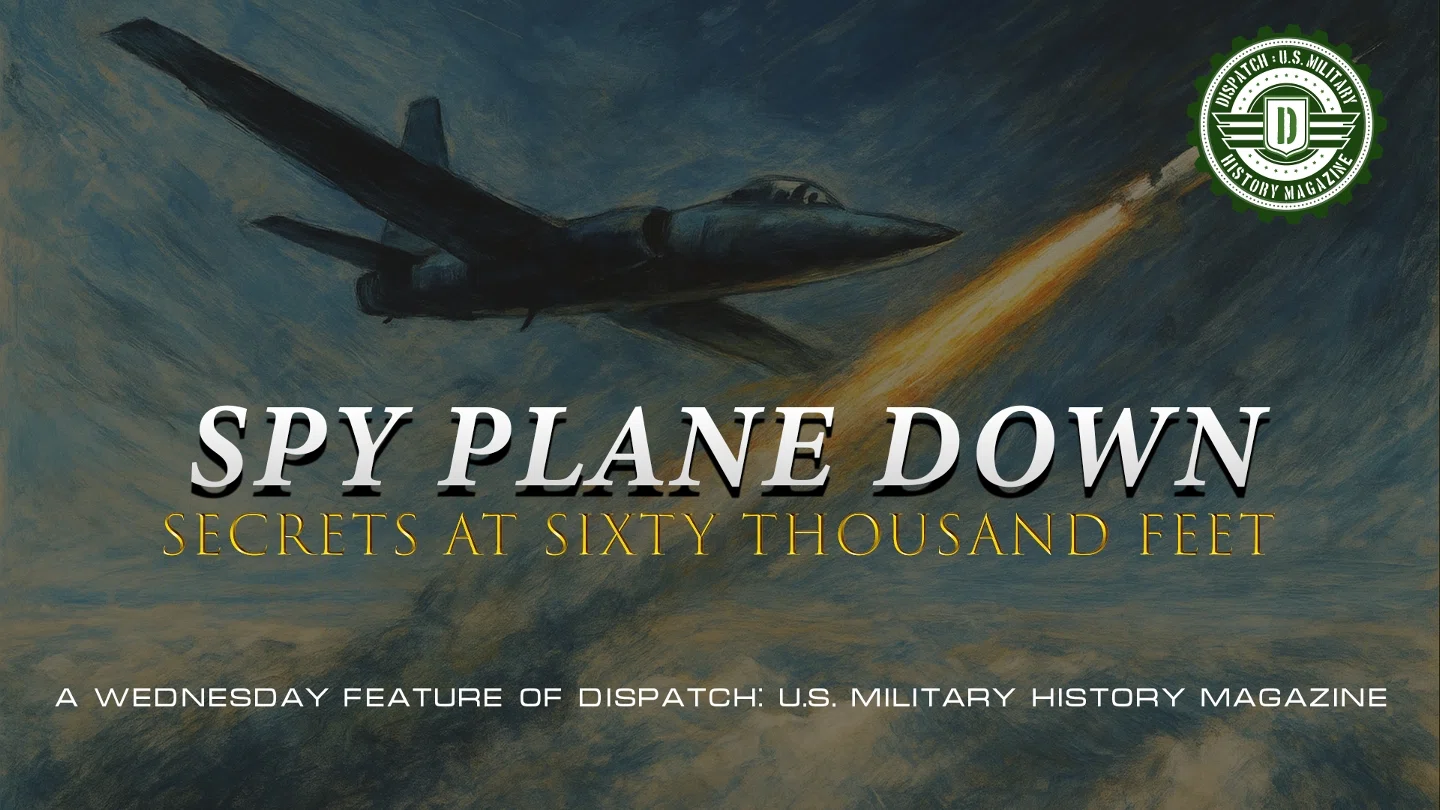
Dawn broke somewhere far below as the slim black aircraft knifed through the upper reaches of the atmosphere, alone in an icy blue world. In the cramped cockpit of the U-2, Francis Gary Powers watched his instruments more than the horizon, trusting the delicate balance that kept the long wings just above stall and just below destruction. Sixty thousand feet and more above the Soviet Union, there was almost no sense of motion, only the faint tremor of the airframe and the steady whirr and click of the cameras buried in the fuselage. Each pass of film caught rail yards, airfields, missile sites, and factories that no Western pilot had ever seen from this vantage point.
Outside, the sky had shifted to a deep, almost indigo shade, and the curvature of the earth was visible beyond the slim wing. Below, Soviet cities and bases slid past in silence, unaware that a single American pilot was crossing their most sensitive regions. Powers had rehearsed the route, the emergency procedures, even the suicide device he carried in case capture became likely. The mission plan assumed that altitude would keep him beyond reach of Soviet fighters and most ground-based weapons. That confidence had held through years of earlier flights. As the aircraft droned on toward the industrial heartland near Sverdlovsk, the man in the pressurized suit had no way of knowing that this particular run would end not with a long glide into friendly territory, but with fire, a tearing airframe, and a parachute dropping into hostile fields.
What One Flight Risked
Far below the thin air where Powers flew, the Cold War was in one of its tensest phases. The United States and the Soviet Union were locked in a contest defined by bombers, missiles, and ideology, yet both sides operated in a fog of uncertainty. American leaders were haunted by talk of a “bomber gap” and then a “missile gap,” unsure how many long-range aircraft and rockets the Soviet arsenal really contained. Traditional intelligence methods could not pierce the closed Soviet system. High-altitude reconnaissance promised to do what diplomats and spies could not: simply look down and count. The U-2, a fragile-looking machine with glider-like wings, had become one of Washington’s most valuable tools in that effort.
By 1960, U-2 flights had been slipping over the edges of the Soviet Union for years, launched from bases in allied countries and recovery fields on the far side of the target area. The information they brought back shaped everything from defense budgets to negotiation positions. The flight Powers was making on May first was timed just weeks before a planned summit in Paris, where President Dwight Eisenhower and Soviet Premier Nikita Khrushchev were supposed to discuss easing tensions. If the mission succeeded, American analysts hoped to firm up their understanding of Soviet missile deployments, strengthening the United States position at the table. If the Soviets detected and brought down the aircraft, it would expose a secret program that Washington publicly denied, humiliate the United States on the world stage, and risk blowing up the very diplomacy that might keep nuclear war at bay. One thin-winged airplane high over Sverdlovsk carried the weight of strategy, prestige, and peace talks on its narrow spine.
From Desert Airstrips to Soviet Skies
The story of Powers’ mission began years earlier in conference rooms where generals and civilians argued over how to see inside a closed empire. Traditional high-altitude bombers could not simply wander over the Soviet Union without risking war, and satellites were still little more than sketches and dreams. The answer arrived as an odd-looking airplane with sailplane wings and a tiny fuselage, built to climb above the reach of known fighters and guns. It was stripped of armor and weapons to save weight, trading survivability in combat for the ability to cruise in a cold, thin band of air that most pilots would never experience. Behind the scenes, the project was run in the shadows, with a civilian intelligence agency directing flights that would start on remote airstrips and end thousands of miles away.
Early missions had tested Soviet patience and defenses. At first, U-2s nibbled around the edges, then pushed deeper as confidence grew in their altitude advantage. Each successful run confirmed that the cameras could read serial numbers on bombers and count missiles on launch pads, and each safe recovery reinforced the belief that the aircraft really did fly too high to touch. But the Soviets were not standing still. Their air defense network was thickening with new radar, better plotting, and surface-to-air missiles built precisely to reach the altitudes where the U-2 roamed. American planners knew this in theory, yet the pressure for hard intelligence before summits and budget fights kept the missions on the schedule. By the spring of 1960, each new overflight felt more like a roll of the dice. The route Powers would fly on May first had been argued, refined, and approved at the highest levels, an attempt to extract one more haul of film before the window closed.
Missiles Reach for the “Untouchable”
On the morning of the mission, Powers’ U-2 climbed steadily out of its launch field, arcing toward Soviet territory as fuel burned off and the airplane settled into its fragile high-altitude groove. Far away, Soviet radar posts began to notice an intruder that did not behave like an airliner or a routine military flight. The track was slow, high, and persistent, drifting over sensitive regions that already bristled with tension. Controllers handed the blip from screen to screen, trying to match it against known aircraft and flight plans, and quickly concluded that another American spy plane had come. Fighters clawed for altitude but struggled to get near the U-2’s flight level in time and space. The task of actually striking the intruder fell to missile regiments that had been training for exactly this moment.
As Powers adjusted his course over central targets and monitored his systems, missile crews on the ground were aligning launchers and receiving fire orders. Surface-to-air missiles rose from their launchers in a thunder of smoke and flame, climbing on columns of fire toward a target barely visible on their tracking scopes. The high, thin air that made the U-2’s glide efficient also left the aircraft exposed; there was little room to maneuver without stalling, and the pilot’s best defense was to hold steady and hope to remain just outside the envelope of the intercept. On this day, that envelope had grown wider than American planners expected. Near Sverdlovsk, explosions rocked the sky close enough to buffet the U-2’s long wings.
A blast finally damaged the delicate aircraft badly enough that it could no longer hold together. The U-2 broke apart in the thin air, shedding pieces that spiraled down toward fields and forest while Powers fought to escape the tumbling wreck. Training took over as he separated from the disintegrating fuselage and his parachute opened, leaving him suddenly alone in a broad daylight sky over hostile territory. Below, villagers and security forces watched the strange object descending and moved to intercept. In the span of a few minutes, an airplane that had once symbolized untouchable reach lay in scattered fragments on the ground, and its pilot was dropping helplessly into the custody of the very state he had been sent to observe. The technical duel between altitude and air defense had been decided. The political and diplomatic fight that followed was only beginning.
When Altitude Stopped Being Enough
The decisive shift in Powers’ mission did not come from a single button press or one unlucky burst of shrapnel. It grew from months of quiet change inside Soviet air defense units and a steady overconfidence in Washington. The United States had built the U-2 around the assumption that flying far higher than conventional bombers meant flying beyond reach. Each successful overflight seemed to prove the point, and the pressure for more imagery before summits and speeches made it easy to treat risk as an acceptable background noise. Yet every time a U-2 track appeared on Soviet radar, commanders on the other side had another chance to calibrate their systems, drill their crews, and refine their tactics. By the spring of 1960, the aircraft’s greatest strength had become a fixed target in the sky.
On the day Powers flew, several of those trends converged. Soviet radar coverage was denser, missile crews were better trained, and new surface-to-air weapons had the altitude and speed to reach into the U-2’s thin sanctuary overhead. Powers’ own options at that height were brutally limited; nudging the aircraft away from a missile track risked a stall and structural failure even before any warhead detonated. When the missile blast finally crippled the long-winged aircraft, it exposed another American miscalculation: the belief that the U-2’s pilot and hardware would never fall into enemy hands because both would be destroyed in the attempt. Powers survived, conscious and captured, and significant pieces of the wreckage remained intact enough to study and display.
What turned this from a dangerous mission into a full-blown crisis was not only the shootdown itself but the way the United States responded. American officials initially released a cover story about a weather research aircraft gone astray, assuming that little evidence remained on the ground. When the Soviets unveiled the wreckage, the cameras, and Powers himself, the narrative collapsed in public and in real time. The combination of Soviet persistence, new missile technology, American risk tolerance, and a failed attempt at plausible deniability transformed one reconnaissance flight into a turning point in the politics of the Cold War sky.
From One Downed Plane to a Colder Sky
In the immediate aftermath, the consequences rippled outward from a few fields near Sverdlovsk to the highest levels of global diplomacy. Powers was interrogated, tried in a Soviet court, and placed at the center of a propaganda storm that portrayed the United States as an aggressor violating sovereign airspace. In Washington, the failed cover story forced officials to admit the truth of the overflight program. President Eisenhower ultimately took responsibility, arguing that the need to prevent surprise attack justified aggressive reconnaissance, but that did little to ease the anger in Moscow. The Paris summit that had been framed as a chance to cool tensions instead dissolved under public accusations and walkouts. A single airplane had upended a rare opportunity for direct talks just as both sides were piling up nuclear weapons.
The U-2 program did not end overnight, but the rules of the game changed. Deep-penetration flights over the Soviet heartland were halted, and the search accelerated for alternatives that could gather similar intelligence without sending a pilot across hostile borders. Space-based reconnaissance, once a distant concept, suddenly looked less like science fiction and more like a strategic necessity. Later high-speed, high-altitude aircraft would appear, but always under the shadow of what had happened to Powers and his machine. For Soviet planners, the shootdown validated investment in integrated air defenses and surface-to-air missiles, lessons that would echo in conflicts far from Sverdlovsk.
Today, the story of the U-2 and the Powers shootdown is more than a Cold War curiosity. It sits at the intersection of technology, intelligence, and statecraft that modern readers recognize in debates over satellites, surveillance aircraft, and unmanned drones. The questions raised then—how far a state will go to see inside a rival’s defenses, how much risk leaders will accept to reduce uncertainty, and how quickly a single mission can derail diplomatic efforts—remain very much alive. For students of military history, staff riders, and visitors standing beneath a U-2 in a museum, the lesson is stark: tools built to “fly too high to touch” can still fall, and when they do, the impact is felt far beyond the crater.