Into the Black Over Normandy
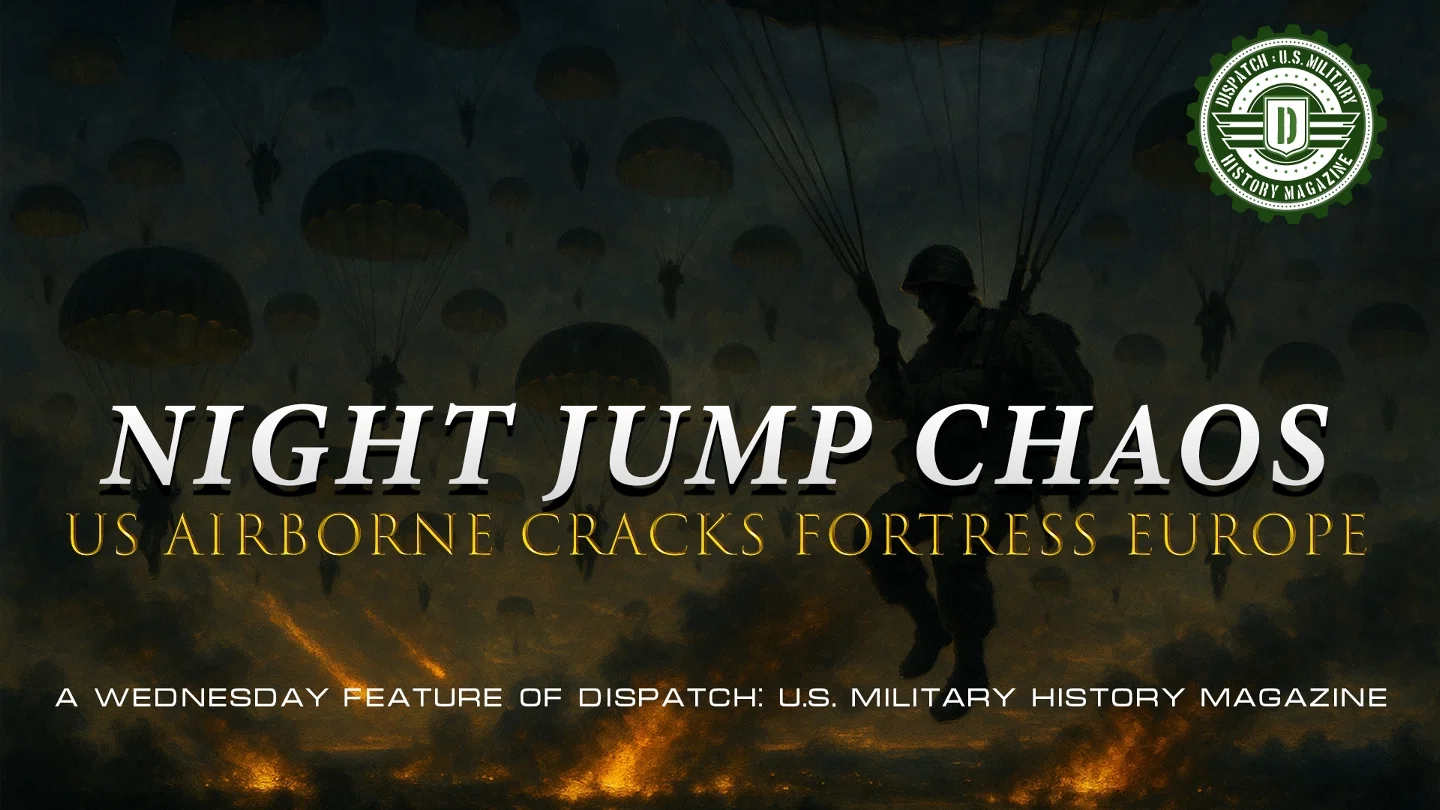
The night sky over Normandy did not look like liberation. It looked like a furnace. As June 5th bled into June 6th, 1944, columns of C-47 transports droned toward the Cotentin Peninsula, their wings shimmering in the flashes of German anti-aircraft fire. Inside, paratroopers of the 82nd and 101st Airborne Divisions stood shoulder to shoulder, weighed down with parachutes, weapons, ammunition, and gear that made each man feel like he carried his own body weight on his back. The red jump light bathed their helmets and faces, turning nervous grins into hard masks as the aircraft buffeted in turbulence and flak bursts.
Outside the open doors, the world was little more than black sea, faint coastline, and sudden, violent explosions. Pilots jinked to avoid searchlights and tracers, scattering precise flight plans that had been rehearsed for months. Below, the patchwork of Norman hedgerows, flooded fields, and small villages was invisible, a deadly maze waiting to receive men dropping from less-than-ideal altitudes and speeds. Some stick leaders caught passing glimpses of church steeples or burning farmhouses; most saw nothing but the blur of wind and sparks.
The green light snapped on, and the line lurched forward. One by one, paratroopers stepped out into the slipstream, the roar of engines replaced by the rush of air and the snap of opening canopies. Many hit flooded fields or tangled hedgerows far from their marked drop zones. Small groups gathered in the dark, swapping passwords and trying to make sense of where they had landed. Ahead of them lay a mission built on precision and coordination. What they had instead was confusion, scattered units, and a hostile countryside. And yet, within that chaos, they were about to make history.
Why These Jumps Had to Work
Hours before those green lights came on, the airborne drops behind Utah Beach were already baked into the logic of Operation Overlord. The landings on the western flank of the Normandy invasion depended on more than naval gunfire and infantry courage; they depended on a fragile network of roads, bridges, and causeways that funneled traffic off a narrow strip of beach and into the interior. German defenders had flooded low-lying fields, turned villages into strongpoints, and positioned artillery to sweep the likely exits. If those exits stayed blocked, soldiers coming ashore at Utah could be trapped between the sea and well-sited defenses.
The American plan called for paratroopers of the 101st Airborne Division to seize and hold the causeways behind Utah Beach, knock out coastal batteries, and secure crossroads that would let infantry and armor push inland. To their north and west, the 82nd Airborne Division had to capture key bridges over the Merderet and Douve Rivers, hold the high ground around Sainte-Mère-Église, and prevent German counterattacks from slicing into the flank of VII Corps. On paper, the airborne divisions would land in neatly defined drop zones, assemble by company and battalion, and move onto their objectives in a coordinated sweep.
Across the hedgerows and along the coast, German units—static infantry divisions, elements of airborne-trained troops, and scattered armor—watched and waited, uncertain whether this was the real invasion or another feint. Their orders, if carried out with speed and determination, could turn the American landings into a bloody failure. That is what made the night jumps so critical. Success would mean secured exits, disrupted German responses, and a foothold deep in occupied France. Failure would mean isolated paratroopers cut off in the bocage, a beach choked with vehicles, and a harder, longer road to cracking Fortress Europe. This was the hinge on which the western end of D-Day would swing.
Training for a Drop into the Unknown
The men who stepped into the dark over Normandy were the product of years of hard lessons. American airborne forces had been forged in experiments and early operations in North Africa, Sicily, and Italy, where parachute drops tested equipment, tactics, and nerves under fire. Officers and enlisted volunteers learned that a night jump into hostile territory was never going to be neat; sticks scattered, radios failed, and units had to improvise on unfamiliar ground. By the spring of 1944, planners knew that Normandy would demand all of that hard-won experience and more. The airborne divisions were no longer a sideshow. They were a spearpoint.
Planning for the Utah Beach sector wrapped itself around the airborne mission. Staff officers drew lines on maps that traced causeways through flooded fields, villages with commanding crossroads, and bridges over rivers that could channel or stop German armor. Pathfinders were selected and trained to jump in first, set up radar beacons and signal lights, and give trailing aircraft something to home in on. The transports themselves were modified and rehearsed, their crews drilled on tight formations, speed, and altitude. Every briefing hammered home the same idea, that a few hundred yards on the ground could mean the difference between a clean breakout and a beachhead under relentless fire.
Meanwhile, the German defenses in the Cotentin Peninsula hardened. Coastal batteries, flak positions, and strongpoints turned villages and farm clusters into fortified nodes. Engineers flooded low ground to turn fields into shallow lakes that could drown paratroopers and bog down vehicles. Local commanders in the German Seventh Army knew that an invasion would come somewhere along the French coast and saw every night flight as a potential threat. Yet their higher headquarters wrestled with competing priorities, holding mobile armored units back as a central reserve while leaving the immediate coastal defense to infantry formations with limited mobility. Into this web of strengths and weaknesses the airborne commanders planned to drop two full divisions.
Scattered Landings, Local Fights
When the first pathfinders jumped shortly before the main airborne lift, the plan began to collide with reality. Low clouds, haze, and flak disrupted formations and confused pilots looking for radar beacons and signal panels. Some pathfinder teams landed on target and set up their gear under fire. Others scattered into fields and hedgerows, forced to improvise signals or fight simply to stay alive. As the main serials of C-47s swept in from the sea, anti-aircraft fire thickened, tracer streams clawing at the night sky. Pilots broke formation to dodge searchlights, climbed or dove to escape flak, and in doing so widened the drop patterns far beyond what planners had intended.
Paratroopers of the 82nd and 101st Airborne Divisions found themselves tumbling into flooded marshes, orchards, and narrow lanes, sometimes miles from their designated zones. Some landed in deep water and cut themselves free just in time. Others crashed into hedgerows or farm buildings, collecting bruises and lost equipment before they could even think about assembling. Groups that were supposed to form around company commanders instead gathered around whoever was close and still standing, whether a lieutenant, a sergeant, or a private with a good sense of direction. In the dark, under random bursts of German fire, they took stock of weapons, counted heads, and began moving toward the sound of shooting or toward landmarks they half recognized.
On the ground, German outposts reacted in uneven fashion. Some local units responded quickly, manning roadblocks, ringing church bells, and bringing machine guns into play along key approaches. In other sectors, confusion reigned as reports of parachutists mixed with false alarms and uncertainty about the scale of the attack. Isolated American groups ran into pockets of resistance at farmyards, crossroads, and village edges, engaging in brief firefights before slipping away to continue their search for objectives. One small band might blow a culvert or sever a telephone line. Another might overrun a gun position, capturing dazed defenders who were still trying to understand how many enemies had dropped from the sky.
As the hours passed, a patchwork of actions began to replace the tidy arrows on planning maps. Improvised patrols blocked roads leading toward Utah Beach, seized small bridges, and planted makeshift signs to steer incoming infantry columns off the sand and toward safer routes inland. Around Sainte-Mère-Église, paratroopers from the 82nd Airborne fought to secure the town and nearby roads despite their scattered arrival. Closer to the beach, elements of the 101st Airborne groped toward the causeways, knocking out strongpoints that threatened to put artillery and machine-gun fire onto the exits. Dawn approached with no single, neat front line, only clusters of airborne troops fighting where they stood and Germans trying to piece together a coherent response. The turning points of the day were beginning to take shape in that confusion, even if few on the ground could see the whole picture yet.
Improvised Groups That Opened the Way
What turned a scattered, chaotic night into a success was not tidy execution of the plan, but the stubborn initiative of small groups. Across the bocage, handfuls of paratroopers moved toward the sounds of firing and toward landmarks they half recognized from sand-table rehearsals. A stick leader who realized he was miles from his intended objective still found a bridge to blow or a crossroads to hold. Sergeants pulled together mixed groups of 82nd and 101st men, turned them into ad hoc patrols, and set them to work cutting telephone lines and blocking roads that led toward Utah Beach. In place after place, German officers encountered resistance where they did not expect it, and gaps where their own lines should have been solid.
Along the causeways behind Utah, this improvisation paid off in concrete ways. Strongpoints that were meant to pour fire onto the exits were attacked from the rear or from their flanks by paratroopers who had no idea how important those positions were on a higher map, only that enemy guns threatened friendly troops coming ashore. One group knocked out a battery that could have swept the beach. Another seized a key crossroads and held it through the gray light of dawn, directing arriving infantry off the sand and into safer lanes inland. Around Sainte-Mère-Église and along the Merderet, other clusters of airborne troops seized or contested bridges that German commanders had hoped to use for counterattacks. The pattern was messy, but it was disruptive in exactly the ways the invasion plan needed.
Just as important, the scattered landings misled the defenders. Reports of parachutists came in from a wide area, making it hard for German headquarters to gauge where the main weight had fallen. Some units overestimated how many Americans were behind their lines, while others waited for clearer orders before committing reserves. That hesitation, amplified by cut wires and harassing fire on roads, gave the 4th Infantry Division coming ashore at Utah time and space. By midmorning, infantry units were already linking up with airborne parties in villages and hedgerows, forming a growing bridgehead. The airborne drops had not unfolded as planned, but those improvised stands at bridges, causeways, and crossroads helped open the door into occupied France.
From Night Chaos to a Foothold in France
By the end of June 6th, the battlefield behind Utah Beach looked nothing like the neat overlays of pre-invasion briefings. Villages and farmsteads had changed hands more than once. Some bridges the airborne divisions had been ordered to hold were still contested, while others had been bypassed as troops found different routes through the flooded low ground. Casualty lists among the paratroopers were heavy, reflecting drownings in the fields, hard landings, and fierce close-range firefights in lanes and farmyards. Yet the essentials were in place. The causeways off Utah Beach were in American hands, key crossroads were secured, and German counterattacks that might have driven toward the sand were delayed or blunted.
In the days that followed, the airborne divisions continued to fight for ground that would shape the campaign in Normandy. The 82nd Airborne struggled to retain control of the Merderet crossings and the approaches to Sainte-Mère-Église, absorbing sharp German counterblows while more forces came ashore. The 101st Airborne pushed to secure Carentan and the corridor that would eventually link Utah and Omaha Beaches into a continuous front. These actions cost blood, but they also denied the defenders clean lines of movement and prevented them from massing armor and artillery in ways that might have threatened the growing Allied foothold. What began as scattered night drops matured into a connected network of positions supporting the broader advance inland.
Strategically, the success of the Utah sector helped the Allies secure their western flank in Normandy and build momentum toward isolating and capturing Cherbourg, the deep-water port vital for sustaining operations in France. The airborne experience over Normandy also echoed through doctrine and training. Commanders took note of how dispersion, while dangerous, could be turned into an asset when junior leaders were prepared to act on their own initiative. The importance of disrupting communications, seizing key terrain, and creating psychological pressure from behind the front line became embedded in the way airborne missions were planned. For students of military history, staff rides, and museum visitors today, the night over Normandy shows how a mission that goes badly off script can still succeed when individual soldiers understand the larger purpose and fight toward it, one hedgerow and village at a time.