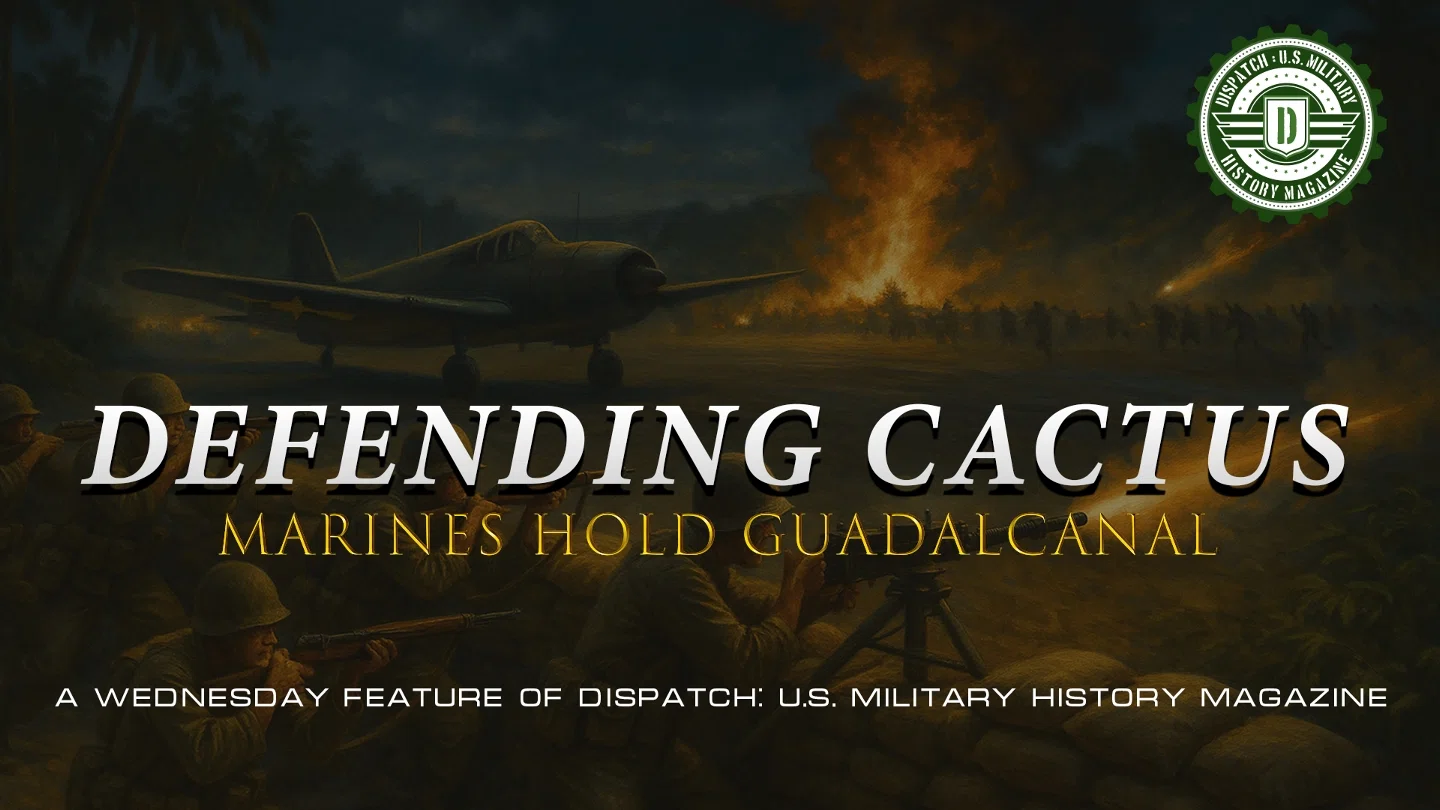
Searchlights Over the Jungle Runway
The strip did not look like the heart of a campaign. Henderson Field was a rough scar hacked out of red clay and jungle, its pierced-steel planking glinting in the moonlight, framed by palm trunks and black silhouettes of wrecked aircraft. On many nights in late 1942, the men around it lay in shallow foxholes and muddy pits, listening to the distant rumble of engines build into something heavier. The first shells reached them as an ugly whistle and then a violent crack, Japanese naval guns walking fire up and down the runway while dirt, metal, and palm fronds lifted into the air. The ground shook like a living thing.
Marines clung to the edges of the field, scattered along low ridges and scrub, counting the seconds between bursts. The “Cactus” pilots, whose battered fighters and dive bombers lined the edge of the strip, could only lie still and hope that the next hit did not find their aircraft or the fuel dumps. Searchlights probed the clouds over Ironbottom Sound, and flashes from out at sea marked cruisers and destroyers methodically trying to erase the airfield in the dark. Every concussion threatened to rip up the runway that daylight operations depended on.
In the brief pauses between salvos, men checked weapons by touch, feeling the cold steel of rifles and machine guns, listening for shouted orders over the ringing in their ears. Some nights, flares drifted down and turned the entire clearing into a harsh white stage, where any movement might draw fire. The smell of cordite, cut vegetation, and spilled aviation fuel hung over the place. Henderson Field was only a few hundred yards of open ground, but it felt like the center of the island. The men who guarded it knew that the bombardment and the nights of ground attacks that followed were part of something larger than one rough jungle airstrip.
The Airfield That Guarded a Sea
Henderson Field mattered because the fight for Guadalcanal was never just about one island. The strip gave the United States a base for land-based aircraft in the middle of a long supply line that ran from the American west coast to Australia and beyond. From this rough runway, fighters and bombers could strike Japanese ships moving down the Solomon Islands, threaten transports, and cover Allied convoys bringing in men, ammunition, and food. If the Japanese knocked the field out or overran it, they could reopen the seaway toward Australia and force the Allies back onto the defensive in the South Pacific.
For the Japanese, Guadalcanal was a chance to finish what they had started in the first months of the war: pushing Allied power away from their newly won perimeter. Retaking Henderson Field meant isolating Australia, splitting Allied attention, and buying time to dig in across the Pacific. That is why they fed infantry regiments, artillery, and precious shipping into repeated attempts to crush the small garrison around the airfield. Night after night, destroyers and cruisers risked submarine attack and air strikes to deliver troops and supplies along the island’s dark shoreline.
On the American side, the early months on Guadalcanal were a thin, dangerous gamble. The Marines who first seized the unfinished strip, and the Army units that later joined them, operated at the end of a narrow logistical rope. Fuel, spare parts, rations, and ammunition arrived irregularly. Ships that tried to unload by day risked air attack, and those that tried by night risked surface action. Yet every day that Henderson Field stayed in operation, the “Cactus” aircraft made Japanese moves in the daylight more costly. The airfield became both shield and sword, protecting the seaway while punishing any attempt to push farther south. That is why this patch of scraped earth in the jungle deserved, and still deserves, a headline.
From Unfinished Strip to Prize
Only a few weeks before shells began to fall on Henderson Field, the place had been an unfinished Japanese project. In August 1942, when United States Marines came ashore on Guadalcanal, their orders were to seize the half-built airstrip that Japanese engineers had carved out near the north coast. The landing itself was rough but successful. Japanese resistance on the airfield was light, and within days the Marines had pushed inland just far enough to form a loose defensive ring around the runway. Engineers and aviation ground crews moved in almost as soon as the area was secure, laying down more surfacing and carving revetments into the jungle edge.
The name “Henderson Field” honored a Marine aviator killed in the earlier fighting around Midway, a reminder that this new base was meant to carry the air war forward. The mixed collection of Marine, Navy, and Army aircraft that flew from the strip became known as the “Cactus Air Force,” after the Allied code name for Guadalcanal. Their presence meant that Japanese ships could no longer move freely in daylight in the central Solomons. Each day that planes got off the ground, they attacked troop convoys, bombarded nearby Japanese positions, and provided cover for the cargo ships that tried to feed the Marines’ slim stockpiles.
But the position was brittle. The initial naval defeat off Savo Island left the Marines largely on their own ashore, and the Japanese moved quickly to reinforce from nearby bases. Colonel Ichiki’s detachment, sent in with orders that underestimated the size and determination of the American force, was thrown back and destroyed near the Ilu River. Other Japanese units probed and attacked along the jungle approaches, testing the perimeter. Commanders on both sides now understood that the campaign had been decided in concept: whoever held Henderson Field would dictate the pace of operations in the southern Solomons. What remained was a grinding contest of reinforcement, bombardment, and close-range night fighting around that vulnerable strip.
Night Assaults and Daylight Sorties
The battle for Henderson Field settled into a harsh rhythm. By day, the Cactus Air Force rose from the jungle runway, its fighters clawing into the humid air to intercept Japanese bombers and their escorts pushing down the slot from Rabaul. Dive bombers and attack aircraft followed, hunting transports, destroyers, and barges that tried to edge men and supplies toward the island under thin clouds. The strip roared with takeoffs and landings, dust and debris swirling as ground crews raced to turn battered aircraft around with limited fuel and spare parts. Each sortie kept pressure on the Japanese, but each also burned through the slender resources that the Marines and their supporting units struggled to protect.
By night, the pattern reversed. Japanese warships of the “Tokyo Express” surged down to shell the island, their guns searching for Henderson Field and the perimeter around it. On some nights, cruisers poured heavy shells onto the runway, collapsing revetments, shredding parked aircraft, and cratering the surface. The bombardments shook dugouts and command posts, snapping telephone lines and leaving stunned defenders to grope through darkness and dust. In the wake of these attacks, Japanese infantry tried to break the line, slipping through jungle paths toward the thin Marine and Army positions guarding the airfield’s approaches.
The most famous of these clashes came along the ridges south of the field, where Marines under officers like Merritt Edson and Alexander Vandegrift rallied thin lines to hold against determined night assaults. Men fired by muzzle flash, guided by shouted instructions and the dull glow of flares drifting overhead. Artillery observers worked by sound and memory to call fire on advancing Japanese columns, knowing that a gap anywhere along those ridges could open the way to the field. At the same time, across the island and out at sea, Japanese commanders coordinated new efforts to isolate Guadalcanal, sending in fresh units that often arrived exhausted, underfed, and already under air attack.
In one phase after another, the Japanese tried to mass enough strength to overwhelm the defenders. They pushed along the Matanikau, probed the eastern sectors, and launched larger coordinated attacks aimed directly at the airfield’s heart. Each time, the pattern repeated: bombardment from sea, ground assault by night, and then the harsh light of morning revealing wreckage and fallen men on both sides. As long as Henderson Field remained in American hands, the Cactus Air Force could resume operations, hitting troop movements and threatening any large-scale Japanese reinforcement. The fight around the runway became a series of linked crises, each one testing whether the defenders could repair damage, shift reserves, and keep the airstrip in action for one more day.
Ridge Lines, Radios, and Resolve
In the end, Henderson Field was saved by a mix of terrain, timing, and hard choices made under pressure. The most critical fighting came in late October, when Japanese commanders massed fresh forces for a concentrated push against the southern and western approaches to the airfield. They chose narrow corridors of jungle and ridge line where they believed they could slip close, form up, and crack the perimeter in a single violent blow. Instead, they ran into defenders who had learned the ground the hard way and had spent weeks improving fields of fire, digging in machine guns, and registering artillery on likely avenues of approach. The ridges that had seemed to offer covered routes toward the airstrip became killing zones when flares and star shells turned night into a ghostly day.
American firepower and communication held the line at moments when it easily could have failed. Forward observers lay in shallow positions, whispering corrections over field telephones and radios while Japanese troops tried to probe past them. Marine and Army riflemen shifted squads to plug gaps, guided by runners and the dim light of burning palm trunks. At critical points, 37 millimeter guns firing canister at close range broke up attacks that had already reached wire and foxhole depth. The newly arrived Army infantry, including the 164th Infantry Regiment, brought fresh bodies and automatic weapons that added depth to the perimeter. It was not a clean or tidy defense; it was a series of desperate stands that, taken together, bled the assaults white.
Offshore, battered but still active American naval forces disrupted attempts to bring in enough heavy equipment and supplies to sustain the Japanese offensive. Even when enemy units managed to reach the island, they often arrived short on food, ammunition, and medical support. The Cactus Air Force turned every clear morning after a failed night assault into another chance to strike Japanese positions, shell craters, and supply points. Step by step, the pattern shifted. Where early attacks had cut deeply into the perimeter, later efforts stalled sooner, with attackers weakened by hunger, disease, and constant harassment from air and artillery. The turning of the battle for Henderson Field did not come from a single dramatic charge or counterattack, but from the steady accumulation of these advantages, held together by the resolve of men who refused to abandon the strip.
From Jungle Airfield to Turning Point
By the end of 1942, it was clear that the struggle for Henderson Field had broken the momentum of Japanese expansion in the southern Solomons. Repeated attempts to overrun the airstrip had failed, leaving entire regiments shattered along jungle trails and ridge lines. The Japanese high command faced a stark choice: continue to feed men and ships into a campaign that no longer promised a decisive victory, or cut their losses to preserve strength for future fights closer to their core defensive perimeter. In early 1943, they began a carefully staged withdrawal from Guadalcanal, pulling surviving units off the island under cover of night. For the Marines and soldiers who had guarded Henderson Field through bombardment and assault, the realization that the enemy was leaving marked a quiet but profound shift in the wider war.
Holding Henderson Field allowed the United States to turn Guadalcanal from a vulnerable foothold into a forward base. From there, Allied forces could project air power and naval patrols farther up the chain of islands, setting conditions for later advances through New Georgia, Bougainville, and beyond. The Guadalcanal campaign showed that a determined defense of a single airfield could reshape an entire theater, forcing an opponent to fight on terms that favored those who held the runway. It also proved that the United States could sustain a long, contested operation far from its main industrial centers, learning how to manage logistics, joint operations, and relief of exhausted units under constant pressure.
The story of Henderson Field still matters because it captures the link between small-unit endurance and grand strategy. The men in foxholes and revetments did not think in terms of sea lanes and future campaigns. They thought about keeping the strip open for one more dawn sortie, keeping a ridge line from breaking, keeping a supply dump from exploding under shellfire. Yet their success gave commanders options that simply would not have existed if the airfield had fallen. For students of military history, staff rides, and museum visitors today, Guadalcanal offers lessons in how air, land, and sea power intersect, and how vulnerable points on the map can become anchors for larger plans. The rough jungle airfield that once seemed like a temporary foothold became a symbol of how holding ground at great cost can open doors far beyond the immediate horizon.