Low Tide, High Fire at Omaha
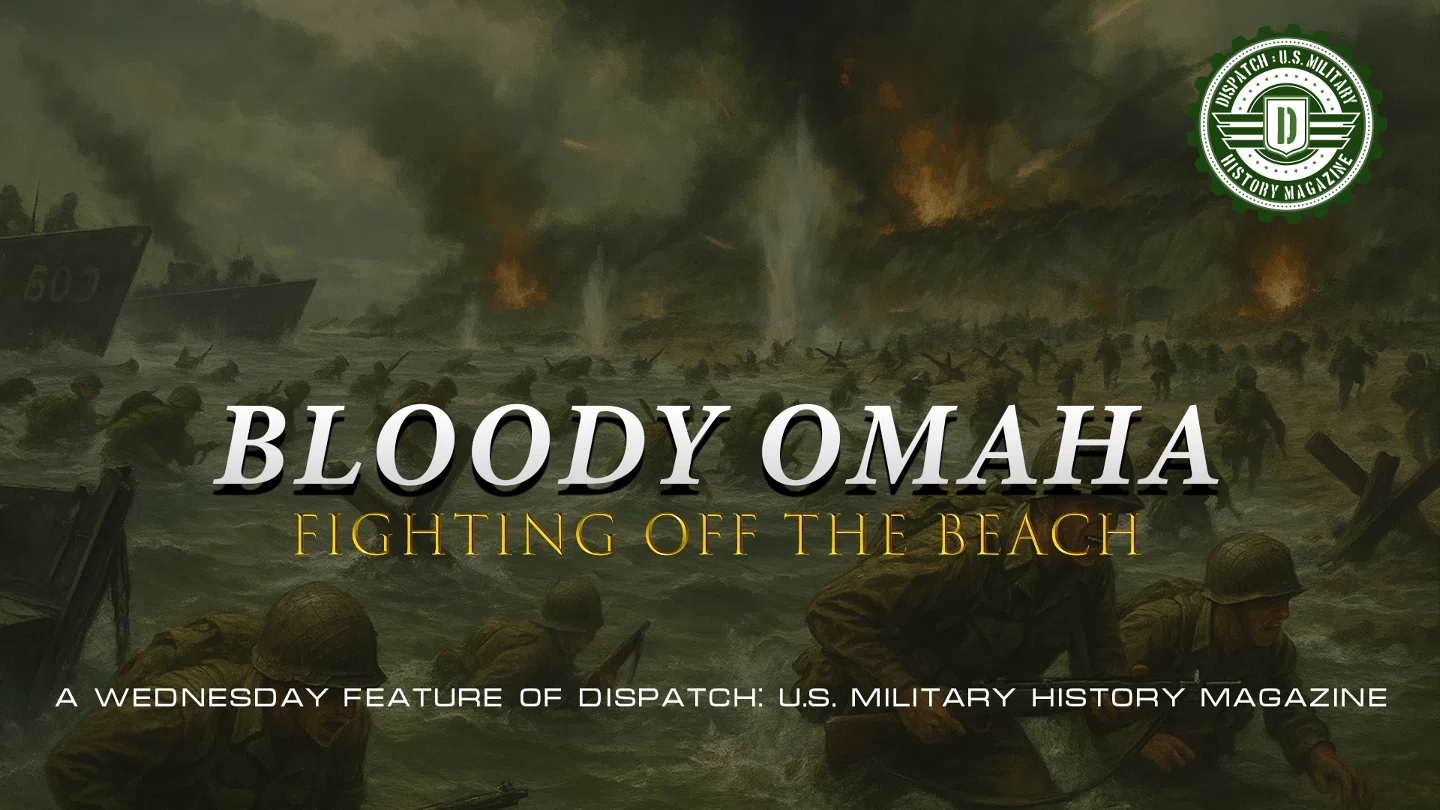
The morning light over the English Channel on 6 June 1944 was gray and flat, the kind of light that hides details until they are suddenly too close. In the chill spray, landing craft full of soldiers from the United States 1st and 29th Infantry Divisions ground forward toward a strip of sand code-named Omaha. The ramps dropped into waist-deep water, and men stepped into a world of shock: machine-gun fire tearing across the surf, mortar bursts walking up and down the tide line, and the dull thud of shells hitting sand and steel obstacles. Many of the amphibious tanks that were supposed to be churning ahead of them had already gone under in the rough seas, leaving the infantry exposed.
The plan on paper had promised a beach softened by bombardment, with enemy guns smashed and obstacles shattered. What greeted the first waves was something very different. The naval guns had lifted early, the smoke and dust had drifted away on the wind, and the German concrete strongpoints built into the bluffs were very much alive. From those positions, machine guns, artillery, and anti-tank guns looked straight down the length of the beach, turning stretches of open sand into killing zones. Men who tried to run were cut down; others crawled behind steel hedgehogs or lay flat in the thin line of shingle at the high-water mark, barely covered by loose stones.
All along that curving strip of Normandy coast, individual landing craft took hits, burned, or spun uselessly in the shallows. Medical corpsmen tried to work under fire. Combat engineers, burdened with explosives and equipment, struggled to mark lanes through the mined obstacles but often never made it to the right spots. Radio nets were broken, officers were missing, and in more than one sector, entire companies were reduced to scattered clusters of survivors who had never trained together. For many of the soldiers pinned to that sand, it felt as if the invasion was failing in front of their eyes.
Yet even in those first brutal minutes, something else was happening beneath the roar and chaos. Small knots of men began to edge sideways along the beach, looking for dead ground the enemy guns could not quite reach. Junior officers and sergeants shouted themselves hoarse, trying to pull strangers into makeshift teams. A few engineers clawed forward to blow gaps in the wire. The long morning that followed would hinge not on neat wave formations or scripted schedules, but on whether those improvised groups could find a way off the sand and up into the teeth of the bluffs.
If Omaha Breaks, The Invasion Falters
To understand why that narrow beach mattered so much, it helps to pull the camera back to the scale of the entire Normandy invasion. Operation Overlord depended on five landing beaches to crack open the German-held coast of France: Utah and Omaha for the United States forces on the western flank, and Gold, Juno, and Sword for the British and Canadians farther east. Omaha’s role was to anchor the center of the American landings, linking Utah to the British and Canadian beaches and opening the road net toward the key port of Cherbourg and the interior of France. If Omaha failed, the invasion line would have a dangerous gap in the middle.
The terrain made the stakes even higher. Omaha was a crescent of sand backed by steep bluffs, broken only by a handful of draws and gullies where roads ran inland. The German defenders had spent years turning those exits into choke points, lacing them with mines, barbed wire, and interlocking fields of fire. Concrete bunkers, gun casemates, and trenches formed a layered defensive belt often referred to as part of the Atlantic Wall. On the morning of 6 June, elements of the German 352nd Infantry Division were on hand in greater strength than Allied planners had expected, which meant more rifles, more machine guns, and more artillery waiting above the beach.
High above the surf, corps and army commanders on both sides were watching Omaha’s fate with cold urgency. For the Allied side, leaders such as Lieutenant General Omar Bradley needed a firm foothold by the end of the day as follow-on waves of troops and vehicles crowded the Channel behind the first assault. If Omaha remained a killing ground instead of becoming a launch point inland, those later waves would have nowhere safe to land. In the worst case, battered units might have to re-embark under fire or die in place, and the carefully built timetable for reinforcing the bridgehead would collapse.
Beyond the immediate tactical picture lay larger political and strategic pressure. The Western Allies were finally returning to mainland Europe, answering long-standing Soviet demands to relieve pressure on the Eastern Front and making good on promises to liberate occupied countries. A disaster at Omaha would not just cost lives; it would send a shock through the alliance, embolden German commanders to believe they could still hold the West, and hand propaganda material to a regime eager to claim that the invasion had been repelled. On that long, brutal morning, the question of whether the Normandy landings would create a lasting foothold or a blood-soaked failure rested on the ability of small, scattered groups to claw their way off the beach and up into Normandy’s hedgerow country.
Plans, Weather, and Wrong Estimates
The road to that brutal morning began years earlier, when German engineers and infantry units started pouring concrete into the cliffs of the French coast. After defeats in North Africa and Italy, German commanders expected that the Western Allies would eventually come across the Channel, so they hardened ports and beaches into a defensive belt. At Omaha, they wired the draws with explosives, buried mines in the sand, and built machine-gun nests to sweep the likely landing zones. The terrain did the rest of the work, funnelling any attacker into a few narrow exits that could be raked from several angles at once. On maps, the beach looked like a slot that could be closed with steel and fire.
Allied planners knew they faced a fortress coast, but they had to make choices about where to accept risk. With limited heavy bombers and naval guns, they spread firepower across all five beaches. They also relied on a mix of theory and intelligence estimates about German strength in each sector. At Omaha, the presence of the German 352nd Infantry Division meant more combat power than expected, but that fact did not fully register in time to change the plan. Air crews and naval gunners were tasked to hammer the beach defenses just before the landings, using tight timing windows and navigation in marginal weather.
Then the weather itself forced a gamble. Rough seas and low clouds pushed the invasion from an earlier target date, and when the armada finally sailed, many landing craft and amphibious tanks had to fight their way through heavy swells and poor visibility. Some bombing runs fell inland instead of directly on the beach positions. Naval shells landed but often failed to crack the strongest bunkers. The doctrine behind amphibious assaults called for overwhelming fire to stun defenders and allow engineers and infantry to cross the tide line in organized waves. By the time the first soldiers of the 1st and 29th Infantry Divisions were crouched in their landing craft, much of that textbook preparation had frayed, though they would not know how badly until the ramps dropped.
Wave After Wave Into the Fire
When the first assault waves touched down at Omaha, the gap between plan and reality became brutally clear. In some sectors, landing craft drifted off course and put companies down in front of different strongpoints than they had studied. Amphibious tanks meant to provide covering fire went to the bottom in choppy water or arrived late and in small numbers. As the ramps crashed open, soldiers stepped into machine-gun cones that swept the approaches in straight lines, cutting through ranks and dropping men before they could even clear the boats. Others were forced to jump early and wade in under the weight of gear, struggling through surf that threatened to pull them under while tracer fire stitched the water around them.
On the sand, survivors scrambled for any cover they could find. Steel obstacles and wooden stakes meant to tear open landing craft became the only things shielding small groups of men. Combat engineers, loaded with explosives and marking gear, tried to reach the belts of mines and wire that blocked the exits, but many were shot down in the shallows. Those who made it forward crawled in fits and starts, blowing gaps under direct observation, often with little communication to the units behind them. Along sections like Dog Green, where companies of the 116th Infantry suffered especially heavy losses, radio nets collapsed and leadership thinned in minutes, leaving sergeants and even privates to decide whether to stay pinned or move.
Higher up the beach, among the shingle and the base of the bluffs, a second pattern emerged. Stragglers from different companies, even different regiments, found themselves pressed together, sharing quick, shouted plans. A lieutenant might gather a handful of riflemen, a couple of engineers, and a machine-gun team that had never trained as a unit. Using smoke, the dead ground behind dunes, and the moments when German gunners shifted fire to fresh waves, they began to push toward breaks in the wire or small ravines cutting into the bluff. Each move forward meant exposing themselves again, sprinting a short distance, then dropping flat as bullets cracked into the sand around them.
Out beyond the breakers, naval officers watched the pattern of explosions and smoke and struggled to read what was happening on the beach. Reports coming back by radio were fragmentary and often terrifying: units shattered, obstacles still up, exits blocked. The timetable for bringing in follow-on waves was colliding with the reality of a beach crowded with wrecks and bodies. By mid-morning, some commanders considered whether parts of the landing might have to be shifted or even pulled back. On the sand and starting up the slopes, however, the fight was shifting to a new phase, shaped less by neat arrows on maps and more by the initiative of small groups clawing for any foothold in the German defenses.
From Bloody Sand to a Fragile Beachhead
By afternoon, the panorama at Omaha looked very different from the slaughter of the early hours. The beach itself remained littered with wrecked landing craft, burned-out vehicles, and the bodies of the dead and wounded. Casualties were severe, with some companies reduced to a fraction of their morning strength. Yet above the high-water line, along the crest of the bluffs and beyond, American units had carved out footholds that linked into a patchwork of positions inland. In several sectors, soldiers moved through hedgerows and small fields rather than across bare sand, trading one kind of danger for another but at least no longer fully exposed to the full weight of the beach defenses.
Those footholds were enough to change the operational story. Once a continuous line of defenders along the bluffs was broken in multiple places, it became harder for German commanders to coordinate counterattacks. Communication lines were cut, observation posts lost, and some local reserves committed piecemeal. At the same time, the very presence of troops inland gave Allied commanders justification to keep pushing reinforcements through the surf rather than suspending landings. Engineers worked feverishly to clear and mark workable exits, turning those deadly draws into routes for vehicles and heavier weapons. By evening, tanks, artillery pieces, and additional infantry battalions were beginning to move off the beach and into Normandy’s interior.
In the larger Normandy campaign, that shift mattered more than any precise tally of yards gained on day one. Omaha would remain a hard, costly sector for days to come, but the feared outcome—a failed landing, a forced withdrawal, or a permanently broken link between Utah and the British and Canadian beaches—did not happen. Instead, the line held and then thickened. The invasion kept its central anchor, allowing Allied forces to build up combat power, seize key road junctions, and eventually break out of the bocage country toward the open ground where armored formations could maneuver.
The legacy of Omaha’s long morning endures far beyond the exact contours of the sand and bluffs. For military professionals, it is a case study in the limits of planning and the importance of adaptable leadership at the lowest levels. Carefully crafted schedules and fire plans met weather, misestimates, and a determined enemy, and what ultimately carried the day were destroyer skippers willing to risk their ships and junior leaders willing to gather whoever was still standing and move. Staff rides, training exercises, and classroom discussions still mine Omaha for lessons about initiative, combined arms, and the moral weight of sending people into such a fight.
For civilians, veterans, and families who walk that beach today, the story of Omaha is both sobering and grounding. It is a reminder that even the most celebrated victories were not inevitable, and that history’s turning points often hinged on fear, confusion, and courage compressed into a few critical hours. The men who fought their way off that sand did so without any guarantee that the larger plan would succeed, only with the knowledge that the only way out was forward. Remembering that long morning helps keep the human scale of D-Day in view, and honors the small groups whose decisions under fire helped open the way into Western Europe.