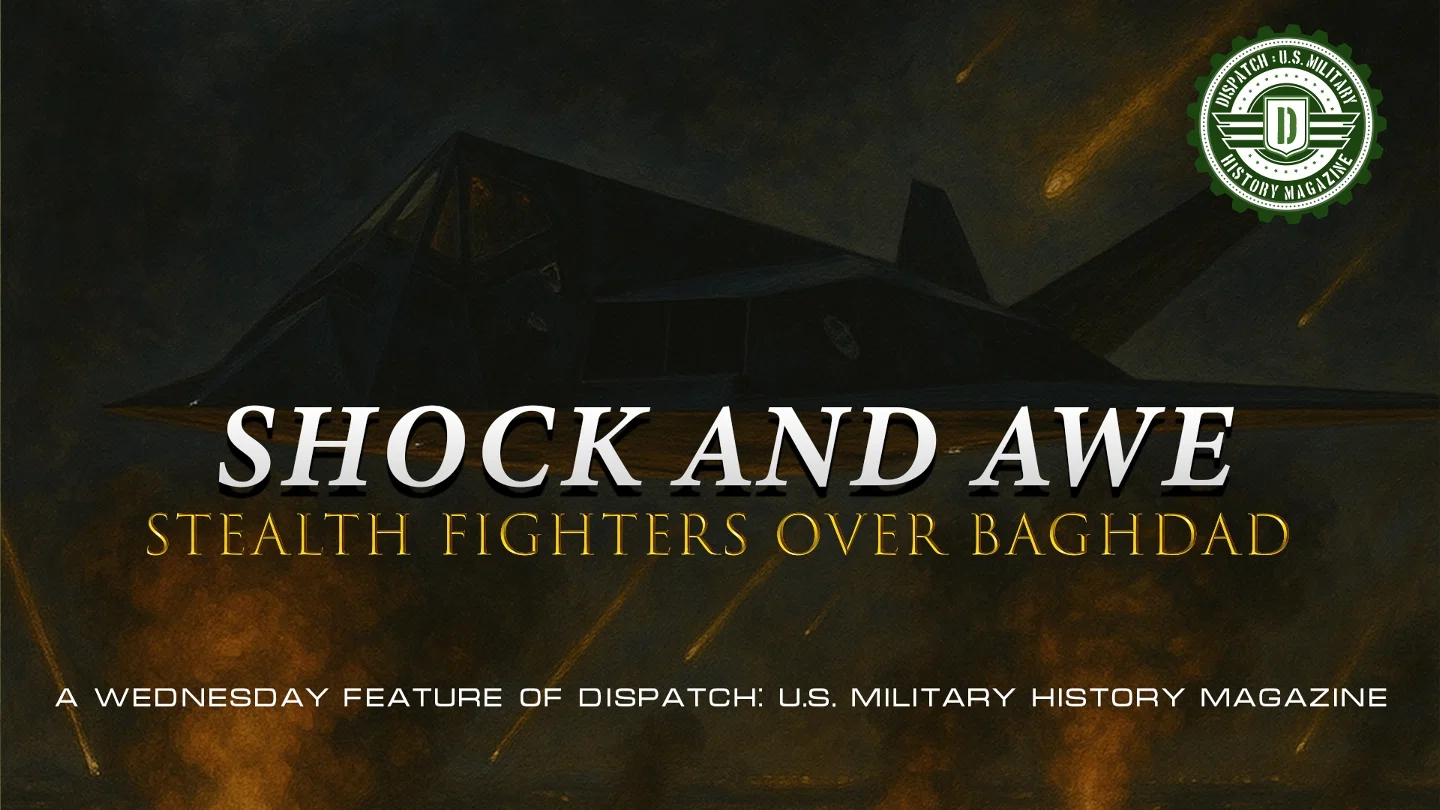
Night Over Baghdad’s Radar Web
Shortly after midnight on 17 January 1991, the skies over Baghdad did not look like the opening of a conventional air war. The city had slipped into blackout, its streetlights and neon signs snuffed out as sirens wailed and gun crews scrambled into position. Somewhere above that darkness, invisible to the radars that had watched the Iran–Iraq War for eight bloody years, the first United States Air Force F-117 stealth fighters slid toward their aim points. Their pilots flew by cockpit glow and mission tapes, trusting that the radar beams combing the sky below them would sweep right past without a return.
On the ground, Iraqi air defenders used what they had always used: searchlights, surface-to-air missile batteries, and radar-guided guns layered around key ministries, communications hubs, and leadership bunkers. They knew an attack was coming. Coalition build-up in Saudi Arabia had been impossible to hide, and Saddam Hussein’s speeches had warned of “the mother of all battles.” But knowing an attack is coming is not the same as knowing where the first blows will land. As the opening minutes ticked by, desert-based radar sites and command posts began to lose contact, one by one, as stealth-delivered bombs and cruise missiles ripped into antennas, power feeds, and hardened bunkers.
From the perspective of the F-117 pilots, the raid was a series of green symbols on a display and a steady voice in the headset, counting down to weapons release over a city that could barely be seen. From the perspective of Iraqi officers in those bunkers, the opening felt like sudden blindness: phones going dead, screens going black, subordinate units dropping off the net. This was the hinge between two eras of warfare, compressed into a few night hours. What began as a handful of aircraft pressing into a heavily defended capital would, by dawn, be recognized as something else: a deliberate attempt to decapitate a command system before the ground war even began.
Taking Apart Saddam’s Nerve Center
The opening night of Desert Storm was not simply about dropping bombs on Baghdad. It was a calculated effort to break the central nervous system of Saddam Hussein’s war machine in the first hours of the campaign. Iraq’s occupation of Kuwait had given it control of vital oil reserves and a stronger position on the Persian Gulf. Allowing that occupation to stand, or suffering heavy casualties in trying to reverse it, carried consequences far beyond the desert border. For the United States and its coalition partners, the stakes included regional stability, alliance credibility, and the message sent to other regimes tempted by conquest.
To achieve their goals, coalition planners knew they had to do more than suppress a few air defense sites. Iraq’s command-and-control network linked leadership bunkers in Baghdad to corps headquarters in the field, to air bases, missile units, and frontline armored divisions dug in along the Kuwaiti frontier. If that network stayed intact, Iraqi forces could coordinate a defense of occupied Kuwait, launch counterattacks, or even attempt a spoiling offensive into Saudi Arabia. Worse, they could use that network to direct Scud missile strikes and potentially chemical warheads, raising fears in Israel and other neighboring states and risking a split in the coalition.
So the first wave of attacks on that January night was built around targets that do not show up on battlefield maps in bright colors: communications centers, air defense coordination nodes, leadership facilities, and key electrical grids that powered radar and command posts. Stealth fighters went after the most heavily defended nodes in downtown Baghdad. Cruise missiles, launched from ships and submarines hundreds of miles away, raced low over the desert and sea toward relay stations and radar sites. Conventional strike aircraft, supported by jamming platforms and tankers, fanned out against air bases and early warning radars beyond the capital’s immediate umbrella.
For all the complexity, the logic was simple: if you can darken the enemy’s radar screens, confuse their commanders, and isolate their field units before the ground offensive begins, you can reduce your own casualties and shorten the war. On the first night of Desert Storm, that theory was being tested in real time above and around Baghdad. The outcome would shape not just the campaign for Kuwait, but how militaries around the world thought about air power, information, and the opening moves of modern war.
From Desert Shield to Opening Blow
The first night over Baghdad began months earlier on the ground in Saudi Arabia under a different name: Desert Shield. In August 1990, Iraq’s sudden invasion and occupation of Kuwait stunned the region and forced a rapid response. The United States and coalition partners began moving aircraft, armor, and troops into the Arabian Peninsula, building up bases and supply lines in the open desert. Airfields that had hosted training deployments now filled with squadrons of fighters, bombers, tankers, and reconnaissance aircraft, many of them rotating in from Europe and the continental United States as part of a carefully timed flow.
As the buildup grew, planners in Riyadh and Washington shifted from simply deterring an Iraqi push into Saudi Arabia to figuring out how to eject Iraqi forces from Kuwait. They understood that a direct ground assault against entrenched divisions, supported by a still-intact Iraqi Air Force and surface-to-surface missiles, risked heavy casualties. The answer they pursued was an offensive air campaign designed to strip away Iraqi advantages before a tank ever rolled forward. That meant finding the seams in Iraq’s integrated air defense system, mapping every radar and missile battery, and pairing them with the right combination of stealth, jamming, and stand-off weapons.
Stealth technology had been developed and quietly tested in the previous decade, but Desert Storm would be the first time a large-scale coalition operation leaned on it from the opening minute. F-117 pilots flew training missions over the desert, practicing routes and timing that would later be replayed over Baghdad’s defenses. At the same time, crews assigned to launch cruise missiles rehearsed the complicated choreography of programming routes to snake through valleys, hug terrain, and arrive over targets at precisely calculated times. In nearby command centers, huge target folders grew thicker as satellite images, reconnaissance photos, and electronic intelligence poured in.
By early January 1991, diplomatic deadlines had passed and the air campaign plan was locked in. It was built in phases, beginning with attacks on leadership, command-and-control, and air defenses, then moving toward the systematic dismantling of Iraqi military power in Kuwait. Within that first phase, the very first night had a special purpose: to open a hole in Iraq’s perception and coordination so wide that later waves of aircraft could operate in a more permissive environment. The result was a layered design in which stealth fighters would slip into the capital, helicopters and specialized aircraft would punch corridors through radar coverage, and waves of conventional jets would pour through those gaps toward airfields and frontline units.
Stealth, Cruise Missiles, and Tracer Fire
When the plan moved from briefing slides to reality, it did so in stages that stretched across the region. Before most people in Baghdad heard a siren, attack helicopters were already moving through the night over western Iraq. Specially trained crews in Apache gunships, guided by low-flying Pave Low helicopters, crept in to destroy key early warning radar sites. Their job was to knock out the eyes that would otherwise alert Iraq’s defenses to incoming waves. When their missiles streaked into those isolated radars, they were opening invisible corridors in the sky long before the first television images of anti-aircraft fire lit up the capital.
Almost simultaneously, cruise missiles rose from ships and submarines in distant waters. They flew low over the desert and sea, guided by internal maps and sensors rather than pilots. Each missile carried a specific aim point: a power station that fed command bunkers, a communications hub linking Baghdad to field armies, or a radar node controlling surface-to-air missile batteries. Farther back, airborne warning and control aircraft watched the overall picture, directing fighters that stood ready to intercept any Iraqi jets that tried to climb into the fight. Tankers orbited in safer airspace to keep strike packages fueled as they moved toward their targets.
Into this layered attack slipped the F-117s, each jet following its own carefully calculated route to downtown targets. Their pilots descended toward aim points that would have been nearly suicidal for conventional aircraft: hardened leadership facilities, air defense headquarters, and communications centers in the heart of a heavily defended capital. Below them, Iraqi gunners saw and heard signs of an attack, but their radars did not show the neat formations of incoming aircraft they were used to tracking. Instead, they reacted to flashes and impacts, filling the sky with unguided tracer arcs and volleys of missiles fired more on general suspicion than on precise tracking data.
At the edges of the battle, other coalition aircraft pressed in under jamming support and radar suppression. Strike packages hit air bases to crater runways and destroy parked fighters. Electronic warfare aircraft worked to confuse and blind radar operators. Wild Weasel crews hunted surface-to-air missile sites, provoking radar emissions and then firing anti-radiation missiles at those sources. Iraqi fighter pilots who tried to engage found themselves facing alert coalition fighters supported by detailed awareness from airborne controllers. Several Iraqi aircraft were shot down, further discouraging attempts to contest the air.
From the ground view in Baghdad, the night looked chaotic: sirens, flashes, tracer streams clawing at the sky, and the distant boom of impacts. From the air campaign perspective, that chaos was the outward sign of a command system under sudden, coordinated assault. As the hours passed, more nodes in the network went dark, more radar screens blanked, and more air defense batteries were left to act on their own. By the time the first night’s main wave receded and crews turned back toward their recovery bases, the shape of the war had already changed. The coalition had not yet won air supremacy, but it had driven a wedge into Iraq’s ability to see, understand, and direct the fight, setting the stage for the critical turning points that followed in the days ahead.
The Night the Network Broke
Looking back, the turning point of that first night was not a single explosion but the way so many blows landed almost at once. Iraqi commanders had built their defenses on the assumption that they would see large formations coming and mass fire in response. Instead, the critical damage arrived in fragments: an early warning radar site erased in western Iraq, a key power feed cut to a command bunker, an air defense headquarters stunned by a precision hit that ripped through its roof. In isolation, each strike hurt. Taken together over the span of a few hours, they broke the pattern that Iraq’s leadership relied on to manage a modern war.
Stealth was part of that effect, but only part. Cruise missiles arriving from unexpected directions and altitudes added to the confusion, forcing defenders to react to ghostly tracks that appeared only briefly before impact. Jamming aircraft and anti-radar missiles sowed doubt among operators who knew that turning on a radar could invite a guided weapon into their control van. Pilots flying conventional strike aircraft benefited from this pressure, slipping into a sky where many of the most dangerous, coordinated threats were already weakened or distracted. The integrated air defense system on which Saddam Hussein had spent years of resources began to act less like a system and more like scattered, uncoordinated batteries.
Inside Baghdad and across Iraq, that breakdown showed up as silence. Phones that had connected command posts to field units went dead. Radios crackled with partial reports and unverified rumors instead of clear tasking. Some local commanders fought on their own initiative, firing on suspected targets and staying put in positions that no longer fit any broader plan. Others waited for orders that never came, their higher headquarters either damaged or too overwhelmed to respond. The coalition did not destroy every radar, bunker, and communications node that night, but it did enough to change how the Iraqi system behaved. By dawn, the country still had guns, missiles, and airfields, yet its ability to use them as a single, coherent instrument had been sharply reduced, and that shift would echo through the rest of the campaign.
From Shock to a New Playbook
In the hours and days that followed, the immediate results of that opening night became clear on maps and mission briefs. Coalition aircraft returned with relatively light losses for such a deep and ambitious first strike against a defended capital. Iraqi fighters that did take off found themselves at a disadvantage against alert patrols guided by detailed airborne picture reports. Many more Iraqi aircraft stayed on the ground, some later flown to Iran in an attempt to preserve them. Airfields struck in the first waves suffered cratered runways and damaged shelters, reducing the threat of a sustained Iraqi air challenge. Command centers, communications hubs, and air defense coordination sites hit on the first night found it difficult to restore the kind of seamless control imagined by their designers.
As the air campaign expanded, the initial shock over Baghdad set a pattern. Subsequent nights and days saw continued attacks on command-and-control nodes, logistical networks, and front-line units in Kuwait and southern Iraq. Ground forces still had to close with and defeat Iraqi divisions when the ground offensive began, and they encountered real resistance in some sectors. Yet the conditions under which they fought were shaped by that earlier air work: Iraqi units often lacked timely information, air cover, or clear guidance, while coalition formations moved under the umbrella of a growing sense of air supremacy. The promise that early air strikes could save lives on the ground gained a concrete example in the way the campaign unfolded.
For militaries watching around the world, the first night of Desert Storm became a case study in what precision, stealth, and careful target selection could do to a modern state’s nervous system. Air planners and theorists pointed to Baghdad’s darkened command centers as proof that an enemy’s ability to see, decide, and coordinate could be attacked directly, not only through attrition of fielded forces. At the same time, the conflict showed that even a successful opening air campaign did not remove the need for ground operations and postwar decisions, lessons that later wars would underline in different ways. Today, when officers talk about joint operations, networks, and the vulnerability of information systems, they still reach back to that January night when a capital city’s defenses were jolted by a kind of opening shock the world had not yet seen at that scale.