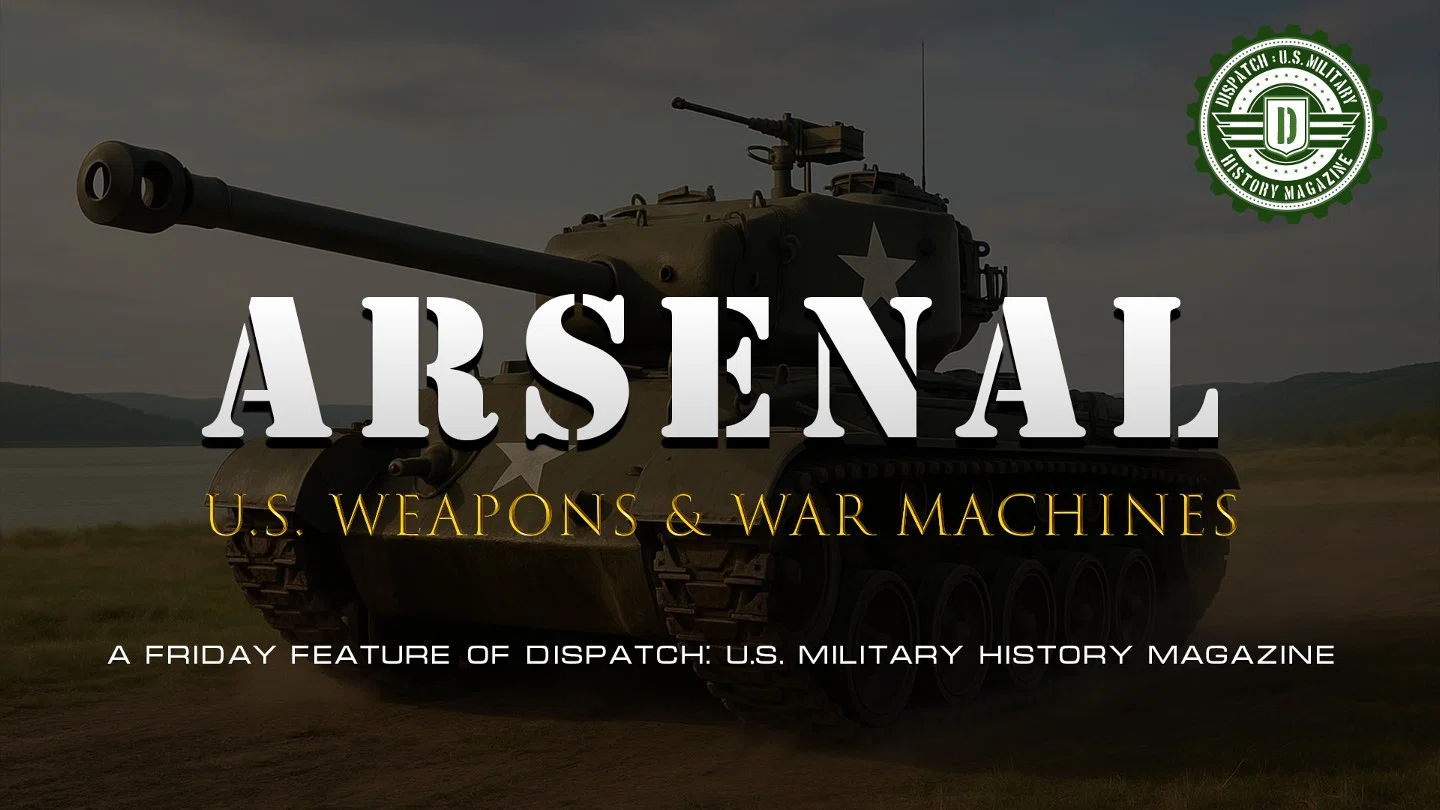
In Action
The streets around Cologne’s cathedral are a canyon of stone and smoke. It is March 1945, late afternoon, and an American tank platoon noses its way forward, engines grumbling against the cobblestones. At the head of the column rumbles something new: a big, low-slung tank with a long 90 mm gun and a turret that seems to dwarf the familiar silhouette of the Sherman behind it. Inside the lead vehicle, the Pershing’s crew works in clipped phrases over the intercom, eyes flicking between periscopes, gunsights, and the maze of shattered buildings ahead.
The tank eases up to an intersection and halts. The gunner searches down the main street, past wrecked trams and drifting dust. In the narrow slice of his sight, a dark shape moves: a German tank edging out from behind a building, angling for a shot at the American column. The commander snaps an order, the turret whines, and the big 90 swings onto target. The gunner settles the crosshairs on the enemy’s hull and squeezes.
The Pershing lurches as the main gun speaks, the blast echoing between stone walls. The loader is already shoving another shell into the breech, hands working on habit more than thought. Through the dust and smoke, the German tank begins to burn. The column behind starts to move again, infantry darting from doorway to doorway under the gun’s protection.
For the men inside that Pershing, this moment feels like vindication. After years of fighting in tanks that too often had to rely on speed and luck when facing German heavy armor head-on, they finally have a machine built to meet that threat on more even terms. What they do not yet know is that this new heavy tank’s story will not end on the Rhine. Within a few years, its tracks will bite into very different ground on another peninsula, halfway around the world.
The Problem It Was Built To Solve
The M26 Pershing was the United States answer to a painful mid-war lesson: it is one thing to field a reliable, easy-to-produce medium tank, and quite another to ram that tank into fortified defenses and heavy enemy armor, day after day, without something heavier to back it up. Early in the war, American armored doctrine emphasized mobility and exploitation. The standard M4 Sherman, with its 75 mm gun, good reliability, and respectable speed, fit that philosophy well. Stopping enemy tanks, on paper, was supposed to be the job of separate tank destroyer units with specialized vehicles and high-velocity guns.
Reality was messier. In North Africa, Italy, and then Normandy, American crews increasingly found themselves facing German Panthers and Tigers in hedgerows, towns, and tight valleys where there was little room to maneuver. The Sherman could win these fights through numbers, tactics, and coordination with artillery and air power, but frontal duels against heavier German armor were always dangerous. Crews complained about having to flank for a killing shot while shells from bigger guns could punch through their own tanks from long range.
At the same time, infantry commanders needed a tank that could take more punishment while knocking down strongpoints at close range. The Sherman’s armor, effective early in the war, began to feel thin against upgraded anti-tank guns and panzerfausts in the final campaigns in Europe. Reports piled up describing losses in tight urban fights and along embankments and bridges where there was no room to dance around a better-armored foe.
Engineers and planners had not been blind to this. Heavy tank projects had been simmering for years in the background, but concerns about weight, shipping space, and mechanical complexity slowed them. Only after Normandy, when the scale of the problem in Europe became impossible to ignore, did pressure build to push a new design—the T26—into full production as a heavy tank. The result would be the M26 Pershing, a machine meant to give American crews a gun and armor package that could stand up to German heavies, and, as events would soon prove, to meet the next generation of Soviet-built tanks in the hills and paddies of Korea.
From Design Board To Production
The Pershing did not appear out of nowhere in the last months of the war. It grew out of a long line of experimental designs that tried to marry American ideas about mobility and reliability with the hard lessons coming back from the front. Early in the conflict, the focus had been on improving the Sherman, adding better guns and thicker armor where possible without completely reshaping the tank. At the same time, engineers at American design arsenals and industry partners were sketching a heavier machine on paper, one that could carry a larger gun and more armor without becoming too slow or fragile for field use.
These experiments moved through several trial families, with prototypes that tested electric drives, different suspensions, and a mix of guns. Each step taught something about what would work in mass production and what would not. Electric drives promised fine control but were complex and difficult to field under wartime conditions. New suspensions offered better ride and cross country performance, but could be too bulky for transport. The final pattern that emerged for the T26 program used a more powerful gasoline engine than the Sherman, a strong yet compact transmission, and torsion bar suspension that gave the tank a lower profile and a smoother ride than earlier American designs.
At a glance, the M26 Pershing was an American heavy tank for the United States Army and Marine Corps in the late stages of the Second World War and the early years of the Korean War. It carried a crew of five, a 90 millimeter main gun with coaxial and bow machine guns, and rolled on wide tracks driven by a rear mounted gasoline engine that gave it a respectable road speed for its weight. Its armor was thicker and better sloped than the Sherman, and its silhouette was lower, with a broad turret centered over the hull.
Production was a race against time. By the time the design was frozen and factories retooled, the campaign in northwest Europe was already far along. Only a limited number of Pershings reached frontline units before Germany surrendered, and they served alongside Shermans rather than replacing them. Yet the experience gained in rushing the tank into combat, and in shipping it overseas in quantity, ensured that when a new war erupted in Korea a few years later, the M26 and its direct descendants would be available in much larger numbers.
Inside The Weapon
Walk up to a Pershing from the front and the first impression is of a broad, purposeful face. The glacis plate is noticeably thicker and more steeply angled than the familiar Sherman, and the hull sits lower to the ground, with the suspension tucked under armored side skirts. The turret, nearly circular in plan, is a compact mass of cast steel with a long 90 millimeter gun projecting from a heavy mantlet. Stowage boxes, spare track links, and external fittings dot the hull and turret, giving each tank a slightly individual look shaped by its crew and unit.
Inside, space is carefully divided among five men and the machinery that keeps them moving and fighting. In the front left of the hull sits the driver, with his controls, pedals, and periscopes laid out in a familiar pattern for those who had graduated from Shermans. To his right is the bow gunner and radio operator, seated behind a ball mounted machine gun and responsible for working the hull radio set when not engaging close targets. Between and behind them run the driveshaft and linkage heading toward the rear power pack, insulated but still a source of noise and heat.
The turret is the heart of the fighting compartment. On the right side sits the gunner, his main sight mounted alongside the 90 millimeter gun and secondary observation periscopes above. Behind and slightly above him is the tank commander, standing or sitting in the turret bustle, able to peer out through his cupola and direct the crew over the intercom. On the left side is the loader, who lives in a constant dance between ammunition racks, the breech, and spent shell cases scattered at his feet during action. The floor under them is the turret basket, which turns with the turret and carries seat mounts, ready racks, and equipment.
The Pershing’s major subsystems are arranged in a way that reflects both American design habits and battlefield demands. The rear of the hull houses the engine and transmission in a single power pack that can, in principle, be removed as a unit for major maintenance. The fighting compartment holds the gun, ready ammunition racks, and the fire control equipment that helps the crew aim and hit at range. The armor envelopes this space with a mix of cast and rolled steel, thicker around the front of the turret and hull where enemy fire is most likely to strike. Communications run through an internal intercom system and external radio, letting the commander talk with other tanks and supporting arms while keeping orders crisp inside the vehicle.
On training grounds, instructors emphasized that the Pershing was more spacious and better laid out than some foreign heavy tanks, but veterans of combat quickly learned that no armored vehicle ever feels roomy under fire. The larger gun and thick armor came with extra weight, and crews had to manage that when crossing bridges, climbing hills, or slogging through soft ground. In European villages with tight turns, the longer barrel and bulkier hull required careful driving, yet the added punch and protection gave crews more confidence facing German heavy armor. In Korea’s hills and paddies, the same crew stations, sights, and controls translated to a new battlefield, where range, elevation, and engine strain were constant worries. Living with a Pershing meant long hours of cleaning guns, checking tracks, and coaxing the power pack to life, but for many crews it also meant a feeling that, at last, they had a tank that could stand in a hard fight.
Baptism Of Fire
The Pershing’s combat debut came very late in the European war, which only sharpened the focus on every engagement it fought. The tank filmed advancing into Cologne became famous because it showed what American crews had wanted for so long: a vehicle that could meet German heavy armor head on in a European city and not be at an automatic disadvantage. In that fight and others like it, the 90 millimeter gun proved it could penetrate Panthers and Tigers at useful ranges, while the Pershing’s armor gave crews a measure of confidence as they poked into narrow streets and across exposed squares.
These first Pershings were often assigned in penny packets, a few tanks per battalion or even per division, rather than as whole battalions of heavy armor. They supported infantry in crossing rivers, protecting bridgeheads, and plowing through built up areas in the Ruhr. In many cases they worked alongside Shermans, which still made up the bulk of American armored strength. Reports from these actions noted that the Pershing’s gun could knock out enemy tanks at ranges where the standard Sherman struggled, and that its better sloped armor helped it shrug off hits that might have disabled earlier vehicles.
By the time crews and commanders were starting to absorb these lessons, the war in Europe ended. The Pershing’s true test as a frontline combat tank came a few years later on the Korean peninsula. When North Korean forces, equipped with Soviet supplied T thirty four eighty five tanks, rolled south in 1950, American units scrambled to find armor that could stop them. Early encounters with lighter American tanks were sobering, but once Pershings arrived in theater they quickly became the backbone of American heavy armor. In the defense of the Pusan Perimeter, in the fighting to retake Seoul, and later in the brutal hill battles further north, M26 crews used their guns and armor in a very different landscape of rice paddies, steep ridges, and narrow roads. The tank that had been built to fight German heavies in Europe now found itself in duels with Soviet designs in Asia.
Strengths And Weaknesses
Crews and commanders quickly identified what the Pershing did best. Its 90 millimeter gun, with appropriate ammunition, gave it the ability to engage enemy tanks, bunkers, and fortified buildings with far more authority than the standard 75 millimeter Sherman armament. Against German Panthers and Tigers, and later against T thirty four eighty fives in Korea, this firepower mattered. The thicker, sloped frontal armor and lower profile improved survivability in head on engagements, and many tankers appreciated moving from a vehicle that always seemed to be looking for a flank shot to one that could trade fire more confidently.
At the same time, the Pershing had drawbacks that became more apparent over time. The gasoline engine and drivetrain were working hard to move the heavier hull, especially in rough or mountainous terrain. In Korea’s steep valleys and primitive roads, the tank could feel underpowered, and mechanical reliability became a concern when long supply lines and difficult recovery operations were the norm. The added weight also made crossing weak bridges and soft ground more complicated, which limited tactical options in some sectors.
Enemies respected the Pershing but also learned to work around it. German tank and anti tank crews aimed for side shots and used ambush positions in towns and woods, where any tank’s frontal advantage could be blunted. North Korean forces used terrain, mines, and close assault teams to try to neutralize American armor, knowing that no matter how strong a tank’s armor was, its tracks, rear, and top remained vulnerable at very close range. Compared with other contemporary tanks, such as the Panther on one side and the T thirty four on the other, the Pershing offered a solid balance of gun, armor, and crew ergonomics, but it did not completely escape the constant tension between protection, mobility, and mechanical strain.
Variants And Evolution
Because the Pershing arrived so late in the Second World War, its direct wartime variants were limited. Engineers explored improved versions with higher velocity guns and minor armor and automotive changes, but the fundamental design remained the same. Field modifications focused on practical matters such as additional track links and sandbags for extra protection, changes in stowage arrangements, and winterization measures. Some Pershings were adapted as command tanks or recovery vehicles, but the big changes came after designers had more time to digest combat reports.
Postwar, the M26 served as a stepping stone to a new family of American main battle tanks. The most important evolution was the move toward what became known as the Patton series. By upgrading the powerplant, improving the transmission, and refining the suspension, designers produced tanks that looked similar to the Pershing at first glance but offered better mobility and reliability. These successors kept the basic layout of a five man crew, a powerful main gun in a central turret, and a rear mounted engine, but they reflected the growing importance of fighting on a global scale against potential adversaries equipped with newer Soviet armor.
Experiences in Korea also shaped the Pershing’s evolution. The need for better engine performance in mountainous terrain, improved fire control in poor visibility, and more robust protection against mines and close assaults all informed later modifications. In this sense the Pershing was both a combat vehicle and a test bed, bridging the gap between wartime expedients and a more deliberate Cold War armored doctrine. Its variants and descendants carried forward many of its core ideas while trying to solve the weaknesses that crews had highlighted under fire.
Legacy And Where To See It Today
The M26 Pershing’s legacy reaches far beyond the limited number of hulls that actually fought in Europe and Korea. As a design, it marked the turning point from the World War Two era distinction between medium and heavy tanks toward the concept of a general purpose main battle tank. Its layout, with a powerful gun, balanced armor, and a crew friendly turret, set the pattern for generations of American tanks that followed. In both Europe and Asia, it helped restore confidence in American armored forces by proving that United States designs could meet and defeat some of the most feared enemy tanks of their time.
Doctrinally, Pershing experience nudged planners away from the idea that separate tank destroyer forces could carry the whole burden of anti tank work. Instead, it reinforced the view that frontline tanks needed to be able to handle enemy armor as part of their normal missions, while still supporting infantry and exploiting breakthroughs. The later Patton series and, eventually, more modern tanks carried this lesson into the Cold War, with improvements in engines, optics, stabilizers, and protection that all grew from the same basic foundation.
Today, surviving Pershings sit in museums, memorial parks, and collections in the United States and abroad. Visitors can study their lower silhouettes, thick mantlets, and broad tracks up close, seeing the details that photographs only hint at. Some stand as gate guards at training bases, silent reminders of the crews who once relied on them in ruined German cities and icy Korean valleys. Photo and video coverage from enthusiasts and archival projects, including material highlighted through Dispatch features and Trackpads channels, keeps their story in front of new audiences. However modern the latest tanks may be, the Pershing still speaks to a moment when American armored design took a decisive step from one era into another, on battlefields where the performance of steel and the skill of human crews were tightly bound together.