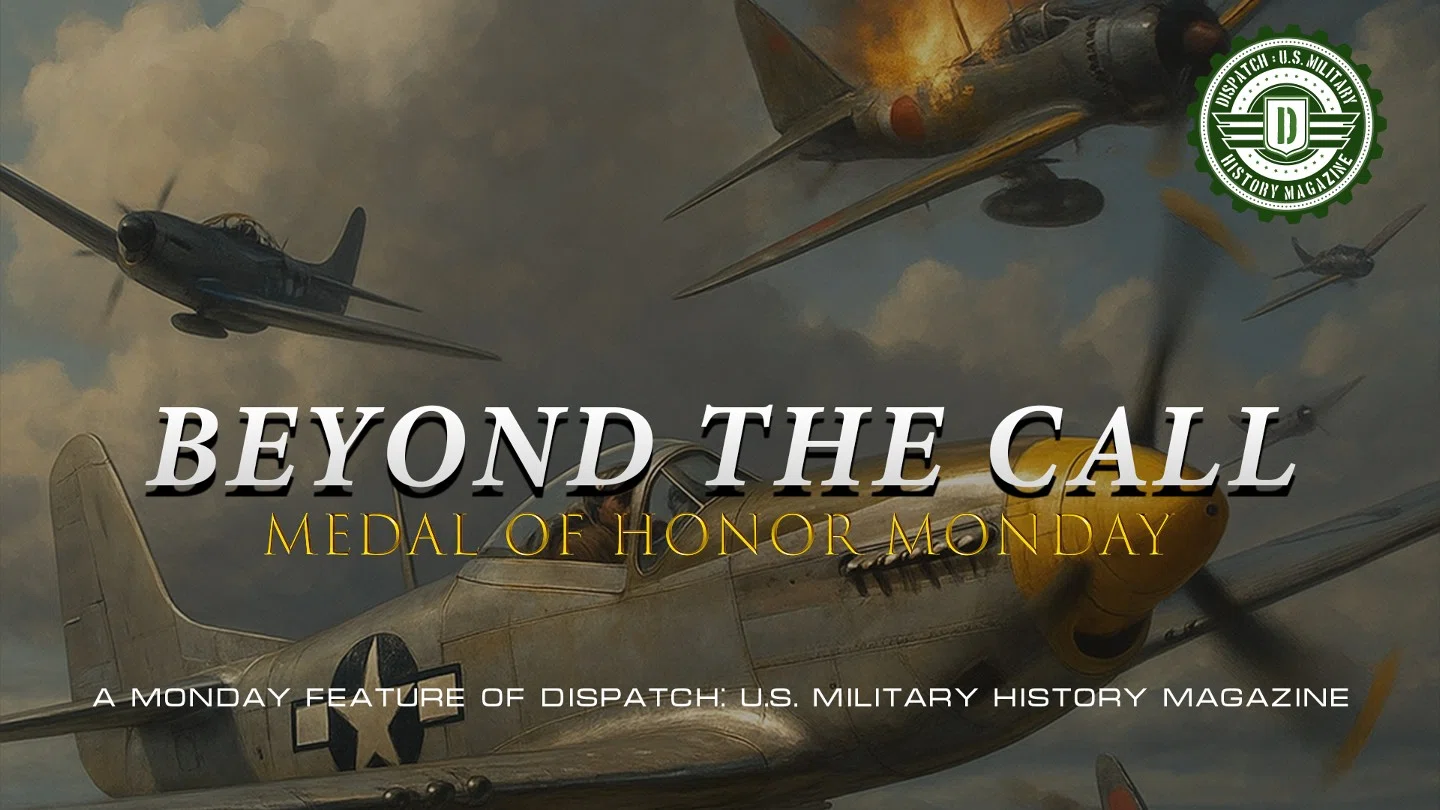
The Moment of Decision
The morning sky over northern Luzon is deceptively calm. From the cockpit of his sleek reconnaissance Mustang, Major William Arthur Shomo scans the broken clouds, hunting for airfields and antiaircraft positions that his ground commanders need to see. His mission is straightforward on paper: an armed photographic and strafing sweep over the Aparri and Laoag airdromes, far ahead of friendly lines. In practice, it means flying low, often alone or with a single wingman, deep into enemy airspace where every gun on the ground and every enemy fighter in the sky is hunting for him.
Ahead and above, tiny specks begin to separate from the haze: a twin-engine bomber ringed by fighters, a moving knot of enemy aircraft cutting across his path at about two thousand five hundred feet. As the formation grows larger in his windscreen, Shomo counts and quickly understands the odds. There are two American fighters in his flight. Arrayed against them is a bomber protected by a dozen escorts, a force that should be hunting them, not the other way around.
He could stay low, skirt beneath the formation, and complete the reconnaissance run. No one would fault him; his orders do not require a duel with overwhelming numbers. But he also knows what that bomber and its fighters can do to the troops and ships supporting the liberation of the Philippines. In seconds, the choice crystallizes. Shomo keys his radio, gives the order to attack, and hauls his Mustang into a climbing turn toward thirteen enemy aircraft, committing himself and his wingman to a fight that by any reasonable measure should be unwinnable.
The Road to That Day
William Arthur Shomo did not grow up expecting to become one of the most celebrated fighter pilots in the Pacific. He was born on May 30, 1918, in Jeannette, a small industrial town in western Pennsylvania, part of a family whose older generations had survived the Johnstown Flood a half-century earlier. That brush with disaster was family lore, a reminder that catastrophe could arrive suddenly and that survival often depended on calm decisions made in moments of chaos.
As a young man, Shomo chose a path that demanded steadiness rather than speed. He studied at the Cincinnati College of Embalming and the Pittsburgh School of Embalming and went to work as a mortician, tending to families at their worst moments and learning how to manage grief with quiet professionalism. Handling the details of death for others required precision, emotional control, and an ability to keep working carefully when everything around him felt raw and urgent. Those habits would later serve him in the cockpit just as surely as they had in the funeral home.
When war clouds gathered in 1941, Shomo traded black suits for a flight suit. He entered the Aviation Cadet Program of the Army Air Forces, endured the wash of new skills—navigation, gunnery, aerobatics—and proved he could not only fly but lead. Instructors and fellow cadets saw a man who spoke quietly, planned carefully, and made up his mind quickly when it counted. Assigned to the 82nd Tactical Reconnaissance Squadron, he deployed across New Guinea and the islands north of Australia, flying long, lonely missions that combined photography, scouting, and low-level attack. By the time his squadron shifted forward to support the liberation of the Philippines, Shomo was a seasoned flight leader with a growing reputation for bringing his people back from missions that bordered on impossible.
On the morning of January 11, 1945, that experience put him in the lead cockpit of a two-plane reconnaissance flight over Luzon. The job was to find and photograph enemy airfields. The war, however, was about to hand him something far more dangerous: a bomber and its escorts moving across his path, a target that demanded a decision no training syllabus could fully prepare him for.
Into the Fire
The mission that morning was meant to be dangerous but routine. Major William Arthur Shomo led a two-ship flight of reconnaissance Mustangs, camera-equipped fighters tasked with photographing and, if possible, strafing the Japanese airfields at Aparri and Laoag on the northern tip of Luzon. Their unit, the 82nd Tactical Reconnaissance Squadron, had grown used to flying far ahead of friendly lines, skimming over jungle and coastline to bring back the pictures that planners needed to keep the advance moving. Shomo’s aircraft carried both guns and cameras, and his orders that day were clear: find the airfields, record their condition, and hit whatever targets of opportunity appeared on the ground.
As the two American fighters worked their way along the coast, the air seemed oddly empty. The main landings on Luzon were already underway, and Japanese air power in the region was under intense pressure, but no one in the squadron believed it had vanished. Shomo kept his eyes moving between the broken layer of clouds above and the green coastline below, searching for airstrips, barges, or camouflaged installations. Then, on the far side of a cloud bank, he saw something that snapped the routine of the reconnaissance run: a compact enemy formation sliding across the sky, one twin-engine bomber with fighters tucked around it like thorns on a stem, moving at about two thousand five hundred feet above his current altitude and in the opposite direction.
He counted quickly. The bomber in the middle, then fighters in groups—three elements of four—spread around it in loose escort positions. Thirteen aircraft in all. Against them he had his own Mustang and a single wingman. The safer choice was to stay low, pass beneath the formation, and continue toward the assigned targets. He knew that no one back at base would be surprised if a two-plane reconnaissance flight declined to engage a major enemy force. But he also understood what that bomber and its escorts could do if they slipped south toward the amphibious shipping offshore or the crowded airfields supporting the Luzon landings. The calculation narrowed to a simple point: attack now, or accept that whatever damage they caused later might have been prevented.
Shomo chose attack. He ordered his wingman to follow and shoved his throttle forward, hauling the Mustang into a climbing turn aimed at the rear of the enemy formation. From below and behind, he had a brief advantage: the Japanese pilots would have a harder time spotting two small fighters angling up out of the haze beneath them. Closing fast, he picked out the trailing element and raked the lead aircraft with a long burst of .50-caliber fire. The fighter bloomed into debris in mid-air, fragments spinning away as its wingman scattered, the first sudden hole torn in what had been a tight ring of protection around the bomber.
Without giving the defenders time to recover, Shomo rolled his Mustang across the formation. He curved in from the side, firing into a second fighter and watching it fall in flames toward the sea. The remaining escorts began to react now, swinging into defensive turns and trying to form for a counterattack, but the sky over Luzon was suddenly a swirl of intersecting arcs rather than an orderly procession. Cutting back across their path, Shomo lined up another enemy aircraft and fired again. This third fighter exploded and tumbled out of the fight, leaving the bomber more exposed and throwing the surviving escorts into further confusion.
With the fighters breaking formation, Shomo shifted his attention to the center of the group. He dropped below the twin-engine bomber and then pulled up sharply, raking its underside with gunfire in a classic belly attack. Flames erupted from the aircraft as his rounds tore through engines and fuel, and the bomber rolled away into a fatal descent that ended in fire on the ground. Even as he pulled off the pass, another enemy fighter came straight at him in a head-on run. Holding his nerve, he kept his guns trained on the oncoming aircraft a heartbeat longer than instinct might allow. His burst hit home first; the Japanese fighter disintegrated, and his Mustang flashed through the debris.
The sky was now a chaotic mix of individual duels rather than a single coherent enemy formation. Shomo climbed again toward what remained of the first element of fighters and singled out the lead plane. Closing from behind, he poured fire into its fuselage until it, too, fell away in flames. One last fighter tried to break for safety at low altitude. Shomo chased it down through a long, screaming dive to about three hundred feet, held it in his sights just long enough, and brought it down with an initial burst that sent it crashing into the ground.
While Shomo was cutting through the formation, his wingman was far from idle. Following his leader into the attack, he destroyed three enemy fighters of his own. The remaining Japanese pilots, robbed of their bomber and most of their escorts, finally broke off, using a nearby cloud bank to disappear from the fight. In a matter of minutes, a mission that had begun as a photo run had turned into one of the most lopsided air battles of the southwest Pacific, with two American aircraft destroying ten of thirteen opponents and returning home. When Shomo and his wingman finally turned back toward friendly territory, the silence in their headsets said as much as any radio call: they had survived an encounter that by every reasonable standard should have ended the other way.
The Citation, Decoded
The official Medal of Honor citation for this action uses the careful language of wartime commendations, but behind its phrases lies the raw, compressed chaos of that fight over Luzon. On page two of the materials you provided, the citation opens by praising Shomo’s “conspicuous gallantry and intrepidity at the risk of his life above and beyond the call of duty,” a formal way of saying that he took on a mission no one expected of him, knowing that the odds of survival were slim. His task for the day was an “armed photographic and strafing mission” against enemy airdromes, meaning his primary responsibility was to scout and harass ground targets, not to seek a decisive air battle with superior numbers.
The citation notes that he was leading a “flight of two fighter planes” when he spotted the twin-engine bomber and its twelve fighters “about 2,500 feet above him and in the opposite direction.” Those details matter. The altitude difference meant he had to climb into a position of disadvantage, giving up some of his speed and surprise to reach the enemy. The odds—thirteen to two—were not an exaggeration but a simple count of aircraft in the sky. In that situation, most pilots would have reported the sighting and continued the assigned mission, preserving their small force for another day. The citation’s emphasis that he “immediately ordered an attack” underscores how little hesitation there was between recognition and decision.
Each subsequent phrase sketches a snapshot of the dogfight. When it describes how he “closed on the enemy formation in a climbing turn and scored hits on the leading plane” of one element, that translates into the opening shot that blew apart the trailing fighter and shattered the escorts’ formation. Later lines describing how he “attacked the second element,” dived under the bomber to hit its underside, and then destroyed additional fighters, outline a chain of rapid, high-risk choices. At every step he was moving into positions where a single mistake or a single accurate burst from the enemy could have ended the fight—and his life—immediately.
The concluding sentence, which calls his destruction of seven enemy aircraft in one action “unparalleled in the southwest Pacific area,” is not just a flourish. In a theater crowded with skilled pilots and brutal air battles, that single mission stands out even against the records of top aces. The citation’s formal language is careful not to boast, but taken together it tells a simple truth: faced with a far superior force while flying a mission that did not require such a confrontation, Major William Arthur Shomo chose to attack, fought with skill and aggression, and turned the odds upside down in a matter of minutes.
Why It Mattered
In the narrow sense, the fight over northern Luzon was a brief, violent interruption of a reconnaissance mission. In practical terms, it removed a bomber and most of its escorts from the shrinking pool of Japanese aircraft capable of striking the Luzon landings. Those thirteen planes were not just numbers on a report; they represented one of the few remaining chances for the enemy to hit troop convoys, crowded anchorages, or newly seized airfields at a moment when a single successful raid could have cost hundreds of lives. By destroying the bomber and seven of its fighters in minutes, Major William Arthur Shomo and his wingman turned a potential threat to the invasion into a one-sided victory that never reached the beachhead. Wikipedia+1
The impact stretched beyond the immediate tally. Tactical reconnaissance squadrons were thinly spread, and each aircraft was a valuable tool for mapping enemy positions, targeting artillery, and guiding the advance. Had Shomo chosen to avoid contact, the bomber might have slipped past him to hunt the very forces his squadron existed to protect. By taking the fight to the enemy, he not only removed a dangerous formation but returned to base with his own aircraft intact, ready to fly again in support of the Luzon campaign. In a theater where air superiority had to be continuously earned, that single mission strengthened the fragile shield over soldiers and sailors pressing inland from Lingayen Gulf.
There was also a moral and psychological dimension. Aircrews across the Pacific heard the story of two reconnaissance pilots who charged a vastly superior force and won. For American units, it became a talking point about initiative and aggressive action, proof that even small formations could seize the initiative and change the odds. For the enemy, the loss of so many aircraft in a single encounter underscored how precarious their position had become. Had Shomo and his wingman held back, the bomber’s run and its surviving escorts might have added another grim chapter to the history of the Luzon landings instead of becoming an example of how bold decisions at the tactical level can ripple upward through a campaign.
Leadership and Character
Major Shomo’s leadership on January 11, 1945 did not begin with the radio call to attack; it began years earlier in the habits he brought from his civilian life and his long apprenticeship in reconnaissance squadrons. The former mortician who had learned to work calmly around death carried that same composure into the cockpit, where every flight over enemy territory could end abruptly. His crews and peers saw a quiet officer who prepared thoroughly, flew precisely, and avoided drama, which made his decision to attack such overwhelming odds all the more striking. When someone that measured chooses the riskier path, it carries a different weight than if it came from a habitual gambler.
Initiative is the theme most often associated with the mission over Luzon, but it rested on a foundation of responsibility. Shomo did not fling his two-ship flight at the enemy in a blind charge. He used surprise and position, coming up from below and behind, breaking the formation apart methodically, and relying on the training he had hammered into his squadron. His leadership gave his wingman a clear example to follow and a structure to operate within. The American pair did not survive because they were lucky; they survived because their leader converted risk into advantage step by step, turning a hopeless ratio into a sequence of short, controlled engagements.
Another thread is how he balanced personal courage with care for others. Reconnaissance pilots in the Southwest Pacific already lived with thin margins—long flights over water, minimal escort, and enemy territory on all sides. By choosing to attack, Shomo accepted additional danger not only for himself but for the younger pilot on his wing. Yet he also structured the fight in a way that gave that pilot opportunities to engage, contribute, and break away when needed. Modern leaders, military or civilian, can see in this episode how character expresses itself not in speeches but in the way a leader takes risks, protects subordinates, and uses skill to make the least bad option survivable.
Legacy and Memory
In the months that followed, the mission over northern Luzon moved from debriefing rooms to formal recognition. By early April 1945, Shomo had been promoted to major and received the Medal of Honor in a ceremony at a forward airfield in the Philippines, honoring not only his seven confirmed victories that day but the broader record of more than two hundred combat missions he had flown in the Pacific. The undertaker-turned-pilot whose Mustang carried nicknames tied to his prewar trade now found himself standing in front of his peers as one of the war’s most decorated reconnaissance flyers, a reminder that extraordinary actions often emerge from quiet professionals rather than from those who seek the spotlight.
Unlike many wartime officers who returned immediately to civilian life, Shomo stayed in uniform. He remained with the postwar United States Air Force, eventually reaching the rank of lieutenant colonel and holding a series of commands in fighter-interceptor squadrons and air defense units across the United States, Labrador, and Greenland. For more than two decades after the war, he worked in the less glamorous but vital world of continental air defense, training younger pilots, refining tactics, and helping shape an Air Force preparing for new kinds of threats. When he retired in 1968, his career spanned the era from piston-engine fighters over New Guinea to jet interceptors guarding North American skies.
William Arthur Shomo died in 1990 and was laid to rest in St. Clair Cemetery in Greensburg, Pennsylvania, not far from his hometown. His name appears on the rolls of Medal of Honor recipients, in unit histories, and in the stories told within the Pennsylvania Air National Guard and other organizations that claim his legacy. Pilots and historians still revisit the film of that January day and the written accounts that followed, measuring what it means for a leader to act “above and beyond the call of duty” when no one could have blamed him for choosing caution. He is remembered not only as an ace in a day, but as a steady professional whose single, audacious choice under fire continues to echo through the way we think about courage, responsibility, and the risks we ask others to share. You can also hear narrated versions of Beyond the Call stories as part of the Trackpads podcast feeds and Dispatch audio features.