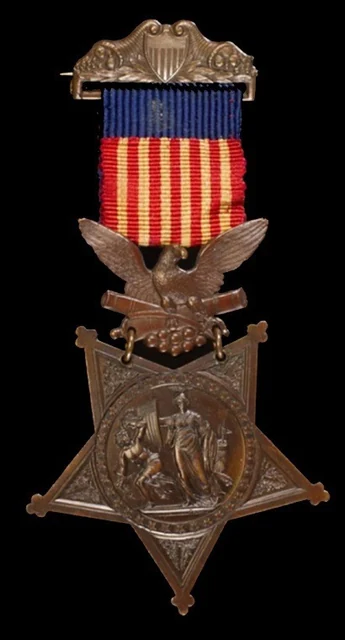
Medal of Honor
September 17, 1862
Antietam, Maryland, USA
- Rank at action
- Second Lieutenant
- Service
- U.S. Army
- Conflict
- U.S. Civil War
- Unit or command
- Company B, 33d New York Infantry
The Citation
Sources ↓While in command of a detached company, seeing his regiment thrown into confusion by a charge of the enemy, without orders made a countercharge upon the attacking column and checked the assault. Penetrated within the enemy's lines at night and obtained valuable information.
Sources & record notes
General Order comparison: pending. Current-profile review does not mean that the underlying original order has been examined.
- John Joice Carter — current Society profile ↗Congressional Medal of Honor Society · Checked 2026-08-27
current identity, service, action metadata, and citation comparison
Transcription, metadata & provenance notes
- Award ID
- MOH-AW-000649
- Transcription status
- Legacy full text · current reference profile matched
- Last source check
- 2026-08-27
- Later or highest recorded rank
- Colonel
- Entered service at
- Nunda, N.Y.
- Archive transcription SHA-256
- 3ea4aa2c8d7d527c506969fcf38e33086b080adb7d29ce112aa5362c94652ff5
Legacy transcription retained without substantive editing; current rendered profile variants documented in the Phase 10 evidence snapshot.
Current official Society evidence confirms the identity and core action record; historical action wording replaces inherited geocoder text while all inherited values and the complete legacy citation remain preserved.