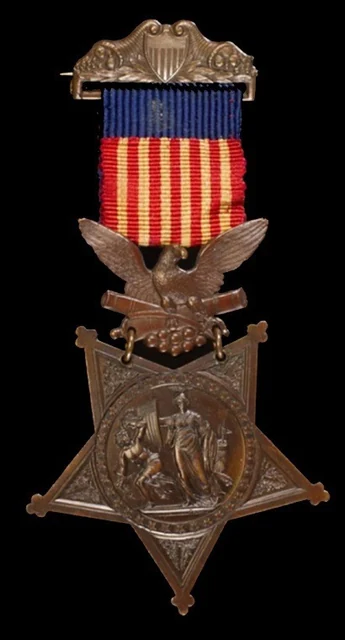
Medal of Honor
November 20, 1863
Fort Sanders, Knoxville, Tennessee, USA
- Rank at action
- Corporal
- Service
- U.S. Army
- Conflict
- U.S. Civil War
- Unit or command
- Company A, 17th Michigan Infantry
The Citation
Sources ↓Conducted the "burning party" of his regiment at the time a charge was made on the enemy's picket line, and burned the house which had sheltered the enemy's sharpshooters, thus insuring success to a hazardous enterprise.
Sources & record notes
General Order comparison: pending. Current-profile review does not mean that the underlying original order has been examined.
- John A Falconer — current Society profile ↗Congressional Medal of Honor Society · Checked 2026-08-27
current identity, service, action metadata, and citation comparison
Transcription, metadata & provenance notes
- Award ID
- MOH-AW-000740
- Transcription status
- Legacy full text · current reference profile matched
- Last source check
- 2026-08-27
- Entered service at
- Manchester, Mich.
- Archive transcription SHA-256
- 9ecb5a7ea7119062af5c0ce405c62ca089b45b1a688d673c7a8425ce5a1daf27
Legacy transcription retained without substantive editing; current rendered profile variants documented in the Phase 10 evidence snapshot.
Current official Society evidence confirms the identity and core action record; historical action wording replaces inherited geocoder text while all inherited values and the complete legacy citation remain preserved.