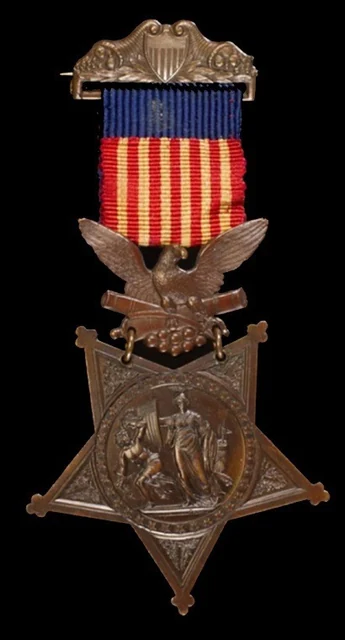
Medal of Honor
March 1868
Plum Creek, Kansas, USA
- Rank at action
- Sergeant
- Service
- U.S. Army
- Conflict
- Indian Campaigns
- Unit or command
- Company H, 3d U.S. Infantry
The Citation
Sources ↓While in charge of a powder train en route from Fort Harker to Fort Dodge, Kans., was attached by a party of desperadoes, who attempted to rescue a deserter in his charge and to fire the train. Sgt. Fegan, singlehanded, repelled the attacking party, wounding 2 of them, and brought his train through in safety.
Sources & record notes
General Order comparison: pending. Current-profile review does not mean that the underlying original order has been examined.
- James Fegan — Congressional Medal of Honor Society recipient profile ↗Congressional Medal of Honor Society · Checked 2026-09-01
current identity, service, action metadata, and citation comparison
Transcription, metadata & provenance notes
- Award ID
- MOH-AW-002865
- Transcription status
- Legacy full text · current reference profile matched
- Last source check
- 2026-09-01
- Archive transcription SHA-256
- 9aa691d13ba141f4fe587ef01c18488348e03b60e431d6cfeb94dfae9b1d3a22
Legacy transcription retained without substantive editing; rendered current reference profile comparison is documented in the Phase 10 evidence snapshot.
The reference profile supplies only March 1868. Month precision is encoded explicitly; no exact day is inferred.