The Trackpads collection

FIND YOUR NEXT DISCOVERY.

Search the people, battles, citations, stories, books and audio behind military history.

Type at least two letters or numbers.Full search & filters

Medal of Honor Recipient

Henry Schauer

U.S. Army · World War II

MOH-RC-002650Source-based record

The award

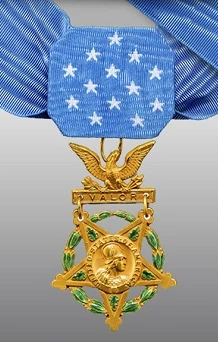
Representative medal image: Army design with a neck ribbon. Not a portrait or a photograph of this recipient’s own medal.
Army Medal of HonorRecorded presentation: 1944

Portrait not yet available. Representative medal shown.

About this image

Representative form selected from the recorded presentation year (1944), not authenticated medal-object provenance. This is a design-transition year; selection by year does not establish the exact presentation-day form.

Medal imagery and historical designs →

Medal of Honor

May 23–24, 1944

near Cisterna di Littoria, Italy

Rank at action
Private First Class
Service
U.S. Army
Conflict
World War II
Unit or command
Battle Patrol, Company F, 2d Battalion, 15th Infantry Regiment, 3d Infantry Division
Presentation date
October 27, 1944

The Citation

Sources ↓
For conspicuous gallantry and intrepidity at risk of life above and beyond the call of duty. On 23 May 1944, at 12 noon, Pfc. (now T/Sgt.) Schauer left the cover of a ditch to engage 4 German snipers who opened fire on the patrol from its rear. Standing erect he walked deliberately 30 yards toward the enemy, stopped amid the fire from 4 rifles centered on him, and with 4 bursts from his BAR, each at a different range, killed all of the snipers. Catching sight of a fifth sniper waiting for the patrol behind a house chimney, Pfc. Schauer brought him down with another burst. Shortly after, when a heavy enemy artillery concentration and 2 machineguns temporarily halted the patrol, Pfc. Schauer again left cover to engage the enemy weapons single-handed. While shells exploded within 15 yards, showering dirt over him, and strings of grazing German tracer bullets whipped past him at chest level, Pfc. Schauer knelt, killed the 2 gunners of the machinegun only 60 yards from him with a single burst from his BAR, and crumpled 2 other enemy soldiers who ran to man the gun. Inserting a fresh magazine in his BAR, Pfc. Schauer shifted his body to fire at the other weapon 500 yards distant and emptied his weapon into the enemy crew, killing all 4 Germans. Next morning, when shells from a German Mark VI tank and a machinegun only 100 yards distant again forced the patrol to seek cover, Pfc. Schauer crawled toward the enemy machinegun. stood upright only 80 yards from the weapon as its bullets cut the surrounding ground, and 4 tank shells fired directly at him burst within 20 yards. Raising his BAR to his shoulder, Pfc. Schauer killed the 4 members of the German machinegun crew with 1 burst of fire.

Sources & record notes

General Order comparison: pending. Current-profile review does not mean that the underlying original order has been examined.

  1. Henry Schauer — current Society profile ↗Congressional Medal of Honor Society · Checked 2026-08-31

    current identity, service, action metadata, and citation comparison

Transcription, metadata & provenance notes
Award ID
MOH-AW-002662
Transcription status
Legacy full text · current reference profile matched
Last source check
2026-08-31
Recorded order reference (not verified against the original)
83
Later or highest recorded rank
Technical Sergeant
Entered service at
Scobey, Mont.
Archive transcription SHA-256
163abd59c2d8e462f2b612a7a5bcdc2d87714e0157e27e74a73d4f9c495eef3c

Legacy transcription retained without substantive editing; rendered current reference profile variants documented in the Phase 10 evidence snapshot.

Current reference profile confirms Private First Class as the action rank, Technical Sergeant as the later or highest rank, and the May 23–24, 1944 action range near Cisterna di Littoria. Recovery provenance: the prior live-verification result is reconstructed because the described P10-C060–P10-C062 restart files were not physically available; the verified P10-C059 authority, retained web-reference metadata, legacy record, and prior session evidence are all preserved.