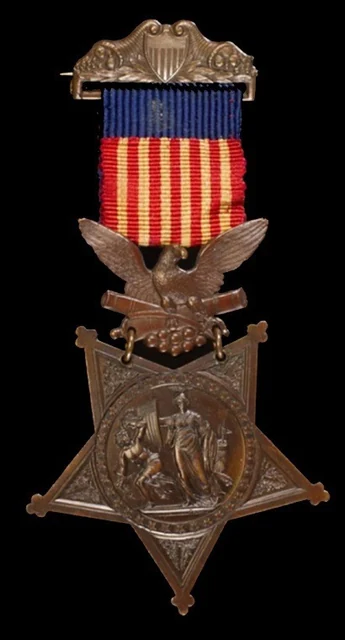
Medal of Honor
March 17, 1876
Powder River, Montana, USA
- Rank at action
- Blacksmith
- Service
- U.S. Army
- Conflict
- Indian Campaigns
- Unit or command
- Company M, 3d U.S. Cavalry
The Citation
Sources ↓Separately preserved current-source wording
Captured from the linked current recipient source; it is not a new comparison with an original General Order.
Sources & record notes
General Order comparison: pending. Current-profile review does not mean that the underlying original order has been examined.
- Albert Glavinski — current Society profile ↗Congressional Medal of Honor Society · Checked 2026-08-29
current identity, service, action metadata, and citation comparison
Transcription, metadata & provenance notes
- Award ID
- MOH-AW-001709
- Transcription status
- Legacy full text · current reference profile matched
- Last source check
- 2026-08-29
- Archive transcription SHA-256
- a16293285dd961a7c3776fe1abb2868a5c7be50f903b314788630a5fb592ffe0
Legacy transcription retained without substantive editing; current rendered profile variants documented in the Phase 10 evidence snapshot.
Documented alternate-name rendering(s) are retained without creating a duplicate identity. The current historical action-place wording replaces only the controlled canonical geocoder field; the complete inherited place remains preserved. The current citation rendering and inherited citation remain stored independently with separate checksums.