In Action
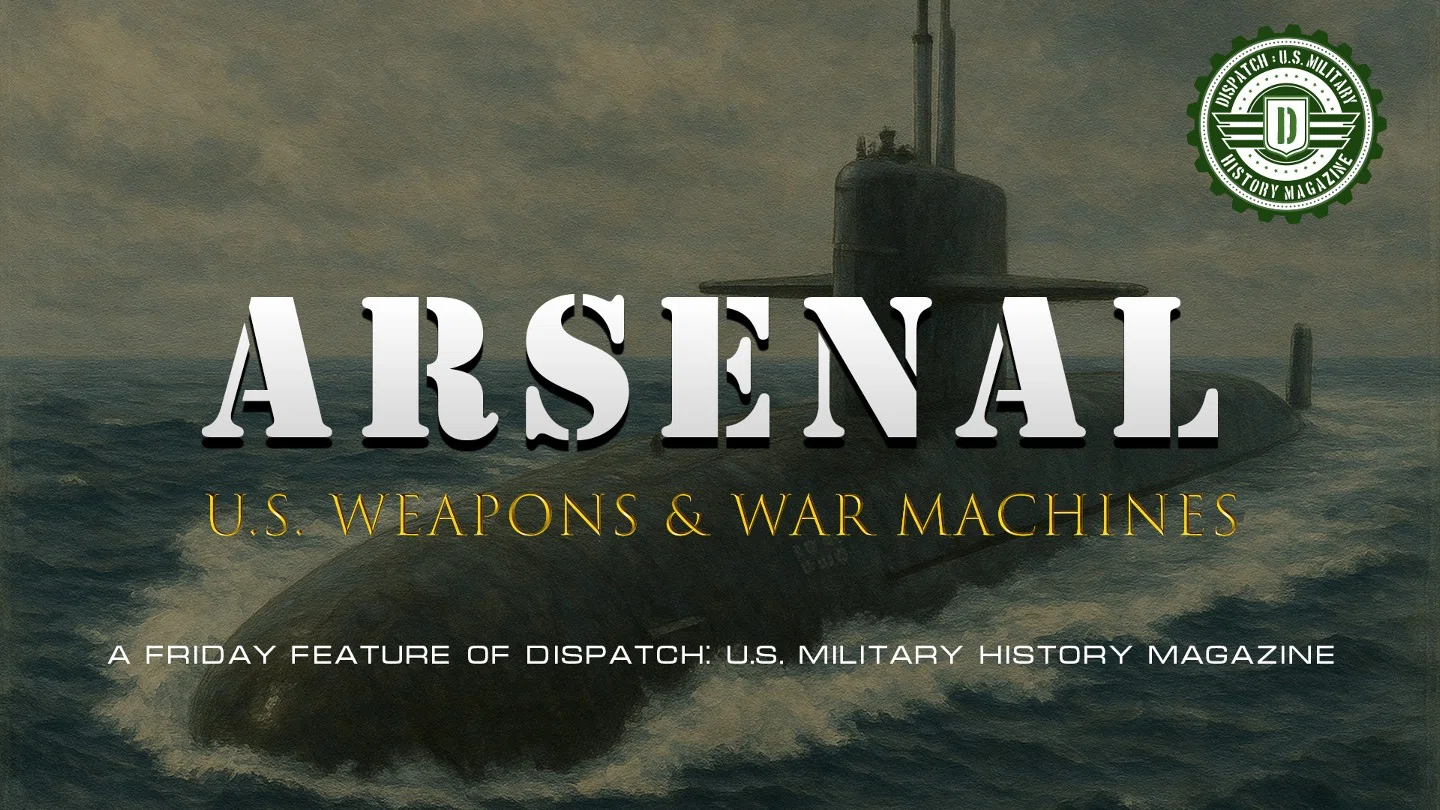
The ocean above is a gray, restless ceiling, somewhere in the North Atlantic on a winter night. Hundreds of feet below, a black hull longer than two football fields moves at a steady, quiet pace through cold, dense water. The sailors of an Ohio-class ballistic missile submarine have been submerged for weeks, following a carefully plotted track that keeps them hidden in deep water, far from shipping lanes but close enough to the continents they are sworn never to strike unless everything else has already gone wrong.
Inside, the atmosphere is controlled and cool, lit in red and soft white. In the control room, sonar operators listen through headphones to the faintest traces of distant ships, while navigation teams nurse the boat along an invisible path that exists only on their charts and displays. Down a secure passageway, in a compartment that stays locked and guarded, the strategic weapons team stands watch over the procedures that would take the submarine from routine patrol to nuclear launch, if ordered. Each sailor knows that any incoming message over the very low frequency antenna might be a routine broadcast, an exercise, or the start of a day no one wants to see.
Behind the watertight doors sits the reason this patrol exists at all: two staggered rows of massive missile tubes, built into the humped back of the submarine. The class was designed with twenty-four vertical launch tubes, each sized for a long-range Trident ballistic missile; today, treaty limits mean that four tubes on each deployed boat are permanently disabled, leaving twenty available for patrol. Loaded with Trident II D5 missiles carrying multiple independently targeted warheads, these tubes represent enough destructive power to change the course of a war, yet the crew’s daily job is to keep them safe, secure, and unused.
Little of this is visible to anyone on the surface. The boat sails from its homeport in Georgia or Washington, submerges, and disappears for about two and a half months at a time. Two full crews, Blue and Gold, rotate on and off the hull so that the submarine can spend most of its life on patrol rather than pier side. From the outside world’s perspective, these patrols are quiet lines on a planning map, but together they form roughly half of the nation’s deployed strategic nuclear warheads and the most survivable leg of the nuclear triad.
Somewhere on that anonymous track, on one particular patrol, the captain and crew ride out another mid-watch while the rest of the ship sleeps in shifts. It feels routine because it has to be. Yet every sonar contact, every communications check, every drill links this boat to a larger story: how the United States chose to anchor a large share of its nuclear deterrent in steel cylinders that hide in the deep and, by being ready, aim to ensure they are never used.
The Problem It Was Built To Solve
When the Ohio-class was conceived in the late 1960s and early 1970s, the basic problem was brutally simple: how to guarantee that even a surprise attack on the homeland would not eliminate the ability to strike back. Land-based intercontinental ballistic missiles promised speed and accuracy but were fixed targets whose silos could be mapped. Strategic bombers offered flexibility but depended on vulnerable airfields and long flight times. Ballistic missile submarines, operating in deep oceans, were the one leg of the triad that could reasonably be expected to survive almost anything and still be able to fire.
The United States had already deployed an earlier generation of missile boats, often called the “forty-one for freedom,” carrying Polaris and Poseidon missiles in relatively small, cramped hulls. Those submarines had shorter-range missiles, noisier machinery, and less comfortable conditions for their crews, which limited how long they could stay at sea and how quietly they could patrol. As the Cold War matured and competition with Soviet anti-submarine forces intensified, planners wanted a new class of submarines that could carry more missiles with greater range and accuracy from fewer hulls, while remaining far harder to find.
At the same time, arms control negotiations and budget realities pushed the Navy toward designs that squeezed more capability into each submarine. The answer was an exceptionally large yet remarkably quiet hull, designed from the keel up around the Trident missile system. An Ohio-class boat stretches to about 560 feet in length, with a submerged displacement close to 18,750 tons, propelled by a single nuclear reactor driving one shaft. The design aimed to allow about fifteen years between major overhauls while keeping the acoustic signature so low that the submarine could cruise at more than twenty knots and still be harder to detect than previous boats at much lower speeds.
To make all of that usable in practice, the operational model had to change as well. Each Ohio-class SSBN was given two complete crews, Blue and Gold, rotating through cycles of deployment, refit, and training so the submarine itself could spend far more of its life at sea. Over the span of two decades, the Navy built eighteen of these “Trident boats”; fourteen serve today as ballistic missile submarines, while four were later converted to carry conventional cruise missiles and special operations forces instead of nuclear-armed Tridents. The ballistic missile hulls now form the backbone of the nation’s sea-based nuclear deterrent, even as their eventual successors in the Columbia class begin to take shape in the shipyards.
For the admirals and civilian planners who approved the Ohio-class, the objective was not to win a nuclear exchange. It was to make the idea of starting one so obviously self-defeating that it never happens. A submarine that could leave port, vanish into the ocean, and stay hidden for months with dozens of long-range missiles on board was the tool they believed could best solve that problem—and that is the role these boats continue to play today.
From Design Board To Production
The Ohio-class story begins in the late stages of the Cold War, when earlier Polaris and Poseidon boats were still on patrol but already showing their limits. Those submarines carried fewer, shorter range missiles in smaller, noisier hulls that could not take full advantage of improvements in guidance, warhead design, and quieting technology. Naval planners wanted a new strategic submarine that could stay hidden longer, carry more missiles with greater reach and accuracy, and do it with fewer hulls in commission. The result on the drawing board was a very large ballistic missile submarine built around the Trident system rather than treating the missiles as an afterthought.
Engineers at General Dynamics Electric Boat and the Navy’s design bureaus wrestled with classic tradeoffs. A bigger hull could house more missile tubes, more fuel and stores, and better accommodations, but size also affects maneuverability and potential noise sources. Nuclear propulsion gave essentially unlimited range, yet it had to be wrapped in layers of sound isolation so the propeller and machinery would not betray the submarine’s position. The final design settled on a single reactor, one large propeller shaft, extensive sound damping, and a hull form that could move at more than twenty knots while remaining quieter than the previous generation at much lower speeds.
The first of class, USS Ohio, was laid down in the mid nineteen seventies and commissioned in 1981, with follow on hulls entering service through the mid nineteen nineties. In total, eighteen submarines were built, all at Electric Boat’s yard in Groton using prefabricated cylindrical sections produced at Quonset Point in Rhode Island. Fourteen became ballistic missile submarines carrying Trident, while the four oldest were later converted into guided missile submarines with conventional Tomahawk payloads. Even as those conversions took place, the basic architecture of the design had proven flexible enough to handle new weapons and missions without building a new hull from scratch.
At a glance, an Ohio-class SSBN is a United States Navy ballistic missile submarine of the late Cold War and post Cold War era, about 560 feet long and displacing roughly 18,750 tons when submerged. A typical crew is around 155 people, about fifteen officers and 140 enlisted sailors, split into alternating Blue and Gold crews so that the ship can spend most of its life at sea. The primary armament is a battery of twenty Trident II D5 submarine launched ballistic missiles in twenty active vertical launch tubes, supported by four torpedo tubes for Mk 48 heavyweight torpedoes. With nuclear propulsion and months of food and consumables, its operational range is limited more by human endurance than by fuel.
Production of the class anchored the strategic fleets based at Kings Bay, Georgia, and Bangor, Washington, creating paired Atlantic and Pacific squadrons that could cover different oceans and patrol areas. Over time, updates to the missiles and fire control systems, as well as quieter equipment and new electronics, were introduced during major refits rather than requiring new hulls. That incremental approach kept the basic design relevant for decades, even as the Columbia-class replacement began to move from paper to steel. The Ohio hulls were never meant to be glamorous ships constantly in the news; they were meant to be steady, durable platforms that solved the production and patrol problem for a generation.
Inside The Weapon
Seen from the outside, an Ohio-class SSBN is a long, clean hull with a rounded bow, a prominent sail, and a broad, raised missile deck aft of the sail. The bow houses the large sonar sphere and torpedo tubes, while the hull tapers to a single screw and cruciform control surfaces at the stern. Above the hull, retractable masts and antennas rise from the sail when the boat is near the surface, including the long very low frequency antennas that carry messages on patrol. The outer lines tell only part of the story, because the real work of deterrence happens inside a stacked world of decks and compartments hidden behind the pressure hull.
Forward, the torpedo room and sonar spaces occupy the nose of the submarine. Here, acoustic specialists monitor the undersea environment through arrays of hydrophones, building a three dimensional picture of surrounding ships, terrain, and biologic noise. Nearby, torpedo handling spaces store Mk 48 weapons and their associated gear, ready for the unlikely but serious event that the SSBN must defend itself. Above and slightly aft lies the control room, where the officer of the deck, the diving officer, and a cluster of watchstanders drive and navigate the submarine. Periscopes, photonic masts, navigation displays, and the ship’s control consoles are all concentrated there so that the boat can be steered silently at depth or maneuvered on the surface.
Behind the control spaces stretches the heart of the strategic mission: the missile compartment. On an SSBN, this is a tall, multi deck space running up into the hump of the hull, lined with two rows of launch tubes and threaded with ladders, platforms, and handling gear. Each tube is a heavily engineered structure with multiple hatches, safety interlocks, and monitoring systems, built to cradle a Trident II D5 missile through months at sea. The compartment also contains the electronic brains that manage targeting data, launch control, and the safeguards that ensure no single person can take unauthorized action. The physical layout reinforces doctrine: multiple people, multiple steps, and repeated verification are always required before anything critical happens.
Below and aft of the missile compartment lie the engineering spaces, which remain off limits to most of the crew. The nuclear reactor is sealed away behind shielding and watertight barriers, overseen by specially trained officers and enlisted technicians who monitor its output and keep the steam plant running within tight parameters. Further aft, the engine room translates reactor power into shaft rotation through turbines, reduction gears, and the main propulsion shaft that drives the screw. The engineering department also maintains auxiliary systems that matter just as much to survival as propulsion, including electrical power, atmosphere control, and fresh water generation. For the sailors who stand these watches, the submarine is as much an industrial plant as a warship.
Threaded through these technical areas are the living spaces that turn steel and machinery into a functioning crew. The crew’s mess serves as dining room, ready room, and social center, with televisions, coffee urns, and pin boards carrying the small news of life at sea. Berthing compartments pack three tier bunks into tight rows, but compared with earlier boats, the Ohio design offers somewhat more room and better climate control, making long patrols more bearable. Sailors sleep, work, exercise, and relax on a carefully managed schedule that keeps the boat manned around the clock. Privacy is limited and routines are strict, yet many veterans remember the sense of shared purpose and tight knit community as a defining part of service on these ships.
Overlaying all of this is a web of communications and navigation systems that tie the submarine to national command while keeping it hidden. Inertial navigation equipment and periodically updated fixes allow the crew to know their position without broadcasting it, while secure receivers listen for message traffic without giving away the boat’s location. When a high priority message arrives, watchstanders in the radio room and control center follow scripted procedures to authenticate it before it ever reaches the captain. The same quiet professionalism that governs every sonar contact and every engineering check also governs any step toward missile operations, because the very point of the design is to keep the submarine ready, reliable, and under control while it remains unseen beneath the sea.
Baptism Of Fire
For the Ohio-class SSBNs, baptism of fire never meant charging into a visible battle line. It meant slipping out of port in darkness, disappearing beneath the surface, and holding position on the front line of nuclear deterrence without ever being seen. The first patrols in the early nineteen eighties took place as the Cold War was still intense, with Soviet bombers, submarines, and satellites all hunting for signs of American missile boats. When USS Ohio completed her first strategic outload and deterrent patrol in 1982, it marked not a single dramatic engagement but the quiet start of a new era in how the United States intended to ride out any nuclear crisis and still be able to strike back if ordered.
Over the following years, Ohio-class patrols became part of the background rhythm of national security. Boats sailed from Kings Bay and Bangor, each patrol lasting about seventy to ninety days, then turned over to the other crew for a rapid refit and return to sea. Through cycles of tension and thaw with the Soviet Union, and later the Russian Federation, they continued to cover their assigned patrol boxes. Even after the Cold War officially ended, strategic submarine patrols stayed close to Cold War tempos, with dozens of deterrent patrols conducted in a single year across the fleet. The measure of success was simple and grim: there were no launches, no exchanges, only the steady presence of hidden firepower that made first strikes look suicidal.
These submarines also had to adapt to a changing world. As arms control treaties reduced overall warhead numbers and shifted targeting plans, the number of Ohio-class boats in strategic service dropped from eighteen to fourteen, with missile loading and patrol patterns adjusted to match. Patrol areas evolved with improvements in missile range and accuracy, allowing boats to stay farther from heavily monitored chokepoints and to hide in deeper, quieter waters. Crews trained for the possibility that a crisis could unfold during any patrol, running classification drills on acoustic contacts and practicing the authentication procedures that would precede any real launch order. The stress was mostly psychological rather than kinetic, but it was very real.
In that sense, the Ohio-class received its baptism not in a single storm of fire but in decades of unbroken readiness. Every major international crisis that touched nuclear planning found some of these boats already at sea, listening and waiting. Their contribution was measured in crises that did not escalate and weapons that never left their tubes. For the sailors who served on board, the memory of those patrols is not of dramatic combat but of constant drills, quiet watches, and the knowledge that their invisible presence was one of the main reasons no one dared push the world over the edge.
Strengths And Weaknesses
Crews, commanders, and planners tend to describe the Ohio-class in terms of reliability, quietness, and endurance. As a ballistic missile platform, its greatest strength is survivability: the ability to leave port, vanish into the ocean, and remain on station for months with a full load of long range Trident II D5 missiles ready if commanded. The combination of low acoustic signature, long endurance between major overhauls, and two complete crews per hull gives each submarine a high share of time at sea. In peacetime, this translates into a stable, predictable deterrent presence. In a crisis, it gives national leaders confidence that a significant portion of the strategic arsenal is both secure and dispersed.
Habitability is another strength compared with earlier missile boats. The larger hull and better climate control make long patrols less physically punishing, which matters for a crew expected to perform demanding duties deep into a third month at sea. Sailors often note the sense of routine and community that the design supports, from the relatively spacious mess to the improved berthing compartments. Technically, the missile and fire control systems evolved over time to maintain accuracy, security, and safety, reinforcing confidence that the missiles would work if they were ever needed, yet remain secure if they were not. The class also proved flexible enough to accept mid career upgrades without losing its basic stealth and endurance.
The weaknesses are less visible but still important. Nuclear propulsion and complex missile systems demand intensive training, maintenance, and regulatory oversight. The boats rely on a small pool of highly skilled personnel, and retaining those skills over decades is a constant challenge. Operationally, an SSBN is deliberately unspectacular; it cannot be used for visible shows of force without undercutting its own concealment, so its political signaling power is more subtle than that of bombers or surface ships. In comparison with land based missiles, the fleet is expensive to build and modernize, which is one reason the Columbia-class replacement is such a large and scrutinized program. Adversaries have also invested heavily in anti submarine warfare, which means the quiet advantage that Ohio-class boats enjoy must be continually protected by upgrades and careful tactics.
Variants And Evolution
The most visible evolution of the Ohio design came not in a new external shape but in a new role. In the nineteen nineties and early two thousands, as arms control reviews determined that fourteen SSBNs were enough to meet strategic needs, the four oldest boats were selected for conversion into guided missile submarines. Ohio, Michigan, Florida, and Georgia had their Trident launch tubes modified to carry vertical launch systems for Tomahawk land attack missiles and facilities for embarked special operations forces. Where a ballistic missile load out represents a strategic nuclear threat, the converted SSGNs became conventional strike and special operations platforms, able to fire up to 154 Tomahawks and deploy dozens of special operators from their altered missile tubes.
This change did not alter the basic hull, propulsion, or quieting features, but it turned four strategic deterrent boats into high capacity tools for regional conflicts. SSGNs have since been used for major conventional strike campaigns and as test beds for new undersea payload concepts. Software and electronics on both SSBNs and SSGNs have been upgraded over time, keeping navigation, sonar, combat systems, and communications up to current standards. Missile systems evolved as well, with Trident II D5 replacing earlier versions and receiving life extension work that keeps it viable even as the hulls age. The flex in the original design, which left room for future systems in cable runs and spaces, proved its worth as these upgrades came online.
Today, the evolution story is shifting toward replacement. The Columbia-class program is building a new generation of ballistic missile submarines that will gradually take over from the remaining fourteen Ohio-class SSBNs. Columbia boats will carry fewer missile tubes per hull but are designed with a life of more than forty years and reactors that do not require mid life refueling, allowing a smaller number of hulls to maintain the deterrent posture. Budget debates, yard capacity, and construction schedules all influence how smoothly this transition unfolds, but the fact that the replacement was modeled on lessons from the Ohio era shows how strongly the older class shaped thinking about what a strategic submarine should be.
Legacy And Where To See It Today
The Ohio-class legacy lies in deterrence quietly maintained over decades rather than in battles fought. As the backbone of the sea based leg of the nuclear triad, these submarines helped make it clear that any nuclear attack on the United States or its allies would be met by a survivable response. Their very existence, hidden under the oceans, added a layer of uncertainty that strategic planners on the other side could never remove. In that sense, their influence runs through doctrines, war plans, and risk calculations more than through any single historical event. The fact that there has never been a major accident or loss involving these submarines or their strategic payloads speaks to the professionalism of the crews and the robustness of the design.
They also reshaped expectations about what a ballistic missile submarine should be. Long between overhaul intervals, dual crew systems, and careful attention to crew comfort have all influenced thinking about Columbia-class design and other nations’ strategic submarines. The conversion of some hulls into SSGNs showed how a platform built for one kind of strategic mission could be adapted to another, adding conventional strike and special operations capacity without building entirely new ships. At the same time, the gradual retirement plans for both SSBNs and SSGNs highlight how expensive and technically demanding such capabilities are to maintain. Each decommissioning and each new keel laid for a Columbia represents a handoff in a chain of deterrent presence stretching from the early eighties into the middle of this century.
Unlike famous surface warships preserved as museum pieces, Ohio-class submarines are unlikely to appear as full exhibit ships any time soon. Their nuclear propulsion plants, sensitive internal layouts, and ongoing relevance make full public displays impractical. For most people, the closest view will come from photographs, official imagery, scale models, and training artifacts such as a removed missile tube section or a mock up of a control room. Naval museums, heritage centers, and archives help fill in the picture with exhibits on the ballistic missile submarine force and the broader story of Cold War and post Cold War deterrence. For readers of Dispatch, Trackpads coverage of submarines, ports, and missile systems offers another pathway into that hidden world, pairing imagery with stories from sailors who served on board.