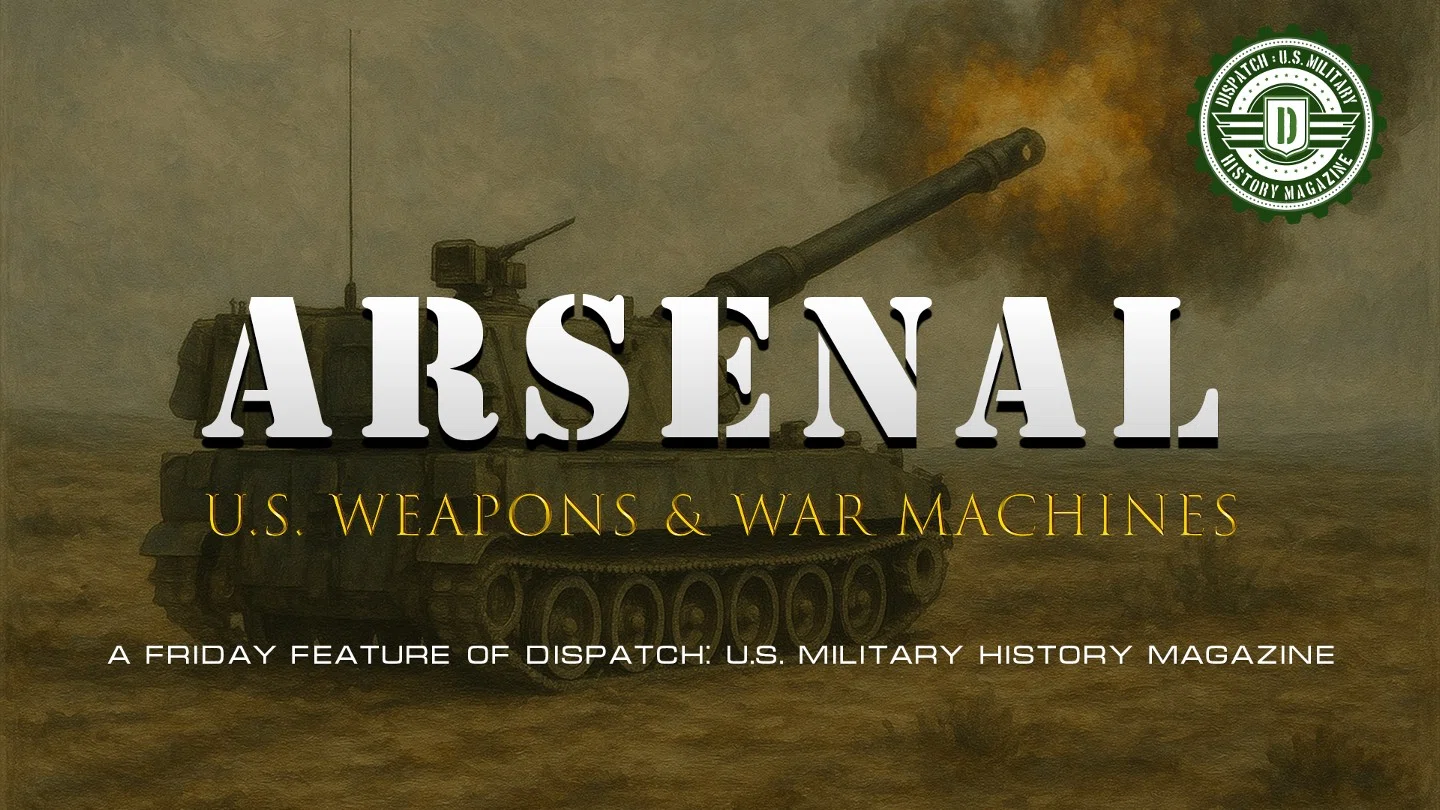
In Action
The desert is almost quiet until the fire mission breaks in. A battery of M109 self-propelled howitzers squats in the sand, hulls dug in, guns elevated toward a horizon no one can see through the night. Inside one vehicle, red lamps bathe the cramped turret in a low glow as the gun crew leans over plotting boards and digital readouts, repeating the target data back to the fire direction center. The air smells of diesel, sweat, and the faint acid tang of earlier shoots.
The command comes in short, clipped phrases. The gunner cranks the turret, swinging the 155 millimeter tube toward a set of coordinates miles away where Iraqi positions sit along the Kuwaiti border. The loader hauls another shell from the ammunition racks, thirty or so kilograms of steel and explosive, and muscles it onto the tray. Powder bags follow, charges set for the range, the breach slams shut with a heavy metallic thunk that everyone in the crew can feel through their boots.
Outside, the driver hunkers low in his seat, engine idling, ready to move as soon as the fire mission is complete. Counter-battery radar is watching for any enemy response. When the fire command comes, the howitzer bucks on its suspension, the blast punching out into the dark. The shot is one of many in a carefully timed barrage softening enemy defenses for armored units that will advance at dawn. For the crew, it is another reminder that their tracked “gun in a box” was built to keep up with tanks, survive the enemy’s reply, and shift position before the next salvo is called for.
The Problem It Was Built To Solve
The M109 grew out of a simple but brutal problem: how to keep heavy artillery fire walking alongside armored and mechanized forces in a fast-moving, modern war. In the Second World War and Korea, 155 millimeter guns like the M114 towed howitzer delivered powerful fire, but they depended on trucks, prime movers, and hard work to move, emplace, and tear down. Every displacement meant jacking, digging, and lining up trails by hand. Against opponents with aircraft and counter-battery radar, that kind of delay was an invitation to be found and destroyed.
By the early Cold War, the United States Army expected its main fight to be in central Europe, across rolling fields, forests, and small towns where NATO armored divisions might have to maneuver quickly under the threat of both conventional barrages and nuclear weapons. Artillery had to be more than just powerful. It had to be armored, mobile, and fast into and out of action. Earlier self-propelled guns like the M44 and M52 were steps in that direction but had limitations in protection, reliability, and commonality with other vehicles. Crews needed something that could cross the same broken ground as tanks, keep them under armor against airburst fragments and small-arms fire, and still throw a heavy shell far downrange.
Doctrine was also shifting. Artillery was no longer just the “king of battle” firing from fixed positions. It was expected to maneuver as part of the combined-arms team, massing fires in minutes and then disappearing before enemy sensors could lock on. That demanded a weapon with a turret for full traverse, a reliable engine and transmission, and enough onboard ammunition to sustain a real fight. The M109 was conceived as the answer: a tracked, turreted, 155 millimeter howitzer that shared components with other armored vehicles and could be built in large numbers. The decision to move from towed 155s to this new family of self-propelled guns would reshape divisional artillery for decades to come.
From Design Board To Production
Turning the M109 from a requirement into a real machine meant solving a difficult set of tradeoffs on a single tracked chassis. Designers needed enough armor to protect the crew from shell splinters and small arms without making the vehicle so heavy that it lagged behind tanks. They wanted a turret that could traverse widely so that the gun did not need to be lined up by moving the whole hull, yet the turret ring and recoil system had to stay compact enough for field transport and mass production. Early prototypes experimented with different gun lengths and recoil arrangements before settling on a short barreled 155 millimeter weapon that could fit within a fully enclosed turret and still elevate for high angle fire.
Industry partners built on lessons from earlier self propelled guns that used open mounts and limited traverse. The M109’s hull and automotive components were designed to share as much as possible with other armored vehicles in order to simplify logistics. Engineers accepted a relatively modest top speed on roads in exchange for cross country mobility and the ability to dig into firing positions with dozer blades and spades. Inside the turret, space was allocated to ammunition racks, a power assisted rammer, and a fire control layout that could be updated as new sights and radios appeared. Production models evolved quickly, with improved engines, upgraded guns, and more ammunition stowage woven into successive versions.
At a glance, the M109 is a tracked, turreted self propelled howitzer from the United States that entered service in the early nineteen sixties. It serves primarily with the United States Army and United States Marine Corps, with a typical crew of six including a commander, driver, gunner, assistant gunner, and two loaders. Its main armament is a 155 millimeter howitzer capable, in its early forms, of hurling shells well beyond fifteen kilometers, with later barrels and ammunition pushing that envelope significantly farther. Thousands of M109s and their upgraded descendants have been built for the United States and many allied armies, becoming a common sight in Cold War and post Cold War artillery units.
Inside The Weapon
Walking around a parked M109, the first impression is of a compact boxy hull carrying a tall turret with its long gun tube pointing slightly skyward. The driver sits low in the front left of the hull behind an armored hatch, with the engine compartment to his right feeding power to the front drive sprockets. Along the sides, road wheels and return rollers carry the tracks that let the howitzer crawl over soft ground, ditches, and berms. At the rear, a large square spade can be lowered into the ground when the vehicle prepares to fire, biting into the earth to absorb recoil and keep the hull from sliding under repeated salvos. The whole silhouette is lower than a tank but still substantial, a reminder that this is a gun designed to survive near the front.
Inside the turret, space is at a premium. The commander stands or sits under his cupola, with periscopes and a hatch that gives him a view of the battery position and the surrounding terrain. The gunner has his own sights and controls, using handwheels and powered assist to elevate and traverse the 155 millimeter howitzer according to fire direction commands. Beside the breech, an assistant gunner and loader work in a tight dance, hauling shells from the racks, placing them on the loading tray, setting fuzes, and adding propellant charges from separate canisters. Every motion has been drilled again and again so that a well trained crew can sustain a rapid rate of fire when the mission demands it.
Ammunition stowage lines the turret walls and sometimes extends into the hull, with each shell and charge in its appointed place to reduce confusion in the heat of combat. Communications gear links the vehicle to the fire direction center and to neighboring guns, with an intercom system tying the crew together so that commands can be heard over the constant mechanical noise. The driver, though separated from the turret crew by bulkheads and engine noise, is part of the same rhythm, moving the vehicle into position, adjusting hull angle when required, and then standing ready to pull away the moment a “scoot” order is given after firing. In training manuals the workflow is neat and linear, but veterans describe a more chaotic reality as they balance safety, speed, and fatigue inside a steel box that bucks under recoil and never quite stops smelling of fuel and burnt propellant.
Baptism Of Fire
By the time the M109 rolled into the deserts of Kuwait and Iraq in early nineteen ninety one, it was already a veteran of earlier wars. Batteries of these self propelled howitzers had fired in Vietnam, on the Sinai and Golan Heights with allied crews, and along Cold War training areas in Germany, but Desert Storm showed what a mature tracked artillery system could do when everything worked in its favor. In the opening stages of the ground war, United States Army armored divisions advanced behind carefully planned fire plans that called on M109 batteries to pound Iraqi trench lines, logistics hubs, and command posts long before tanks and infantry closed in. Fire direction centers pulled target data from aerial observers, radar, and patrol reports, then pushed missions out to gun lines scattered across the desert in carefully camouflaged positions.
A typical engagement might see a battery receive orders to deliver a time on target strike against a suspected armored reserve. Crews already had their guns laid on general sectors, but now they spun turrets, adjusted elevations, and prepared specific charges and fuzes. Within minutes, a ripple of thunder rolled across the desert as each vehicle fired in sequence, shells arcing high into the night with airburst patterns designed to shred soft targets and shake enemy morale. Before the last rounds even landed, drivers were moving their howitzers off position, following preplanned routes to alternate sites that would make enemy counter battery fire less likely to find them.
In this wider campaign, the M109 served as the long arm of maneuver units, reaching beyond visible horizons to break up counterattacks and collapse defensive belts. When Iraqi units did manage to fire back, the mobility and armored protection of the howitzers gave their crews a better chance of surviving than earlier generations of towed gun teams would have enjoyed. At the same time, the tempo of operations stressed every weakness in the system. Ammunition trucks had to chase fast moving battalions across soft sand, maintenance teams had to keep aging engines alive, and fire direction centers had to manage a constant flow of target data without losing track of where each gun was digging in. Desert Storm did not simply prove that the M109 could fight. It showed how demanding modern combined arms warfare had become for any tracked artillery that wanted to keep up.
Strengths And Weaknesses
Crews who lived with the M109 often praised the same core strengths. It was, first and most obviously, far more mobile than the towed 155 millimeter pieces it replaced. Being able to move under its own power, drop a spade, fire a mission, and then rumble away under armor gave gunners confidence that they could survive in a battlefield full of enemy sensors. The turreted layout meant the howitzer could cover a wide arc of fire without repositioning the hull, and the enclosed fighting compartment offered protection against shell fragments, small arms, and the harsh weather that wears crews down on long deployments. When well supplied and properly maintained, a trained team could sustain a respectable rate of fire and respond quickly to shifting priorities from higher headquarters.
Those same crews, however, could list plenty of limitations. The interior of an M109 was cramped, noisy, and hot, especially in desert or tropical climates where cooling was limited. Every extra feature, from improved radios to additional armor kits, took up space and added weight, making movement and ammunition handling more difficult. Early models had relatively short range compared to some competing systems, which meant that batteries had to sit closer to the front and could not always reach deep targets without relying on special ammunition. Mechanical reliability was another constant concern. Engines, transmissions, and suspension components had to work hard to move a heavy, turreted vehicle over rough ground, and any breakdown turned a self propelled gun into a very large, very vulnerable metal box.
Enemy soldiers who faced the M109 rarely saw the guns themselves, but they felt the results. Many described the psychological impact of accurate, repeated artillery fire that arrived without warning from unseen positions. At the same time, opposing forces learned that tracked howitzers were not invincible. Air power, long range rockets, and effective counter battery systems could still locate and destroy artillery units that stayed in one place too long or failed to camouflage properly. Within allied armies, comparisons with newer or foreign designs sometimes highlighted the M109’s age, but the verdict was usually practical. It might not be perfect, but with upgrades and careful use, it remained good enough to anchor divisional artillery long after its designers first drew its lines.
Variants And Evolution
Few artillery systems have evolved in service as much as the M109 family. The original vehicles that entered service in the early nineteen sixties carried a relatively short barreled 155 millimeter gun and modest automotive performance by later standards. Experience in training and early combat soon drove demand for more reach and improved reliability. The first major updates lengthened the gun tube to increase range and refined internal arrangements for ammunition stowage and crew workflow. Successive models improved engines, transmissions, and suspension to cope with added weight and to give batteries a better chance of keeping pace with tanks and armored infantry.
As the Cold War rolled on, designers and field units pushed for more than incremental change. New variants added better fire control equipment, modern radios, and improved protection against fragments and the effects of battlefield contaminants. The M109A5 and similar versions combined longer guns with enhanced ammunition handling, allowing crews to deliver more fire at greater distances than the original vehicles could have managed. The most visible leap came with the Paladin generation, which introduced a redesigned turret, upgraded armor, improved navigation and positioning systems, and the ability to receive and process fire missions more quickly and accurately. This was not a new vehicle in name only. It represented a shift toward faster, more self sufficient artillery platforms that could operate as part of digital command and control networks.
Export customers and allied armies added their own twists to the design. Some nations focused on increased range through specialized barrels and ammunition, while others emphasized improved crew protection, climate control, or local communications equipment. A few produced licensed or heavily modified versions that shared the basic hull and turret concept but reflected national doctrine and budget realities. Throughout these changes, the core idea remained stable. A tracked, turreted 155 millimeter howitzer with enough mobility to stay near the front and enough growth potential to accept new technology proved remarkably adaptable. Even as entirely new self propelled gun designs emerged in Europe and Asia, upgraded M109s remained in service, bridging the gap between mid twentieth century concepts and twenty first century digital artillery.
Legacy And Where To See It Today
The legacy of the M109 stretches beyond its own steel hulls. It helped cement the idea that well protected, self propelled artillery should move and fight as part of the combined arms team rather than linger miles behind the lines in static positions. Later designs around the world took lessons from its strengths and weaknesses, building in longer barrels, automated loading, and fully integrated digital fire control while retaining the basic concept of a tracked vehicle that could keep up with armored formations. In training, the M109 family shaped generations of artillery officers and enlisted gunners, teaching them how to manage complex logistics, coordinate closely with observers and maneuver units, and live safely with large quantities of explosives in confined spaces.
Today, retired M109s sit on display at artillery schools, base museums, and local memorial parks across the United States and in many allied countries. Visitors can walk around the vehicles, trace the line of the 155 millimeter barrel with their eyes, and get a sense of how large yet human scaled these machines really are. Some museums open the hatches so that guests can peer into the cramped turret where crews once worked in heat, noise, and vibration to keep the fire missions flowing. Others serve as gate guardians at former artillery posts, painted in fresh camouflage but carrying the scars and weld marks of long service. Photographs and video tours from enthusiasts and historians bring these guns to a wider audience, showing them in training fields, on rail cars, and in the background of armored maneuvers.
Within the Dispatch and Trackpads family of projects, the M109 connects naturally to stories about armored divisions in the Cold War and Gulf War eras, to interviews with field artillery veterans, and to companion Arsenal pieces on tanks and rocket launchers that shared its battlefield. You can also hear narrated versions of Arsenal features as part of the Trackpads podcast feeds and Dispatch audio editions. Behind every M109 that ever fired a mission were crews, opponents, and civilians whose lives were shaped by where those shells landed and how this tracked gun performed when the order to fire came down.