In Action
Dawn is a gray smear over the Philippine Sea, but on the destroyer’s bridge the world is already white and orange. Shell splashes march closer, tall columns of water bracketing the American escort carriers off Samar. The men on the Fletcher-class destroyer Johnston can see the shapes on the horizon now: cruisers, battleships, and clouds of muzzle flashes from a Japanese force they were never meant to fight.
The ship is already pushing past her designed flank speed, hull shuddering as she turns into another spread of incoming fire. On the bridge, orders are shouted, repeated, and snapped into action below. Boiler rooms drive steam to the turbines. Handling rooms haul powder and shells up to the five-inch guns. The forward mounts hammer back, their rapid fire clawing at the silhouettes of much larger ships. Each blast is a concussive punch through steel decks and human ribs.
Torpedomen crouch at their tubes, waiting for the moment when the captain commits. The destroyer throws out smoke, trying to cover the escort carriers drawing back to the east. The Japanese gunners adjust, their shells now plunging into the fringes of the American screen, tearing water and steel apart at once. Above, carrier aircraft from the little “jeep” carriers dive and climb, some without bombs, making dry runs just to distract the enemy.
Inside this chaos, the Fletcher is doing exactly what her designers hoped she could do: sprint, screen, and strike above her weight. Her guns, torpedoes, radar, and speed give her choices that earlier destroyers did not have. Yet the scale of the threat off Samar shows the limits too. This moment, with a handful of destroyers charging a battle line, is the sharpest possible test of a class built for a very different vision of how the Pacific war would unfold.
The Problem It Was Built To Solve
A decade earlier, the United States Navy pictured a different war at sea. Interwar planners imagined long-range operations across the Pacific, but within the tight bounds of treaty limits that kept displacement and armament in check. The destroyers of the 1930s were lean, fast ships, capable of screening battleships and carriers, but they were also crowded with compromises. As new anti-aircraft guns, sonar sets, and radar gear appeared, there was simply not enough room or weight margin left to fit them all without painful tradeoffs.
At the same time, early fighting in the Pacific exposed harsh realities. Japanese surface forces relied on powerful “long lance” torpedoes and aggressive night tactics in confined waters like Ironbottom Sound. United States ships needed better gunnery control, more reliable sensors, and the ability to fight day or night against aircraft, submarines, and surface ships alike. Older destroyer classes lacked the endurance for sustained operations with fast carrier task forces ranging thousands of miles from base. Crew spaces were cramped and hot, and the extra weight of wartime equipment pushed stability to the edge.
The Navy wanted a destroyer that could do more than just escort and screen. It needed a true multi-role workhorse: able to steam long distances at high speed, throw a heavy torpedo broadside, put up a meaningful anti-aircraft umbrella, hunt submarines, and still survive the punishment of rough Pacific seas. Industrial strength at home offered an opportunity: with treaty limits fading as war loomed, designers could think bigger, literally.
The Fletcher-class destroyer emerged from this mix of frustration and ambition. She was conceived as a larger, more flexible hull that could carry the weapons, sensors, and fuel necessary for a two-ocean navy at war. The decision to build her in large numbers reflected a clear judgment from the Navy: the fleet needed a destroyer that could keep up with aircraft carriers, stand in with cruisers, and still answer the endless daily demands of convoy escort, shore bombardment, and patrol. The jump from earlier designs to the Fletcher line was not just incremental; it was a deliberate attempt to solve the Navy’s growing list of problems with one adaptable, repeatable platform.
From Design Board To Production
The Fletcher-class story began in design offices and board rooms where officers and engineers tried to escape the limits of the previous decade. Earlier destroyers had been squeezed into treaty tonnage and it showed. There was little reserve weight or space for radar, more anti-aircraft guns, or improved fire control. Designers wanted a clean break, a new hull that could start with a strong armament and still have room to grow as war demands changed. They accepted that this meant a larger ship that would cost more steel and fuel, but they judged that the gain in flexibility and endurance was worth it.
Tradeoffs dominated every sketch. A longer hull promised higher sustained speed and better seakeeping in Pacific swells, but it also risked a bigger target and more structural stress. Heavier anti-aircraft batteries would help protect carriers and transports, yet every additional mount meant more topside weight and crew to serve it. Designers balanced a powerful torpedo armament against the need for depth charge gear, sonar, and later ahead-throwing anti-submarine weapons. The result was a ship that looked simple from a distance but carried a crowded, carefully argued design under the skin.
At a glance, a Fletcher-class destroyer was an American fleet destroyer of the Second World War, built for the United States Navy as an all-purpose escort and attack ship. She displaced around two thousand tons standard, carried a crew that grew from roughly two hundred seventy men to well over three hundred as new equipment crowded aboard, and mounted five five inch dual purpose guns and ten twenty one inch torpedo tubes as her main battery. She could make about thirty five knots at flank speed and had the fuel to range across the vast reaches of the Pacific while keeping up with fast carrier task forces.
Once the Navy accepted the design, production became a test of American industry. Yards on both coasts and along the Gulf turned out Fletchers in a steady drumbeat, laying keels, launching hulls, and commissioning ships at a pace that would have seemed impossible in peacetime. Standardized machinery and weapons eased mass production, but each yard left small fingerprints in fittings and layout. By the middle years of the war, Fletcher-class destroyers formed the backbone of the destroyer force, present at nearly every major operation from the Solomons to Okinawa, a confirmation that the design decisions on paper had translated into a practical, repeatable weapon at sea.
Inside The Weapon
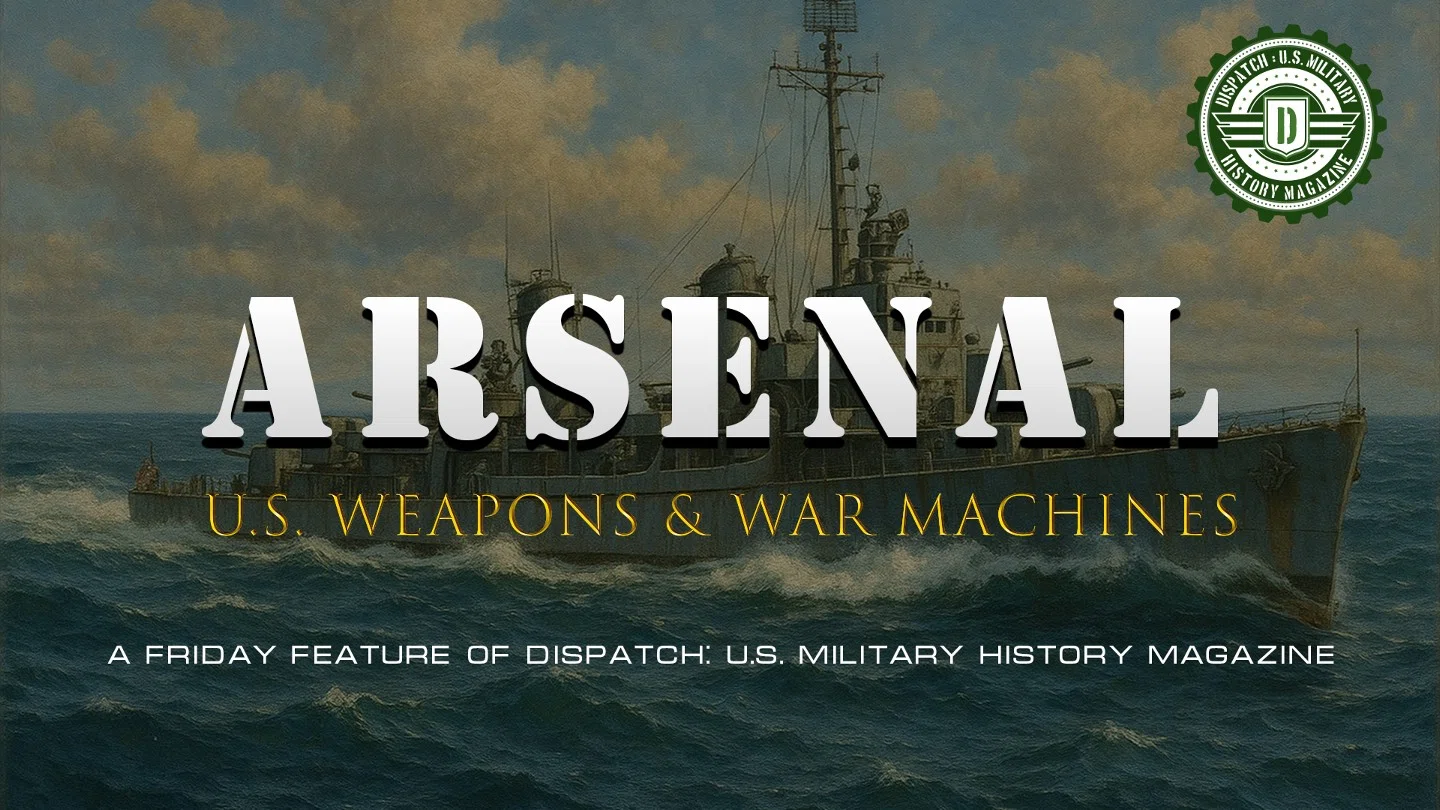
Seen from the waterline, a Fletcher-class destroyer presented a lean, purposeful profile. A raised bow with a single five inch gun looked over the sea, followed by a clean stretch of deck broken by another gun mount and the forward torpedo tubes. Two raked funnels and a lattice of masts and directors marked the ship’s center, while the after deck carried more guns and depth charge gear. The hull was long enough to ride Pacific swells with some grace but short enough to swing quickly when ordered, a compromise between a gun platform and a knife in the water.
Life and work on board centered on a few critical spaces. High on the forward superstructure, the open bridge and enclosed wheelhouse formed the captain’s and officer of the deck’s world. From there, they could see the sea, read the wind and waves, and talk directly with lookouts and signalmen scanning the horizon. Just behind and below lay the combat information center, a darkened room crowded with radar scopes, plotting tables, and voice circuits. In that space, young officers and enlisted operators turned raw blips and bearings into a mental map of the fight that guided every helm order and gun solution.
Below the waterline, the ship’s engineering plant provided the muscle for everything the crew wanted to do. Boiler rooms raised steam that fed the turbines in the adjacent engine rooms, driving twin shafts and screws. Watch teams of firemen, machinist’s mates, and electricians worked in hot, noisy compartments where the sound of machinery never stopped. The layout split the plant into separate units so that a single hit would not necessarily cripple the ship. Damage control teams trained to isolate flooding, reroute power, and keep at least some propulsion and weapons available even after serious damage.
The weapon side of the ship wrapped around these living and working spaces. The five inch dual purpose guns, controlled by a director and later equipped with radar ranging, could fire at surface targets and aircraft alike. Torpedo crews tended the centerline mounts, ready to swing the tubes out and fire a spread when the ship closed to attack. As the war went on, anti-aircraft batteries of forty millimeter and twenty millimeter guns multiplied along the decks, filling every spare patch of steel with shields, ready rounds, and more men to serve them. Depth charge racks and projectors, and later ahead-throwing weapons, gave the crew tools to hunt submarines as well as fight on the surface.
For the crew, the destroyer was both home and weapon. Mess decks doubled as recreation spaces when the watch schedule allowed, while berthing compartments were cramped and often hot despite improvements over earlier classes. Communication in action relied on sound powered telephones, voice tubes, and short, clear orders repeated up and down the chain. Training ashore taught clean procedures and textbook formations, but veterans remembered how real combat in heavy weather, under air attack, or in night actions forced them to adapt, improvise, and work around battle damage. Inside a Fletcher-class destroyer, every station, from the bridge to the engine rooms, depended on the others, and the ship’s reputation grew from how well those human links could keep the machinery fighting under strain.
Baptism Of Fire
The destroyer charge off Samar in October 1944 unfolded inside the larger Battle of Leyte Gulf, a sprawling effort to secure the invasion of the Philippines. The escort carrier group known as Taffy 3 was never meant to stand toe-to-toe with battleships and heavy cruisers, yet that is exactly what happened when a Japanese surface force slipped through the straits and fell upon the lightly protected carriers. Fletcher-class destroyers like Johnston, Hoel, and Heermann found themselves between the giants and the thin-skinned escort carriers that carried the air power for the landing beaches. Their mission, in that moment, was brutally simple: draw fire, buy time, and disrupt the enemy formation any way they could.
The sequence of the fight showed what a Fletcher could do and what it could not. The destroyers used smoke to hide the carriers, then sprinted out of their own cover to fire torpedoes at closing heavy ships. Five inch guns, firing as fast as crews could load them, raked enemy superstructures, gun mounts, and bridges. At ranges where the Japanese heavy guns should have dominated, the smaller ships stayed alive with constant maneuver and a steady rain of return fire. Distances collapsed from tens of thousands of yards to brawling range, and each turn of the wheel was a gamble between presenting a smaller target and keeping torpedoes or guns bearing.
This was not the first time Fletchers had met the enemy. In the Solomons campaign they had already traded blows in chaotic night battles, using radar-directed gunnery and torpedoes to contest waters where Japanese long-range torpedoes had once ruled. Off Guadalcanal, at Cape St. George, and in countless lesser-known engagements, the class earned its reputation as a hard-hitting, hard-working destroyer that commanders trusted. Leyte Gulf, however, turned that running record into legend, because the stakes were so stark and the odds so uneven. By the time the fighting off Samar ended, some Fletcher-class ships lay on the bottom, but the escort carriers and the troops depending on them were still in the fight, a direct result of what those destroyer crews had done under fire.
Strengths And Weaknesses
Ask the men who served in them, and certain strengths come up again and again when they talk about Fletcher-class destroyers. The ships were fast and could sustain high speeds in heavy seas, which mattered enormously in the wide Pacific. They were good seaboats, rolling and pitching but rarely feeling fragile, and their long hulls gave gunners and directors a relatively stable platform to work from. Crews valued the five inch dual purpose guns, which had both reach and rate of fire, and appreciated that the original design left room for more anti-aircraft weapons and electronics as the war progressed. There was also a measure of comfort by destroyer standards: still cramped and hot, but a step up from the even tighter earlier classes.
The weaknesses were closely tied to those same design choices. To get speed and range, the ships sacrificed armor almost entirely, which meant even a single well-placed shell or torpedo could cause catastrophic damage. As the war went on and more anti-aircraft mounts, radar sets, and fittings crowded the decks, some ships felt top-heavy and wet forward, shipping water in rough weather. Crew numbers ballooned, straining living spaces and making every compartment more crowded, noisier, and hotter. Maintainers had to keep complex machinery and electronics running around the clock, often far from major bases and with only what spares they could carry.
Enemies formed their own view of the class. Japanese sailors and aviators respected the quick, accurate fire of American destroyers and the bite of their torpedoes, learning to treat them as real threats rather than merely screening units. At the same time, they looked for ways to exploit thin protection, using coordinated air and surface attacks to overwhelm the defenses of individual ships. Compared with some contemporary destroyers, such as heavier gunned but shorter-range types, the Fletcher represented a balanced package rather than a specialist. Commanders appreciated that balance, yet always knew that in a direct duel with much larger ships, courage and tactics would have to make up for what steel could not provide.
Variants And Evolution
Over time, the Fletcher-class story became one of constant adaptation. The basic hull and machinery stayed the same, but almost everything mounted on and within that hull was fair game for change. Early ships carried a particular mix of torpedo tubes and light anti-aircraft guns that reflected pre-war thinking about night torpedo attacks and limited air threats. As the war revealed just how dangerous enemy aircraft were, many Fletchers lost some of their torpedo armament in favor of more forty millimeter and twenty millimeter mounts, trading a bit of offensive punch for a thicker dome of flak around the ships they escorted.
Bridge and superstructure shapes also evolved, with some ships built or modified with different bridge configurations to improve visibility, reduce silhouettes, or accommodate new fire-control equipment. Radar sets improved rapidly, and the combat information center grew in importance, absorbing more of the ship’s intellectual workload as new screens, repeaters, and plotting tools appeared. Anti-submarine gear followed a similar path, expanding from basic depth charge racks and throwers to include more sophisticated sonar and, in the postwar years, ahead-throwing weapons and rocket-assisted systems that turned the destroyer into a serious submarine hunter.
The Fletcher’s success encouraged further design steps. Follow-on classes such as the Allen M. Sumner and Gearing destroyers built on the concept of a large, flexible hull with strong dual purpose armament and room for growth. In the years after 1945, many Fletcher-class ships were modernized rather than scrapped, receiving new anti-submarine weapons, updated radar, and improved living spaces in programs that kept them active into the early Cold War. Others were transferred to allied navies, where local modifications and refits reflected different tactical needs and budgets, but the core hull and layout remained recognizable. Through these changes, the class showed how a sound basic design could absorb new technology and missions while still keeping its character.
Legacy And Where To See It Today
The legacy of the Fletcher-class destroyers reaches far beyond the specific battles where individual ships fought. They helped define what a modern destroyer should be: fast, long-legged, able to protect larger ships from air, surface, and submarine threats, and rugged enough to operate across oceans for extended periods. Their impact on doctrine was just as strong. Carrier task force operations, fast surface sweeps, radar-directed night actions, and intricate anti-submarine screens all leaned heavily on what these destroyers could do, shaping the way navies thought about integrated fleets for decades.
In the postwar period, Fletcher-class destroyers continued to serve in conflicts such as the Korean War and in Cold War patrols, often in updated forms that bore more electronics and anti-submarine gear than their wartime designers could have imagined. Even after they left frontline service, they remained present in training roles and foreign fleets, extending their influence through the officers and sailors who learned their craft aboard them. Later generations of destroyers, bristling with guided missiles and advanced sensors, still reflected ideas first proven on those relatively simple gun and torpedo ships.
For readers who want to stand on the deck of a Fletcher today, several preserved ships offer that chance. In American ports, museum destroyers sit with their guns, torpedo tubes, and depth charge gear still on display, open to visitors who can walk the same steel decks and climb into the same cramped interiors their wartime crews knew. Inside, restored combat information centers, bridges, and engineering spaces help make sense of how these ships worked when they were young and in harm’s way. Memorials and gate-guard displays at bases and parks keep the silhouettes familiar even to those who never go aboard.