In Action
The night sky over the Iraqi border is almost black when the pair of F-15Cs cross the line. Down below, the desert is invisible. Up here, at twenty-plus thousand feet, the world is a radar scope, a glowing head-up display, and the steady thrum of two afterburning engines. The pilots are on combat air patrol in the opening hours of Operation Desert Storm, listening to the calm voice of an airborne warning and control aircraft feeding them the picture they cannot see with their own eyes.
Contacts appear as faint symbols at long range, sliding across the scope. Iraqi fighters, probably MiGs, lifting to challenge the strike packages headed for airfields and command centers. The lead Eagle noses a fraction left, easing the formation into position. The whole point of the aircraft is here in this moment: find, fix, and kill first, before the enemy ever knows exactly where the threat is coming from.
The first missile leaves the rail with a solid shove, streaking off into the darkness toward a target the pilot has never visually seen. Seconds later, another launch from his wingman. On the radios there is a brief, controlled chaos as controllers confirm, other fighters call their own shots, and the first reports of kills start to filter back. Somewhere in that darkness, Iraqi fighters are falling in fire.
For the Eagle crews, this is what the aircraft was built to do: seize and hold control of the sky so that everything else in the campaign can happen underneath. The road from messy skies over Vietnam to this carefully orchestrated first night of Desert Storm runs straight through the design decisions that shaped the F-15.
The Problem It Was Built To Solve
The F-15 Eagle began as an answer to a hard lesson. In the 1960s, the United States Air Force went to war over North Vietnam with heavy, missile-armed fighters that were supposed to sweep the skies clean at long range. Instead, they discovered just how often air combat collapsed into close-in turning fights where lighter, simpler enemy MiGs could exploit their agility. Rules of engagement that demanded visual identification, unreliable early missiles, and aircraft optimized for multiple roles all combined into a painful air-to-air learning curve.
At the same time, intelligence images from the Soviet Union showed a new generation of fighters and interceptors on the other side of the Iron Curtain. Sleek MiG-21s and variable-geometry MiG-23s were one concern. The real shock was the appearance of the huge MiG-25, a fast, high-flying interceptor that seemed, at first glance, to outclass anything the United States could send against it. Even as the true strengths and weaknesses of these aircraft were debated, their existence underscored a simple fact: the Air Force could not afford to gamble air superiority on aircraft designed as bomb-truck compromises.
Inside the service, a consensus slowly formed. If the United States meant to guarantee control of the air in any future conflict, it needed a dedicated air superiority fighter with no illusions about its job. It had to out-climb, out-accelerate, and out-turn anything likely to oppose it, carry a powerful radar and missiles for long-range engagements, yet still fight and survive in a close-in dogfight. The slogan that emerged was blunt: not a pound for air-to-ground.
That demand for a pure, single-minded air dominance machine set the F-15 program in motion. From requirements documents and design studies would come a large, twin-engine fighter with the thrust, radar, and weapons to give its pilots an overwhelming edge in the kinds of air battles the service expected next. How the Air Force and its chosen contractor turned those ambitions into a real jet is the next part of the story.
From Design Board To Production
Turning the idea of a dedicated air superiority fighter into a real airplane meant rewriting a lot of recent history. The F-X program that produced the F-15 pulled together lessons from Vietnam, new aerodynamic thinking about energy and maneuverability, and a sober look at Soviet threats. Designers were told to chase climb rate, acceleration, and sustained turn performance even if it meant building a larger, more expensive aircraft than some critics wanted. The emerging concept was clear: a twin engine fighter with high thrust, a powerful radar, and a big wing that could carry both fuel and weapons without becoming clumsy in a dogfight.
Several major firms competed for the contract, but in December 1969 the Air Force chose McDonnell Douglas to build its new Eagle. Full scale development moved fast. The first prototype flew in July 1972, and production aircraft began reaching combat squadrons in the mid 1970s. By skipping a long prototype phase and committing early, the service accepted risk on cost and complexity in return for getting its air superiority fighter into frontline units before the next crisis. Within a few years, the F-15 was a familiar sight at bases in the continental United States, Europe, and later the Middle East, standing alert with live missiles under its wings.
Every major feature carried a tradeoff. The large wing and twin vertical tails gave tremendous lift and control authority at high angles of attack but also created a big visual and radar target. Twin engines offered huge thrust and a margin of safety over water or hostile terrain, yet each engine was a complex, maintenance intensive machine that had to be tamed after early reliability problems. The radar was designed to reach far and see low flying targets against ground clutter, but that meant investing heavily in advanced electronics and pilot displays. Weight had to be shaved wherever possible to keep the thrust to weight ratio high enough for the climb and turn performance the Air Force demanded.
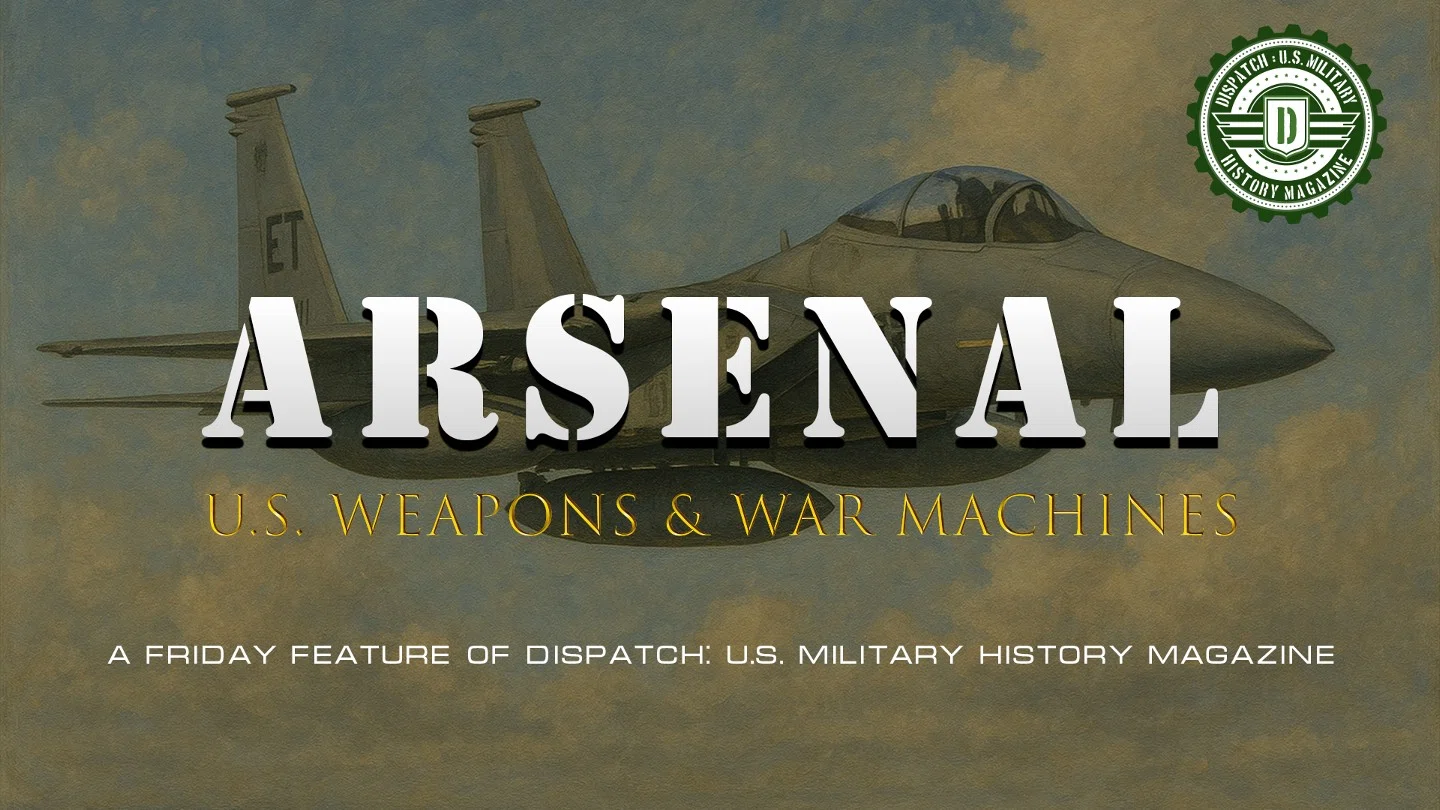
At a glance, the F-15 Eagle is an American twin engine, all weather air superiority fighter built by McDonnell Douglas for the United States Air Force during the later Cold War. It is a single seat aircraft in its front line air to air forms, typically flown by one pilot with ground controllers and airborne radar aircraft providing offboard support. Its primary armament is a mix of radar guided and heat seeking missiles backed by a six barrel 20 millimeter cannon, and it can sprint to speeds above Mach two with a service ceiling above sixty thousand feet. Over one thousand basic air superiority F-15s were produced, with many delivered to key allies in the Middle East and Asia, ensuring that the Eagle’s silhouette became a common sight wherever the United States and its partners needed to control the sky.
By the time the F-15C, the definitive air superiority model of the early 1980s, replaced older Eagles on the front line, the basic concept had proven sound. The aircraft gave Western air forces a fighter that could launch from distant bases, climb hard, push forward under control of powerful radars, and meet enemy aircraft on favorable terms. How that translated into the daily experience of pilots and ground crews is easiest to see by walking around the jet itself.
Inside The Weapon
Seen from the ramp, the F-15 is big for a fighter. Its shoulder mounted swept wings sit high on the fuselage, with broad flaps and ailerons that hint at its low speed handling, while two tall vertical tails rise from the rear, bracketing the exhausts of its engines. Rectangular air intakes sit under the wing roots, sloping outward to feed each engine even at high angles of attack and high speed. On the nose, a clean, pointed radome hides the large radar antenna that is the heart of the Eagle’s long range hunting ability. The landing gear is stout and widely spaced, built to handle heavy takeoffs with a full missile load, fuel tanks, and often conformal tanks wrapped around the fuselage on later models.
Climb the ladder and the aircraft feels different. The pilot sits high under a single piece bubble canopy with minimal framing, giving wide views forward and over each shoulder. Directly ahead is the head up display that projects key flight and targeting information into the pilot’s line of sight so eyes can stay outside the cockpit in a fight. Below that, a combination of traditional round dials and newer display panels feed in data from engines, radar, navigation, and weapons. The stick and throttle sit where a fighter pilot expects them, but years of design work went into arranging switches so that essential controls can be reached without taking hands off those primary controls.
Behind the scenes, the avionics tie everything together. The Eagle’s pulse Doppler radar can look up to high altitude threats or look down and separate moving aircraft from ground clutter, a critical skill for defending low flying bombers and strike packages. Its central computer fuses radar returns, navigation data, and weapons status into usable symbology, so the pilot can sort contacts, prioritize threats, and launch missiles without drowning in raw numbers. An internal electronic warfare system listens for hostile radars and can cue chaff and flare dispensers or external jamming pods as needed. For the pilot, the effect is a cockpit that feels busy but purposeful, built to make long missions of scanning, sorting, and sometimes fighting manageable.
Down in the fuselage, the pair of Pratt and Whitney F100 engines give the Eagle its defining physical sensation: relentless thrust. At military power they haul the aircraft through thick air, and in afterburner they push it rapidly uphill, trading fuel for altitude and speed. Early in the Eagle’s career, those engines were temperamental, and maintainers spent long hours dealing with issues that came from running them hard and fast in operational service. Over time, improved versions tamed many of the worst problems, leaving pilots with the confidence that they could light the burners, pull hard, and trust the jet to keep responding.
Weapons fit neatly into this world. Under the wings and along the belly, the Eagle carries its mix of radar guided and infrared missiles on pylons positioned to minimize drag and interference with airflow. In a typical air superiority load, medium range radar missiles ride on the fuselage stations, with heat seeking missiles out on the wingtips or outer pylons, ready for close in work. The internal cannon sits in the right wing root, its ammunition drum hidden behind access panels, giving the pilot a last ditch or opportunistic weapon that never depends on seeker heads or datalinks. In training, pilots practice the choreography of radar modes, missile cues, and gun solutions long before they ever see an enemy aircraft on the scope.
Around all of this technology is the human space that makes it livable. The cockpit is cramped but laid out so that checklists, kneeboards, and oxygen lines all have a place, and the environmental control system tries to keep temperatures tolerable from high altitude cold to desert heat. On the ground, maintainers use built in walkways along the fuselage and wing roots to reach inspection panels without damaging the skin. A full turn of the aircraft from recovery to new launch involves refueling, weapons loading, engine and systems checks, and quick debriefs with the pilot, all unfolding under the Eagle’s shadow. When the jet taxis out again, everyone involved shares the same assumption that has guided the design from the start: this aircraft exists so that, when it is in the air, friendly forces own that piece of sky.
Baptism Of Fire
By the time those Eagles slipped across the Iraqi border in 1991, the aircraft already had a reputation written in someone else’s logbooks. The F-15 first proved itself in the hands of Israeli pilots in the late 1970s and early 1980s, meeting Syrian fighters over Lebanon in a series of sharp, unforgiving engagements. There, the aircraft’s mix of powerful radar, long range missiles, and tight turning performance gave it the ability to start most fights with a clear advantage and finish many of them before the enemy even saw the attacker. That long string of kills without corresponding losses helped convince planners that the Eagle concept worked in real air combat, not just on test ranges.
Desert Storm brought the largest test yet, with American and allied F-15s tasked to tear down Iraqi air defenses and protect strike aircraft over long distances. The Eagles that appeared in the opening vignette were flying as part of that layered shield, guided by airborne controllers who could see the broader air picture. When Iraqi fighters lifted to challenge coalition raids, the F-15s moved in to intercept, using radar to search beyond visual range, a term that describes engagements at distances where pilots still cannot see the other aircraft with their own eyes. Often, missiles were fired at long range, with pilots trusting radar data and guidance logic instead of the classic dogfight view over the canopy rail.
Not every engagement was that clean. At times, Iraqi aircraft tried to use low level flight and ground clutter to hide from radar, or they turned back toward their own surface to air missile belts in the hope that pursuing Eagles would hesitate. In those more complex fights, the F-15’s agility and thrust kept options open. Pilots could crank the jet into hard turns, climb rapidly out of missile envelopes, or reposition for clear shots while still keeping enough energy to escape if the situation soured. On some missions, the mere presence of Eagle patrols persuaded Iraqi pilots to land or flee, preserving the machine’s most precious effect: air forces on the coalition side could plan strikes without assuming constant fighter opposition.
The result was a campaign in which the F-15’s design purpose came fully into focus. It did not win Desert Storm alone, but it created bubbles of airspace in which bombers, attack aircraft, and surveillance platforms could work with far less fear of interception. The opening night scene, with unseen MiGs falling in distant fire, was not an isolated flash of drama. It was a typical expression of what the Eagle had been built to do from the start: change the balance of risk in the sky so decisively that the rest of the force could concentrate on targets on the ground.
Strengths And Weaknesses
Ask pilots and maintainers what made the F-15 special and the first answers usually involve power and awareness. The aircraft’s thrust to weight ratio, the relationship between engine power and airframe mass, allowed it to climb steeply, accelerate hard, and recover energy in a turning fight more quickly than many contemporaries. The large radar and head up display gave pilots a strong picture of the air battle, especially when paired with skilled controllers in support aircraft who could feed them additional cues. Crews also appreciated the simple fact that the jet could haul a serious missile load into combat, often with fuel to spare, which let them stay on station for the long, dull stretches between moments of violence.
From the ground crew perspective, strength showed up in structural toughness and systems designed with combat durability in mind. The landing gear tolerated rough landings on heavy weights, and built in test equipment helped maintainers quickly isolate faults instead of chasing intermittent problems blindly. Over time, improvements to the engines and avionics cut down on some of the early headaches, increasing sortie rates and making it easier to keep squadrons fully mission capable. Commanders liked having a fighter that, when properly supported, could answer a wide range of air defense needs with the same basic airframe.
Weaknesses were present too, and they shaped how the Eagle was used. The aircraft was large and relatively expensive, demanding significant fuel and tanker support for long missions. Its sophisticated radar and avionics required careful maintenance, and operating costs per flight hour were high compared to lighter fighters. In tight budget environments, that meant fewer airframes and a constant tension between flying enough hours for pilot proficiency and protecting service life.
Enemies who studied the Eagle learned to respect it but also looked for ways to blunt its advantages. Flying at very low altitude, using terrain and clutter to mask their approach, or relying on surprise from unexpected directions could sometimes complicate an F-15’s long range radar picture. Some potential adversaries invested heavily in surface to air missile networks and integrated air defenses, reasoning that the surest way to deal with the Eagle was not to fight it directly at all. Compared with smaller fighters like the F-16, the F-15 sacrificed some simplicity in exchange for sheer reach and sensor power, a trade that made sense in its intended role but that also locked it into a particular niche.
Variants And Evolution
The earliest F-15A and two seat F-15B models provided the foundation, but they were only the starting point. As experience accumulated, the F-15C and D variants arrived with improved radar, more internal fuel, and strengthened airframes that could carry new generations of missiles and extra tanks. These upgraded Eagles became the main air superiority workhorses through the 1980s and into the post Cold War era, standing alert in Europe, the Middle East, and the Pacific. Small refinements in electronics and displays made it easier for pilots to sort targets and survive increasingly complex electronic environments.
The biggest change in the family was the emergence of the F-15E Strike Eagle, a two seat strike fighter that took the basic airframe and turned it into a long range precision attack platform while preserving strong air to air capability. With conformal fuel tanks hugging the sides of the fuselage, modern navigation and attack systems, and the ability to carry guided bombs under its wings, the Strike Eagle gave planners a way to hit heavily defended targets deep inside enemy territory without abandoning the performance and survivability that had made the original F-15 attractive. In practice, Strike Eagles often flew missions that combined self escort with precision strikes, making them some of the most heavily tasked aircraft in later conflicts.
Export variants carried the concept even further. Partner nations in the Middle East and Asia accepted Eagles tailored to their own doctrine and budgets, many with unique avionics fits or local weapons integrations. Over time, new build versions have incorporated active electronically scanned array radars, updated cockpits, and modern defensive suites, ensuring that even as stealth fighters arrive, the latest Eagles remain credible front line aircraft. The ongoing evolution into advanced models keeps the basic idea alive: a fast, long legged fighter that brings a powerful radar and significant firepower to the opening stages of any air campaign.
Legacy And Where To See It Today
The F-15’s legacy begins with its combat record but extends into doctrine and design thinking. For decades, air forces looked at the Eagle’s combination of power, sensors, and weapons and saw proof that a dedicated air superiority fighter could change the shape of a conflict by dominating the early days of a campaign. That experience influenced the design and justification of later stealth fighters that promised to carry the same air dominance mission into more dangerous air defense environments. Training syllabi, tactics manuals, and large force exercises all absorbed lessons learned in Eagles, from the importance of energy management in maneuvers to the value of integrating fighters tightly with airborne controllers and support aircraft.
Physically, the aircraft itself is now a museum piece in some locations even as other examples continue to fly. Visitors to major aviation museums in the United States can walk under retired Eagles preserved indoors, often displayed with missiles and tanks that hint at their wartime loads. Outdoor displays at air bases and memorial parks put F-15s on pedestals or gate guard mounts, their gray paint and swept lines greeting generations of airmen and visitors. Many of these airframes served through the Cold War into the new century, carrying serial numbers that link them to specific squadrons and deployments.
For those who want a deeper connection, photo and video collections from exercises and operations capture Eagles at full power: banking hard against blue skies, spraying vapor from their wings, or sitting on alert pads with weapons crews at work. Within the broader Dispatch and Trackpads ecosystem, the F-15 appears in companion features such as oral history interviews with pilots and maintainers and stories that place the jet alongside other aircraft in shared campaigns. A reader who starts with this Arsenal feature can follow those trails to see how the Eagle’s story overlaps with ground battles, coalition partnerships, and the long evolution of airpower thinking.
Behind the numbers and the sharp angles, the legacy that matters most remains human. For pilots, maintainers, and sometimes opponents, the F-15 was the machine that defined what the sky felt like in their era, a standard by which other aircraft were judged and a presence that shaped life and death choices in combat. You can also hear narrated versions of Arsenal features as part of the Trackpads podcast feeds and Dispatch audio editions.