Into the Surf at Betio
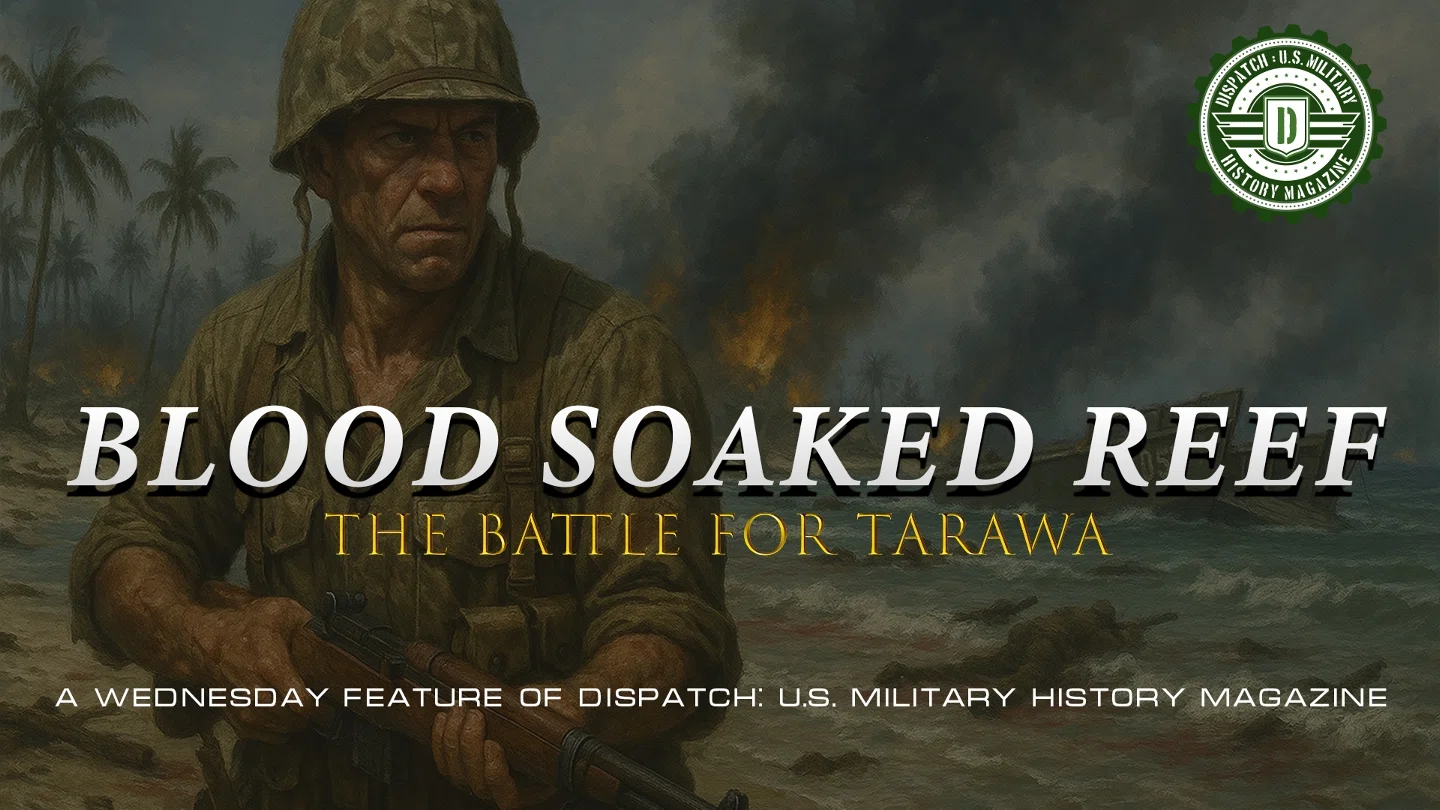
Dawn came gray and low over Tarawa’s Betio Island, but the Marines saw very little of it. What filled their world was the roar of naval guns behind them, the slap of salt spray over the gunwales, and the jagged black line of palm trees and bunkers ahead. The reef that ringed the lagoon had been a line on a chart in briefings, something planners believed the tide would cover. In the landing craft and amphibious tractors now grinding forward, it was suddenly a wall of shallow water and exposed coral that threatened to strand whole waves of Marines in the open. Boat engines coughed and stalled as hulls scraped bottom. The first LVTs lurched ahead, wallowing under the weight of gear and men, while Higgins boats behind them began to hang up on the reef.
Japanese guns had survived the bombardment. As the lead waves closed on Betio, machine guns and light cannon opened from low concrete bunkers, from bunkers buried under sand, from wrecked-looking structures that were anything but dead. Tracers stitched across the lagoon, walking across the places where the Marines had to cross. Some men dropped from the sides of stalled boats, trying to wade in through chest-deep water, rifles held high, packs dragging them down. Others clung to the sides of vehicles already riddled with fire, caught between staying aboard and diving into a lagoon that felt just as lethal. The smell of cordite, gasoline, and churned coral mixed with shouted orders and the flat crack of rifles fired almost blind toward the shore. In those first minutes, every decision was instant and personal: keep going, find any scrap of cover, push one more yard toward the beach. Few on those first waves had time to think about the wider war. Yet this single stretch of reef and sand, fought yard by yard, would echo through every amphibious assault that followed.
A Small Atoll With Enormous Stakes
Tarawa sat in the middle of the Central Pacific, a name that meant little to families back home but everything to planners mapping the road toward Japan. Betio, the tiny island now under fire, held an airfield that gave the Japanese a forward base to watch and strike at any American move across the ocean. For the United States, seizing the Gilbert Islands was the first major test of a Central Pacific offensive built around amphibious landings, naval gunfire, and carrier air power working in tight coordination. If the Marines could not crack a heavily fortified atoll like Tarawa, the entire timetable for the drive toward the Marshalls, the Marianas, and beyond would slow or shift. Failure here would not just mean a bloody repulse. It would raise doubts about the whole concept of storming defended beaches across thousands of miles of ocean.
On the Japanese side, Tarawa’s garrison had been told the island could not be taken in a hundred years. Concrete bunkers, interlocking fields of fire, and a reef that could trap landing craft were all part of a plan to bleed any attacker white at the water’s edge. Officers and enlisted alike understood that no rescue was coming; their mission was to hold and kill until they were spent. For the 2nd Marine Division coming in over that reef, the stakes were just as clear in different words. They were testing not only their own courage but the doctrine and training of an entire service, under the gaze of a public that would soon see photographs and film of what happened on that beach. In a matter of days, the question would not be whether Tarawa mattered, but how much its cost would reshape the way America fought its island war across the Pacific.
From Guadalcanal to the Reef
The road to Tarawa began far from the Gilberts, in earlier campaigns where the United States learned hard lessons about amphibious warfare. After Guadalcanal and the fighting in the Solomons, American planners looked west across the Central Pacific and argued that a direct advance toward the Marshalls and Marianas would strike faster at Japan’s inner defenses. To do that, they needed secure bases in the Gilberts, scattered atolls with airfields that could support long-range bombers and patrols. Betio, the small island at the southwestern tip of Tarawa Atoll, was suddenly more than a dot on the map. It was a test case for a whole strategy built on landing Marines against fortified beaches again and again until the Pacific war was won.
On the American side, new tools and ideas had taken shape since the early war landings. Amphibious tractors, or “amtracs,” were designed to crawl over reefs where traditional boats might hang up. Naval gunfire doctrine had evolved, promising carefully timed bombardments that would smash shore defenses just before the first waves came in. Carrier aircraft were tasked to keep pressure on the island from above, strafing and bombing strongpoints that survived the shelling. Staff officers studied aerial photographs, sketched fire plans, and tried to predict tides and currents around the lagoon. Tide tables said that water would be high enough for most landing craft to cross the reef. Those estimates, treated as sound, were woven into the whole assault plan.
On Betio, Japanese engineers and laborers turned the island into a low, bristling fortress. Concrete bunkers were sunk into the sand and coral, tied together by trenches and communication tunnels. Anti-boat and anti-tank obstacles studded the beaches. Guns were placed to fire not just straight out to sea but along the length of the shoreline, ready to catch any force that tried to move up or down the beach. The garrison understood that there would be no evacuation. Their mission was to make any landing so costly that the Americans might rethink the wisdom of attacking defended atolls at all. When the invasion fleet of battleships, cruisers, destroyers, carriers, and transports gathered off Tarawa in November 1943, it represented more than a single operation. It was a bet that previous experience, new technology, and careful planning could overcome any reef and any fortification the enemy built.
Three Days on Betio’s Sand
When the bombardment lifted on the morning of the landing, many Marines in the boats believed little could still be alive on Betio. The naval guns had pounded the island for hours, raising clouds of dust and smoke. Yet as the first waves closed on the reef, Japanese gun crews emerged from protected positions, swung their weapons back into action, and began firing into the lagoon. Amtracs ground over the coral and pushed on toward the beach, but many of the wooden-sided Higgins boats behind them stuck fast in the shallows. Marines poured over the sides, struggling through waist- and chest-deep water under direct fire, some dropping all but their rifles just to keep moving. The few scraps of cover were the backs of stalled vehicles, shell craters in the reef, and the faint shelter of the low seawall ahead.
Small groups made it to the sand and pressed themselves against the seawall, where incoming fire hissed overhead or chewed into the coral just feet away. Radio contact was spotty, smoke obscured landmarks, and many units landed far from their assigned sectors. Leaders had to rebuild control by instinct and voice, sometimes by simply standing upright for a moment under fire to wave men into a makeshift perimeter. Throughout the day, more amtracs shuttled in reinforcements, some burning, some sinking short of the beach. Naval gunfire support ships inched closer to the lagoon entrance, firing as close to the Marines as they dared to knock out stubborn bunkers. By evening, a thin foothold existed on Betio, but it was fragile: small pockets of Marines cut off from each other, surrounded by Japanese positions that still had working weapons and the will to counterattack.
The night was a mix of confusion and sudden violence. Japanese troops infiltrated toward the seawall and shell craters, probing for weak points, sometimes closing to grenade range. Marines fired flares, shifted machine guns, and called for illumination from offshore ships to catch movement in the open. By the second day, more organized reinforcements began to land, including additional infantry and tanks that had managed to negotiate the reef and surf. With heavier support on shore, the Marines started a systematic advance across the island, blowing open bunkers, clearing trench lines, and using flamethrowers and demolitions to neutralize strongpoints that had survived the bombardment and first day’s fighting. Every dozen yards brought another knot of resistance, another machine gun nest or dug-in rifle pit that had to be reduced at close range.
On the third day, Japanese resistance shifted from organized defense to desperate counterattacks and isolated last stands. Some groups attempted charges against Marine lines and were cut down by concentrated fire. Others held out in individual bunkers or pits until they were destroyed one by one. By the time Betio was declared secure after roughly three days of combat, the landscape was shattered and charred, and the garrison was almost entirely wiped out. The 2nd Marine Division had paid heavily for this small strip of land, with casualties that shocked both commanders and the public once the numbers and images became known. Those three days on Betio’s sand were more than another island in a long campaign. They exposed every flaw and strength in American amphibious doctrine, and forced hard questions about how to fight the next landing differently.
Amtracs, Improvisation, and Sheer Will
What ultimately turned Tarawa was not a single dramatic maneuver but a chain of stubborn decisions, small-unit improvisation, and the ability to keep feeding strength into a narrow, deadly beachhead. The first day’s landings had gone badly, with many Marines stranded on the reef or clustered behind the seawall under fire. Yet commanders offshore chose to keep pushing reinforcements in, even as casualties mounted. Amphibious tractors kept grinding back and forth, some limping on riddled hulls, bringing fresh squads, ammunition, and radios into that cramped strip of sand. Naval gunfire ships and aircraft adjusted their aim based on urgent calls from shore, shifting from broad bombardment to pinpoint strikes on bunkers that had survived the initial pounding. Each bunker destroyed made the next few yards of advance just a little less murderous.
On the island, junior leaders took over where the written plan had frayed. Company officers and sergeants pulled scattered men into ad hoc units, assigning sectors on the spot and coordinating rushes from one patch of cover to the next. Flamethrower teams and demolition men worked hand in hand with rifle squads to clear pillboxes that could not be bypassed. Tanks that finally made it ashore gave the Marines moving steel and direct firepower against concrete positions, though operating armor on a small, rubble-strewn atoll brought its own risks. Step by step, they shifted from simply surviving on the beach to attacking across the island, turning the seawall from a last line of cover into a launch point. The Japanese plan had depended on stopping the Americans at the water’s edge. Once that line was breached and a lodgment formed, their fixed fortifications and limited room to maneuver became a liability.
The Japanese garrison fought stubbornly, but their communications and reserves were strained by the intensity of the bombardment and the chaotic, close-quarters nature of the fight. Counterattacks launched across open ground were shredded by Marine firepower. Positions that had been carefully built over months were reduced in minutes by coordinated infantry, flamethrowers, and armor. By refusing to break off the attack after the first day’s grim losses, and by rapidly adapting their tactics on the ground, the Marines turned a near-disaster into a hard-won foothold, then into control of the entire island. Tarawa’s outcome rested on courage, but also on the ability to absorb shock, learn under fire, and keep moving forward across a landscape that seemed purpose-built to stop them.
From Betio’s Sand to Future Shores
When the firing finally slackened and Betio was declared secured, the island was a tangle of shattered palms, burned-out wreckage, and bodies. The Japanese garrison had been virtually annihilated, with only a tiny number of prisoners taken. The 2nd Marine Division had taken severe losses in just a few days of fighting. For many who survived, Tarawa became a personal marker for the rest of their lives, a place where friends had fallen in the surf or in front of low, stubborn bunkers. The airfield, now in American hands, quickly became a forward base for operations deeper into the Central Pacific. Strategically, the capture of Tarawa and the Gilberts opened the way to assaults on the Marshalls and beyond, tightening the ring on Japan’s outer defenses. The island itself was small, but the message was large: a heavily fortified atoll could be taken, even at terrible cost.
Back in the United States, photographs and film of the battle brought the brutal reality of amphibious warfare into living rooms and movie theaters. Images of Marines lying in the surf and piled near the seawall shocked the public. Some questioned whether the price had been too high for such a small patch of ground. Commanders and planners asked many of the same questions, but they also studied Tarawa as a case study in what needed to change. Future landings would feature longer and more carefully timed bombardments, more extensive use of amphibious tractors and specialized landing craft, improved reconnaissance of reefs and tides, and better coordination between ships, aircraft, and troops on the beach. The lessons of Tarawa ran directly into planning for Kwajalein, Saipan, Peleliu, Iwo Jima, and Okinawa.
For students of military history, Tarawa remains a crucible where doctrine, technology, and human will collided in a very small space. The reef that trapped landing craft is a reminder that terrain and tide can be as deadly as enemy fire if they are misread. The stubborn advance inland shows how adaptable leadership and combined arms can still claw victory from a flawed plan. For the Marine Corps, Betio became part of its institutional memory, studied in schools, walked in staff rides, and remembered in museum exhibits and unit stories. The blood-soaked reef at Tarawa shaped not only how the United States fought the rest of the Pacific war, but also how it thought about amphibious operations for generations to come, whenever planners looked at a defended shore and weighed the cost of going in.