The Moment of Decision
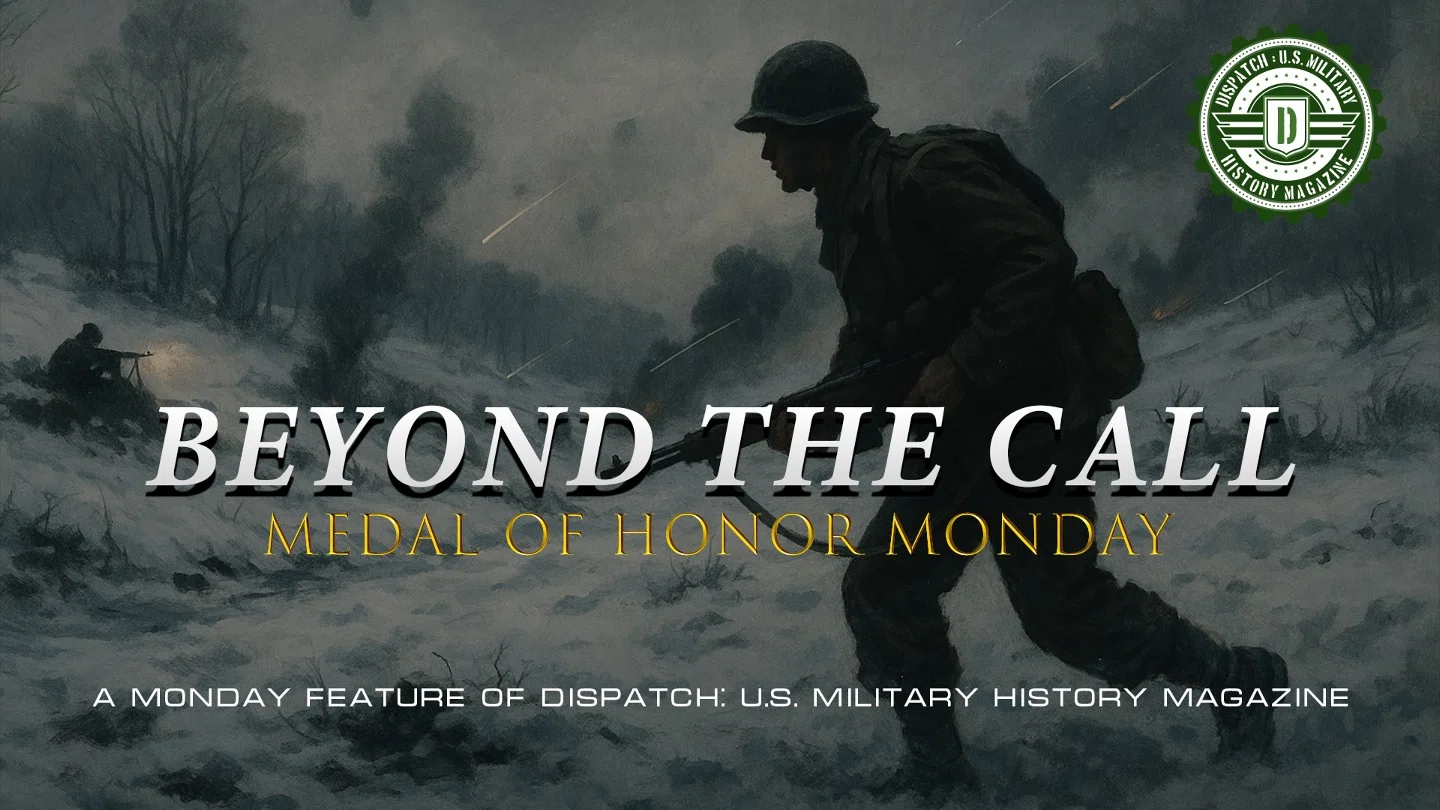
The snow was hard as concrete on the Belgian hillside, the January cold locking the ground into a sheet of ice. Staff Sergeant Curtis F. Shoup and the soldiers of his company lay sprawled on that frozen slope, their dark uniforms stark against the white as German machine guns raked the hillside. The attack had stalled almost as soon as it began. The enemy gun on the rising ground ahead had perfect fields of fire, sweeping every fold and hollow where the Americans tried to move.
Mortar bursts pounded the slope, showering the men with shards of ice and earth that could not be dug into for cover. Artillery from farther back added to the barrage, walking its way up and down the hill. Every attempt to shift position drew another burst of fire. It was the kind of moment when infantry attacks die: pinned in the open, no room to maneuver, casualties mounting by the minute.
Shoup understood that as long as that machine gun nest lived, his company was trapped. If they tried to pull back, men would be cut down. If they stayed put, the mortars and artillery would finish the job. Cradling his automatic weapon, he began to crawl forward alone through the snow, inch by inch, closing the distance under a storm of bullets. When he realized that his fire from that low position could not neutralize the enemy gun, he made a final, stark choice. He rose to his feet, stepped into the open, and advanced straight toward the muzzle flashes, accepting almost certain death to give his company a chance to live.
The Road to That Day
Curtis F. Shoup was born on January 11, 1921, in Napanoch, a small community in Ulster County, New York. He grew up in the shadow of the Depression, in a world where steady work and quiet responsibility counted more than big speeches. Friends and neighbors later remembered him as a straightforward young man who did what needed to be done without drawing attention to himself. When his country went to war, he followed the same pattern, entering the United States Army from Buffalo in western New York.
The Army turned him into an infantryman, one of the countless citizen-soldiers who learned to march under heavy packs, fire rifles and automatic weapons, and lead small groups of men under stress. Training fields in the United States gave way to troopships and then to the bitter realities of combat in Europe. Assigned to Company I of the 346th Infantry Regiment, 87th Infantry Division, Shoup proved himself reliable and calm in the field, the sort of noncommissioned officer others instinctively watched when things went wrong.
He was not yet twenty-four, but responsibility came quickly in wartime. As a staff sergeant he carried the daily burdens of a small-unit leader: making sure men were fed and equipped, reading the terrain ahead, and keeping fear from turning into paralysis when the shelling started. Accounts from his unit emphasize a steady presence rather than dramatic speeches—a man who led from the front and shared the same cold, hunger, and danger as his squad.
By early January 1945, that squad was part of a larger push through the snow-covered forests of Belgium, pressing against German positions in the wake of the enemy’s winter offensive. Their objective near the village of Tillet was a stretch of rising ground held by determined defenders with good weapons and better cover. Taking that hill would mean stepping into the teeth of prepared fire. It would also bring Shoup to the moment on the icy slope where he had to decide how much he was willing to risk for the men beside him.
Into the Fire
By early January 1945, the men of the 346th Infantry Regiment were pushing through deep snow and bitter cold as part of the effort to break the German winter offensive in the Ardennes. Near the small Belgian village of Tillet, their battalion received orders to attack enemy troops dug in on a piece of rising ground that dominated the surrounding fields. The slope looked deceptively simple from a distance, just another snow-covered hill, but the defenders had chosen it well. Machine guns sited near the crest could cover every likely approach, and the frozen earth made it nearly impossible for attackers to dig in once they left the tree line. When Shoup’s company stepped off, they knew they were heading into open ground with little cover and no easy way back.
The first rush forward drew immediate fire. German machine guns opened up in long bursts, stitching the hillside and forcing the Americans to hug the ground wherever a fold or shallow depression offered a few inches of protection. Mortar rounds began to fall, exploding in sharp blasts that sent ice and dirt showering over the pinned-down men. Soon heavy artillery joined in, and the slope turned into a killing field. Every attempt to crawl or shift position attracted more fire, and casualties mounted. The company’s attack had stalled in the worst possible place: fully exposed, short of the objective, with no easy way to maneuver around the hostile position that blocked the advance.
In that chaos, Staff Sergeant Shoup could see that the enemy machine gun nest was the keystone of the defense. As long as it was intact, any movement by his company meant more men hit and more bodies in the snow. If they tried to fall back, the gun would rake them; if they stayed, the mortars and artillery would eventually find their marks. Shoup took it on himself to change that equation. Armed with an automatic weapon, he began to crawl forward alone, inching his way up the frozen slope toward the gun that was holding the company in place. He moved through snow churned up by explosions, feeling bullets crack overhead and spit into the ground around him, pushing closer until he had closed to about seventy-five yards from the enemy position.
From that shallow scrape in the snow, he opened fire, trying to suppress the enemy crew. But at that range, from that low position, his fire could not silence the gun for long. The defenders still controlled the crest and could shift their aim across the hillside. Shoup understood that as long as he stayed where he was, the company would remain pinned and the situation would not change. So he made a choice that went far beyond any written duty. Completely disregarding his own safety, he rose to his feet, fully exposed, and advanced straight toward the muzzle flashes, firing his weapon from the hip as he went. Enemy bullets struck him several times, knocking him to the ground, but he forced himself back up and pushed forward again, closing the distance step by painful step. Near the position, close enough for a grenade to make the difference, he used the last of his strength to hurl it into the machine gun nest, destroying the weapon and its crew. In that act, he removed the threat that had been poised to tear his company apart and turned a desperate, failing attack into a chance for victory.
The Citation, Decoded
The official Medal of Honor citation for Staff Sergeant Shoup compresses that terrible climb into a few measured sentences, but each phrase points to what it meant on the ground. It notes that his company attacked German troops on rising ground and that intense hostile machine gun fire pinned them in an exposed position where frozen earth made digging for cover impossible. In practice, that meant men lying on a bare hillside with almost no protection, every movement watched by an enemy gun crew who knew their fields of fire. The citation’s reference to heavy mortar and artillery fire from enemy batteries being added to the “storm of destruction” describes a layered barrage in which high-explosive rounds rained down while the machine gun swept any attempt to move. In such conditions, survival often depended on staying still and hoping the next shell did not land nearby.
When the citation states that Shoup realized the machine gun must be silenced “at all costs,” it reflects a leader’s cold assessment of a tactical problem with only one viable solution. Crawling to within seventy-five yards of the enemy emplacement under direct fire meant crossing a distance roughly the length of a football field with almost no cover, each yard gained at the risk of immediate death. His decision to stand up, stride forward, and fire his low-held weapon while bullets struck him again and again gives concrete meaning to words like “heroism,” “fearless determination,” and “supreme sacrifice.” Those phrases, often repeated in award language, here describe a man who accepted near-certain death in order to take out a single position. By eliminating that machine gun nest with his grenade, Shoup did more than destroy a weapon. He removed the immediate threat to his company, opened the way for them to move, and transformed the meaning of that frozen hillside from a place of helplessness into a measure of what one person’s resolve can accomplish.
Why It Mattered
On that Belgian hillside near Tillet, Shoup’s decision to stand up into the fire did more than destroy a single machine gun. His last advance removed the key weapon that had fixed his company in place and threatened to break it apart. With the gun and its crew gone, the Americans could lift their heads, reorganize, and push forward instead of waiting for the next mortar salvo to find them. The frozen slope that had been a killing zone became ground they could cross, and the attack shifted from paralysis back to movement. In a small unit fight like this, one position often decides whether a company survives or is wiped out, and Shoup struck directly at that hinge point.
The action around Tillet was part of the wider struggle known as the Battle of the Bulge, where American forces fought to halt and then reverse the last major German offensive in the West. The high ground near the village was important because it overlooked roads and approaches the Germans were using to feed men and equipment toward Bastogne and other critical points. Infantry of the 87th Infantry Division, working with supporting units, had to pry the enemy off each ridge and crossroads in brutal winter conditions. Shoup’s sacrifice helped keep his company in the fight at a time when every rifle and every yard of ground mattered.
If the machine gun nest had remained intact, the company might have been forced to pull back under fire or simply been chewed apart where it lay. Either outcome would have weakened the regiment’s line and handed the defenders more time to hold the approaches to Tillet. Instead, the destruction of that position allowed the Americans to regain the initiative. His Medal of Honor citation notes that his act “turned a desperate situation into victory,” a simple phrase that captures the tactical truth: without someone willing to accept almost certain death, the attack could easily have failed and the hill remained in enemy hands.
Leadership and Character
Leadership in combat is often measured less by words than by what a person does when no good options remain, and Shoup’s conduct on the slope above Tillet shows that clearly. As a staff sergeant, he was responsible for the welfare and effectiveness of the soldiers under him, and he understood that staying pinned down meant slow destruction for his company. His choice to crawl forward alone, and then to rise and walk directly into the gun’s field of fire, reflected a deep sense of responsibility: if someone had to take that risk, he would not ask a younger or less experienced man to do it in his place. That is what “beyond the call of duty” looks like when stripped of ceremony.
His actions also show a particular kind of courage that combines clear thinking with self-sacrifice. Shoup did not charge blindly; he first tried to suppress the gun from a closer firing position, then changed his approach when he realized that effort would not be enough. He weighed the situation, recognized that his company was on the edge of disaster, and still chose the path that offered almost no chance of personal survival. Words in the citation like “heroism,” “fearless determination,” and “supreme sacrifice” are often repeated in award language, but here they point directly to a man who kept moving forward after being hit, rising again when his body failed him, and finishing the job with a final grenade. That persistence under fire, motivated by concern for others rather than for himself, remains a powerful example of moral courage in practice.
Beyond this single day, the record of his service suggests a soldier who had already earned the trust of those around him. He joined the Army from Buffalo in 1942, rose to the rank of staff sergeant, and served in a regiment that saw hard fighting in multiple campaigns. Alongside the Medal of Honor, his decorations included the Bronze Star Medal, the Purple Heart, and honors from allied nations, reflecting not only one famous act but a broader pattern of service recognized by those who fought with him and those who studied the war afterward. For today’s leaders—military or civilian—his story underlines how character built over years can crystallize in a single, decisive moment when others are depending on it.
Legacy and Memory
Staff Sergeant Curtis F. Shoup did not live to see the ground his company fought for secured. He fell on January 7, 1945, near Tillet, only days before the village and its surrounding high ground were finally in American hands. His body came home after the war, and he now rests in North Scriba Union Cemetery in Scriba, New York, far from the Belgian hillside where he made his last advance. Visitors who walk past his headstone see familiar dates—born January 11, 1921, died just shy of his twenty-fourth birthday—and the brief words that mark him as a Medal of Honor recipient, but those few lines stand in for the cold, the fear, and the resolve of that winter day.
His hometown area has taken steps to keep his memory alive. A memorial in Scriba honors him as a symbol of all those from the town who served, using his story to represent a wider community of service and sacrifice. Beyond New York, his name went to sea on a ship: a coastal freighter first built as Spindle Eye was later renamed USNS Sgt. Curtis F. Shoup in his honor, serving for years in roles that ranged from news transmission ship to oceanographic survey vessel. That choice ensured that his name would travel far beyond the fields where he fought, appearing on hull markings, orders, and logs across oceans he never lived to cross.
Even the physical medal he earned continues to teach. His Medal of Honor is preserved at the National Infantry Museum, where visitors can see the decoration associated with his name and learn the story behind it. Together with the grave in Scriba, the memorials in his community, and the ship that bore his name, these places and objects form a chain of memory that stretches from wartime Belgium to the present day. They remind us that Staff Sergeant Shoup was not just a figure in an award citation but a young man with a hometown, friends, and hopes, whose final decision on a frozen slope saved others at the cost of his own life. Remembering him in this fuller way keeps his sacrifice from becoming just another line in a long list of honors.