The Moment of Decision
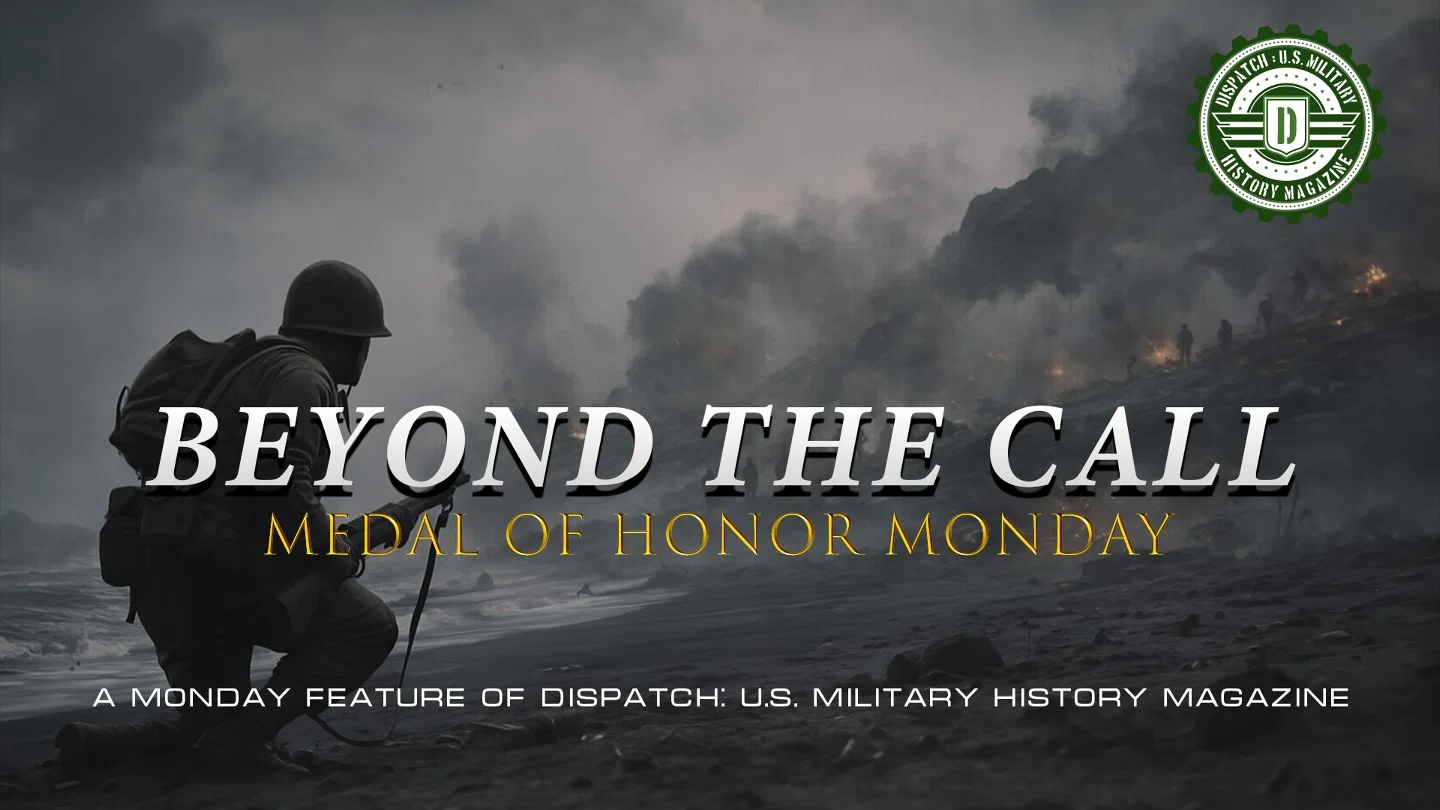
The black volcanic sand of Iwo Jima offered no cover, only shallow shell holes and jagged rock. On the morning of March 9, 1945, Platoon Sergeant Joseph R. Julian lay there with the rest of his company, pressed into the ash while enemy fire tore long furrows across the slope. Ahead of them, a line of Japanese trenches and pillboxes guarded a critical rise. Machine guns hammered from narrow firing slits. Mortars thumped from hidden pits, dropping shells that showered the Marines with rock and steel.
The company’s advance had stalled. Every attempt to move forward drew another storm of bullets. Men were pinned flat, unable to raise their heads, listening to the harsh chatter of enemy guns and the cries of the wounded only a few yards away. Radio messages crackled back and forth, but no easy answer came. If this position held, the battalion’s attack on that sector of the island would falter, and with it the carefully timed assault of the division pushing inland from the beaches.
Julian studied the enemy line: the squat outline of a pillbox anchoring the trench, the faint suggestion of connecting caves worked into the hillside, the arcs of fire that crossed and overlapped in front of his Marines. As platoon sergeant, his job was to keep his men alive and keep them moving. Right now, those two duties pulled in opposite directions. He could wait for supporting fire and hope it arrived before the enemy adjusted and cut them to pieces—or he could move first.
He reached for satchel charges and grenades, weighed them in his hands, and made his choice. Without waiting for orders, Joseph Julian rose from the sand, alone, and started forward toward the pillbox that was holding up the entire line.
The Road to That Day
Joseph R. Julian’s path to that volcanic slope began in the quieter hills of New England. Born on April 3, 1918, in Sturbridge, Massachusetts, he grew up in a small town where everyone seemed to know one another and where news of the war overseas arrived in newspaper headlines and radio broadcasts before it touched daily life. He finished his studies at Southbridge High School, an ordinary young man in an ordinary American town—until the world changed.
By early 1942 the United States was at war across two oceans. In January of that year, Julian raised his right hand and enlisted in the United States Marine Corps Reserve. The decision took him far from Massachusetts. After basic training at Parris Island, South Carolina, he stayed on as a drill instructor, one of the Marines responsible for turning raw recruits into riflemen. Day after day he walked the training fields, correcting rifle positions, pushing men on long marches, and hammering home the small habits that keep people alive under fire.
That experience shaped him. Teaching others the essentials of combat discipline and marksmanship meant he had to master them himself. It also gave him a reputation as a Marine who understood responsibility in a very direct way: every recruit he trained would eventually face someone else’s bullets. The seriousness of that fact never left him.
As the war dragged on and casualty lists grew, Julian moved from training new Marines to preparing for combat with them. He was assigned to the 5th Marine Division, a unit being built and honed specifically for some of the toughest amphibious assaults of the Pacific campaign. Within the division he joined the 1st Battalion, 27th Marines, eventually serving as a platoon sergeant in a rifle company. The long months of field exercises, live-fire ranges, and planning sessions all pointed toward one operation that loomed larger than the rest: the assault on a small, heavily fortified island called Iwo Jima. When his division received its orders, Julian knew that everything he had taught—and everything he had learned—would soon be tested in the most brutal way possible.
Into the Fire
By early March 1945, the fighting on Iwo Jima had shifted from the beaches to a brutal contest for every ridge, draw, and bunker inland. Julian’s battalion had been ordered to push forward through a maze of trenches and pillboxes that anchored the Japanese defensive line in their sector. The enemy had spent months carving firing positions into the volcanic rock, tying bunkers together with covered trenches and caves so a position that looked isolated could suddenly come alive with fire from several directions. To advance even a short distance meant crossing open ground swept by machine guns and mortars, with very little natural cover to hide behind.
On March 9, Julian’s company moved out to attack one of these strongpoints on the left front of the battalion’s line. The Marines had to cross the powdery black sand and broken ground that offered only shallow depressions and shell holes. As they pushed ahead, Japanese machine guns in the nearest pillboxes opened up, stitching the ground with fire. Mortar rounds began to fall in a tight pattern, exploding with sharp cracks that sent fragments of rock and steel ripping through the air. Within moments, the forward elements of the company were pinned down, forced to hug the ground while bullets snapped overhead and shells burst among them. Any attempt to rise drew immediate fire.
As platoon sergeant, Julian could see the attack unraveling. If the strongpoint held, the entire advance in that sector would stall, and the enemy would have time to adjust their fires and call in more support from connected positions. He quickly directed his platoon’s guns into positions where they could at least return some fire, placing automatic weapons to rake the pillbox apertures and trench lines. Those supporting fires helped suppress some of the enemy, but they could not silence the core of the defenses. The key pillboxes and caves still dominated the ground, and his men remained exposed and unable to move.
Julian decided that the only way to break the deadlock was to eliminate the nearest position himself. Acting entirely on his own initiative, he gathered satchel charges and grenades, including white phosphorus grenades designed to produce intense heat and blinding smoke. Then he rose from cover and started forward alone toward the pillbox that anchored the enemy line. The distance was short in yards but long in danger: every step meant crossing ground the defenders had already zeroed in. Machine guns and rifles tracked him as he ran, diving from one fragment of cover to the next until he reached a point close enough to strike. He hurled his explosives and grenades into the pillbox opening, blasting the interior, killing two of the enemy, and driving the remaining defenders into the connecting trench.
Rather than pull back, Julian seized a discarded rifle and plunged into that same trench before the shocked defenders could recover. In the cramped, twisting passage, there was no room for maneuver or careful tactics. It was close-quarters combat, with Julian moving quickly from turn to turn, firing and advancing as he went. By the time he emerged from the trench system, he had killed five more enemy soldiers and cleared that portion of the line. His actions opened a gap in what had moments before been an unbroken wall of fire, but other caves and pillboxes still poured fire into the Marines’ position.
Determined to finish the job, Julian obtained more explosives and linked up with another Marine willing to follow him back into the storm. Together, the two men charged additional cave positions that were still active on the hill. Working as a small assault team, they moved under covering fire from the platoon, sprinting forward to hurl charges into cave mouths and firing into openings as they withdrew. In a series of rapid attacks, they knocked out two more cave positions, further reducing the volume of enemy fire that had been pinning down their company. Each success came at extreme risk, as the surviving defenders shifted their attention to the pair of Marines who were clearly driving the attack.
One major strongpoint remained, a pillbox that still anchored the position and threatened any attempt to exploit the gains Julian had carved out. For this final task, he picked up a bazooka and ammunition and moved once again toward the front, this time essentially alone. To fire effectively, he had to expose himself on open ground long enough to line up his shots. Under the same withering machine-gun and rifle fire, he calmly loaded and fired round after round into the remaining structure, scoring direct hits. On his fourth shot, the pillbox was destroyed, its threat finally eliminated. In the moments after that last blast, a burst of enemy fire struck Julian and mortally wounded him. He fell on the black sand, having broken the resistance of a position that had halted an entire company’s advance.
With the key pillboxes and caves silenced, the Marines could finally rise from the ground and move forward. The company advanced through the shattered defenses, clearing remaining pockets of resistance and securing the objective their battalion needed to continue the drive across Iwo Jima. Julian’s leadership and sacrifice had turned a stalled attack into a successful assault at a critical phase of the battle. His fellow Marines carried him from the field knowing that his last actions had made their survival, and the battalion’s progress, possible. In the harsh arithmetic of that campaign, his life had purchased a breakthrough that could not have been won any other way.
The Citation, Decoded
The official Medal of Honor citation for Platoon Sergeant Joseph R. Julian begins with the familiar language of “gallantry and intrepidity at the risk of his life above and beyond the call of duty.” For many readers, those words can feel formal and distant. On the slopes of Iwo Jima, they meant a man choosing to leave what little cover he had, not once but several times, and walk straight into the center of enemy fire when every instinct and all ordinary orders would have told him to stay down. “Above and beyond” was not a figure of speech; it described a decision that no one required him to make, a decision that exposed him to almost certain death for the chance to save others.
The citation speaks of his determination “to force a breakthrough” when Japanese troops in trenches and fortified positions stopped his company’s advance. In practical terms, that line describes the moment when an entire attacking formation lay flat on the ground, unable to move, with casualties mounting and the success of the larger operation in doubt. It captures Julian’s recognition that artillery or supporting arms might not arrive in time, and that someone at the small-unit level had to act decisively. Establishing his platoon’s guns in supporting positions is summarized in just a few words, but on the ground it meant crawling, shouting, and signaling under fire to place weapons where they could at least hold the enemy’s heads down while he attempted his solo assaults.
Another key phrase in the citation notes that he “fearlessly moved forward to execute a one-man assault” and later “again charged the hostile fortifications” and “launched a bazooka attack unassisted.” Each of those actions is described in a compact way, but together they trace a sequence of escalating risks. First he attacked with demolitions and grenades, then he fought hand-to-hand in the trenches, then he returned to strike additional caves, and finally he exposed himself with a shoulder-fired rocket launcher to destroy the last pillbox. The citation’s reference to his “bold decision, daring tactics, and relentless fighting spirit” summarizes what Marines on the ground would remember as a series of nearly unbelievable charges by a platoon sergeant who refused to accept that the attack would fail.
The closing lines of the citation state that his conduct “contributed materially to the continued advance of his company and to the success of his division’s operations” and that he “gallantly gave his life for his country.” Those formal words frame the cost and the effect of his actions. Tactical success came in the form of a captured strongpoint and a renewed advance in that sector of the island. Operational success meant that his division could keep pressing forward in the sustained drive to seize Iwo Jima, with all its strategic importance for the air war against Japan. The final phrase acknowledges that this progress was not abstract. It was purchased with the life of a Marine who, in the most literal sense, went beyond what duty required so that others could survive and the mission could go on.
Why It Mattered
On the ground that day, the effect of Julian’s actions was immediate and obvious. A position that had pinned down an entire company, and threatened to stall the battalion’s advance, was ripped open by one man’s decision to move when everyone else had to stay flat. Once the key pillboxes and caves were destroyed, Marines who had been pressed into the sand could finally rise, reorganize, and push through the shattered defenses. That shift turned a hopeless patch of ground into a foothold, and it allowed the battalion to regain its momentum on a day when every yard of progress was paid for dearly.
At the tactical level, his assaults broke the backbone of a defensive knot that had tied up supporting fires and blocked movement in that sector. Clearing that strongpoint meant that adjoining units no longer had to divert attention and resources to protect a stalled flank. Instead, they could press their own attacks, knowing that the gap Julian opened would be held and expanded. In a battle fought at such close quarters, where ridges and draws could isolate companies from one another, that kind of local success helped prevent the line from fragmenting under pressure.
Beyond that immediate impact, his actions contributed to the slow, grinding advance that ultimately captured Iwo Jima itself. The island’s airfields would become critical staging and emergency landing sites for long-range bombers striking the Japanese home islands, saving the lives of countless aircrews. The success of the division’s operations did not hinge on any single Marine, but it was built from moments like this one, when a platoon sergeant chose to take on a task no reasonable commander could have ordered. Without such decisions at the small-unit level, the larger objectives of the campaign could not have been achieved at all.
Leadership and Character
Joseph Julian’s story highlights several traits that military leaders still study today. First is initiative: the willingness to act without waiting for perfect information or explicit orders when the situation clearly demands it. No one told him to launch a one-man assault against a fortified position. He recognized that the company’s attack had stalled and that inaction would only mean more casualties and greater risk to the mission. His choice to stand up, gather explosives, and move forward under full enemy fire is a stark example of initiative rooted in a deep understanding of both the mission and his responsibility to his men.
Second is a sense of personal responsibility that goes beyond formal rank. As a platoon sergeant, he was responsible for discipline, training, and day-to-day leadership. On Iwo Jima, he extended that responsibility to include the success of the entire assault, even when it placed him in the most exposed position on the field. His decision to keep returning to the front—first with satchel charges, then in the trenches, then with a bazooka—shows a refusal to let others carry a burden he believed he should shoulder himself. That pattern reflects a character formed over years of training other Marines and living with the knowledge that their survival might depend on his judgment.
Finally, his conduct demonstrates a kind of moral courage that complements physical bravery. He understood the likely outcome of repeated solo attacks against reinforced positions. Courage in this context was not a lack of fear, but a deliberate choice to act despite it because he believed the lives of his Marines and the success of the mission required nothing less. Modern leaders, whether in uniform or in civilian life, can draw from this example the idea that real leadership sometimes means accepting personal risk—reputational, professional, or physical—to remove obstacles that are crushing those who depend on you. Julian’s courage under fire offers a clear, concrete case study of what that looks like when the stakes are as high as they can be.
Legacy and Memory
Joseph R. Julian did not live to see the flag raised over the heights of Iwo Jima or to return home to Massachusetts. He fell on the island he had fought so fiercely to help secure, one of many Marines whose lives ended on that strip of volcanic rock. For his actions on March 9, 1945, he was awarded the Medal of Honor posthumously, an official recognition that attempted, in formal language, to honor a sacrifice his comrades remembered in more personal terms. For them, he was the platoon sergeant who stood up when no one else could and who kept moving forward until the enemy defenses were broken.
In the years since the war, his name has appeared wherever the story of Iwo Jima is told: in unit histories, in lists of division heroes, in commemorations of the Pacific campaign, and in the quiet remembrances of his hometown. Local memorials and veterans’ gatherings in Massachusetts have helped preserve his story as more than a line on a roll of honor, connecting his extraordinary actions overseas to the community that shaped him. Within the Marine Corps, his citation stands alongside those of other enlisted leaders whose battlefield decisions had outsized impact on the course of hard-fought operations.
Today, his memory lives not only in stone and ink but also in the way Marines and students of military history think about small-unit leadership and personal courage. When people pause to study his actions, they see a man who began life in an unremarkable American town and ended it on one of the most bitterly contested battlefields of the war, making choices that changed the fate of his comrades. Remembering Joseph R. Julian as a full human being—a son, a friend, a leader, and a Marine—helps ensure he remains more than a name on a medal, and his example continues to speak to new generations.